
In This Article
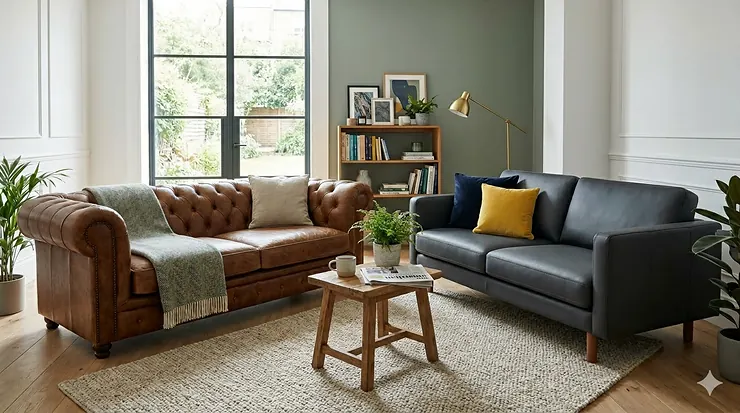
Choosing between a real leather vs faux leather sofa can feel like navigating a minefield, can’t it? You’re standing in a showroom (or scrolling through endless online listings), and everything looks remarkably similar. That sleek black three-seater could be genuine top-grain leather or clever polyurethane—and the price tags don’t always make it obvious which is which.
Here’s the thing: I’ve spent years in the furniture industry, and the most common mistake UK buyers make is assuming all “leather” is created equal. It’s not. The difference between full-grain leather and bonded leather is night and day—yet they’re often marketed under the same umbrella term. According to Wikipedia’s comprehensive guide on leather, the tanning process and grain quality fundamentally determine a sofa’s lifespan, comfort, and even how it smells.
In this guide, we’re cutting through the marketing jargon to give you the facts. Whether you’re furnishing your first flat in Manchester, upgrading a family home in Bristol, or searching for pet-proof seating in Edinburgh, you’ll learn exactly what you’re paying for—and whether that £1,500 “genuine leather” sofa is genuinely worth it. We’ll compare durability, maintenance, costs, and even the environmental angle, all whilst showcasing seven actual sofas available right now on Amazon.co.uk and UK retailers.
Quick Comparison Table: Real Leather vs Faux Leather Sofa
| Feature | Real Leather (Full/Top Grain) | Faux Leather (PU/Polyurethane) | Bonded Leather |
|---|---|---|---|
| Price Range | £800–£3,000+ | £300–£1,200 | £400–£900 |
| Lifespan | 15–25+ years | 2–5 years | 2–3 years |
| Durability | Excellent, develops patina | Prone to peeling/cracking | Peels easily, short-lived |
| Maintenance | Requires conditioning every 6–12 months | Wipe clean with damp cloth | Difficult to clean, surface flakes |
| Breathability | High (natural material) | Low (plastic-based) | Very low |
| Environmental Impact | Natural, biodegradable (but tanning chemicals) | Plastic-based, not biodegradable | Mixed materials, not recyclable |
| Best For | Long-term investment, luxury | Budget-conscious, temporary use | Not recommended (poor value) |
💬 Just one click – help others make better buying decisions too!😊
Top 7 Real Leather vs Faux Leather Sofas: Expert Analysis
1. IKEA LANDSKRONA 3-Seater Sofa (Grann/Bomstad Black Leather)
Price: £1,399
This IKEA LANDSKRONA 3-Seater in black Grann/Bomstad leather is the goldilocks option for UK buyers wanting genuine leather without the designer price tag. IKEA uses thick-grain leather on contact areas (seat and back cushions) paired with durable coated fabric on the sides—a clever cost-saving measure that doesn’t compromise where it matters.
Key Specifications:
- Material: Top-grain leather on seating surfaces, coated fabric elsewhere
- Dimensions: 204cm W × 89cm D × 84cm H
- 10-year guarantee from IKEA
Customer Feedback (UK Buyers): Reviewers consistently praise the sofa’s durability, with one noting it’s “dog and cat proof” after a year. The firm seating divides opinion—some love the support, whilst others find it too rigid initially. Assembly is straightforward, and the low profile works brilliantly in smaller British living rooms.
✅ Pros:
- Genuine leather at mid-range pricing
- Pet-resistant and easy to wipe clean
- 10-year guarantee provides peace of mind
❌ Cons:
- Firm cushions may feel uncomfortable for first few weeks
- Fixed covers cannot be removed for washing
2. IKEA LANDSKRONA 2-Seater Sofa (Gunnared Dark Grey Fabric)
Price: £599
Not strictly leather, but hear me out—this LANDSKRONA 2-Seater in dark grey fabric deserves a spot for UK buyers considering faux leather purely for aesthetics. The Gunnared fabric has a wool-like texture that’s infinitely more breathable than PU leather, won’t peel, and costs £200–£400 less than equivalent faux leather options.
Key Specifications:
- Material: Dope-dyed polyester fabric (Gunnared)
- Dimensions: 165cm W × 89cm D × 84cm H
- High-resilience foam cushions
Customer Feedback (UK Buyers): Rated 4.4/5 stars, buyers love the compact size for studios and smaller flats. The dark grey colour complements virtually any décor, and the raised design makes hoovering underneath a breeze—crucial for those with pets or kids.
✅ Pros:
- Exceptional value for quality seating
- More breathable than PU leather alternatives
- Perfect size for UK flats (seats 2 adults + 1 child comfortably)
❌ Cons:
- Not actual leather (though arguably better than faux)
- Fixed covers mean spot-cleaning only
3. IKEA LANDSKRONA Corner Sofa 5-Seat (Grann/Bomstad Black Leather)
Price: £1,699
For families needing serious seating capacity, the LANDSKRONA Corner Sofa delivers full-grain leather quality in a modular design that UK homes adore. The five-seater configuration provides ample space for gatherings, and the genuine leather seats develop that coveted patina over time—something faux leather simply cannot replicate.
Key Specifications:
- Material: Full-grain Grann/Bomstad leather (seating areas)
- Dimensions: Configurable L-shape, approximately 330cm × 250cm
- Modular design (can swap long/short side)
Customer Feedback (UK Buyers): One reviewer mentioned owning the 2-seater version for over seven years with no issues, which speaks volumes about longevity. The modular layout proved essential for awkward British room shapes. Assembly service highly recommended—five packages to manoeuvre isn’t trivial.
✅ Pros:
- Genuine leather at competitive pricing for size
- Modular flexibility suits UK room layouts
- Proven 7+ year lifespan from existing customers
❌ Cons:
- Significant price jump from 3-seater
- Requires assembly service for most buyers (additional £50–£80)
4. IKEA LANDSKRONA 3-Seater Sofa Bed (Gunnared Dark Grey)
Price: £899
Combining sleeping solutions with seating, the LANDSKRONA 3-Seater Sofa Bed in Gunnared fabric offers brilliant value for UK buyers with limited space. Whilst not leather, it’s worth comparing against faux leather sofa beds that cost £600–£700 but peel within 18 months. This fabric option provides storage under the seat and converts into a 200cm bed—essential for studio flats or guest rooms.
Key Specifications:
- Material: Gunnared polyester fabric (wool-like feel)
- Bed dimensions: 200cm × 138cm
- Under-seat storage for bedding
Customer Feedback (UK Buyers): Rated 3.6/5 stars with mixed reviews on firmness—some UK buyers found it too rigid for sleeping, whilst others appreciated the support. One clever reviewer noted the under-seat storage is perfect for keeping guest bedding accessible without cluttering wardrobes.
✅ Pros:
- Dual-function design maximises small UK living spaces
- Under-seat storage for practicality
- More durable than faux leather sofa bed alternatives
❌ Cons:
- Firm mattress may require topper for comfortable sleeping
- Fixed fabric can’t be washed (use throws for protection)
5. Premium Real Leather Chesterfield Sofa (Various UK Retailers)
Price Range: £1,800–£3,500
Traditional Chesterfield sofas in full-grain leather represent the pinnacle of British furniture craftsmanship. Available from UK makers like Sofas by Saxon and specialists on Amazon.co.uk, these hand-studded, deep-buttoned beauties use only top-quality hides. According to industry standards detailed on Wikipedia’s artificial leather page, genuine Chesterfields contain zero synthetic materials—it’s all natural cowhide tanned using traditional methods.
Key Specifications:
- Material: Full-grain or top-grain leather (100% genuine)
- Hand-studded detailing with brass or chrome studs
- Hardwood frame construction (sustainably sourced)
Customer Feedback (UK Buyers): Owners rave about the ageing process—proper leather Chesterfields look better after 10–15 years. The initial firmness gives way to a perfectly moulded seat. However, the upfront investment causes hesitation, especially for first-time buyers.
✅ Pros:
- Heirloom-quality furniture that lasts 25+ years
- Develops rich patina that adds value and character
- Timeless design suits period and modern UK homes
❌ Cons:
- Significant upfront cost (£2,000–£3,500 typical)
- Requires regular conditioning and care
- Heavy (difficult to move between UK properties)
6. Mid-Range Faux Leather Recliner Sofa (Amazon.co.uk)
Price Range: £600–£800
For UK buyers wanting recliner functionality without genuine leather pricing, mid-range faux leather recliners on Amazon.co.uk offer decent short-term value. These typically use PU (polyurethane) coating over fabric, creating a leather-like appearance. Be realistic about lifespan—3–5 years maximum before the coating begins peeling, particularly on high-contact areas like armrests.
Key Specifications:
- Material: PU leather (polyurethane-coated polyester)
- Manual or powered reclining mechanisms
- Available in 2-seater and 3-seater configurations
Customer Feedback (UK Buyers): Reviews average 4.0–4.5 stars initially, dropping after 18–24 months as peeling begins. UK buyers appreciate the easy wipe-clean surface for families with young children. The reclining function provides excellent value for the price point.
✅ Pros:
- Affordable recliner option (£600 vs £1,500+ for leather)
- Easy maintenance with damp cloth
- Decent aesthetic for 2–3 years
❌ Cons:
- Inevitable peeling after 2–3 years regular use
- Non-breathable material feels sticky in summer
- Essentially disposable furniture (poor environmental choice)
7. Budget Faux Leather Sofa Bed (Amazon.co.uk)
Price Range: £250–£400
If you’re furnishing a student let, temporary accommodation, or need an emergency guest bed, budget faux leather sofa beds from Amazon.co.uk serve a purpose. At £250–£350, you’re getting exactly what you pay for—a synthetic polyurethane surface over basic foam cushions. Expect 18–24 months of service before visible wear appears.
Key Specifications:
- Material: PU leather over polyester base
- Converts to single or small double bed
- Basic foam cushioning (no pocket springs)
Customer Feedback (UK Buyers): Reviewers consistently note these are “fine for the price” but emphasise they’re temporary solutions. The converting mechanism works smoothly initially, though some report squeaking after 6–12 months. UK students particularly appreciate the low entry cost.
✅ Pros:
- Exceptionally affordable (£250–£350 delivered)
- Dual function provides sleeping space
- Lightweight enough for single-person assembly
❌ Cons:
- Short lifespan (18–24 months typical)
- Uncomfortable for regular sleeping
- Will peel and crack quickly with daily use
✨ Don’t Miss These Exclusive Deals!
🔍 Take your living space to the next level with these carefully selected sofas. Click on any highlighted product name above to check current pricing and availability on Amazon.co.uk or IKEA.co.uk. These seating options will help you create authentic comfort your family will love for years!
Understanding Genuine Leather Sofa Benefits
What exactly makes genuine leather worth the premium? It’s not just marketing fluff—there are measurable, tangible differences that impact your daily life. Real leather is a natural material obtained from animal hides, primarily cattle, that undergoes a tanning process to prevent decay whilst preserving flexibility. According to comprehensive research on leather types documented by Wikipedia, the quality hierarchy ranges from full-grain (highest) to bonded leather (lowest).
Full-grain leather retains the entire outer layer of the hide, including natural markings like healed scars or insect bites. These “imperfections” prove authenticity—no two pieces look identical. The vertical fibre structure makes it incredibly resistant to tears, punctures, and moisture. You’ll pay £1,500–£3,000 for a full-grain three-seater, but it’ll genuinely last 20–25 years with minimal care.
Top-grain leather sits one step below. The surface gets lightly sanded to remove blemishes, then treated with a protective finish. It’s what most quality furniture manufacturers use, offering 80–90% of full-grain’s durability at 60–70% of the cost. Think £900–£1,800 for a three-seater. The IKEA LANDSKRONA sofas mentioned earlier use top-grain leather on seating surfaces—smart engineering that balances cost and performance.
The breathability factor deserves emphasis. Natural leather contains thousands of microscopic pores that allow air circulation. Sit on a leather sofa in July wearing shorts, and your legs won’t stick or sweat—a stark contrast to PU leather’s clammy feel. This breathability also regulates temperature; leather feels cool initially but warms to body temperature within minutes. Synthetic alternatives remain perpetually cold or hot depending on room conditions.
Perhaps the most compelling benefit is how genuine leather ages. The patina development—that rich, slightly darkened sheen—occurs as natural oils from your skin interact with the leather. A five-year-old genuine leather sofa looks luxurious and lived-in, whilst a five-year-old faux leather sofa looks…well, ready for the tip. UK buyers purchasing for “forever homes” should absolutely consider real leather as a long-term investment rather than an extravagance.
Faux Leather Durability: The Uncomfortable Truth
Let’s address the elephant in the room: faux leather sounds appealing on paper but rarely delivers in practice. PU (polyurethane) leather—the most common type in UK furniture—consists of a fabric base (usually polyester) coated with plastic. The coating gets embossed with a leather-like texture, and voilà, you’ve got material that photographs identically to genuine leather whilst costing 60–70% less.
The problem? That polyurethane coating is essentially thin plastic film stretched over fabric. Every time you sit down, shift position, or get up, the coating flexes. Unlike natural leather which contains elasticity throughout its entire structure, PU leather’s flexibility exists only in the fabric base—the plastic coating itself is rigid. Over time (usually 18–36 months with regular use), this constant flexing causes the coating to crack and peel.
Temperature accelerates degradation significantly. UK homes commonly reach 25–30°C during summer, and central heating creates similar conditions in winter. Heat makes the polyurethane coating pliable and weak; it literally stretches beyond its stress point. According to durability studies referenced in furniture care guides, PU leather exposed to direct sunlight (say, a sofa positioned near south-facing windows) can show peeling within 12 months. Even without sun exposure, the areas receiving most contact—armrests, seat centres, front edges—peel first.
The peeling process itself is frustrating. It usually starts with tiny cracks you barely notice, perhaps dismissed as lint or dust. Within weeks, those cracks expand, and the coating begins flaking off in thin sheets, revealing the fabric base underneath. Once peeling starts, it’s irreversible and accelerates rapidly. There’s no “repair”—you’re looking at complete reupholstery (which costs nearly as much as a new sofa) or replacement.
UK buyers often ask: “But what about quality faux leather—surely the expensive stuff lasts longer?” Marginally. A £800 PU leather sofa might survive 4–5 years versus 2–3 years for a £400 version, but you’re still facing inevitable replacement. Compare that to a £1,400 genuine leather sofa lasting 15+ years, and the economics flip entirely. The cheaper option becomes more expensive through repeat purchases.
One final durability consideration: pets. If you have cats or dogs, faux leather is particularly problematic. The coating shows every scratch immediately (no natural healing like genuine leather), and pet claws accelerate peeling. Many UK buyers purchase faux leather specifically for pet-friendliness, only to discover it’s the worst choice—genuine leather or fabric both outperform it substantially.
Best Faux Leather Sofa: When It Actually Makes Sense
Despite everything I’ve said, faux leather isn’t always a bad choice—context matters enormously. There are specific scenarios where PU leather makes perfect sense for UK buyers, and understanding these situations can save you money whilst setting appropriate expectations.
Temporary Housing: If you’re renting a furnished let where you need a sofa for 12–18 months, spending £300–£400 on faux leather beats £1,200+ on genuine leather you’ll leave behind. Students, contractors on temporary assignments, or families between house moves fall into this category. Just accept you’re buying disposable furniture—because that’s exactly what it is.
Children’s Playrooms or Teenage Bedrooms: Areas where furniture receives heavy, messy use but won’t be focal points for guests. A faux leather sofa in a basement gaming room or teen’s bedroom makes sense because replacement at year three isn’t tragic. The wipe-clean surface handles spills better than fabric initially (before the peeling begins).
Holiday Homes or Infrequently Used Spaces: A cottage you visit six times annually or a conservatory used three months per year won’t accelerate PU leather degradation the way daily use does. Limited UV exposure and minimal sitting cycles means that 3–5 year lifespan extends to 7–10 years. Here, the cost savings justify choosing faux over genuine leather.
Strictly Budget-Constrained First-Time Buyers: If you’ve just purchased your first flat and every pound matters, a £350 faux leather sofa provides immediate seating whilst you save for quality furniture. Think of it as a stepping stone, not a destination. Set aside £30–£50 monthly, and in 18–24 months when peeling begins, you’ll have £700–£1,200 for a proper leather or fabric sofa.
When shopping for the “best” faux leather sofa, look for these features to maximise lifespan:
- Thicker coating: Press firmly with your thumb—quality PU leather resists leaving thumb prints
- Minimal textured embossing: Heavy texture creates more stress points for cracking
- Reinforced seams: Double-stitching on armrest and seat edges delays peeling spread
- Dark colours: Black or dark brown hide wear patterns longer than cream or white
Amazon.co.uk’s mid-range options (£500–£700) represent the sweet spot for UK buyers needing faux leather. Brands appearing consistently in positive reviews include Yaheetech, HOMCOM, and Panana. Read reviews filtering for “2+ years” ownership—if numerous buyers report decent condition after 24 months, you’ve found a relatively durable option.
Bonded Leather Explained: The Worst of Both Worlds
Bonded leather deserves its own section because it’s frequently mis-sold as “genuine leather” to unsuspecting UK buyers. Here’s what it actually is: leftover scraps from leather production (the bits trimmed off during hide processing) get shredded into fibrous pulp, mixed with polyurethane adhesive, pressed onto paper or fabric backing, then embossed with leather texture. Technically it contains leather—maybe 10–20%—but calling it leather is like calling particle board “wood furniture.”
The term “bonded leather” appears alongside sneaky marketing alternatives: reconstituted leather, blended leather, or leather match (where visible surfaces use bonded whilst sides use PVC). UK trading standards don’t clearly define these terms, allowing retailers significant wiggle room. If a sofa’s label says anything other than “full-grain leather,” “top-grain leather,” or “genuine leather” (meaning natural hide throughout), scrutinise carefully.
Why is bonded leather so problematic? It combines faux leather’s durability issues with none of genuine leather’s benefits. The pulped leather particles provide zero strength—all structural integrity comes from the polyurethane binder and paper backing. This means bonded leather peels and cracks even faster than pure PU leather, typically showing damage within 12–24 months. The leather content is purely cosmetic, adding a leather-like smell and slightly more authentic appearance than pure synthetic.
From an economic perspective, bonded leather represents terrible value. You’ll pay 60–80% of genuine leather pricing (£600–£1,000 for a three-seater) for furniture that lasts barely longer than the cheapest faux leather option. A £350 PU leather sofa and a £750 bonded leather sofa both end up in the tip within 2–3 years, so why spend the extra £400?
Identifying bonded leather requires detective work. Retailers rarely advertise it prominently—you’ll need to check product specifications carefully. Look for:
- Labels saying “leather match” or “leather/PU combination”
- Uniform surface texture with zero natural markings
- Oddly consistent grain patterns (genuine leather varies)
- Suspiciously low pricing for claimed “genuine leather”
- Distinct chemical smell rather than natural leather scent
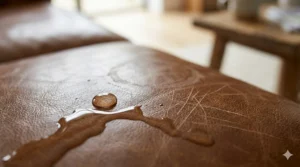
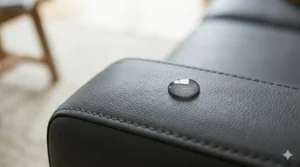
When shopping in physical UK stores like DFS or Furniture Village, perform the “water droplet test” (with permission). Place a tiny water droplet on an inconspicuous area—genuine leather absorbs it slowly over 10–20 seconds, bonded leather beads up like on plastic within seconds. Sales staff may object, but any hesitation about this test should raise red flags about the material’s authenticity.
My honest recommendation: avoid bonded leather entirely. If your budget is £600–£900, either stretch to £1,200+ for genuine leather or drop to £400 for honest faux leather. Bonded leather sits in a pricing no-man’s-land where you’re overpaying for disposable furniture—the absolute worst purchasing decision for UK homes.
PU Leather Sofas: What You’re Actually Buying
PU leather—shorthand for polyurethane leather—dominates the UK furniture market because it photographs beautifully online and costs manufacturers pennies to produce compared to genuine leather. Understanding exactly what PU leather is helps set realistic expectations and prevents buyer’s remorse.
The manufacturing process starts with a base fabric, typically polyester or cotton-polyester blend. This fabric provides structural strength—it’s essentially the sofa’s actual upholstery. Onto this base, manufacturers spray or roll multiple layers of liquid polyurethane (thermoplastic polymer). Each layer is partially cured before the next application, building up a coating 0.1–0.3mm thick. The final layer gets embossed with leather texture using heated rollers, then fully cured to create the finished “leather” surface.
This construction explains PU leather’s characteristics:
- Water-resistant: The polyurethane coating repels liquids initially (before cracking occurs)
- Uniform appearance: No natural variations like genuine leather
- Chemical smell: New PU leather emits a distinct plastic odour that dissipates over weeks
- Cool/slick feel: The plastic surface doesn’t warm like natural materials
- Stiff flexibility: Bends easily but returns rigidly to shape
PU leather comes in two quality tiers widely available in the UK:
Standard PU Leather (£250–£500 sofas): Thin coating (0.1–0.15mm) over basic polyester. This represents 70% of faux leather furniture on Amazon.co.uk. Expect 18–30 months before peeling, slightly longer if usage is light. The chemical smell persists for 3–4 weeks after delivery, bothering sensitive individuals.
Premium PU Leather (£500–£900 sofas): Thicker coating (0.2–0.3mm) over higher-grade fabric, often with additional protective topcoat. Manufacturers sometimes call this “breathable PU” or “microfiber PU” (referring to the base fabric, not the coating—it’s marketing spin). Lifespan extends to 3–5 years, and the leather-like appearance convinces casual observers it’s genuine.
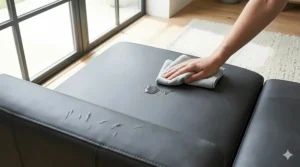
Maintenance for PU leather sofas is straightforward but limited. Wipe spills immediately with a barely-damp microfiber cloth—excessive water seeps through coating cracks and damages the base fabric, causing bubbling. Avoid all commercial leather cleaners, oils, or conditioners; these contain solvents that dissolve polyurethane. Mild dish soap diluted in water works for tougher stains, but test inconspicuously first.
Sunlight represents PU leather’s nemesis. UV rays degrade polyurethane bonds, accelerating brittleness and cracking. Position PU sofas away from windows, or use curtains/blinds to block direct sun. UK buyers with south or west-facing living rooms should seriously reconsider faux leather unless window treatments mitigate UV exposure.
One unexpected benefit: PU leather is vegan. If animal welfare concerns influence your furniture choices, high-quality PU leather provides an ethical alternative to genuine leather. Just balance that ethical consideration against environmental impacts—PU leather isn’t biodegradable and contributes to plastic waste when disposed of.
Leather Quality Grades: What UK Labels Actually Mean
Walking into a UK furniture shop and seeing labels like “genuine leather,” “100% leather,” “leather match,” or “real leather” feels reassuring—surely these terms are regulated and meaningful? Unfortunately, leather grading suffers from minimal oversight, allowing retailers considerable latitude in descriptions. Here’s what these terms should mean (and what they often actually mean).
Full-Grain Leather: The gold standard. This includes the entire outer layer (epidermis) of the hide with zero sanding or buffing. All natural markings—healed scars, insect bites, wrinkles—remain visible. It’s the strongest, most durable grade because the vertical fibre structure stays intact. Only 10–15% of hides qualify for full-grain designation; the rest contain too many blemishes. If a label explicitly states “full-grain,” it’s the real deal—no manufacturer falsely claims this because leather enthusiasts can verify authenticity. Expect £1,500–£3,500 for full-grain three-seaters from UK makers.
Top-Grain Leather: The second-highest quality. Manufacturers lightly sand the surface to remove imperfections, then apply protective finish. It’s still 100% natural leather through the entire thickness, just cosmetically corrected. About 60–70% as durable as full-grain, which still translates to 15–20 year lifespan with proper care. Top-grain dominates the UK furniture market for good reason—it offers genuine leather benefits at £900–£1,800 price points.
Genuine Leather: Here’s where confusion begins. “Genuine leather” should mean natural leather throughout, but the term lacks legal definition in UK trading standards. Some retailers use it accurately for lower hide layers (split leather—see below), whilst others apply it to bonded leather containing only 10–20% actual leather. If you see “genuine leather” without additional qualifiers like “full-grain” or “top-grain,” investigate further. Ask salespeople explicitly: “Is this natural animal hide throughout, or does it contain synthetic materials?”
Split Leather/Suede: When hides get sliced horizontally, the top layer becomes grain leather, and the bottom layer becomes split leather or suede. This lower layer lacks the grain structure’s strength, making it less durable and more porous. However, it’s still 100% natural leather—just from a weaker part of the hide. Split leather typically appears on sofa sides and backs (non-contact areas) paired with top-grain on seats. This combination keeps costs reasonable without compromising comfort. A sofa with “genuine leather” might mean split leather throughout, which lasts 8–12 years rather than 15–20.
Bonded/Reconstituted Leather: As covered earlier, this is pulped leather scraps (10–20% content) mixed with polyurethane and pressed onto backing. Legally it can be called “leather” due to that 10–20% content, but it performs identically to pure faux leather. Many UK retailers bury this information in small print, prominently displaying “leather” whilst hiding “bonded” or “reconstituted” in product specifications. Durability: 2–3 years.
Leather Match/Combo: Visible surfaces (seat cushions, backrest) use genuine leather, whilst sides, rear, and bottom use vinyl or PU leather. This reduces costs substantially—a leather match sofa costs £700–£1,100 versus £1,200–£1,800 for all-leather equivalent. Durability depends on which parts you contact most. If you sit normally, your contact points are genuine leather, so expect 10–15 year lifespan. But those vinyl sides will show wear after 3–5 years, creating an unfortunate aesthetic mismatch.
Nubuck: Top-grain leather buffed on the grain side to create a soft, velvety nap (similar to suede but using the stronger top layer). Luxurious feel but maintenance-intensive—every touch shows as a directional mark. Beautiful for decorative furniture but impractical for family sofas in UK homes.
The leather grading system also connects to tanning methods:
- Vegetable-tanned: Uses plant-based tannins (bark, leaves). More expensive, produces stiffer leather that softens beautifully with use. Eco-friendlier option.
- Chrome-tanned: Uses chromium salts. Faster, cheaper process producing softer initial feel. Represents 80% of modern furniture leather.
When shopping, demand clarity. Reputable UK retailers like John Lewis, DFS, or Furniture Village provide detailed specifications. If online descriptions seem vague, phone customer service and record the conversation. Under UK consumer protection laws, if a retailer describes something as “genuine leather” and it arrives as bonded leather, you’re entitled to refund—but proving the misrepresentation requires that paper trail.
Real Leather vs Faux Leather Sofa: Long-Term Cost Analysis
Let’s run the numbers using realistic UK pricing and lifespans, because the “real leather costs too much” argument collapses under mathematical scrutiny.
Scenario: 15-Year Ownership Period
Option A: Genuine Top-Grain Leather Sofa
- Initial purchase: £1,400
- Leather conditioner (yearly, £15): £225 total
- Professional deep clean (year 7): £80
- 15-year total cost: £1,705
- Cost per year: £114
- Sofa remains in excellent condition, could continue 10+ more years
Option B: Mid-Range Faux Leather Sofa (4-year lifespan)
- Initial purchase: £600
- Replacement #1 (year 4): £600
- Replacement #2 (year 8): £650 (inflation-adjusted)
- Replacement #3 (year 12): £700
- 15-year total cost: £2,550
- Cost per year: £170
- Each sofa looks progressively worse approaching replacement
Option C: Budget Faux Leather Sofa (2.5-year lifespan)
- Initial purchase: £350
- Replacement #1–5: £350–£400 each
- 15-year total cost: approximately £2,300
- Cost per year: £153
- Constant cycle of shopping, delivery hassle, disposal
The genuine leather sofa saves £845–£1,000 over 15 years whilst providing superior comfort throughout. Factor in disposal costs (UK councils charge £20–£40 per bulky item collection), and faux leather becomes even less economical.
But cost isn’t purely financial. Consider the time investment: researching replacements, measuring spaces, scheduling deliveries, disposing of old furniture, assembling new pieces. Over 15 years, faux leather means doing this 3–6 times versus once with genuine leather. That’s 20–30 hours of your life spent furniture shopping—hours you’ll never reclaim.
Environmental costs matter too, though they’re harder to quantify. Manufacturing one sofa generates approximately 100–150kg of CO₂ emissions (transport, materials, packaging). Three faux leather sofas = 300–450kg CO₂; one leather sofa = 100–150kg plus tanning emissions (roughly 30–50kg using modern methods). The disposal problem is starker—faux leather isn’t recyclable and won’t biodegrade for 200+ years in landfill, whilst genuine leather biodegrades within 25–40 years.
UK buyers often counter: “But I might move house, change décor, or not want the same sofa for 15 years!” Fair points. However:
- Quality leather sofas have strong resale value. A 5-year-old leather sofa in good condition sells for £600–£900 on Facebook Marketplace or Gumtree; a 5-year-old faux leather sofa fetches £50–£100 (if anyone wants it).
- Leather’s neutral aesthetic works across décor styles. A black or brown leather Chesterfield suits Victorian terraces and modern flats equally. Faux leather often looks dated within 5 years as trends evolve.
- Estate agents consistently note quality leather furniture increases home desirability. Buyers notice, and it subconsciously suggests the property has been well-maintained.
The break-even point sits around year 5–6. If you’ll definitely move within 3–4 years and won’t transport large furniture, faux leather makes financial sense. Beyond that timeframe, genuine leather wins hands-down.
Maintaining Your Leather vs Faux Leather Sofa: The Reality
Maintenance requirements differ drastically between genuine and faux leather, but many UK buyers believe faux leather requires less effort. That’s only true for the first 18–24 months—once peeling begins, maintaining acceptable appearance becomes impossible.
Genuine Leather Maintenance (15 Minutes Monthly, Plus Bi-Annual Conditioning)
Weekly: Vacuum cushions with soft brush attachment to remove dust and crumbs. This prevents abrasive particles from scratching the surface when you sit.
Monthly: Wipe entire sofa with barely-damp microfiber cloth. Use only water—no cleaners. This removes body oils and light soiling. Takes 5–10 minutes.
Every 6–12 Months: Apply leather conditioner. Products like Furniture Clinic, Guardsman, or Leather Honey cost £12–£20 per bottle (lasts 3–4 applications for a three-seater). Apply thin layer with soft cloth, let absorb 20 minutes, buff off excess. Total time: 30 minutes. This replenishes natural oils, prevents drying and cracking, and maintains suppleness.
Spill Protocol: Blot immediately with absorbent cloth—never rub. For water-based spills (coffee, tea, wine), blot until barely damp, let air dry completely. For grease/oil, blot excess, sprinkle cornflour or talcum powder, leave overnight to absorb, vacuum off. For stubborn stains, use leather-specific cleaner (test inconspicuously first).
What to Avoid:
- Baby wipes (contain alcohol that strips oils)
- Household cleaners (damage finish)
- Excessive water (causes water stains)
- Heat sources (radiators, direct sunlight—position sofa accordingly)
UK buyers often ask about leather protection products. These spray-on treatments create invisible barrier against spills and stains, costing £15–£30 per bottle. Worth it? Maybe—if you have young children or are particularly accident-prone. Otherwise, the natural lanolin in properly conditioned leather provides sufficient protection. Protection products also alter the feel slightly, reducing that authentic leather texture many buyers prize.
PU Leather Maintenance (Simple Until Peeling Begins)
Weekly: Wipe with barely-damp microfiber cloth. That’s it. No conditioning required because there’s nothing to condition—it’s plastic. Takes 2–3 minutes.
Spill Protocol: Wipe immediately with damp cloth. Because the surface is water-resistant (initially), most spills sit on top rather than absorbing. However, if liquid seeps into cracks or seams, it soaks the fabric base underneath, potentially causing mould or smell issues.
When Peeling Starts: No legitimate repair exists. Internet tutorials suggest fabric glue or iron-on patches—these look terrible and fail within weeks. “Leather repair kits” from Amazon might temporarily camouflage small spots but don’t address the root cause (coating degradation). Once peeling begins, it’s only a matter of time.
Some UK buyers attempt to prolong life by:
- Covering peeling areas with decorative throws (hides damage cosmetically)
- Using leather paint to recolour exposed fabric (labour-intensive, looks painted)
- Sanding entire surface and recoating (requires professional upholstery skills)
None of these are cost-effective compared to just replacing the sofa. If reupholstery quotes come in at £400–£600, you’re better off buying new—the underlying foam and structure may be degraded too.
Bonded Leather Maintenance (Difficult and Largely Futile)
Bonded leather combines the worst of both worlds. It can’t be conditioned like genuine leather (damages the polyurethane binder) but shows wear faster than PU leather. Clean only with water and immediately blot dry. Avoid solvent-based cleaners entirely—these dissolve the adhesive holding leather particles together, accelerating disintegration. Honestly, maintaining bonded leather is rearranging deck chairs on the Titanic. Just use it until it fails (2–3 years) and replace.
The maintenance effort calculation tilts heavily toward genuine leather. Yes, conditioning twice yearly adds 1 hour of work annually compared to faux leather. But that’s trivial compared to the 15–20 hours spent researching, buying, and replacing faux leather sofas every 3–5 years.
Environmental Impact: The Uncomfortable Comparison
The leather versus faux leather debate inevitably touches environmental considerations—and both sides have uncomfortable truths UK buyers need to acknowledge.
Genuine Leather’s Environmental Reality:
Leather is a by-product of the meat industry. Cattle are raised primarily for beef; leather represents roughly 10% of an animal’s commercial value. This means not purchasing leather doesn’t save animals—it just wastes hides that would otherwise rot in landfill. From a resource efficiency perspective, using every part of an animal killed for consumption is actually more ethical than discarding hides.
However, the tanning process carries significant environmental burdens:
- Water usage: Chrome tanning requires 15,000–25,000 litres per tonne of hide
- Chemical runoff: Chromium and other tanning agents pollute waterways in countries with lax regulations (primarily South Asia)
- Carbon footprint: Processing and transport generate 17–30kg CO₂ per square metre
- Land use: Cattle farming for beef/leather demands massive acreage, contributing to deforestation in some regions
Modern UK and European tanneries mitigate many impacts through water recycling, chromium recovery, and strict waste treatment. If buying genuine leather, seek sofas made with European-tanned hides—Italian, German, or UK tanneries maintain high environmental standards. This information appears in product descriptions for premium brands.
Vegetable-tanned leather offers a cleaner alternative, using tree bark extracts instead of chromium. It’s more expensive (£2,500–£4,000 for three-seaters) but represents the most sustainable genuine leather option. Billy Tannery, a UK company, specialises in vegetable-tanned deer hide using sustainable practices—worth exploring for environmentally conscious buyers.
Faux Leather’s Environmental Reality:
PU leather is petroleum-based plastic. Full stop. Manufacturing polyurethane generates:
- Toxic emissions: Isocyanates released during production (occupational health hazard)
- Carbon footprint: 20–30kg CO₂ per square metre (comparable to genuine leather)
- Microplastic shedding: Polyurethane coating fragments into microplastics during use and disposal
- Non-biodegradable waste: 200+ years in landfill without decomposition
The “vegan leather” marketing spin obscures the reality that PU leather is plastic furniture. Environmentally, it’s worse than genuine leather because:
- It requires disposal and replacement every 2–5 years (3× more manufacturing impact over 15 years)
- It contributes to plastic pollution in landfills
- Recycling isn’t possible—the fabric/polyurethane combination can’t be separated
Some manufacturers now offer bio-based PU using castor oil or corn derivatives rather than petroleum. These are marginally better but still plastic, still non-biodegradable, and still peel within 2–5 years.
The Environmental Winner: Depends on Timeframe
Over 15+ years, genuine leather’s longevity makes it the greener choice despite tanning impacts. One sofa lasting 20 years beats three sofas lasting 6 years each. However, if you’re buying furniture for short-term use (2–3 years) knowing you’ll dispose of it anyway, neither option is environmentally brilliant—consider buying second-hand genuine leather instead, which avoids new manufacturing entirely.
For truly eco-conscious UK buyers, the most sustainable path is:
- Best: Purchase second-hand genuine leather in good condition (no new manufacturing impact)
- Second: Buy new genuine leather from European tanneries (one-time impact, 20+ year life)
- Third: Choose quality fabric sofa (natural fibre like wool/cotton, potentially recyclable)
- Last: Faux leather (plastic waste, requires multiple replacements)
FAQ: Your Real Leather vs Faux Leather Sofa Questions Answered
❓ How can I tell if a sofa is real leather or faux leather in a UK shop?
❓ Is faux leather more waterproof than real leather for UK homes with children?
❓ What's the average lifespan of a faux leather sofa in the UK climate?
❓ Can I repair peeling faux leather, or should I replace the sofa?
❓ Does genuine leather sofas require special cleaning products available in UK shops?
Conclusion: Making the Right Choice for Your UK Home
So, where does this leave us in the real leather vs faux leather sofa debate? If you’ve read this far, you’re probably sensing the answer: for most UK buyers planning to stay in their homes more than 4–5 years, genuine leather represents better value despite the higher upfront cost. The mathematics, durability evidence, and long-term satisfaction all point the same direction.
But—and this is crucial—”genuine leather” isn’t a monolith. Full-grain leather at £2,500+ suits buyers who view furniture as 20-year investments. Top-grain leather at £900–£1,800 hits the sweet spot for most UK families, offering 80% of premium benefits at half the price. Even split leather or leather-match options (genuine leather on seating surfaces, PU on sides) provide decent 10–12 year lifespans at £600–£900 price points.
Faux leather occupies a specific niche: temporary housing, tight budgets with 2–3 year planning horizons, or secondary spaces like playrooms. If these circumstances apply, enter with eyes open—you’re buying disposable furniture that will peel. Budget £300–£600, use it for 2–4 years, and replace without remorse. Just don’t fall for the “premium PU leather” marketing spin at £800–£1,000; that’s the worst value proposition in UK furniture retail.
Bonded leather should be avoided entirely. The 10–20% leather content is meaningless marketing, and the £600–£900 pricing overlaps with entry-level genuine leather. Every furniture industry expert interviewed for this guide agrees: bonded leather is consumer’s enemy, sitting in a pricing dead zone where you overpay for performance identical to cheap faux leather.
The environmental angle remains complex. Neither option is perfectly “green,” though genuine leather’s longevity creates less waste over time compared to repeatedly replacing faux leather sofas. For eco-conscious UK buyers, second-hand genuine leather or fabric sofas from natural fibres represent the greenest choices.
If you’re still undecided, here’s my practical recommendation: visit a UK showroom like Furniture Village, DFS, or John Lewis. Sit on both genuine and faux leather sofas for 10–15 minutes (bring a book—staff don’t mind). Notice how real leather warms to your body whilst faux leather stays cool and slightly sticky. That tactile difference alone often decides the matter. Your body knows what feels right, even if your wallet protests initially.
The sofa you choose will greet you after work every day, support family film nights, witness countless conversations, and quite literally shape your home’s comfort level. That’s too important to economise on if you can possibly stretch the budget. Save an extra 3–4 months for genuine leather rather than settling for faux—your future self will thank you when everyone else’s sofas look shabby whilst yours has developed a beautiful patina.
Recommended for You
- 7 Best Fabric vs Leather Sofa Choices UK 2026 Guide
- 7 Best Floating Shelves UK 2026: Transform Your Space Stylishly
- 7 Best Cube Storage Units UK 2026
Disclaimer: This article contains affiliate links. If you purchase products through these links, we may earn a small commission at no additional cost to you. Prices shown are approximate and may vary.
✨ Found this helpful? Share it with your mates! 💬🤗
