
In This Article
If you’ve ever spent an evening on your sofa only to wake up with a nagging backache, you’re far from alone. Across the UK, approximately 8 out of 10 people experience back pain at some point in their lives, and believe it or not, your beloved sofa might be contributing to the problem. The typical British household spends countless hours lounging on the sofa—whether binge-watching the latest series, working from home, or simply unwinding after a long day. But here’s the kicker: that plush, cloud-like sofa you thought was the epitome of comfort could actually be wreaking havoc on your spine.
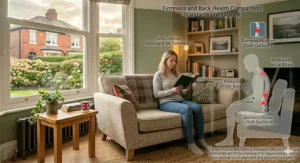
Choosing the right sofa for back pain isn’t just about picking something that looks good in your living room. It’s about understanding the delicate balance between comfort and support, recognising how your body interacts with furniture, and making informed decisions that prioritise your spinal health. According to Cambridge University Hospitals NHS Foundation Trust, maintaining the natural ‘S’ shape of your spine whilst sitting is crucial for preventing and managing back pain. Poor posture in seating can aggravate both back and neck discomfort, turning your relaxation time into a source of chronic pain.
In this comprehensive guide, we’ll explore seven expertly vetted solutions available on Amazon.co.uk that can transform your sitting experience. From budget-friendly lumbar cushions to premium ergonomic supports, we’ve done the legwork so you don’t have to. Whether you’re dealing with chronic lower back pain, recovering from an injury, or simply want to prevent future problems, there’s a solution here for you.
Quick Comparison Table
| Product | Type | Price Range | Key Feature | Best For |
|---|---|---|---|---|
| YUGEVRA Lumbar Support Pillow | Memory Foam Cushion | £16.99-£21.99 | Streamline ergonomic design | Office workers & drivers |
| Everlasting Comfort Lumbar Cushion | Premium Memory Foam | £20.39-£23.99 | 4D breathable mesh cover | All-day comfort |
| HOMESCAPES Back Support Cushion | 100% Cotton Orthopaedic | £34.99+ | UK-made, natural materials | Traditional seating preference |
| Diana Cowpe Fleece Cushion | T-shaped Lumbar Support | £25-£35 | British-made, washable | Armchair & sofa use |
| CILI Heated Lumbar Support | Heated & Vibrating | £30-£45 | Massage function with heat | Muscle tension relief |
| Cozyhealth Heated Pillow | Graphene Heating Tech | £28-£38 | Sleep & sitting support | Night-time back relief |
| TANYOO Recliner Back Support | Dual Layer Memory Foam | £25-£40 | Extra thick for deep seats | Recliners & elderly users |
💬 Just one click – help others make better buying decisions too!😊
Top 7 Sofas for Back Pain: Expert Analysis
1. YUGEVRA Lumbar Support Pillow – Best Overall Value
The YUGEVRA Lumbar Support Pillow has quickly become a favourite among UK buyers seeking affordable yet effective back support. This streamlined memory foam cushion boasts an ergonomic design that specifically targets the lumbar curve, filling that problematic gap between your lower back and your sofa.
Key Specifications:
- High-density memory foam core
- Breathable mesh cover (removable and machine-washable)
- Dimensions: 44×30×12cm
- Universal fit for most furniture
Price: £16.99-£21.99
Customer Feedback: UK buyers consistently praise this cushion for its firm yet comfortable support. One reviewer with chronic sciatica noted it made “travelling more bearable,” whilst another mentioned they wished they’d purchased it six months earlier. The cushion maintains its shape over time, making it particularly valuable for daily use.
✅ Pros:
- Excellent value for money
- Maintains shape over extended use
- Versatile—works on sofas, office chairs, and car seats
❌ Cons:
- May feel too firm initially (softens with body heat)
- No attachment strap (can slip on leather surfaces)
Best For: Budget-conscious buyers needing reliable lumbar support across multiple seating situations.
2. Everlasting Comfort Lumbar Support Cushion – Premium Choice
The Everlasting Comfort cushion represents a step up in both materials and engineering. Featuring advanced 4D breathable mesh fabric, this cushion addresses one of the most common complaints about memory foam products: heat retention. The ventilated design promotes air circulation, keeping you cool during extended sitting sessions.
Key Specifications:
- Premium-grade memory foam
- 4D breathable mesh technology
- Eco-friendly materials (OEKO-TEX certified)
- Ergonomic contoured shape
Price: £20.39-£23.99 (currently on limited-time deal)
Customer Feedback: Reviewers note the superior breathability compared to standard cushions. One office worker mentioned staying “comfortable throughout eight-hour shifts,” whilst another appreciated the cushion’s ability to maintain support without feeling “wooden or awkward.”
✅ Pros:
- Exceptional breathability prevents overheating
- Adapts to individual body contours
- Sustainability certifications
❌ Cons:
- Slightly higher price point
- May be too thick for shallow-seated sofas
Best For: Those prone to overheating or requiring all-day support in various settings.
3. HOMESCAPES Charcoal Grey Back Support Cushion – Traditional Comfort
For those who prefer natural materials over synthetic foam, the HOMESCAPES cushion offers a compelling alternative. Crafted from 100% soft cotton with a 15cm depth, this orthopaedic cushion provides substantial lumbar support whilst maintaining a more traditional aesthetic that complements classic British interiors.
Key Specifications:
- 100% cotton construction
- 15cm depth for substantial support
- Orthopaedic-grade design
- Available in multiple colours
Price: £34.99+
Customer Feedback: UK buyers appreciate the natural feel and robust construction. Several reviewers mention it’s particularly suitable for older adults who find memory foam either too firm or too “synthetic-feeling.” The cotton material breathes naturally, preventing the clammy sensation some experience with foam products.
✅ Pros:
- Natural, breathable materials
- Substantial depth provides excellent support
- Complements traditional furniture styles
❌ Cons:
- Higher price point
- Requires professional cleaning (not machine-washable)
Best For: Those with sensitivities to synthetic materials or preferring traditional furniture aesthetics.
4. Diana Cowpe Fleece Back Support Cushion – British Craftsmanship
Proudly manufactured in the UK, the Diana Cowpe cushion series has built a loyal following amongst British consumers. The T-shaped design provides both lumbar and upper back support, making it particularly effective for armchairs and high-backed sofas where additional shoulder support is beneficial.
Key Specifications:
- T-shaped multi-zone support
- UK-manufactured quality
- Fleece covering for comfort
- Multiple design options (florals, tartans, solids)
Price: £25-£35
Customer Feedback: With over 1,700 reviews averaging 4.4 stars, this cushion enjoys strong customer satisfaction. Reviewers particularly appreciate the dual support zones and the quality of British manufacturing. One user noted it “eases and prevents back pain” during extended reading sessions.
✅ Pros:
- UK-made quality assurance
- T-shape provides multi-zone support
- Attractive traditional designs
❌ Cons:
- Fleece covering may be too warm in summer
- Not suitable for car seats due to shape
Best For: Armchair users and those wanting to support British manufacturing.
5. CILI Heated Lumbar Support Pillow – Therapeutic Relief
The CILI cushion takes back support into therapeutic territory by combining memory foam support with heating and vibration massage functions. This makes it particularly valuable for those dealing with muscle tension alongside structural back issues. Research from Bradford Teaching Hospitals NHS Foundation Trust indicates that heat therapy can significantly reduce muscle stiffness and improve circulation, complementing the structural support provided by the cushion itself.
Key Specifications:
- Heated function with adjustable settings
- Vibration massage modes
- Memory foam core
- USB-powered (requires power bank or adapter)
Price: £30-£45
Customer Feedback: Users with fibromyalgia and chronic muscle tension report significant relief from the combined heat and vibration features. One reviewer mentioned using it during both work hours and evening relaxation, noting it’s “like having a personal masseuse.”
✅ Pros:
- Multi-functional (support + heat + massage)
- Adjustable settings for personalised comfort
- Excellent for muscle-related back pain
❌ Cons:
- Requires power source (not portable)
- More expensive than basic cushions
Best For: Those with muscle tension, fibromyalgia, or wanting therapeutic benefits alongside support.
6. Cozyhealth Heated Lumbar Pillow – Dual-Purpose Design
The Cozyhealth pillow bridges the gap between sleeping and sitting support. Its unique profile works both as a bed pillow for sleeping with lower back support and as a seated lumbar cushion. The graphene heating technology provides gentle, even heat distribution without the hot spots common in traditional heating pads.
Key Specifications:
- Graphene heating element
- 2.4-inch height at centre, 17.7-inch length
- Hypoallergenic removable cover
- Suitable for bed, chair, and sofa use
Price: £28-£38
Customer Feedback: Particularly popular among those with herniated discs or sciatica, reviewers appreciate the versatility. One user with three slipped lumbar discs rated it as “by far the best” among three different support pillows they’d tried, noting it’s “firm but not too hard.”
✅ Pros:
- Dual functionality (sleeping and sitting)
- Even heat distribution with graphene tech
- Ideal for sciatica and disc issues
❌ Cons:
- USB cable must remain connected (no rechargeable battery)
- Not suitable for very soft sofas (too thin)
Best For: Those needing support both during sleep and whilst seated.
7. TANYOO Back Support Pillow for Recliners – Extra Depth Comfort
The TANYOO cushion addresses a specific problem: recliners and deep-seated sofas that leave a substantial gap behind your back. Its dual-layer construction with memory foam shreds provides both support and a luxurious, mouldable feel that adapts to various body types.
Key Specifications:
- Dual-layer construction
- Memory foam shred filling
- Extra-thick design for deep seats
- Washable cover in multiple colours
Price: £25-£40
Customer Feedback: Elderly users and those with deep-seated furniture particularly value this cushion. Reviews highlight its ability to fill substantial gaps without feeling overly rigid, making it comfortable for extended sitting periods.
✅ Pros:
- Perfect for recliners and deep-seated furniture
- Soft yet supportive feel
- Excellent for elderly users
❌ Cons:
- May be too thick for standard-depth sofas
- Shred filling can compress over time
Best For: Recliner users, elderly individuals, and those with extra-deep sofas.
Understanding Back Pain and Your Sofa
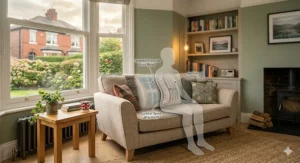
The relationship between your sofa and back pain is more complex than you might think. Your spine naturally forms an ‘S’ shape when viewed from the side—a gentle curve in your neck, a slight arch in your upper back, and another curve in your lower back (the lumbar region). When you sit on a sofa that’s too soft, too deep, or lacks proper support, these natural curves collapse, forcing your muscles to work overtime to maintain your posture.
According to the NHS, back pain is one of the most common reasons people seek medical advice in the UK, with most cases stemming from mechanical issues rather than serious medical conditions. Prolonged sitting in unsupportive furniture is a significant contributing factor. When you sink into a too-soft sofa, your pelvis tilts backward, flattening your lumbar curve and placing excessive strain on the ligaments and discs in your lower back.
Conversely, sitting too upright on a rock-hard surface isn’t the solution either. The key is finding that “Goldilocks zone”—firm enough to maintain your natural spinal alignment, yet comfortable enough that you’re not constantly shifting position. This is where medium-firm cushioning with targeted lumbar support becomes essential.
The Science Behind Proper Seating
Your intervertebral discs—the cushiony pads between your vertebrae—rely on movement and proper positioning to stay healthy. When you sit with poor posture, these discs experience uneven pressure, which can lead to bulging, herniation, or degeneration over time. Furthermore, your back muscles fatigue when forced to hold unnatural positions, leading to muscle spasms and chronic pain.
Research published in medical journals suggests that maintaining a lumbar lordosis (the inward curve of your lower back) whilst sitting significantly reduces disc pressure compared to slouched postures. This is precisely why lumbar support cushions are so effective—they physically maintain this curve when your sofa’s design falls short.
How to Choose the Perfect Sofa for Back Pain
Selecting furniture that supports your back involves considering several crucial factors. Here’s a comprehensive guide to making an informed decision:
1. Seat Depth Matters More Than You Think
Measure from the back of your knee to your lower back whilst sitting. Ideally, your sofa’s seat depth should allow you to sit all the way back against the backrest with a small gap (about 5-8cm) behind your knees. If the seat’s too deep, you’ll either perch on the edge (losing back support) or slouch forward (collapsing your lumbar curve). This is where a lumbar cushion becomes invaluable—it effectively shortens the seat depth.
2. Firmness: Finding Your Sweet Spot
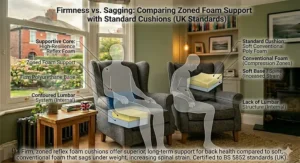
Test sofas by sitting down and then standing up. If you struggle to rise without using your hands, the cushioning is likely too soft. You should feel supported but not feel like you’re sitting on a park bench. Medium-firm cushioning made from high-resilience foam or pocket springs typically offers the best balance.
For existing sofas, adding a lumbar support cushion can transform an overly soft seat into a back-friendly seating option. The cushions reviewed in this guide range from firm and structured (like the YUGEVRA) to softer and more mouldable (like the TANYOO), allowing you to customise support to your preference.
3. Back Height and Angle
Your sofa’s backrest should support at least your mid-back, ideally extending to your shoulder blades. The angle of the backrest matters too—slightly reclined (about 100-110 degrees) reduces pressure on your lower back compared to perfectly vertical seating. High-back sofas provide better support for your neck and shoulders, preventing the forward head posture that contributes to upper back pain.
4. Seat Height: The 90-Degree Rule
When seated, your knees should form approximately a 90-degree angle, with your feet flat on the floor. If your knees are significantly higher than your hips, you’ll tend to slouch. If they’re much lower, you’ll experience increased pressure on your lower back. For the average person, a seat height of 43-48cm works well, though shorter or taller individuals may need adjustments.
5. Material Considerations
Leather and faux leather can be slippery, causing cushions to migrate. If you’re adding a lumbar support cushion to a leather sofa, look for models with adjustable straps (like the CILI) or grippy backing materials. Fabric sofas generally hold cushions in place better but may show wear patterns more quickly.
Common Mistakes When Shopping for Sofas
Even well-intentioned buyers often make these errors:
Prioritising Aesthetics Over Ergonomics: That stunning minimalist sofa with ultra-low seating might look Instagram-perfect, but if you can’t get out of it without groaning, it’s not serving you. Remember, you’ll spend hundreds of hours on this furniture—make comfort and support your top priorities.
Testing Sofas for Too Short a Time: Sitting on a showroom floor sofa for 30 seconds tells you almost nothing. If possible, spend at least 10-15 minutes sitting in various positions. Better yet, bring your lumbar support cushion along to test compatibility.
Ignoring Your Body Type: A sofa that’s perfect for a 1.6-metre person might be terrible for someone who’s 1.9 metres tall. Consider your height, weight distribution, and any existing mobility issues when making your selection.
Forgetting About Daily Activities: Will you be working from this sofa? Watching telly for hours? Consider how you’ll actually use the furniture. If you’re a hybrid worker who splits time between desk and sofa, a firmer, more supportive option serves you better than something purely designed for passive lounging.
Enhancing Your Existing Sofa for Better Back Support
Not ready to replace your current sofa? Here are proven strategies to improve its back-friendliness:
Layer Your Support
Combine a lumbar support cushion with a firm seat cushion if your sofa’s sitting surface has become saggy. This two-pronged approach addresses both lumbar curve maintenance and overall posture support. The YUGEVRA cushion works particularly well in this layered approach.
Adjust Your Sitting Position
According to Cambridge University Hospitals NHS Foundation Trust, you should sit all the way back against your backrest rather than perching on the edge. Pull your sofa closer to the coffee table to avoid leaning forward, which strains your back. Use a footstool if your feet don’t reach the floor comfortably.
Take Regular Movement Breaks
No sofa, regardless of how ergonomic, should be sat on continuously for more than 30-40 minutes. Set a timer to remind yourself to stand, stretch, and walk around. This isn’t just good for your back—it’s crucial for circulation, flexibility, and overall health. Your spine loves movement; static positions, even well-supported ones, aren’t ideal for extended periods.
Consider Heated Options for Muscle Relief
If muscle tension contributes to your back pain, heated lumbar cushions like the CILI or Cozyhealth models can provide significant relief. The gentle heat increases blood flow, reduces muscle stiffness, and enhances the effectiveness of the physical support.

The Role of Exercise and Posture
Whilst the right sofa and lumbar support are crucial, they’re only part of the solution. Core strengthening exercises, regular stretching, and conscious posture awareness all play vital roles in managing and preventing back pain.
Complementary Strategies
Strengthen Your Core: Your abdominal and back muscles work together to support your spine. Simple exercises like planks, bird-dogs, and pelvic tilts can dramatically reduce back pain over time. Start gently—even 5-10 minutes daily makes a difference.
Stretch Regularly: Tight hamstrings and hip flexors contribute significantly to lower back pain. Regular stretching of these muscle groups can alleviate pressure on your lumbar spine. Cat-cow stretches, knee-to-chest pulls, and gentle spinal twists are excellent options.
Practice Mindful Sitting: Even with perfect support, poor sitting habits undermine your efforts. Check in with your posture regularly—are you slouching? Is your head jutting forward? Are you crossing your legs (which throws off your pelvic alignment)? Gentle corrections throughout the day train better habits.
Stay Active: Walking, swimming, and yoga keep your back muscles strong and flexible. The NHS recommends staying active as one of the most effective ways to manage back pain. Activities that promote movement and flexibility are particularly beneficial.
When to Seek Professional Help
Whilst the right sofa and support cushions can significantly alleviate back pain, certain symptoms warrant medical attention. Consult your GP if you experience:
- Pain that persists beyond a few weeks despite rest and home treatment
- Pain that radiates down your legs, especially below the knee
- Numbness, tingling, or weakness in your legs
- Difficulty controlling your bladder or bowels
- Unexplained weight loss accompanying back pain
- Back pain following a fall or injury
- Pain that worsens at night or disturbs your sleep
According to NHS guidelines, most back pain resolves with conservative treatment, but professional assessment ensures you’re not missing underlying issues requiring specific intervention. Physiotherapists can also provide personalised exercises and advice tailored to your specific condition.
Material Durability and Maintenance
When investing in lumbar support cushions, understanding care requirements helps maximise their lifespan:
Memory Foam Care: Never machine-wash memory foam itself—it will disintegrate. Most quality cushions (like the YUGEVRA and Everlasting Comfort) feature removable, washable covers. Wash covers on a gentle cycle with mild detergent and air-dry to prevent shrinkage.
Natural Fibre Cushions: Cotton cushions like the HOMESCAPES typically require professional cleaning or careful spot-cleaning. The natural materials breathe beautifully but are more susceptible to staining than synthetic alternatives.
Heated Cushions: Always unplug heated cushions before cleaning. Check manufacturer guidelines carefully—some allow cover washing whilst others prohibit water contact entirely. The CILI and Cozyhealth models feature removable covers that can be washed, but the heating elements must never get wet.
Longevity Tips:
- Rotate and flip cushions weekly to prevent uneven compression
- Air them out regularly to prevent odour buildup
- Keep them away from direct sunlight, which degrades foam materials
- Store unused cushions in cool, dry locations
Budget Considerations and Value Assessment
Back support doesn’t have to break the bank. Here’s how to evaluate true value:
Budget-Friendly Options (Under £25)
The YUGEVRA cushion at £16.99-£21.99 offers exceptional value. For less than the cost of a single physiotherapy session, you get memory foam support that lasts months or years with proper care. Similarly priced options like the Diana Cowpe cushion provide British manufacturing quality without premium pricing.
Mid-Range Investments (£25-£35)
This sweet spot offers enhanced features like breathability, dual-layer construction, or UK manufacturing. The HOMESCAPES and TANYOO cushions in this range provide noticeably superior comfort and durability compared to budget options.
Premium Solutions (£35+)
Heated, multi-functional cushions like the CILI justify their higher price through therapeutic benefits. If muscle tension significantly contributes to your pain, the combined support, heat, and massage functions offer better value than purchasing separate products.
Cost Per Use Calculation
Consider how often you’ll use the cushion. If you work from home and spend six hours daily on your sofa, even a £40 cushion costs mere pennies per use over its lifespan. Compare this to ongoing pain medication costs or lost productivity from back discomfort, and quality support becomes remarkably affordable.
Real User Experiences and Testimonials
Beyond specifications and features, real-world experiences paint the most accurate picture:
Chronic Pain Sufferers: Multiple reviewers with conditions like fibromyalgia, sciatica, and disc herniation report significant improvements. One YUGEVRA user with chronic sciatica noted it made driving “bearable” again, whilst a Cozyhealth customer with three slipped discs called it the “best” among multiple products tried.
Office Workers: Remote workers particularly value the versatility of cushions that transition between desk chairs and sofa lounging. The Everlasting Comfort model receives consistent praise from those spending 8+ hours daily seated.
Elderly Users: The TANYOO recliner cushion earns high marks from older adults and their families. Its softer feel combined with adequate support suits those with reduced mobility who struggle with firmer options.
Post-Surgery Recovery: Several reviewers mention using these cushions during recovery from back procedures. The adjustable positioning and varying firmness levels accommodate changing needs during the healing process.
Environmental and Sustainability Considerations
For eco-conscious consumers, several options prioritise sustainability:
OEKO-TEX Certification: Many cushions, including the Everlasting Comfort and several others reviewed, carry OEKO-TEX certification. This guarantees testing for over 1,000 harmful chemicals, ensuring safer materials for both human health and the environment.
UK Manufacturing: The Diana Cowpe and HOMESCAPES cushions support British manufacturing, reducing transportation emissions whilst supporting local employment.
Natural Materials: Cotton-based options like HOMESCAPES offer biodegradability advantages over purely synthetic products, though they may have shorter lifespans.
Longevity Equals Sustainability: Ultimately, the most sustainable choice is one you’ll use for years. A durable memory foam cushion that lasts five years has less environmental impact than three cheaper alternatives that wear out quickly.
Frequently Asked Questions
❓ Can a lumbar support cushion really help with chronic back pain?
❓ How long should I use a lumbar support cushion each day?
❓ Which type of cushion is better: memory foam or traditional filling?
❓ Are heated lumbar cushions safe to use daily?
❓ Can I use a lumbar support cushion if I have a herniated disc?
Conclusion: Your Path to Better Back Health
Finding the right sofa for back pain doesn’t necessarily mean purchasing new furniture. As we’ve explored, strategic additions like lumbar support cushions can transform even the softest sofa into a back-friendly haven. The seven products reviewed here—ranging from the budget-conscious YUGEVRA Lumbar Support Pillow at £16.99 to the therapeutic CILI Heated Cushion at £30-£45—offer solutions for every need, preference, and budget.
Remember, managing back pain is a holistic endeavour. Your sofa and lumbar support form just one pillar of a comprehensive approach that should also include regular movement, strengthening exercises, and professional guidance when needed. The investment you make today in proper support pays dividends in reduced pain, improved quality of life, and the freedom to enjoy your home without discomfort.
Take action today—your back will thank you tomorrow. Whether you’re working from your sofa, relaxing with family, or recovering from injury, the right support makes all the difference. Start with one of our recommended cushions, implement the postural strategies we’ve discussed, and commit to regular movement breaks. Small changes compound into significant improvements.
Your journey to a pain-free life begins with a single decision. Make it count.
Recommended for You
- 7 Best Pet Friendly Sofa Options UK 2026
- 7 Best Sofa for Small Living Room UK 2026
- Real Leather vs Faux Leather Sofa: 7 Facts UK Buyers Must Know in 2026
Disclaimer: This article contains affiliate links. If you purchase products through these links, we may earn a small commission at no additional cost to you. Prices shown are approximate and may vary. Always consult healthcare professionals for personalised medical advice regarding back pain.
✨ Found this helpful? Share it with your mates! 💬🤗
