
In This Article
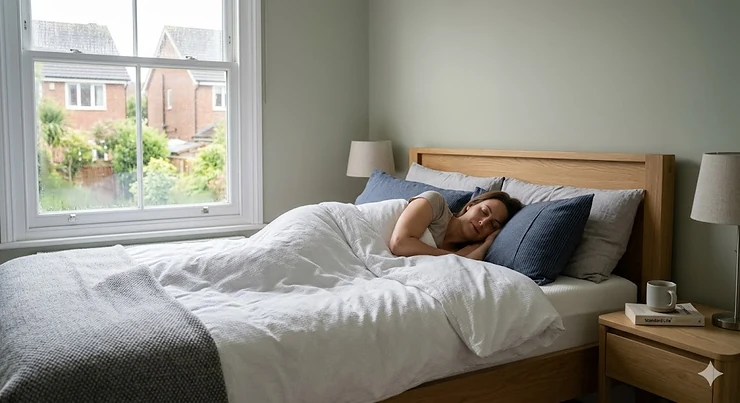
Waking up with a stiff back isn’t just annoying—it’s your body telling you that your mattress has stopped doing its job. According to NHS data, back pain affects roughly 30% of the UK population at any given moment, and for many sufferers, the culprit is hiding right beneath their bedsheets. The wrong mattress can turn eight hours of rest into eight hours of slow torture, leaving your spine twisted, your pressure points screaming, and your morning routine starting with a grimace rather than a stretch.
Here’s what most people don’t realise: memory foam mattresses aren’t all created equal. The cheap memory foam you grabbed from a discount warehouse three years ago bears little resemblance to the sophisticated, multi-layered orthopaedic systems available today. Modern memory foam mattresses for back pain combine targeted pressure relief with proper spinal support—and when matched correctly to your sleep position and body type, they can genuinely transform how you feel when the alarm goes off.
In this guide, I’ve researched and analysed seven of the best memory foam mattresses for back pain currently available on Amazon.co.uk, paying special attention to what actually matters for British buyers: UK delivery times, realistic price ranges in pounds, genuine customer feedback from UK reviewers, and how these mattresses perform in our famously damp climate. Whether you’re a side sleeper with hip pain, a back sleeper seeking lumbar support, or someone who’s simply fed up with waking up feeling worse than when you went to bed, you’ll find a mattress here that addresses your specific needs without requiring you to remortgage your house.
Quick Comparison Table
| Mattress | Best For | Firmness | Depth | Price Range |
|---|---|---|---|---|
| Simba Hybrid Pro | Medium-firm support with cooling | Medium-firm | 28cm | £700-£900 |
| Emma NextGen Premium | All-round pressure relief | Medium | 25cm | £500-£800 |
| CozyLiving Hybrid | Budget orthopaedic support | Medium-firm | 22cm | £200-£350 |
| Luxe Living Blue Dual-Layer | Customisable firmness levels | Medium-firm | 25cm | £250-£450 |
| Dormeo Octasmart | Octaspring technology cooling | Medium | 22cm | £400-£600 |
| Silentnight Memory Cool | Hot sleepers with back pain | Medium | 20cm | £300-£500 |
| Vesgantti Hybrid | Heavy sleepers needing support | Firm | 30cm | £350-£550 |
The table above reveals a clear pattern: hybrid construction dominates the back pain mattress market in 2026. Pure memory foam mattresses have largely fallen out of favour among physiotherapists and sleep specialists because they lack the responsive support that springs provide. The Simba Hybrid Pro leads on premium features and cooling technology, whilst the CozyLiving Hybrid offers remarkable value for budget-conscious buyers who still need proper orthopaedic support. What’s particularly interesting is the depth variation—those suffering from severe back pain generally fare better with mattresses over 25cm deep, as the extra layers allow for both pressure relief at the surface and firm support deeper down.
💬 Just one click — help others make better buying decisions too! 😊
✨ Don’t Miss These Exclusive Deals!
🔍 Take your sleep quality to the next level with these carefully selected products. Click on any highlighted item to check current pricing and availability on Amazon.co.uk. These picks will help you find exactly what you need!
Top 7 Memory Foam Mattresses for Back Pain: Expert Analysis
1. Simba Hybrid Pro – Premium Multi-Layer Support with Award-Winning Technology
The Simba Hybrid Pro represents the cutting edge of British mattress engineering, combining up to 4,800 Aerocoil microsprings with graphite-infused Simbatex foam to create a sleep surface that genuinely addresses the root causes of back pain. What sets this apart from cheaper alternatives is the dual-layer spring system—one layer sits at the top for responsive pressure relief, whilst a second SupportCore layer maintains structural integrity deeper in the mattress. This isn’t marketing nonsense; it’s engineering that translates into tangible relief for chronic back pain sufferers.
The 28cm depth allows for substantial layering without feeling overly plush. The titanium alloy Aerocoil springs compress independently, which means your shoulder can sink whilst your lumbar region receives firm support—exactly what side sleepers with back pain desperately need. The Simbatex foam layer delivers over five times more airflow than standard memory foam, according to independent laboratory testing, which addresses the classic British concern: will I overheat during those unexpectedly warm summer nights when you can’t quite bring yourself to open the window because of the midges?
UK customers consistently praise the Simba Hybrid Pro for eliminating morning stiffness, though the break-in period is real—expect two to three weeks before the mattress fully softens to its optimal feel. The washable cover is genuinely useful for British households (tea spills, muddy paw prints, the occasional mysterious stain), and the 200-night trial period means you can test it through multiple seasons before committing. Worth noting: this is a heavy beast, so rotating it every three months as recommended will require a second pair of hands.
Pros:
✅ Dual Aerocoil layers provide targeted spinal support
✅ Graphite-infused foam stays remarkably cool
✅ 200-night trial and 10-year guarantee
Cons:
❌ Heavy weight makes rotation challenging
❌ Premium pricing may stretch smaller budgets
Price range: Around £700-£900 depending on size
Best for: Side and combination sleepers who need both pressure relief and firm support, particularly those who overheat on traditional memory foam
2. Emma NextGen Premium – Seven-Zone Halo Memory Foam for Adaptive Spinal Alignment
The Emma NextGen Premium takes a different approach to back pain relief: instead of relying purely on spring count, it uses a seven-zone support system that adapts to your body’s pressure map. The Halo Memory Foam top layer is designed to cradle pressure points whilst the zoned support beneath provides firmer pushback exactly where your lumbar region needs it. In practical terms, this means your hips and shoulders get the cushioning they require without your lower back sagging into a pain-inducing arch.
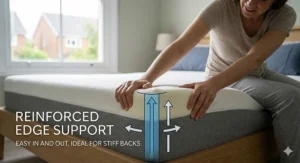
The E2E (edge-to-edge) technology is particularly clever for couples who’ve experienced the dreaded “roll together” phenomenon with cheaper mattresses. The support extends right to the perimeter, which not only prevents that midnight tumble feeling but also maximises the usable sleep surface—rather important in British homes where a super king often means rearranging the entire bedroom. The hybrid construction includes pocket springs that provide enough bounce for easy position changes, which matters more than you’d think when back pain makes rolling over feel like a tactical operation.
What Emma has done well here is balance the contouring properties of memory foam with enough responsiveness to prevent that “stuck in quicksand” sensation. UK reviewers note that the mattress performs particularly well during the break-in period, reaching optimal comfort within the first fortnight rather than requiring months of adjustment. The medium feel suits average-weight sleepers across all positions, though heavier individuals (over 15 stone) might find it slightly too soft for optimal lumbar support.
Pros:
✅ Seven-zone system targets different body regions
✅ Edge support prevents roll-together and maximises space
✅ Relatively quick break-in period
Cons:
❌ May be too soft for heavier sleepers
❌ Some UK customers report durability concerns after two years
Price range: Around £500-£800 depending on size
Best for: Average-weight back and side sleepers who want targeted pressure relief without excessive sinkage
3. CozyLiving Hybrid – Budget-Friendly Orthopaedic Support That Actually Works
If you’re sceptical that a mattress in the £200-£350 range can genuinely help with back pain, the CozyLiving Hybrid exists specifically to prove you wrong. This double 4ft6 mattress combines gel memory foam with individually wrapped pocket springs to deliver orthopaedic-grade support at a price point that won’t require financing. The multi-zone support system provides targeted relief to your head, neck, shoulders, back, waist, hips, and legs—which sounds like marketing fluff until you actually lie on it and realise your spine is, in fact, properly aligned.
The wave-shaped memory foam layer is designed to contour gently without the aggressive “sink” of denser foams, whilst the 3D mesh fabric promotes airflow to combat heat retention. In British homes where central heating battles with draughty windows, this breathability matters—you won’t wake up sweating at 3am despite the radiator being on full blast. The gel infusion helps regulate temperature further, though it’s worth managing expectations; this isn’t a cooling mattress in the same league as the Simba, but it’s substantially better than pure memory foam.
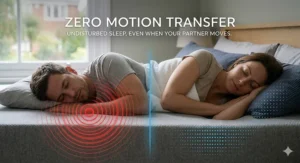
What the CozyLiving Hybrid does exceptionally well is deliver proper spinal support for lighter to average-weight sleepers without the premium price tag. UK customer feedback highlights excellent motion isolation—crucial if your partner’s restless nights have been disturbing your own fragile sleep. The OEKO-TEX certification confirms the materials meet strict safety standards for harmful chemicals, and the mattress arrives vacuum-packed for easy maneuvering up British staircases that were clearly designed before furniture was invented.
Pros:
✅ Remarkable value for orthopaedic-grade support
✅ Excellent motion isolation for couples
✅ OEKO-TEX certified for safety
Cons:
❌ May compress faster than premium alternatives
❌ Limited depth (22cm) might not suit heavier individuals
Price range: Around £200-£350 depending on size
Best for: Budget-conscious buyers and lighter-weight sleepers seeking genuine orthopaedic support without premium pricing
4. Luxe Living Blue Dual-Layer Orthopaedic – Clinical-Grade Firmness with Memory Foam Comfort
The Luxe Living Blue Dual-Layer Orthopaedic mattress takes a refreshingly honest approach: it acknowledges that some back pain sufferers genuinely need a firm foundation, then adds a memory foam top layer to prevent the “sleeping on plywood” sensation that ruins many orthopaedic mattresses. The distinctive blue orthopaedic foam base provides unwavering spinal support—this is the layer doing the therapeutic heavy lifting—whilst the memory foam comfort layer prevents pressure points from developing at your hips and shoulders.
What makes this particularly clever for UK buyers is the customisable thickness options. You can choose configurations ranging from 5 inches (4-inch firm base plus 1-inch memory foam) up to 10 inches total depth, allowing you to dial in exactly how much cushioning you want atop that firm foundation. If you’re recovering from a herniated disc or dealing with chronic lower back pain that worsens on softer mattresses, this adjustability is genuinely valuable rather than a marketing gimmick.
The high-density orthopaedic foam maintains proper spinal alignment throughout the night, which addresses the core issue with many memory foam mattresses: they feel lovely for twenty minutes, then your lumbar region sags into an unsupported arch that leaves you stiff and miserable by morning. The Luxe Living prevents this by refusing to let your spine curve excessively, whilst the memory foam layer ensures you’re not just lying on a rigid surface. UK reviewers consistently mention relief from morning stiffness, particularly back sleepers and those with degenerative disc issues.
Pros:
✅ Customisable thickness suits varying support needs
✅ Clinical-grade firm base for therapeutic support
✅ Excellent for chronic lower back pain
Cons:
❌ Firmness may feel too rigid for side sleepers
❌ Memory foam layer is relatively thin
Price range: Around £250-£450 depending on size and configuration
Best for: Back sleepers with chronic lower back pain, those recovering from spinal injuries, anyone who needs firm support but wants to avoid the plywood feel
5. Dormeo Octasmart – Innovative Octaspring Technology for Breathable Pressure Relief
The Dormeo Octasmart introduces a genuinely different approach to memory foam mattresses through its Octaspring technology—individual foam springs arranged in zones to provide targeted support whilst maintaining exceptional breathability. Think of it as pocket springs made from foam rather than metal, which delivers the responsive support of a spring mattress with the pressure-relieving properties of memory foam. For UK buyers who’ve struggled with the heat retention of traditional memory foam, this hybrid approach offers a compelling middle ground.
The 22cm depth houses multiple layers: a base support layer, the zoned Octaspring system, and a top Aerocell foam layer that combines cushioning with airflow. The result is a mattress that adapts to your body’s contours without trapping heat against your skin—rather important during those British summer heatwaves when you’re convinced the weather is personally conspiring against your sleep. The zoned construction provides firmer support through your core whilst allowing shoulders and hips to sink appropriately, maintaining neutral spinal alignment across sleeping positions.
What sets the Dormeo Octasmart apart is the memory foam’s responsiveness; it contours to your body but springs back when you shift position, rather than leaving an impression that takes minutes to reform. This matters for back pain sufferers who need to change positions during the night—you’re not fighting against the mattress every time you roll over. UK customer feedback particularly praises the mattress for maintaining its support characteristics over time, with minimal sagging reported even after two years of use. The OEKO-TEX certification ensures the materials meet stringent European safety standards for harmful chemicals.
Pros:
✅ Octaspring technology combines support with breathability
✅ Responsive foam allows easy position changes
✅ Maintains support characteristics over extended use
Cons:
❌ Medium feel may be too soft for heavier individuals
❌ Octaspring tech adds to cost compared to standard foam
Price range: Around £400-£600 depending on size
Best for: Combination sleepers who change positions frequently, hot sleepers seeking memory foam comfort without heat retention, those wanting innovative technology
6. Silentnight Memory Cool – Gel-Infused Layers for Hot Sleepers with Back Pain
If you’ve dismissed memory foam mattresses because you overheat at night, the Silentnight Memory Cool range deserves your attention. Silentnight has addressed the classic memory foam complaint—heat retention—by incorporating gel-infused layers that actively wick warmth away from your body. The gel particles respond to temperature fluctuations, absorbing excess heat during those sweaty midnight moments and releasing it as you cool down, creating a more stable thermal environment throughout the night.
The mattress construction layers memory foam atop Miratex support foam, with the gel infusion throughout the memory layer rather than just at the surface. This means temperature regulation isn’t just a thin veneer; it’s baked into the comfort system. For British buyers dealing with unpredictable weather—duvet off at midnight, duvet back on at 3am—this consistent temperature management prevents the constant adjustments that fragment sleep and aggravate back pain through disrupted rest.
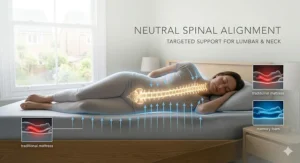
The medium firmness suits most sleeping positions, though the Silentnight Memory Cool particularly excels for side sleepers who need pressure relief at shoulders and hips without excessive sinkage. The memory foam contours to your body’s shape, distributing weight evenly to prevent pressure point buildup, whilst the support layer maintains spinal alignment. UK customers note that the mattress arrives compressed and fully expands within 24-48 hours—substantially quicker than some competitors that take three days to reach full loft. The Silentnight brand recognition offers reassurance for those wary of unfamiliar manufacturers.
Pros:
✅ Gel infusion throughout prevents overheating
✅ Quick expansion after unboxing
✅ Trusted UK brand with established customer service
Cons:
❌ Medium feel may lack support for heavier individuals
❌ Memory foam still retains some heat despite gel technology
Price range: Around £300-£500 depending on size
Best for: Hot sleepers who want memory foam comfort, side sleepers needing pressure relief, those seeking established brand reliability
7. Vesgantti Hybrid – Heavy-Duty Construction for Plus-Size and Heavier Sleepers
The Vesgantti Hybrid addresses a frequently overlooked segment: heavier individuals who need substantially more support than standard mattresses provide. With 30cm total depth and a firm construction featuring high-density foam layers combined with robust pocket springs, this mattress is engineered to support body weights that cause lesser mattresses to bottom out. If you’re over 15 stone and tired of mattresses that feel supportive for a month before developing permanent impressions, the Vesgantti is built specifically for your needs.
The seven-zone pocket spring system provides targeted support across different body regions, with firmer springs through the core to prevent lumbar sag and softer springs at shoulders and feet. The memory foam comfort layer is denser than typical budget options, which means it contours to pressure points without compressing excessively under higher body weight. This combination prevents the two classic heavy-sleeper complaints: either the mattress is too soft and you sink through to the springs, or it’s too firm and you wake with pressure-point pain at hips and shoulders.
The breathable construction combines cool-touch fabric with an open-cell foam structure that promotes airflow, addressing the heat retention that particularly affects heavier sleepers who naturally generate more body heat. UK customer feedback from plus-size users consistently mentions improved sleep quality and reduced morning back pain, with particular praise for the edge support that prevents the “roll-off” sensation common with cheaper mattresses. The Vesgantti Hybrid arrives vacuum-packed despite its substantial depth, though you’ll want help wrestling it into position once it expands.
Pros:
✅ Engineered specifically for heavier body weights
✅ 30cm depth provides substantial support layers
✅ Excellent edge support maximises usable surface
Cons:
❌ Firm feel may be too rigid for lighter individuals
❌ Substantial weight makes rotation challenging
Price range: Around £350-£550 depending on size
Best for: Heavier individuals (over 15 stone), those who’ve experienced premature mattress sagging, sleepers needing robust edge support
How Your Sleeping Position Affects Back Pain (And Which Mattress Helps)
Your preferred sleeping position dramatically influences which type of memory foam mattress will actually help your back pain rather than aggravate it. Side sleepers create pressure points at hips and shoulders that require cushioning, but if the mattress is too soft, your waist sags and your spine curves into a painful arc. Back sleepers need firmer support through the lumbar region to prevent the lower back from arching excessively, whilst stomach sleepers—arguably the most challenging position for back pain—require substantial support to prevent the hips from sinking and hyperextending the spine.
The Simba Hybrid Pro and Emma NextGen Premium excel for side sleepers because their zoned construction provides softer cushioning at pressure points whilst maintaining firm support through the core. If you’re a dedicated back sleeper, the Luxe Living Blue Dual-Layer or Vesgantti Hybrid offers the firmer foundation your lumbar region demands, with just enough surface cushioning to prevent pressure buildup. Stomach sleepers face the trickiest challenge; most memory foam mattresses are simply too soft for this position. The Vesgantti’s firm construction or the Luxe Living with minimal memory foam topping are your best options if you absolutely cannot break the stomach-sleeping habit.
Combination sleepers who shift positions throughout the night need mattresses that don’t fight against movement. Pure memory foam creates that “stuck in quicksand” sensation when you try to roll over, which is why hybrid constructions dominate this guide. The Dormeo Octasmart’s responsive foam springs and the CozyLiving’s pocket spring system allow position changes without the prolonged struggle that fragments sleep. If you wake frequently to readjust because your mattress resists movement, that disrupted sleep architecture can worsen pain perception even if the mattress provides decent static support.
The Memory Foam vs Hybrid Debate: Why Pure Memory Foam Fell Out of Favour
Ten years ago, pure memory foam mattresses were hailed as the solution to back pain, with their body-contouring properties and pressure relief seemingly perfect for aching joints and stiff spines. Then reality intervened: people discovered that contouring without adequate support simply created a different type of pain. Your shoulders and hips felt lovely whilst your unsupported lumbar region sagged into an arch, leaving you waking with lower back stiffness that sometimes exceeded the discomfort your old spring mattress caused.
The hybrid revolution addressed this by combining memory foam’s pressure relief with the responsive support of pocket springs. The springs prevent excessive sinkage whilst the foam cushions pressure points—you get the best of both technologies without the drawbacks of either in isolation. This is why every mattress in this guide incorporates some form of spring system; pure memory foam simply doesn’t provide adequate support for the majority of back pain sufferers. The NHS guidance on back pain emphasises maintaining neutral spinal alignment during sleep, and research published in The Lancet found that medium-firm mattresses outperformed firm mattresses for chronic lower back pain—a sweet spot that hybrid construction achieves more reliably than pure foam.
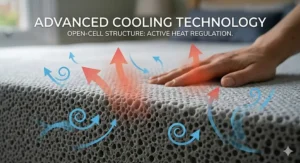
Heat retention remains memory foam’s Achilles heel, particularly problematic in British homes where we’re constantly adjusting between too-hot radiators and draughty windows. Gel infusions, graphite particles, and open-cell structures all attempt to mitigate this, with varying degrees of success. The Simba’s Simbatex foam genuinely does sleep cooler than traditional memory foam, whilst the Silentnight Memory Cool’s gel infusion provides noticeable temperature regulation. But if you run exceptionally hot at night, even these advanced foams will feel warmer than a traditional pocket sprung mattress—something worth considering if you’re already prone to night sweats.
Understanding Firmness: Why “Orthopaedic” Doesn’t Always Mean “Hard as a Rock”
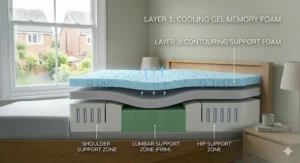
The term “orthopaedic mattress” conjures images of hospital-style firmness that feels more like punishment than therapy, but modern orthopaedic design has evolved substantially. True orthopaedic support means maintaining proper spinal alignment and distributing body weight evenly—objectives that don’t necessarily require a mattress firm enough to double as a skateboarding ramp. In fact, excessively firm mattresses can worsen back pain by creating pressure points at your hips and shoulders, forcing your muscles to work throughout the night to relieve discomfort.
The medium-firm sweet spot—typically rated 5-7 on a 10-point firmness scale—provides enough support to prevent spinal sagging whilst offering sufficient give at pressure points. This is where most of the mattresses in this guide land, and it’s the range consistently recommended by physiotherapists for non-specific back pain. The British Chiropractic Association emphasises that proper spinal alignment during sleep is crucial for managing back pain, and medium-firm mattresses achieve this balance more effectively than extremely firm alternatives. The Luxe Living Blue Dual-Layer sits at the firmer end of this spectrum, genuinely approaching “orthopaedic firm” territory, whilst the Emma NextGen Premium and Dormeo Octasmart occupy the medium range that suits the widest variety of sleepers.
Your body weight dramatically affects how firm a mattress feels. A lighter individual (under 10 stone) will experience less sinkage and may find a medium mattress feels quite firm, whilst a heavier person (over 15 stone) will compress the same mattress more deeply and perceive it as softer. This is why weight-specific recommendations matter: the Vesgantti Hybrid’s firm construction suits heavier sleepers who would bottom out on softer alternatives, whilst the CozyLiving’s medium-firm feel works brilliantly for average-weight individuals but might feel too yielding for someone substantially heavier. If you’re shopping as a couple with significantly different body weights, the Simba Hybrid Pro’s advanced zoning provides the best compromise, adapting to each person’s pressure map independently.
UK-Specific Considerations: Delivery, Returns, and the 200-Night Trial Reality
Shopping for mattresses on Amazon.co.uk offers advantages that high-street retailers can’t match—primarily the ability to test a mattress in your own home for extended periods rather than awkwardly lying on display models in a busy shop whilst trying to imagine how eight hours of sleep would actually feel. Most premium mattresses now include 100-200 night trial periods, though the fine print deserves careful reading. Amazon’s return policy for mattresses can vary by seller, so verify whether you’re buying directly from the brand or through a third-party marketplace seller, as this affects your return rights.
The vacuum-packed delivery system has revolutionised mattress logistics, making it possible to get a king-size mattress up a narrow British staircase that your old spring mattress required three burly delivery drivers and a prayer to navigate. However, expansion times vary: some mattresses reach full loft within six hours, whilst others require 48-72 hours. Don’t panic if your new mattress looks alarmingly flat initially; give it the recommended time before assessing whether it’s defective. The chemical smell—that “new mattress” odour from adhesives and foam—dissipates faster if you can air the room, though British weather doesn’t always cooperate with the “open all windows” instruction.
Free delivery thresholds on Amazon.co.uk typically require £25+ orders, though mattresses generally qualify regardless due to their value. Prime members get next-day delivery on eligible items, which matters if you’re desperate to replace a mattress that’s causing significant pain. However, verify delivery exclusions—some mattresses don’t ship to Scottish Highlands, Northern Ireland, or offshore locations, a frustrating discovery if you live in these areas. Delivery to flat buildings may require you to carry the boxed mattress up yourself, so check whether ground-floor delivery is the limit and plan accordingly if you’re physically unable to maneuver a 30kg box up three flights of stairs.
Common Mistakes When Buying Memory Foam Mattresses for Back Pain
The single biggest mistake? Choosing firmness based on what you think you should want rather than what your body actually needs. Many back pain sufferers convince themselves they need an extremely firm mattress, then discover that sleeping on what feels like compressed cardboard creates new pressure-point pain that rivals their original discomfort. According to research from the Sleep Foundation, medium-firm consistently outperforms firm for chronic lower back pain. Unless you have a specific medical condition requiring firm support, resisting the temptation to go overly firm will likely serve you better.
Ignoring the break-in period causes countless premature returns. Memory foam mattresses—even hybrids—require two to four weeks for the materials to soften and adapt to your body’s pressure map. The Emma NextGen Premium feels noticeably different after a fortnight compared to the first night, whilst the Simba Hybrid Pro needs three weeks to reach optimal softness. If you try a new mattress for three nights, decide it’s terrible, and immediately initiate a return, you’re judging it before it’s properly broken in. Yes, some mattresses genuinely won’t suit you, but give them a fair trial period before making that determination.
Overlooking your partner’s needs creates nighttime conflicts that no mattress can fully resolve. If you’re 11 stone and your partner is 16 stone, you’ll experience the same mattress entirely differently—what provides perfect support for you might feel too soft for them, or vice versa. The Simba Hybrid Pro’s zoned construction handles this discrepancy better than most, but physics has limits. Consider whether you genuinely need a mattress that suits both people equally, or whether separate mattresses pushed together (the Scandinavian approach) might serve you both better despite feeling less romantic.
Finally, dismissing budget options purely due to price prejudice means missing genuinely good mattresses like the CozyLiving Hybrid. Not every back pain sufferer needs an £800 mattress; sometimes a well-constructed £250 option delivers exactly the support required. Conversely, assuming expensive automatically means better is equally flawed—price reflects brand positioning and materials costs, not a linear correlation with back pain relief effectiveness. The Luxe Living at £300 might work better for your specific needs than the Simba at £800, depending on your body weight, sleep position, and pain patterns.
Maintaining Your Memory Foam Mattress in British Conditions
British weather creates specific maintenance challenges for memory foam mattresses, primarily our persistent dampness that encourages mould growth if you’re not vigilant. Mattress protectors aren’t optional—they’re essential defence against the moisture we don’t even realise we’re introducing (that cup of tea balanced on the mattress whilst reading, the slightly damp towel from your hair after a shower, the cat who tracked in rain). According to Which? mattress advice, choose waterproof but breathable protectors that prevent liquid penetration whilst allowing water vapour to escape; fully waterproof vinyl-backed protectors trap moisture and create mould-friendly environments.
Rotation schedules matter more in damp climates. Most manufacturers recommend rotating head-to-foot every three months, but in practice, many UK households benefit from monthly rotation during autumn and winter when condensation and indoor moisture levels peak. This prevents permanent body impressions from forming and distributes wear more evenly. One-sided mattresses (most modern memory foam designs) can only be rotated, not flipped, so verify your specific model’s recommendations. The Simba’s substantial weight makes this a two-person job, whilst the lighter CozyLiving manages solo if you’re reasonably fit.
Airing your mattress combats the moisture buildup that British homes suffer despite our best ventilation efforts. On dry days—yes, they exist, usually sometime in July—remove all bedding and leave the mattress exposed for several hours with windows open. This allows moisture absorbed from your body overnight (we release roughly a pint of water vapour whilst sleeping) to evaporate rather than becoming trapped in the foam layers. If you notice any musty smells developing, this is your early warning that moisture control needs improving. Dehumidifiers in bedrooms aren’t excessive if you live in particularly damp areas; they’re sensible preventative maintenance that extends mattress life substantially.
When to Replace Your Memory Foam Mattress (And Warning Signs You’re Overdue)
Permanent body impressions deeper than about 4cm indicate your mattress has lost structural integrity. Memory foam should recover its shape when you’re not lying on it; if you can clearly see where you sleep when the bed is empty, the foam has compressed beyond its ability to provide proper support. Some sagging is normal after years of use, but visible troughs that don’t reform suggest the mattress is working against your spine rather than supporting it. This is particularly problematic for back pain sufferers, as sleeping in a depression forces your spine into curves it wouldn’t naturally adopt.
Waking with pain that improves throughout the day is the classic sign your mattress is aggravating rather than alleviating back issues. If you feel stiff, achy, and restricted when you first wake, then gradually loosen up over the morning, your sleeping surface is creating problems overnight that your body spends the day attempting to repair. Conversely, if your back pain worsens throughout the day from activity and feels marginally better after rest, your mattress probably isn’t the primary culprit. The distinction matters: replacing a mattress won’t fix a herniated disc, but it can absolutely prevent a healthy spine from developing chronic inflammation through eight hours of nightly misalignment.
The general replacement guidance—7 to 10 years for quality mattresses—applies to memory foam hybrids assuming regular rotation and decent care. Cheaper mattresses with thinner foam layers and lower-density materials typically need replacing closer to 5-7 years, whilst premium options like the Simba Hybrid Pro might serve well for a decade if properly maintained. However, life changes sometimes necessitate earlier replacement: significant weight gain or loss alters how your body interacts with the mattress, pregnancy shifts weight distribution and support needs, and developing back conditions might require firmer or softer support than your current mattress provides. Don’t let “but I only bought it four years ago” prevent you from replacing a mattress that’s clearly not serving your needs.
FAQs
❓ Can memory foam mattresses make back pain worse?
❓ How long does it take for a new memory foam mattress to help back pain?
❓ Are memory foam mattresses worth the investment for chronic back pain in the UK?
❓ What mattress firmness is best for lower back pain in UK sleepers?
❓ Do memory foam mattresses need special care in damp British weather?
Conclusion: Finding Your Perfect Memory Foam Mattress Match
The seven mattresses reviewed here represent the best options currently available on Amazon.co.uk for addressing back pain through proper spinal support and pressure relief. The Simba Hybrid Pro leads for those seeking premium engineering and advanced cooling technology, whilst the CozyLiving Hybrid delivers remarkable orthopaedic support for budget-conscious buyers who refuse to compromise their spinal health. The Emma NextGen Premium occupies the sweet spot between price and performance, offering seven-zone support that suits most sleeping positions and body types without demanding premium pricing.
What’s become clear through both research and UK customer feedback is that hybrid construction has decisively won the back pain mattress battle. Pure memory foam simply cannot provide the responsive support that pocket springs deliver, particularly for maintaining lumbar alignment through the night. If you’ve struggled with memory foam in the past, don’t dismiss the technology entirely—try a hybrid construction like the Dormeo Octasmart or Vesgantti that combines foam’s pressure relief with springs’ support. The improvement over traditional memory foam is substantial enough that they barely deserve the same category name.
Your next step is honest self-assessment: what’s your body weight, primary sleep position, and specific pain pattern? Side sleepers with hip pain need different support than back sleepers with lumbar issues, and a mattress perfect for one will aggravate the other. Use Amazon.co.uk’s trial periods wisely—give the mattress three weeks minimum before judging, rotate it as recommended, and pay attention to morning stiffness patterns rather than initial comfort impressions. The mattress that feels slightly strange for the first fortnight but leaves you waking pain-free by week three is infinitely more valuable than the one that feels lovely immediately but leaves you stiff and uncomfortable long-term. Your spine will thank you for choosing support over instant gratification.
Recommended for You
- 7 Best Memory Foam Mattresses UK 2026
- 7 Best Divan Base Buying Guide UK 2026
- 7 Best Divan Bed with Storage UK 2026
Disclaimer: This article contains affiliate links. As an Amazon Associate, I earn from qualifying purchases. If you purchase products through these links, we may earn a small commission at no additional cost to you.
✨ Found this helpful? Share it with your mates! 💬🤗
