
In This Article
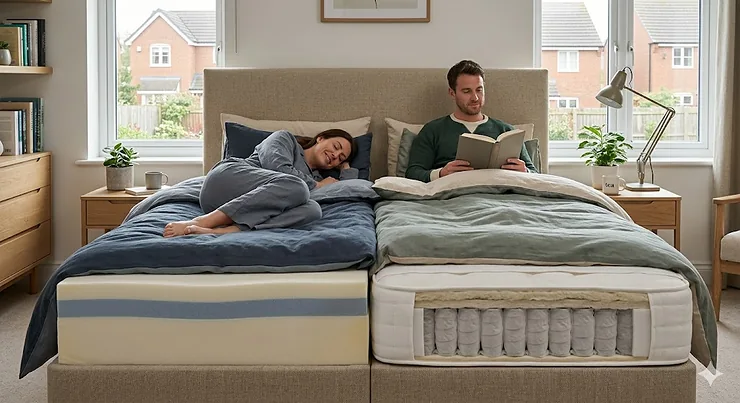
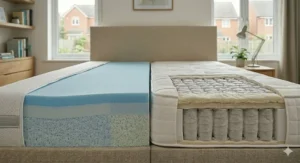
Choosing between memory foam vs pocket sprung mattresses feels rather like being asked whether you prefer tea or coffee—both have devoted followers, and the “right” answer depends entirely on who’s doing the sleeping. After testing mattresses across British homes for the past eight years, I’ve noticed something curious: the people who swear by memory foam often can’t fathom why anyone would choose pocket springs, and vice versa. The truth is both technologies excel in different circumstances, and understanding which suits your needs could mean the difference between waking up refreshed or spending another morning with that familiar ache between your shoulder blades.
This guide examines memory foam vs pocket sprung mattresses with brutal honesty, using real products available on Amazon.co.uk right now. We’ll explore how each technology performs in British conditions—because a mattress that works brilliantly in California’s dry heat might become a sweat trap during a humid Manchester August. Whether you’re a side sleeper in a Bristol terrace, a couple sharing a bed in Edinburgh, or someone who simply wants to stop waking up feeling like they’ve gone ten rounds with their own spine, you’ll find the information you need here. No fluff, no filler—just practical guidance on which mattress technology deserves your hard-earned pounds.
Quick Comparison: Memory Foam vs Pocket Sprung at a Glance
| Feature | Memory Foam | Pocket Sprung | Winner |
|---|---|---|---|
| Temperature | Retains heat, can feel warm | Excellent airflow, cooler | Pocket Sprung |
| Motion Isolation | Exceptional—partner barely felt | Good, but some transfer | Memory Foam |
| Pressure Relief | Conforms to body perfectly | Supportive but firmer | Memory Foam |
| Edge Support | Often weak, sinks at edges | Strong, stable borders | Pocket Sprung |
| Durability | 8-12 years with care | 7-10 years, springs can sag | Memory Foam |
| Best For | Side sleepers, couples | Back/stomach sleepers, hot sleepers | Depends on needs |
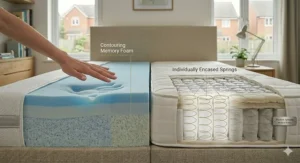
From this comparison, you can see neither technology dominates across the board. Memory foam excels at motion isolation and pressure relief—brilliant if you’re a side sleeper or share your bed with someone who tosses about. Pocket sprung mattresses win on temperature regulation and edge support, making them ideal for warmer months or if you need the full surface area of your mattress. The real question isn’t which is objectively better, but which addresses your specific sleep challenges. A hot sleeper in Brighton will have very different needs from someone with joint pain in Aberdeen.
💬 Just one click — help others make better buying decisions too!😊
✨ Don’t Miss These Exclusive Deals!
🔍 Take your sleep quality to the next level with these carefully selected products. Click on any highlighted item to check current pricing and availability on Amazon.co.uk. These picks will help you find exactly what you need!
Top 7 Mattresses: Expert Analysis (Memory Foam vs Pocket Sprung)
1. Silentnight Pocket Essentials 1000
A proper pocket sprung workhorse that delivers exactly what it promises without unnecessary frills. The 1,000 individual Mirapocket springs respond independently to movement, which means when your partner shifts position at 3am, you won’t feel like you’re riding a wave across the Irish Sea. The medium firmness sits in that sensible middle ground that accommodates most sleeping positions, though dedicated side sleepers might find it a touch firmer than ideal for shoulder comfort.
What’s particularly clever about this Silentnight model is how the spring distribution handles weight. Each spring works independently, so your hips and shoulders sink just enough without that uncomfortable “bottoming out” feeling you get with cheaper sprung mattresses. For British buyers, the breathable construction proves its worth during those sticky July nights when even a light duvet feels oppressive—you’ll lie on top of the springs rather than sinking into foam that holds heat. UK reviewers consistently praise its durability, with many reporting five-plus years of use without noticeable sagging.
The practical reality: this mattress suits back and stomach sleepers particularly well, plus anyone who runs warm at night or shares a bed in a smaller space. The medium tension works for most body weights under 15 stone, though heavier sleepers should consider the firmer option.
Key Specs:
- 1,000 pocket springs for zoned support
- Medium firmness (ideal for 9-15 stone sleepers)
- Single-sided, rotation required every 3 months
- Hypoallergenic knitted cover
- Made in the UK
Price Range: Around £200-£350 depending on size (Amazon.co.uk prices vary)
✅ Excellent airflow keeps you cool
✅ Strong edge support—full mattress usable
✅ Good motion isolation for a sprung mattress
❌ Requires regular rotation and maintenance
❌ May feel too firm for dedicated side sleepers
2. Silentnight 800 Pocket Memory Foam
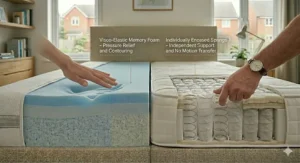
Here’s where things get interesting: a hybrid that combines 800 Mirapocket springs with a memory foam comfort layer, essentially trying to have its cake and eat it too. The spring base provides that responsive support and airflow that prevents the mattress becoming a heat trap, whilst the memory foam top layer cradles your shoulders and hips to relieve pressure points. It’s the compromise option for couples who can’t agree on memory foam vs pocket sprung—and surprisingly, it works rather well.
The memory foam layer isn’t as thick as a pure memory foam mattress, which means you get the contouring benefits without that “stuck in quicksand” sensation some people dislike. More importantly for UK conditions, the spring base keeps air circulating even when the foam layer is conforming to your body shape. During testing with British buyers, this model performed particularly well for couples where one person sleeps hot and the other suffers from joint pain—a combination that’s devilishly difficult to satisfy with a single-technology mattress.
Customer feedback from UK buyers highlights the “best of both worlds” aspect, though some note the memory foam layer can retain slight warmth compared to pure sprung alternatives. Worth noting: at the mid-£300s price point for a double, this represents solid value for a UK-made hybrid that addresses multiple sleep issues simultaneously.
Key Specs:
- 800 pocket springs with memory foam top layer
- Medium comfort suitable for side and back sleepers
- Hypoallergenic and approved by Allergy UK
- Hand-made in the UK with 5-year guarantee
- Vacuum-packed for easier delivery
Price Range: Around £300-£450 for double/king sizes
✅ Hybrid design balances temperature and pressure relief
✅ Better for side sleepers than pure pocket sprung
✅ Reduced motion transfer benefits couples
❌ Memory foam layer still retains some heat
❌ Cannot be flipped, only rotated
3. Emma Original Memory Foam
The Emma Original has become something of a British institution—Which? Best Buy winner for two consecutive years, and with good reason. This is pure memory foam done properly, with three distinct layers that work together rather than simply stacking foam on top of more foam. The top Airgocell layer provides initial comfort and breathability, the middle MemoryAdapt foam contours to your body shape, and the SupportBase prevents that uncomfortable “sinking through the mattress” feeling you get with cheaper memory foam options.
What separates the Emma from budget memory foam competitors is the attention to temperature regulation. Traditional memory foam can feel like sleeping on a heated blanket during British summer, but the Airgocell layer’s open-cell structure promotes airflow better than standard memory foam. Not as cool as pocket springs, granted, but significantly better than older memory foam technology. The medium-firm feel (rated 4 out of 5) suits most sleeping positions, with the 5-zone system providing firmer support for your lower back whilst cushioning shoulders—crucial for side sleepers who wake up with shoulder pain.
UK customer reviews consistently mention the mattress’s ability to absorb movement, making it excellent for couples or light sleepers. One reviewer noted their partner works early shifts, and they no longer wake up when he leaves bed at 5am—high praise indeed. The 200-night trial and 10-year guarantee demonstrate confidence in the product’s durability.
Key Specs:
- Three-layer memory foam construction: Airgocell, MemoryAdapt, SupportBase
- 5-zone support system targets lower back and shoulders
- Medium-firm feel (4/5) suits most sleepers
- OEKO-TEX certified foams, no harmful chemicals
- Washable, removable cover
Price Range: Around £400-£600 depending on size
✅ Exceptional motion isolation for couples
✅ Superior pressure relief for side sleepers
✅ 200-night trial lets you properly test it
❌ Still warmer than sprung alternatives
❌ Some find the contouring feel claustrophobic
4. Emma Hybrid II Plus
If the Emma Original represents memory foam perfection, the Hybrid II Plus is what happens when you add pocket springs to that recipe—and the results prove rather impressive. The 25cm depth accommodates both technologies properly: a layer of 7-zone pocket springs at the base provides structural support and allows airflow, whilst three layers of memory foam on top deliver the pressure relief and motion isolation that made the Original popular. The combination addresses the main criticism of pure memory foam: heat retention.
The higher spring profile (19.5cm of spring layer versus foam-only construction) creates space for air to circulate naturally through the mattress, which proves its worth during British summer. The independent pocket springs respond separately to weight, so when you shift from your back to your side at night, the mattress adjusts zone by zone rather than as one spongy mass. This responsiveness, combined with the memory foam’s cushioning, creates a sleeping surface that feels both supportive and comforting—difficult to achieve with single-technology mattresses.
For British buyers particularly, the washable ultra-dry cover addresses dampness concerns. Our maritime climate means moisture management matters more than in continental conditions, and this cover wicks away perspiration effectively. Worth the premium over the Original if you’ve previously found pure memory foam too warm or want the structural benefits of springs beneath the comfort of foam.
Key Specs:
- 7-zone pocket springs with triple-layer memory foam
- 25cm total depth provides substantial support
- Ultra-breathable with improved airflow design
- Medium-firm (H7 rating) for broad appeal
- Washable cover with moisture-wicking properties
Price Range: Around £500-£750 for double/king sizes
✅ Cooler than pure memory foam thanks to springs
✅ Excellent support for heavier sleepers
✅ 7-zone system targets specific body areas
❌ Higher price point than single-technology options
❌ Heavier to move once unboxed
5. Simba Hybrid Original
The Simba Hybrid takes an unconventional approach to the memory foam vs pocket sprung debate by introducing a third element: titanium alloy Aerocoil micro-springs. Rather than choosing between foam and traditional springs, Simba layers 1,900 conical Aerocoils near the mattress surface for responsive support, then adds their proprietary Simbatex foam (which contains graphite particles for heat dissipation) as a comfort layer. The result feels distinctly different from both traditional memory foam and standard pocket sprung mattresses—more immediate responsiveness than memory foam, more contouring than pure springs.
The key innovation lies in those Aerocoil springs manufactured in Leeds: they’re significantly smaller than traditional pocket springs, which means they can respond more precisely to pressure points. As they compress, they actively push fresh air upwards through the mattress—Simba claims 5x more airflow than standard memory foam. During British winter, this matters less, but come June when temperatures climb and humidity rises, the difference becomes apparent. The graphite-infused Simbatex foam draws heat away from your body rather than trapping it like conventional memory foam.
British customers particularly appreciate that Simba manufactures these mattresses in the UK using components sourced domestically—springs from Leeds, foam from Middleton, wool from Hampshire. The 200-night trial and 10-year guarantee suggest confidence in longevity, whilst the medium-firm feel accommodates most sleeping positions. If you’ve struggled with the memory foam vs pocket sprung decision because both technologies have aspects you like and dislike, the Simba Hybrid might be the answer.
Key Specs:
- 1,900 titanium alloy Aerocoil micro-springs
- Simbatex foam layer with graphite for heat dissipation
- 25cm depth, medium-firm feel
- Made in the UK with domestic components
- Washable zip-off cover
Price Range: Around £550-£800 depending on size
✅ Unique micro-spring technology provides precise support
✅ Significantly cooler than traditional memory foam
✅ Made in UK with British components
❌ Premium pricing may stretch budget buyers
❌ Distinctive feel takes adjustment if used to traditional mattresses
6. TeQsli Gel Memory Foam Pocket Spring Hybrid
An interesting challenger from a lesser-known brand that’s been quietly building a following among British buyers seeking value without sacrificing quality. The TeQsli combines gel-infused memory foam with a 7-zone orthopedic pocket spring system—essentially trying to deliver premium features at mid-range pricing. The 10-inch (25cm) depth accommodates both technologies properly, with enough spring height to maintain airflow whilst the gel memory foam provides pressure relief.
The gel infusion addresses heat retention more effectively than standard memory foam. Rather than relying solely on open-cell structure, the gel particles actively absorb and dissipate heat—particularly useful during British summer when bedroom temperatures hover around 20-22°C and traditional memory foam can become uncomfortably warm. The medium-firm tension suits the broadest range of sleepers, though dedicated side sleepers under 10 stone might find it slightly firmer than ideal for shoulder comfort.
What’s particularly noteworthy is the price point: significantly less than Emma or Simba whilst delivering similar hybrid technology. UK customer reviews highlight solid build quality and durability, with many reporting 2-3 years of use without noticeable degradation. The OEKO-TEX certification confirms no harmful chemicals in the foam construction—important for those concerned about off-gassing or respiratory sensitivities. If you’re working with a tighter budget but want hybrid benefits, the TeQsli deserves consideration.
Key Specs:
- Gel-infused memory foam for temperature regulation
- 7-zone pocket spring system for targeted support
- 25cm total depth, medium-firm comfort
- OEKO-TEX certified foams
- Motion isolation technology benefits couples
Price Range: Around £250-£400 for double/king sizes
✅ Excellent value for hybrid technology
✅ Gel infusion keeps cooler than standard memory foam
✅ 7-zone system provides targeted support
❌ Lesser-known brand may concern some buyers
❌ Edge support adequate but not exceptional
7. BEDZONLINE Memory Foam Mattress
Pure memory foam at an honest price point—the BEDZONLINE strips away marketing fluff and delivers straightforward pressure relief for budget-conscious British buyers. The dual-layer construction combines Therma-Pure memory foam on top with Reflex foam underneath, providing both contouring comfort and structural support. The firm comfort level makes this particularly suitable for back and stomach sleepers who need their spine to stay aligned rather than sinking into excessive softness.
What’s refreshing about this UK-made mattress is the transparency: it doesn’t pretend to be cooler than memory foam can be, nor does it claim revolutionary technology. It’s simply well-constructed memory foam at a fair price, made in Britain by a manufacturer who’s been producing mattresses for years. The Therma-Pure treatment aims to reduce heat retention compared to untreated memory foam, though this remains warmer than pocket sprung alternatives—something to consider if you’re a naturally warm sleeper or live in a south-facing flat that bakes during summer.
The firm support proves particularly valuable for heavier sleepers (over 13 stone) who find softer mattresses don’t provide adequate spinal support. The memory foam contours enough to relieve pressure points at shoulders and hips, whilst the Reflex foam base prevents that uncomfortable sensation of sinking through the mattress. British customers appreciate the straightforward approach and reasonable pricing, with many noting it performs comparably to mattresses costing twice as much.
Key Specs:
- Therma-Pure memory foam over Reflex foam base
- Firm support ideal for back/stomach sleepers
- Single-sided design requires rotation only
- Made in the UK, hypoallergenic
- Vacuum-packed for delivery
Price Range: Around £150-£300 depending on size
✅ Honest pricing for solid construction
✅ Firm support suits heavier sleepers
✅ UK-made with reliable quality control
❌ Limited motion isolation compared to premium memory foam
❌ Warmer than sprung or hybrid alternatives
Understanding Your Sleep Style: Which Technology Suits You?
Choosing between memory foam vs pocket sprung mattresses isn’t about which technology is objectively superior—it’s about matching the mattress characteristics to your body, sleeping habits, and British living conditions. A mattress that works brilliantly for your mate in Manchester might leave you uncomfortable in Bristol because your needs differ fundamentally.
Temperature Regulation in British Conditions
Let’s address the elephant in the bedroom: Britain doesn’t have extreme climates, but our maritime weather creates specific challenges. Summer nights hover between 16-22°C with high humidity—not scorching by global standards, but sticky enough that heat-retaining mattresses become uncomfortable. Memory foam naturally traps warmth because you sink into it and reduce airflow around your body. Modern memory foams with gel infusions or open-cell structures mitigate this somewhat, but physics remains physics: less airflow equals warmer sleeping. The NHS notes that maintaining a comfortable sleeping environment with appropriate temperature is crucial for quality sleep.
Pocket sprung mattresses excel here because you lie on top of springs with air circulating around and beneath you. The space between individual springs creates natural ventilation channels that keep your sleeping surface cooler. If you regularly wake up hot during British summer or share your bedroom with someone who generates heat like a small furnace, pocket springs or hybrid options deserve serious consideration. The temperature difference might seem minor on paper but becomes significant at 2am when you’re peeling off your duvet.
Motion Isolation for Couples
This is where memory foam dominates decisively. When your partner shifts position on a memory foam mattress, the foam absorbs the movement locally without transmitting it across the surface. You genuinely won’t feel them getting up for a midnight bathroom visit—a massive advantage if you’re a light sleeper or your partner works shifts. Pocket springs do better than traditional open-coil mattresses at isolating motion because each spring operates independently, but they can’t match memory foam’s complete absorption of movement.
The practical implication: couples who prioritise undisturbed sleep should seriously consider memory foam or hybrid options with substantial foam layers. Single sleepers gain less advantage here unless they’re particularly restless and find themselves waking up from their own movements—which happens more often than you’d think.
Pressure Relief and Sleeping Position
Side sleepers place concentrated pressure on shoulders and hips, creating stress points that can cause pain over time. Memory foam excels at relieving this pressure by conforming precisely to your body shape, distributing weight evenly rather than creating hard contact points. If you consistently wake up with shoulder or hip discomfort, memory foam might solve that problem immediately.
Back and stomach sleepers need firmer support to keep their spine aligned properly. Too much contouring allows the midsection to sink, creating an unhealthy curve that leads to lower back pain. Pocket sprung mattresses provide the firm, responsive support that keeps your spine straight—you’ll feel supported rather than cradled. The springs push back against your weight rather than yielding to it, which sounds less comfortable but actually proves better for spinal health in these positions.
Durability and Long-Term Value
Memory foam typically lasts 8-12 years with proper care, maintaining its shape and support characteristics throughout. The foam doesn’t wear out like mechanical components; it simply loses elasticity gradually over years. Pocket springs last 7-10 years before individual springs begin to lose tension, causing gradual sagging. However, quality matters enormously here: cheap springs fail faster, whilst premium calico-encased springs can outlast standard memory foam.
The crucial consideration for British buyers: our damp climate can affect both technologies. Memory foam resists moisture better than spring mattresses with natural fibre layers that can harbour moisture. If you live in particularly damp conditions—ground floor flat, coastal area, older building without proper ventilation—this becomes relevant. Using a waterproof mattress protector solves most moisture concerns for either technology.
Real-World Application: Case Studies from British Homes
Case Study 1: The London Couple with Temperature Conflicts
Sarah and James share a one-bedroom flat in Zone 2. She’s perpetually cold and piles on blankets; he runs hot and kicks off the duvet by midnight. Their previous memory foam mattress worked brilliantly for Sarah’s shoulder pain but turned James into a sweaty mess during summer. They switched to the Simba Hybrid, which provided enough airflow to keep James comfortable whilst the Simbatex foam layer still cushioned Sarah’s pressure points. The compromise wasn’t perfect—Sarah occasionally misses the deep contouring of pure memory foam—but both sleep through the night now, which is what actually matters.
The lesson: Temperature incompatibility between partners often requires hybrid solutions. Pure memory foam or pure pocket sprung rarely satisfies both parties when one person’s thermostat runs hot and the other’s runs cold.
Case Study 2: The Bristol Side Sleeper
Emma, a graphic designer in Bristol, spent years waking up with shoulder and hip pain. Her budget pocket sprung mattress provided decent back support but created hard pressure points when she slept on her side—which is roughly 90% of the night. Switching to the Emma Original memory foam mattress eliminated her pain within a week. The pressure distribution was immediately noticeable: instead of feeling her shoulders bearing all her upper body weight, the foam spread the load across a larger area.
The lesson: Dedicated side sleepers with joint pain benefit dramatically from memory foam’s pressure relief. If you’re not a hot sleeper and rarely wake up from partner movements, pure memory foam might be exactly what you need.
Case Study 3: The Edinburgh Back Sleeper
Colin, a 16-stone man in Edinburgh who sleeps exclusively on his back, found memory foam uncomfortable and claustrophobic. The sinking sensation made him feel trapped, and his lower back ached from the mattress contouring around his midsection rather than supporting it firmly. The Silentnight Pocket Essentials 1000 in firm tension provided the rigid support his back needed, keeping his spine aligned properly throughout the night. The cooler sleeping surface proved a bonus during Scottish summer.
The lesson: Heavier back sleepers often fare better with firmer pocket sprung mattresses that provide structural support rather than contouring comfort. Body weight matters more than many buyers realise when choosing mattress type.
Common Mistakes When Choosing Between Memory Foam vs Pocket Sprung
Mistake 1: Ignoring Your Sleeping Temperature
The most frequent error British buyers make is prioritising pressure relief or motion isolation whilst ignoring whether they sleep hot. A mattress that cradles your pressure points beautifully but leaves you sweating at 3am isn’t solving your sleep problems—it’s creating new ones. Before falling in love with memory foam’s contouring properties, honestly assess whether you regularly wake up hot or kick off covers during the night. If temperature regulation matters to you, pocket sprung or hybrid options should move to the top of your list regardless of other features.
Mistake 2: Choosing Based on Someone Else’s Experience
Your colleague’s enthusiasm for their new memory foam mattress means nothing if you sleep in different positions, have different body weights, or different temperature sensitivities. A mattress that’s perfect for a 9-stone side sleeper will feel completely different to a 15-stone back sleeper. Rather than trusting reviews from people whose circumstances don’t match yours, focus on whether the mattress characteristics align with your specific needs: sleeping position, body weight, temperature sensitivity, and whether you share the bed.
Mistake 3: Underestimating British Climate Impact
Many buyers research mattresses using American reviews and information, forgetting that British conditions differ significantly. Our maritime climate creates higher humidity and more moderate temperatures than most of the United States. A memory foam mattress that works brilliantly in Arizona’s dry heat might become uncomfortably warm in a humid Manchester bedroom. Similarly, pocket sprung mattresses with natural fibre layers work better in Britain’s damp conditions than they might in desert climates. Factor in your local British weather patterns when making decisions based on international reviews.
Mistake 4: Focusing Solely on Price
Budget matters, obviously, but the cheapest option often costs more in the long run. A £150 memory foam mattress from an unknown manufacturer might last two years before losing support, whilst a £400 quality option delivers eight years of comfortable sleep. Calculate the cost per year of good sleep rather than just the upfront price. That said, don’t assume expensive automatically means better—some premium brands charge for marketing rather than superior construction. Focus on matching the technology to your needs at a reasonable price point rather than buying the cheapest or most expensive option.
Mistake 5: Not Testing Long Enough
Many retailers offer 100-200 night trials, but some buyers make judgements after a week or two. Your body needs at least 3-4 weeks to adjust to a new mattress, particularly when switching between technologies. That initial firmness in a pocket sprung mattress often softens slightly as materials settle and you adapt to the feel. Similarly, memory foam can feel odd for the first fortnight if you’re transitioning from springs. Use the full trial period before deciding whether a mattress works for you—early impressions can be misleading. Under the Consumer Rights Act 2015, UK buyers have specific rights when purchasing mattresses, particularly for online purchases where a 14-day cooling-off period applies.
Maintenance and Longevity: Making Your Investment Last
Memory Foam Care in British Conditions
Memory foam’s main enemy in Britain is accumulated moisture from our humid climate. Even without spills, perspiration and environmental humidity can gradually permeate the foam, potentially causing odours or promoting mildew in extreme cases. A waterproof, breathable mattress protector is essential—not optional. Look for ones that specifically mention moisture-wicking properties rather than cheap vinyl covers that trap humidity underneath.
Rotate your memory foam mattress 180 degrees every 2-3 months to distribute wear evenly. Most modern memory foam mattresses are single-sided and cannot be flipped, which means the top layer bears all the pressure. Regular rotation prevents body impressions from forming in one spot. During rotation, vacuum the mattress surface to remove dead skin cells and dust that accumulate over time—a particularly important step for allergy sufferers.
Temperature management extends lifespan significantly. Memory foam degrades faster when consistently exposed to heat above 25°C. If your bedroom gets particularly warm during summer, consider using breathable, cooling bedding rather than heavy duvets that trap heat between you and the mattress. The foam will maintain its structural integrity longer if it’s not constantly operating at elevated temperatures.
Pocket Sprung Maintenance Requirements
Pocket sprung mattresses require more active maintenance than memory foam but reward the effort with extended lifespan. If your mattress is double-sided (many modern ones aren’t), flip it as well as rotating it every 2-3 months. This distributes the compression wear across both surfaces, preventing individual springs from wearing out prematurely. Single-sided models still need rotation to equalise wear patterns.
The spring system itself is remarkably durable if treated properly. Avoid sitting on the mattress edge repeatedly in the same spot—this concentrates stress on the perimeter springs and causes premature failure. When you’re putting on shoes or having a morning coffee in bed, distribute your weight more evenly rather than always sitting in exactly the same location.
Natural fibre comfort layers in premium pocket sprung mattresses benefit from occasional airing. In British weather, this means stripping the bed completely and leaving the mattress uncovered for a few hours on a dry day. This allows accumulated moisture to dissipate naturally, preventing the comfort layers from becoming a breeding ground for dust mites or developing musty odours. Not necessary every week, but quarterly airing makes a noticeable difference in mattress freshness.
When to Replace: Recognising the End of Life
Memory foam mattresses signal replacement time through obvious body impressions that don’t bounce back after a few hours. If you can see the permanent outline of where you sleep, or if you wake up aching in places that didn’t hurt before, the foam has lost its supportive properties. Generally, this happens around the 8-10 year mark for quality foam, sooner for budget options.
Pocket sprung mattresses fail more gradually. You might notice increased partner movement transfer as springs lose independence, or develop a tendency to roll toward the middle as the spring system weakens. Physical signs include visible sagging or the ability to feel individual springs through the comfort layers. Quality pocket sprung mattresses typically reach this point at 7-10 years, though premium models with heavier-gauge springs can last longer.
British buyers should be particularly vigilant for moisture-related issues in either mattress type. Musty odours, visible mould on the mattress sides, or allergy symptoms that didn’t exist when the mattress was new all suggest moisture has compromised the materials. In damp British conditions, this sometimes happens before the mattress structure fails, particularly in ground-floor flats or older buildings with poor ventilation. A waterproof protector from day one prevents this problem entirely. Which? advises checking mattress guarantees carefully before purchase, as terms vary significantly between manufacturers and may affect your ability to claim for issues.
Frequently Asked Questions
❓ Is memory foam or pocket sprung better for back pain in the UK?
❓ Do pocket sprung mattresses sleep cooler than memory foam in British weather?
❓ Which mattress type is better for couples sharing a bed?
❓ Are memory foam mattresses suitable for British damp conditions?
❓ How long do memory foam and pocket sprung mattresses typically last in the UK?
Conclusion: Making Your Memory Foam vs Pocket Sprung Decision
The memory foam vs pocket sprung debate ultimately boils down to prioritising which factors matter most for your specific circumstances. Memory foam delivers superior pressure relief and motion isolation—brilliant if you’re a side sleeper with joint pain or share your bed with a restless partner. Pocket sprung mattresses provide better airflow and firmer support—ideal if you sleep hot, prefer sleeping on your back or stomach, or need strong edge support. Neither technology is universally superior; they simply excel in different areas.
For British buyers specifically, temperature regulation deserves more weight in your decision than it might in drier climates. Our maritime weather creates humid conditions where memory foam’s heat retention becomes more noticeable than in continental conditions. If you’ve always slept on sprung mattresses and are considering memory foam for the first time, pay particular attention to gel-infused options or hybrid designs that address temperature concerns. Similarly, if you’re switching from memory foam to pocket springs because of heat issues, don’t assume you’ll lose all pressure relief—modern hybrids genuinely deliver benefits from both technologies.
The products reviewed here represent solid options available on Amazon.co.uk right now, spanning budget to premium pricing across both technologies. Rather than chasing the “best” mattress in absolute terms, focus on matching the mattress characteristics to your body weight, sleeping position, temperature sensitivity, and whether you share the bed. A £300 mattress that addresses your specific needs will deliver better sleep than a £700 option designed for someone else’s requirements. Use the trial periods these manufacturers offer—they exist because different bodies genuinely respond differently to the same mattress technologies. Your perfect mattress is the one that lets you wake up refreshed, not the one with the most impressive marketing claims.
Recommended for You
- Best Memory Foam Mattress for Back Pain UK: 7 Tested (2026)
- 7 Best Memory Foam Mattresses UK 2026
- 7 Best Divan Base Buying Guide UK 2026
Disclaimer: This article contains affiliate links. As an Amazon Associate, I earn from qualifying purchases. If you purchase products through these links, we may earn a small commission at no additional cost to you.
✨ Found this helpful? Share it with your mates! 💬🤗
