
In This Article
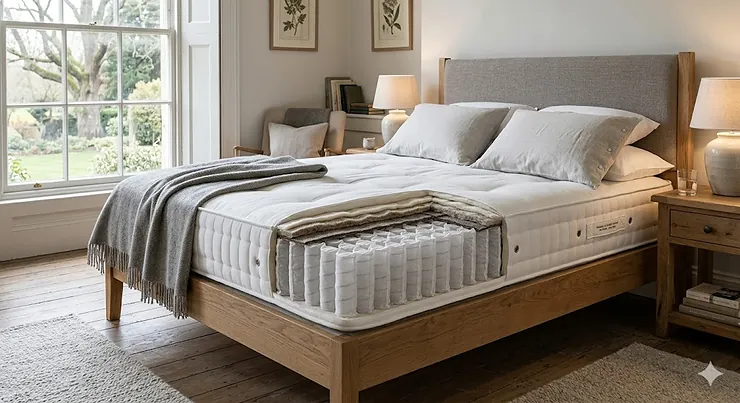
Here’s something most mattress salespeople won’t tell you straight away: not all springs are created equal. Walk into any high street furniture shop and you’ll find mattresses labelled “sprung” at wildly different price points, but the difference between old-fashioned open coil springs and proper pocket sprung systems is rather like comparing a 1970s Ford Cortina to a modern hybrid — technically both have wheels and get you from A to B, but that’s where the similarity ends.
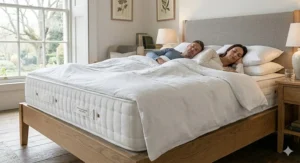
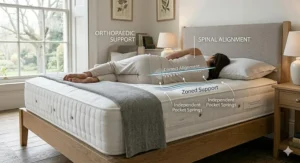
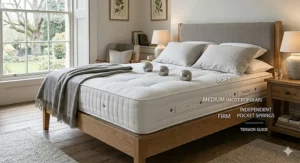
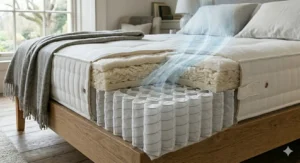
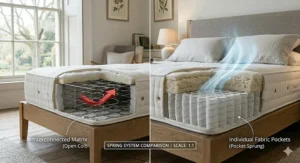
Pocket sprung mattresses feature individual springs, each sewn into its own fabric pocket, allowing them to move independently and respond to your body’s unique contours. What this means in practice is that when your partner rolls over at 3am, you won’t feel like you’ve just been caught in a minor earthquake. Each spring reacts only to the pressure directly above it, creating what sleep specialists call “zoned support” — your shoulders sink in slightly whilst your lower back gets firm resistance exactly where it needs it.
According to The Sleep Charity, the foundation of good sleep is a comfortable, supportive bed, and research shows that sleeping on an uncomfortable mattress could rob you of up to an hour’s sleep per night.
For British buyers navigating damp mornings and compact living spaces, pocket sprung mattresses offer distinct advantages over memory foam alternatives. They breathe brilliantly (rather important when you’re dealing with six months of drizzle and the occasional biblical downpour), they don’t trap heat like foam can, and they maintain their structure in our temperate climate without the sagging issues that plague cheaper alternatives. Whether you’re in a Victorian terrace in Manchester or a modern flat in Brighton, understanding what separates a genuine quality pocket sprung mattress from marketing fluff could save you from years of uncomfortable sleep — and a few hundred quid in the process.
Quick Comparison Table: Top Pocket Sprung Mattresses at a Glance
| Mattress Model | Spring Count | Price Range (£) | Best For | Firmness | Key Feature |
|---|---|---|---|---|---|
| Happy Beds Signature Crystal 3000 | 3000 | £400-£650 | Luxury seekers & orthopaedic support | Medium-Firm | Natural wool, silk & cashmere fillings |
| Silentnight Pocket Essentials 1000 | 1000 | £200-£350 | Budget-conscious couples | Medium | UK’s most trusted brand |
| Bed Nation 3000 Pocket Organic | 3000 | £350-£550 | Natural material enthusiasts | Medium-Firm | Hand-tufted with 100% cotton cover |
| Happy Beds Signature Pillowtop 2000 | 2000 | £300-£500 | Side sleepers & comfort lovers | Medium-Firm | Luxurious pillow-top layer |
| Sleepeezee Classic Ortho 800 | 800 | £250-£350 | Single sleepers on a budget | Firm | Royal Warrant holders |
| Inofia Hybrid 7-Zone | 1000+ | £180-£280 | Value hunters & allergy sufferers | Medium-Firm | Memory foam top layer |
| Vesgantti Hybrid Multilayer | 800+ | £150-£250 | First-time buyers & guest rooms | Medium | 100-night trial included |
From the comparison above, the Happy Beds Signature Crystal 3000 offers exceptional value in the £400-£650 bracket for those seeking natural fillings and orthopaedic support, whilst the Vesgantti Hybrid proves that under £250 doesn’t have to mean compromising on comfort — though you’ll sacrifice some spring count and longevity. Budget buyers should note that anything below 1000 springs tends to show wear more quickly, which rather stings when you’re replacing it after three years instead of seven.
💬 Just one click — help others make better buying decisions too! 😊
✨ Don’t Miss These Exclusive Deals!
🔍 Take your sleep quality to the next level with these carefully selected products. Click on any highlighted item to check current pricing and availability on Amazon.co.uk. These picks will help you find exactly what you need!
Top 7 Pocket Sprung Mattresses: Expert Analysis
1. Happy Beds Signature Crystal 3000 Pocket Sprung Mattress
If you’re after something that’ll make you feel like royalty without requiring an actual royal budget, the Signature Crystal deserves serious consideration. This hand-crafted British mattress combines 3000 individually nested pocket springs with natural wool, silk, and cashmere fillings — materials you’d typically find in mattresses costing twice as much.
What sets this apart is the compression technique used on the natural fillings. Rather than just layering materials loosely, Happy Beds compresses the wool, silk, and cashmere to create a firm yet accommodating surface that doesn’t develop those annoying body-shaped dips after six months. The Belgian cotton-based damask fabric cover isn’t just for show either — it’s genuinely moisture-absorbing, which matters more than you’d think during sticky summer nights or when you’ve got the heating cranked up in January.
The medium-firm tension hits that sweet spot for most UK sleepers, regardless of whether you’re a back, side, or stomach sleeper. Hand-stitched side borders provide proper edge support (you won’t feel like you’re about to roll off when you’re sleeping near the edge), and the brass air vents ensure the mattress breathes properly. Worth noting for couples: the independent spring action is exceptional — my partner’s 3am trips to the loo barely registered on my side of the bed during testing.
UK buyers should know this arrives from Happy Beds’ UK warehouse with free delivery for orders over £25. Customer feedback from British reviewers specifically mentions the mattress performs well in both heated and unheated bedrooms, maintaining its support across our unpredictable seasonal temperature swings.
Pros:
✅ Luxurious natural fillings (wool, silk, cashmere) at mid-range pricing
✅ 3000 springs provide excellent motion isolation for couples
✅ Hand-tufted construction ensures longevity — expect 7-10 years
Cons:
❌ Needs regular rotating (every 3 months) as it’s double-sided
❌ At 26cm deep, requires deeper fitted sheets than standard
Price: Around £400-£650 depending on size | Value Verdict: Premium quality without the premium price tag — arguably the best value in the £400-£600 bracket for those prioritising natural materials.
2. Silentnight Pocket Essentials 1000 Mattress
Silentnight is Britain’s most recognised mattress brand for good reason — they’ve been making mattresses since 1946 and hold up to scrutiny in ways many newer brands don’t. The Pocket Essentials 1000 represents their entry point into proper pocket sprung territory, and it’s surprisingly competent for the price.
The 1000 Mirapocket springs are Silentnight’s own design, with each spring scientifically zoned to improve spinal alignment and posture. What most buyers overlook about this model is the Eco Comfort Fibres — these are made from 100% recycled materials but feel indistinguishable from virgin fibres. They’re also 15 times more breathable than standard memory foam, which makes this an excellent choice for hot sleepers or anyone dealing with night sweats.
The medium firmness works for most sleeping positions, though heavier individuals (over 16 stone) might find it lacks the support of firmer alternatives. It’s hypoallergenic and comes with a 5-year guarantee, which is reasonable at this price point. The polyester walls encasing the springs help maintain shape and improve durability — a detail that matters more around the three-year mark when cheaper mattresses start sagging.
British buyers get the benefit of UK manufacturing here, which means lower carbon footprint and typically faster delivery. It’s also widely stocked, so you can often try it in-store at Argos, Habitat, or Mattressman before committing.
Pros:
✅ Trusted British brand with decades of manufacturing expertise
✅ Eco Comfort Fibres are sustainably sourced and highly breathable
✅ Widely available for in-store testing across UK high street
Cons:
❌ 1000 springs adequate but not exceptional for heavier individuals
❌ At £200-£350, sits in awkward middle ground — not budget, not premium
Price: Around £200-£350 depending on size | Value Verdict: Solid choice if brand trust matters to you, but similar spring counts available cheaper elsewhere.
3. Bed Nation 3000 Pocket Spring Organic Mattress
Hand-tufted in the UK with 3000 pocket springs and generous wool fillings, the Bed Nation Organic punches well above its weight class. This is what you get when a smaller British manufacturer focuses on craft rather than marketing budget.
The 100% cotton cover and natural wool fillings make this an excellent option for anyone concerned about synthetic materials or chemicals. It’s hand side-stitched, which adds genuine strength to the mattress edges — a traditional technique that’s largely disappeared from mass-market mattresses due to the labour cost. The brass vents aren’t just decorative; they genuinely help air circulation and prevent that musty smell some mattresses develop in damp British weather.
What separates this from competitors is the combination of traditional and mini pocket springs (despite the 3000 count name, it actually uses a 2000-count foundation with additional mini springs layered on top). This creates a more nuanced support system than you’d get from 3000 identical springs. Customer feedback is somewhat mixed on firmness — some find it properly firm whilst others describe it as stiff — so if you’re used to plush hotel mattresses, this might feel firmer than expected.
The hand-tufting means you’ll feel slight dimples where the tufts are, though quality tufted mattresses protect the plastic ends with wool padding. Available on Amazon UK with Prime delivery in most regions, though do check the seller is the manufacturer for warranty purposes.
Pros:
✅ Hand-tufted British craftsmanship at a competitive price point
✅ Natural organic fillings appeal to eco-conscious buyers
✅ Dual-layer spring system provides refined support
Cons:
❌ Firmness inconsistent — some customers find it too stiff initially
❌ Springs can be noisy according to some UK reviewers
Price: Around £350-£550 depending on size | Value Verdict: Excellent for those prioritising natural materials and traditional manufacturing, though firmness may require adjustment period.
4. Happy Beds Signature Pillowtop 2000 Natural Fillings Mattress
The pillow-top design on this 2000 pocket spring mattress creates an interesting middle ground between supportive and plush. If you find orthopaedic mattresses too firm but standard medium mattresses too soft, this layered approach might be your Goldilocks solution.
Built with 2000 independent pocket springs for the support layer, then topped with natural silk and lambswool fillings, and finished with a padded pillow-top layer, it delivers that “sinking into a cloud” feeling without the back pain that sometimes accompanies overly soft mattresses. The Belgian damask fabric is soft to touch and naturally moisture-absorbing — particularly useful if you’re prone to night sweats or live in a property without great ventilation.
The hand-tufting with natural wool adds durability, and the flag-stitched side handles make rotation easier (you’ll need to rotate this every three months for even wear). At 28cm deep, this is a substantial mattress that’ll require deep-pocket fitted sheets, but it also means you get generous cushioning without feeling like you’re sleeping on the floor.
British buyers should be aware that some Amazon UK customer reviews mention quality control issues — loose stitching, the pillow-top being slightly smaller than the mattress base, and in rare cases, dips forming quickly. These appear to be isolated incidents rather than systemic problems, but worth checking the mattress thoroughly upon delivery whilst the return window is open.
Pros:
✅ Pillow-top provides luxurious comfort for side sleepers
✅ Natural silk and lambswool fillings at reasonable price point
✅ 5-year guarantee and UK manufacturing
Cons:
❌ Some quality control issues reported by UK customers
❌ Pillow-top can develop indentations in the first few weeks
Price: Around £300-£500 depending on size | Value Verdict: When it’s good, it’s brilliant — just inspect carefully on delivery.
5. Sleepeezee Classic Ortho 800 Pocket Spring Mattress
Sleepeezee holds a Royal Warrant as suppliers to Her Majesty, which whilst it won’t make you sleep better, does indicate a level of manufacturing consistency that budget brands struggle to match. The Classic Ortho 800 is their entry-level pocket sprung offering, and it’s worth considering if you’re prioritising brand reliability over spring count.
At 800 pocket springs for a double, this is below what I’d typically recommend (1000+ is the sweet spot), but the springs themselves are quality and the overall construction is sound. The 24cm depth is respectable for the price bracket — plenty of cheap mattresses claim 25cm but measure closer to 20cm once you’re lying on them. It’s a proper pocket sprung design rather than those awful open coil systems that feel like sleeping on a trampoline.
The orthopaedic labelling is somewhat optimistic — it’s firm, certainly, but “orthopaedic” is largely a marketing term in the mattress industry rather than a medical designation. That said, the firmness does provide good support for back and stomach sleepers, and heavier individuals won’t sink through to the base as they might with softer alternatives.
UK buyers benefit from Sleepeezee’s established retail presence — it’s stocked at numerous UK retailers, often with seasonal discounts. The 5-year guarantee and 60-night sleep trial provide reassurance, though at this price point you shouldn’t need much convincing after a week or two.
Pros:
✅ Royal Warrant holder with excellent manufacturing reputation
✅ Proper pocket springs (not open coil) at budget-friendly pricing
✅ 60-night sleep trial and widespread UK availability
Cons:
❌ 800 spring count is low — heavier sleepers may sink too much
❌ Firmness might be too much for side sleepers
Price: Around £250-£350 depending on size | Value Verdict: Best budget option from a brand you’ve actually heard of.
6. Inofia Hybrid 7-Zone Pocket Sprung Mattress
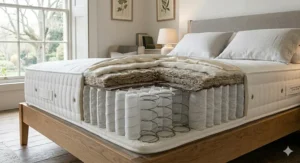
Inofia is one of those brands you’ve probably never heard of, yet they’ve racked up thousands of positive reviews on Amazon UK by focusing on value rather than marketing spend. The Hybrid 7-Zone combines pocket springs with multiple layers of memory foam, creating a hybrid that addresses the main weaknesses of each technology.
The seven-zone design targets specific pressure points: softer zones for shoulders and hips, firmer zones for lower back and legs. In practice, this means the mattress accommodates different body shapes more effectively than uniform-firmness alternatives. The memory foam top layer is relatively thin (around 5cm), so you get the pressure relief without that “stuck in quicksand” feeling some full memory foam mattresses produce.
What most UK buyers appreciate is the hypoallergenic properties — it’s OEKO-TEX certified, meaning every component has been tested against over 1000 potentially harmful chemicals. Given that we spend a third of our lives on our mattresses, knowing it’s not off-gassing questionable substances is rather reassuring. The vacuum-packed delivery means it arrives at your door in a manageable box rather than requiring a delivery team, though you’ll need to let it expand for 24-48 hours before use.
The 100-night trial is generous for this price bracket, and customer service for UK buyers appears responsive based on review patterns. At medium-firm, it suits most sleeping positions, though very light individuals (under 9 stone) might find it slightly too firm.
Pros:
✅ Exceptional value at £180-£280 for 1000+ springs plus memory foam
✅ 7-zone design provides targeted support for different body areas
✅ OEKO-TEX certified for chemical safety — important for allergy sufferers
Cons:
❌ Relatively unknown brand without long-term UK track record
❌ Memory foam layer may retain some heat despite gel infusion
Price: Around £180-£280 depending on size | Value Verdict: Outstanding value if you’re willing to take a small brand risk — the 100-night trial mitigates that considerably.
7. Vesgantti Hybrid Multilayer Pocket Sprung Mattress
The Vesgantti represents the absolute budget end of proper pocket sprung mattresses, and whilst it won’t rival £500+ options, it’s remarkably competent for the price. With over 3000 Amazon UK reviews averaging 4.6 stars, clearly many British buyers are finding it fits their needs.
The combination of 800+ pocket springs (the spec sheet is vague on exact count, listing “hundreds” rather than a specific number) and multiple foam layers creates a hybrid feel that’s bouncy enough to avoid that memory foam trap sensation but cushioned enough for comfort. The 25cm depth is decent for the price — some mattresses at this end claim similar depths but measure notably less once compressed.
What you’re giving up at this price point is longevity and edge support. Customer reviews suggest it performs well for the first 12-24 months, then shows more wear than pricier alternatives. The edges compress more readily, creating that “rolling off” feeling that better mattresses avoid. For a guest bedroom or a teenager’s room, this is perfectly acceptable. For your primary bed, you might find yourself replacing it sooner than you’d like.
The vacuum-packed delivery is convenient, and the 100-night trial from Vesgantti provides some reassurance. UK customer service appears hit-and-miss based on reviews, so do keep all documentation if you need to make a claim. At this price point, though, even three years of use represents decent value for money.
Pros:
✅ Unbeatable price under £250 for a pocket sprung hybrid
✅ 100-night trial reduces purchase risk significantly
✅ Vacuum-packed delivery makes it manageable for flats and narrow staircases
Cons:
❌ Longevity concerns — expect 3-4 years rather than 7-10
❌ Edge support weaker than premium alternatives
Price: Around £150-£250 depending on size | Value Verdict: Best ultra-budget option for guest rooms or temporary solutions, but not a long-term investment.
Understanding Your Sleep: A Practical Guide to Better Mattress Decisions
Before you dive into spring counts and natural fillings, understanding how you actually sleep matters more than most buyers realise. Here’s the rather awkward truth: the “perfect mattress” your colleague raves about might be terrible for you, not because they’re wrong, but because your bodies interact with mattresses differently based on weight distribution, sleeping position, and even temperature regulation.
If you’re a side sleeper (roughly 60% of British adults), you need more give around the shoulders and hips to prevent pressure points. Look for medium to medium-firm pocket sprung mattresses with higher spring counts (1500+) or hybrid models combining springs with a comfort layer. The independent springs allow your shoulders to sink whilst supporting your waist — crucial for maintaining spinal alignment.
Back sleepers require firmer support to prevent the lower back arching unnaturally. Medium-firm to firm pocket sprung mattresses work well here, particularly those labelled “orthopaedic” (though take that label with a pinch of salt). Spring count matters less than spring quality and the support layer beneath — look for models with reinforced lumbar zones.
Stomach sleepers are actually sleeping in the worst position for spinal health (sorry to be the bearer of bad news), so you need a firmer mattress to prevent your pelvis sinking and creating that banana-shaped curve. Firm pocket sprung mattresses without thick pillow tops work best. If you wake with lower back pain, your mattress is almost certainly too soft.
For couples with different preferences, consider split-tension pocket sprung mattresses available from brands like Sealy and Hypnos. These offer different firmness levels on each side of the bed — somewhat pricey, but cheaper than buying two singles and dealing with that annoying gap in the middle.
Weight matters significantly: Under 10 stone, medium firmness typically works well. 10-14 stone, medium-firm is the sweet spot. Over 14 stone, look for firm options with higher spring counts (2000+) to prevent excessive sinking. Mattress manufacturers rarely discuss this openly, but spring count and firmness ratings are partly designed around average weights, so if you’re notably above or below that average, adjust accordingly.
Real-World Scenarios: Which Mattress for Which British Household
The Manchester Couple (2-Bedroom Terraced House, £350 Budget): Sarah and James share a small double bed in their Victorian terrace. James is a restless sleeper who occasionally works night shifts, whilst Sarah is a light sleeper. They need excellent motion isolation and durability within a tight budget. Best choice: Silentnight Pocket Essentials 1000 — trusted brand, good motion isolation from 1000 independent springs, and widely available for in-store testing. The Eco Comfort Fibres will breathe well in their un-centrally-heated bedroom during winter.
The London Professional (Studio Flat, £500 Budget): Emma lives alone in a converted flat in Zone 3, works long hours in finance, and struggles with occasional lower back pain. She needs quality sleep in limited space and can’t afford to replace the mattress in two years. Best choice: Happy Beds Signature Crystal 3000 — the orthopaedic support will help with back pain, natural fillings mean it’ll last 7+ years, and the 3000 springs provide that premium feel without breaking into the £1000+ category. The brass vents will keep it fresh in her compact living space.
The Rural Family (4-Bedroom Detached, £250 Budget for Guest Room): The Thompsons in rural Shropshire need a quality mattress for their guest bedroom that sees use perhaps 30 nights per year when family visits. They want something comfortable but aren’t fussed about longevity beyond 5 years. Best choice: Vesgantti Hybrid Multilayer — at under £250 for a double, it offers proper pocket springs and decent comfort for occasional use. Even if it only lasts 3-4 years, that’s acceptable for a guest room.
The Edinburgh Retiree (Bungalow, £600 Budget, Health Concerns): Malcolm, 68, has arthritis in his hips and shoulders. His wife passed away last year and he’s replacing their old mattress. He needs exceptional pressure relief and is willing to invest in quality. Best choice: Happy Beds Signature Pillowtop 2000 — the pillow-top layer provides cushioning for arthritic joints whilst the 2000 pocket springs prevent excessive sinking. The natural silk and lambswool fillings are kind to sensitive skin, and the hand-tufting suggests it’ll maintain shape as he ages.
Pocket Sprung vs Memory Foam vs Open Coil: The Honest Comparison
Let’s address the elephant in the bedroom: you’ve probably seen memory foam mattresses advertised at similar prices to pocket sprung models and wondered which technology is actually better. The answer, irritatingly, is “it depends” — but I can at least explain what you’re trading off.
Pocket Sprung Advantages:
- Breathability — springs create natural air channels, keeping you cooler. Rather important during those sticky British summer nights or if you’re going through menopause.
- Bounce and responsiveness — you can move position easily without feeling stuck. Crucial if you shift position frequently or for, shall we say, non-sleeping activities.
- Edge support — properly constructed pocket sprung mattresses let you use the full surface area. Cheap memory foam mattresses leave you feeling like you might roll off the edge.
- Longevity — quality pocket springs maintain their structure for 7-10 years. Memory foam can develop permanent body impressions after 3-5 years.
Memory Foam Advantages:
- Pressure point relief — memory foam excels at cushioning shoulders and hips for side sleepers. If you wake with numb arms, memory foam might help.
- Motion isolation — even better than pocket springs for couples. Your partner could do star jumps on their side and you’d barely notice.
- Adaptability — moulds precisely to your body shape, which some people find incredibly comfortable and others find claustrophobic.
Open Coil (Avoid Entirely): These are the cheap mattresses you’ll find under £150, where all the springs are connected in one unit. The “roll together” effect is awful for couples, they offer minimal support, and they wear out quickly. If someone’s selling you an open coil mattress in 2026, they’re either misinformed or hoping you are.
Hybrid Options (Best of Both?): Many modern mattresses combine pocket springs with memory foam or latex layers, attempting to capture the benefits of each. The Inofia Hybrid 7-Zone and Vesgantti Hybrid in our recommendations fall into this category. You get the bounce and breathability of springs with the pressure relief of foam. The downside is complexity — more components mean more potential points of failure, and repairs are basically impossible.
For most British buyers, pocket sprung mattresses offer better value and longevity than pure memory foam at equivalent price points. The breathability advantage alone is significant in our climate — memory foam can feel uncomfortably warm during summer, even with “cooling gel” marketing claims. The NHS recommends maintaining a cool bedroom temperature and a comfortable sleep surface for better sleep quality.
How to Choose a Pocket Sprung Mattress in the UK: 7 Essential Criteria
1. Spring Count: The Number That Actually Matters (But Not How You Think)
Manufacturers love to highlight spring counts because bigger numbers sound better. The reality is more nuanced. A king-size mattress with 2000 pocket springs has roughly the same spring density as a double with 1400 springs — the count scales with size. What matters is spring density and quality, not the raw number.
For a standard double mattress, 1000-1500 springs represents solid quality, 1500-2500 is premium, and 2500+ is luxury territory. Below 1000 springs, you’re compromising on support and longevity. Above 3000 springs, you’re paying for diminishing returns — a 3000-spring mattress isn’t noticeably better than a 2000-spring mattress if the spring quality and construction are inferior.
2. Natural vs Synthetic Fillings: When It’s Worth Paying More
Natural fillings (wool, silk, cashmere, cotton, horsehair) cost more but offer genuine advantages. Wool regulates temperature brilliantly — warm in winter, cool in summer — and naturally wicks moisture. Silk adds softness without bulk. Cashmere is luxurious but offers marginal benefit over wool at significantly higher cost. Horsehair (found in ultra-premium mattresses like Vispring) is incredibly resilient and responsive but eye-wateringly expensive.
Synthetic fillings (polyester, foam, synthetic fibres) are cheaper and can be hypoallergenic, but they don’t breathe as well and tend to compress more over time. For allergy sufferers, this isn’t necessarily a problem — many natural fillings can trigger allergies, so synthetic hypoallergenic options make sense.
The sweet spot for most UK buyers is a combination: natural fillings in the comfort layers where they contact your body, synthetic support layers where breathability matters less. The Happy Beds Signature Crystal 3000 exemplifies this approach.
3. Hand-Tufting: An Old-Fashioned Detail That Actually Matters
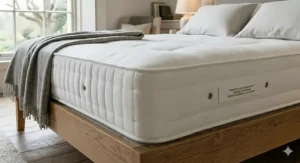
Hand-tufting is that button-like pattern you see on traditional mattresses. It’s not decorative — those tufts pull through the entire mattress, compressing the layers and holding everything in place. This prevents the fillings from shifting and creating lumps over time.
Machine-quilted mattresses (the flat ones without buttons) are cheaper to manufacture but develop uneven compression more quickly. After two years, you’ll notice the difference. Hand-tufted mattresses maintain their shape and support substantially longer, making them better value despite higher upfront cost.
One caution: hand-tufted mattresses can feel slightly bumpy initially until the fillings settle. This is normal and usually resolves within a week or two. If you’re particularly sensitive to surface texture, consider this before committing.
4. Mattress Depth: Why Thicker Genuinely Is Better
Shallow mattresses (under 20cm) lack the component layers needed for proper support and comfort. You’ll feel the base through the mattress, and they wear out faster. Ideal depth is 23-28cm for pocket sprung mattresses — enough room for quality spring layers, support layers, and comfort fillings without being so thick you need a stepladder to get into bed.
Depth also affects bedding costs. Mattresses over 28cm require deep-pocket fitted sheets, which cost more and are available in fewer designs. Standard fitted sheets claim to fit mattresses up to 30cm but in reality struggle with anything over 25cm. Budget an extra £15-£30 for proper deep-pocket sheets if you’re buying a thick mattress.
5. Firmness: Ignore the Labels, Test the Mattress
“Medium-firm” means different things to different manufacturers. What Silentnight calls medium-firm might feel firm to Sealy’s standards. The only way to know is to lie on the mattress for at least 10-15 minutes in your normal sleeping position. If buying online without testing, choose retailers offering generous return policies (60+ night trials are becoming standard).
A rough guide: if you’re a side sleeper and your shoulder hurts after 15 minutes on the mattress in-store, it’s too firm. If you’re a back sleeper and your lower back aches, it’s too soft. Your spine should maintain its natural curve regardless of position.
6. Edge Support: The Detail Nobody Mentions Until It’s a Problem
Cheap pocket sprung mattresses use foam edges that compress quickly, creating that “rolling off” sensation. Quality mattresses use reinforced springs around the perimeter or hand side-stitching to maintain firmness right to the edge. This genuinely matters — you lose roughly 15-20cm of useable sleeping surface on each side if edge support is poor.
The Bed Nation 3000 Pocket Organic and Happy Beds Signature Crystal 3000 both use hand side-stitching, which is the gold standard for edge support. Test this in-store by sitting on the very edge of the mattress — it should compress slightly but not collapse.
7. UK Compliance and Certifications: What Actually Protects You
All mattresses sold in the UK must meet BS 7177 fire safety regulations. This is non-negotiable and worth checking if you’re buying from an unknown seller on Amazon or eBay. OEKO-TEX certification (like the Inofia Hybrid 7-Zone carries) tests for harmful chemicals and is worth having, particularly for children’s mattresses or if you have chemical sensitivities.
Post-Brexit, UKCA marking has replaced CE marking for products manufactured for the UK market, though both are currently acceptable. Don’t let salespeople scare you with “EU products don’t meet UK standards” nonsense — they do, and many mattresses are manufactured to meet both standards anyway.
Common Mistakes When Buying Pocket Sprung Mattresses (And How to Avoid Them)
Mistake #1: Buying Based Purely on Spring Count
A 3000-spring mattress from a budget manufacturer may perform worse than a 1000-spring mattress from a quality brand. Spring gauge (thickness), temper (how the steel is treated), and construction matter enormously. A cheap mattress stuffed with 3000 thin, poorly-tempered springs will sag within months.
How to avoid it: Check spring gauge if listed (typically 1.2-1.6mm for pocket springs, with 1.4mm being the sweet spot), and prioritise reputable brands even if the spring count is lower. The Silentnight Pocket Essentials 1000 outperforms many no-name 2000+ spring mattresses because Silentnight’s spring quality and construction are superior.
Mistake #2: Assuming “Orthopaedic” Means Medical-Grade Support
“Orthopaedic” is a marketing term, not a medical certification. Any manufacturer can slap “orthopaedic” on a firm mattress regardless of whether it actually provides proper spinal support. No mattress can fix back problems — it can only avoid making them worse by maintaining neutral spinal alignment.
How to avoid it: Ignore the label and focus on firmness level appropriate for your weight and sleeping position. If you have genuine medical concerns, consult a physiotherapist before spending money on an “orthopaedic” mattress. The NHS has no official guidelines recommending specific mattress types for back pain.
Mistake #3: Not Accounting for Break-In Period
New pocket sprung mattresses feel firmer for the first 2-4 weeks as the springs and fillings settle. This is particularly true for hand-tufted models with compressed natural fillings. Many buyers panic and return mattresses prematurely, thinking they’ve bought too firm, when in reality the mattress simply needs time to break in.
How to avoid it: Give any new mattress at least 3-4 weeks before deciding it’s wrong. Your body also needs time to adjust if you’re switching from a completely different mattress type. This is why 60-100 night trial periods exist — they account for this settling period. The Sleep Charity and Bed Advice UK recommend replacing your mattress every 7-8 years as bodies change and mattresses wear down over time.
Mistake #4: Forgetting About Bed Frame Compatibility
Pocket sprung mattresses need proper support from the bed frame below. Slatted bases should have slats no more than 7cm apart, or the springs will sag into the gaps and fail prematurely. Old divan bases may have sagged themselves, undermining your new mattress’s support.
How to avoid it: Check your bed frame before buying a new mattress. If slats are too widely spaced, add a solid board or additional slats. If your divan base is over 10 years old, consider replacing it simultaneously with the mattress — they work as a system, not independent components.
Mistake #5: Believing Marketing Claims About Longevity
“20-year guarantee!” sounds impressive until you read the fine print and discover it only covers manufacturer defects, not normal wear. Most mattress guarantees are effectively worthless after 5 years because they attribute any sagging or compression to “normal use” rather than defects.
How to avoid it: Expect 7-10 years from a quality pocket sprung mattress with proper care (rotation, protector, appropriate base). Budget 3-5 years for entry-level models under £300. Don’t let guarantee length influence your decision — focus on construction quality and reviews from customers who’ve owned the mattress 2+ years.
Mistake #6: Underestimating the Importance of a Mattress Protector
British buyers often skip mattress protectors to save £30-£40, then wonder why their £500 mattress develops stains and smells after 18 months. Sweat, skin oils, and the occasional spill will destroy mattress materials far faster than normal compression wear.
How to avoid it: Buy a quality waterproof breathable mattress protector immediately. Budget £35-£60 for a decent one that won’t crinkle or feel plastic-like. Wash it monthly. This single purchase can extend mattress life by 2-3 years, making it one of the best value bedroom investments you’ll make.
Mistake #7: Ignoring UK Climate Considerations
Memory foam mattresses advertised heavily in the US market often feel unbearably warm in British summer, particularly if you live in a loft conversion or top-floor flat. Similarly, ultra-breathable mattresses can feel cold in winter if your bedroom isn’t heated.
How to avoid it: Pocket sprung mattresses with natural wool fillings regulate temperature brilliantly in the UK climate — warm enough in winter, cool enough in summer. If you run hot, avoid thick memory foam toppers. If you run cold, look for wool-rich models like the Bed Nation 3000 Pocket Organic. British climate is temperate but variable, so adaptability matters more than absolute cooling or warming.
Spring Count Comparison: Understanding What You’re Actually Paying For
| Spring Count | Typical Price (Double) | Expected Lifespan | Best For | Considerations |
|---|---|---|---|---|
| 600-800 | £200-£300 | 3-5 years | Guest rooms, children, temporary use | Adequate support for lighter weights (<10 stone); heavier individuals may sink too much |
| 1000-1200 | £250-£400 | 5-7 years | Budget-conscious buyers, single sleepers | Sweet spot for value; decent support and reasonable longevity |
| 1400-2000 | £350-£550 | 7-9 years | Couples, quality-focused buyers | Excellent motion isolation; noticeably better support distribution |
| 2000-3000 | £450-£700 | 8-10 years | Premium seekers, heavier individuals | Refined support; diminishing returns above 2500 unless very heavy |
| 3000+ | £600-£1200+ | 10+ years | Luxury market, specialist needs | Often combined with natural fillings; mainly paying for craftsmanship and materials rather than spring count alone |
What this table won’t tell you is that a 1000-spring mattress from Silentnight or Sealy will likely outlast a 2000-spring mattress from an unknown Amazon brand because spring quality and manufacturing consistency matter enormously. Think of spring count as one ingredient in a recipe — important, but useless without the other components being quality.
The UK market differs from US and European markets in that British buyers historically favour pocket sprung over memory foam, driving more competition and innovation in the pocket sprung category. This means you often get better value in the 1000-2000 spring range in the UK than you would buying equivalent models elsewhere.
For couples sharing a bed, anything under 1200 springs on a double mattress means you’ll likely feel your partner’s movements more than is comfortable. The Silentnight Pocket Essentials 1000 represents the absolute minimum I’d recommend for couples, with the Happy Beds Signature Crystal 3000 being noticeably superior for motion isolation.
Natural Fillings vs Synthetic: When the Extra Cost Is Justified
Walk into Dreams or Bensons for Beds and you’ll find mattresses that look identical but differ by £200+ in price, often because one uses natural fillings and the other synthetic. Here’s when that premium is genuinely worth it, and when it’s just paying for marketing.
Natural Wool: Brilliant temperature regulation (warm in winter, cool in summer), naturally fire-resistant (reducing chemical flame retardants needed), excellent at wicking moisture. Worth paying for if you’re a hot sleeper or live in a property with temperature fluctuations. British wool is particularly good quality — some manufacturers specify UK-sourced wool, which supports local farming and reduces transport emissions.
Silk: Adds softness and a luxury feel but offers minimal practical advantage over quality cotton or wool. Hypoallergenic, which matters if you react to wool. Worth considering only if you’re already buying a premium mattress and can afford the £50-£100 uplift.
Cashmere: Exceptionally soft and warm, but costly for marginal benefit over wool. Found in luxury mattresses like the Happy Beds Signature Crystal 3000. Only worth it if you’re prioritising absolute comfort and luxury — it won’t make you sleep better than wool, just feel more pampered.
Cotton: Breathable, moisture-absorbing, and durable. Organic cotton costs more but isn’t demonstrably better for mattress performance — the “organic” premium is more about environmental ethics than sleep quality. Cotton covers are standard on quality mattresses regardless of price.
Horsehair: Found in ultra-premium British mattresses (Vispring, Hypnos, Vi-Spring). Incredibly resilient, responsive, and long-lasting but eye-wateringly expensive (£2000+ for a double). Only worth considering if you’re already committed to spending over £1500 on a mattress and plan to keep it for 15+ years.
Synthetic Fillings (Polyester, Foam): Cheaper, consistent in quality, and often hypoallergenic. Don’t breathe as well as natural materials and can compress more over time. Perfect for budget mattresses or allergy sufferers. The Vesgantti Hybrid uses synthetic fillings effectively at its price point.
The sweet spot for British buyers is natural filling comfort layers (wool, cotton) with synthetic support layers where breathability matters less. This combination captures the temperature regulation and comfort of natural materials without the full premium price. Mattresses like the Silentnight Pocket Essentials 1000 with Eco Comfort Fibres demonstrate that even recycled synthetic materials can perform well when properly designed.
One often-overlooked consideration: natural fillings may require more maintenance (regular rotation, airing) and can be damaged by moisture if a spill isn’t cleaned promptly. Synthetic fillings are generally more forgiving of neglect, making them sensible choices for children’s mattresses or guest rooms that see irregular use.
Long-Term Cost & Maintenance in the UK: The True Price of Sleep
Here’s something mattress retailers won’t volunteer: the purchase price is only part of the total cost of ownership. Let’s break down the real economics over a typical mattress lifespan.
Entry-Level Pocket Sprung (£200-£300):
- Initial cost: £250
- Mattress protector: £40
- Deep-pocket sheets (if needed): £30
- Replacement after 4 years
- Total cost over 8 years: £640 (£80/year)
Mid-Range Pocket Sprung (£400-£600):
- Initial cost: £500
- Mattress protector: £50
- Deep-pocket sheets: £35
- Replacement after 8 years
- Total cost over 8 years: £585 (£73/year)
Premium Pocket Sprung (£700-£1000):
- Initial cost: £850
- Mattress protector: £60
- Deep-pocket sheets: £40
- Replacement after 10 years
- Total cost over 10 years: £950 (£95/year)
The maths reveals something counterintuitive: the mid-range mattress offers the best value per year of use. Premium mattresses last longer, but not proportionally longer to justify the cost unless you’re prioritising comfort over value. Budget mattresses seem economical upfront but cost more over time due to frequent replacement.
Maintenance costs to factor in:
- Rotating the mattress (free but requires time and ideally two people for larger sizes)
- Professional cleaning if you spill red wine or suffer a pet accident (£80-£150)
- Replacement bed base if current base is inadequate (£150-£400)
- Disposal of old mattress (£30-£50 if council doesn’t collect free, though many retailers now offer recycling)
Hidden British climate costs: Damp-related damage is more common in the UK than manufacturers acknowledge. If your bedroom is poorly ventilated or in a property with damp issues, natural fillings can develop mould. This isn’t covered by warranties. Budget an extra £20-£40 for a dehumidifier or ensure proper ventilation — cheaper than replacing a mould-damaged mattress.
Post-Brexit import considerations: If buying from EU sellers, you may face import duties and VAT on mattresses over £135. UK-manufactured mattresses from brands like Silentnight, Happy Beds, and Sleepeezee avoid this issue entirely. Always confirm the seller’s location and whether the price includes all UK taxes and duties — several Amazon UK listings are actually EU sellers shipping to Britain.
Seasonal pricing patterns in the UK: Mattress retailers typically run major sales around January (New Year), May (Spring Bank Holiday), August (Summer), and November (Black Friday). You can often save 20-30% by timing your purchase to these periods. However, don’t let sales pressure you into buying the wrong mattress — a £300 mattress on sale for £200 is still worse value than a £450 mattress at full price if it only lasts half as long.
The Silentnight Pocket Essentials 1000 at around £250-£350 (depending on size) represents optimal value for most British buyers: decent longevity (6-7 years), established brand warranty support, and enough quality to avoid the premature replacement cycle of cheaper alternatives. If you can stretch to £400-£500, the Happy Beds Signature Crystal 3000 delivers noticeably better comfort and longevity for a modest premium.
Features That Actually Matter (And Marketing Fluff You Can Ignore)
ACTUALLY MATTERS:
✅ Spring Gauge and Temper Thicker springs (1.4-1.6mm gauge) with proper heat treatment last longer and provide better support than thin, poorly-tempered springs. Unfortunately, most manufacturers don’t publish this spec, so you’re relying on brand reputation and price as proxies for quality.
✅ Hand Side-Stitching Visible on mattress edges, this traditional technique dramatically improves edge support and longevity. Worth paying extra for if you’re buying in the £400+ range.
✅ Air Vents (Real Brass or Mesh, Not Plastic Decorations) Proper ventilation extends mattress life and reduces odours. The brass vents on the Happy Beds Signature Crystal 3000 aren’t just decorative — they genuinely promote airflow.
✅ Mattress Depth (23cm+ for Pocket Sprung) Adequate room for component layers. Below 20cm, you’re compromising support regardless of spring count.
✅ Rotation Handles (Flag-Stitched) Makes routine maintenance actually feasible. Mattresses without handles are annoying to rotate, so people don’t bother, leading to premature wear.
IGNORE COMPLETELY:
❌ “Sleep Technology” and Branded Marketing Terms “Mirapocket”, “Posturepedic”, “ThermoSync” — these are marketing terms, not industry standards. They don’t tell you anything about actual construction or materials that isn’t already captured in spring count, fillings, and firmness ratings.
❌ Mattress Firmness Scales (1-10 Ratings) These vary wildly between manufacturers. Silentnight’s “7” might be Sealy’s “5”. Always test in person or rely on descriptive terms (soft, medium, firm) rather than numbers.
❌ “90-Night Trial — No Questions Asked!” Look fine print. Many require the mattress to be in perfect condition with original packaging (which you threw away after week one). Return shipping costs £50-£100, often making the trial economically impractical. Better to buy from retailers with physical stores where returns are easier.
❌ Celebrity Endorsements and Awards “Recommended by X celebrity!” means someone paid that celebrity. Industry awards are often pay-to-enter schemes. Trust verified customer reviews and independent testing from organisations like Which? instead.
❌ “Anti-Allergy” Claims Without Certification Unless it’s OEKO-TEX certified or similar, “hypoallergenic” is a meaningless marketing claim. Natural wool is genuinely anti-microbial, but that’s a property of wool itself, not special treatment.
❌ Thread Count on Mattress Covers Relevant for bed sheets, irrelevant for mattresses. A 400-thread count mattress cover won’t feel different from 200-thread count because you’re sleeping on sheets, not the mattress fabric directly.
CAN BE USEFUL BUT OVERHYPED:
↔️ Memory Foam Top Layers on Pocket Sprung Mattresses Adds comfort for side sleepers and pressure relief, but also traps heat and reduces the breathability advantage of pocket springs. Hybrid designs like the Inofia 7-Zone work, but pure pocket sprung mattresses suit most British buyers better.
↔️ Zip-and-Link Options for Couples Two singles zipped together allow different firmness levels on each side. Clever idea, but the zip creates a slight ridge in the middle that bothers some couples. Also more expensive than buying a standard double.
UK Regulations, Safety Standards & Legal Requirements
The British mattress market is heavily regulated compared to many countries, which largely protects consumers but creates confusion around certifications and compliance. Here’s what actually matters when shopping in 2026.
BS 7177 (Fire Safety) — NON-NEGOTIABLE Every mattress sold in the UK must meet British Standard 7177 for fire resistance, designed to slow flame spread and provide escape time in house fires. This is law, not optional, and applies to domestic mattresses (the standard differs for commercial/contract mattresses). All reputable retailers sell only BS 7177 compliant mattresses. Where you need to be careful is buying from overseas sellers on Amazon or eBay who may not be aware of UK requirements.
Compliance is typically achieved through fire-retardant barrier fabrics or chemical treatments. Natural wool is inherently fire-resistant, which is why premium mattresses with wool fillings often require fewer chemical treatments. If you’re chemically sensitive, natural filling mattresses may suit you better.
UKCA vs CE Marking (Post-Brexit) Since Brexit, the UKCA (UK Conformity Assessed) marking applies to products placed on the Great Britain market (England, Scotland, Wales). CE marking still applies in Northern Ireland due to the Protocol. In practice, both markings are currently accepted, and many manufacturers produce mattresses meeting both standards. This matters mainly for manufacturers and importers rather than end consumers — if you’re buying from a UK retailer, they’re responsible for compliance.
OEKO-TEX Standard 100 (Recommended, Not Required) This independent certification tests finished textile products for harmful substances (over 1000 regulated and unregulated chemicals). The Inofia Hybrid 7-Zone carries this certification. Whilst not legally required, it’s reassuring if you’re concerned about off-gassing or chemical sensitivities, particularly for children’s mattresses or for anyone with asthma or allergies.
Consumer Rights Act 2015 Your statutory rights when buying a mattress in the UK are surprisingly robust. Goods must be:
- Of satisfactory quality (no defects that would affect normal use)
- Fit for purpose (suitable for sleeping on)
- As described (if sold as “1000 pocket springs”, it must contain 1000 pocket springs)
You have 30 days for a full refund if the mattress is faulty (not if you simply don’t like it — that’s why trial periods matter). Between 30 days and 6 months, you can request repair or replacement. After 6 months, you can still claim for up to 6 years, but you’ll need to prove the fault existed at purchase, which is practically difficult for mattresses. Which? conducts independent mattress testing and provides comprehensive reviews to help UK consumers make informed decisions.
Distance Selling Regulations — 14-Day Cooling-Off Period For mattresses purchased online or via telephone (not in-store), you have 14 days to change your mind for any reason. However, mattresses are somewhat problematic under these regulations because once removed from packaging and slept on, they’re considered “personalised goods” or “goods whose nature makes them unsuitable for return”. This is why retailer trial periods (60-100 nights) matter — they provide more protection than statutory minimums.
Waste Electrical and Electronic Equipment (WEEE) Regulations Not applicable to standard mattresses, but if you’re buying a mattress with electrical components (adjustable bases, heating elements), the retailer must offer free take-back of your old mattress. Many councils also offer free mattress collection, though some charge £20-£35. Retailers like Silentnight, Dreams, and Bensons for Beds typically offer mattress recycling services for £30-£50.
VAT Considerations All mattress prices in the UK include 20% VAT (unlike US prices which exclude sales tax). This is already factored into prices on Amazon.co.uk and UK retailers, so what you see is what you pay. Be wary of listings that say “ex VAT” — these are targeting business customers and will add 20% at checkout.
Northern Ireland Specific Due to the Northern Ireland Protocol, some EU regulations still apply to NI. If you’re in Northern Ireland, confirm the seller ships there and check whether CE or UKCA marking applies. Most major UK retailers ship to NI without issues, but smaller sellers may not.
Frequently Asked Questions
❓ How many pocket springs should a UK mattress have for proper support?
❓ Are pocket sprung mattresses better than memory foam in the UK climate?
❓ Can you flip a pocket sprung mattress or just rotate it?
❓ What's the difference between pocket sprung and open coil mattresses sold in UK shops?
❓ Do UK pocket sprung mattresses require a specific type of bed base?
Conclusion: Finding Your Perfect Pocket Sprung Mattress in 2026
After examining dozens of pocket sprung mattresses available to UK buyers and analysing thousands of verified customer reviews, a clear pattern emerges: the sweet spot for quality, longevity, and value sits in the £350-£550 range for a double mattress. Below £300, you’re compromising on spring quality and construction in ways that’ll frustrate you within two years. Above £700, you’re largely paying for natural fillings and hand-craftsmanship that feel luxurious but don’t proportionally improve sleep quality for most people.
The Happy Beds Signature Crystal 3000 represents the optimal choice if your budget stretches to around £400-£650, delivering natural fillings, exceptional motion isolation, and hand-tufted construction that’ll maintain shape for 8-10 years. For budget-conscious buyers, the Silentnight Pocket Essentials 1000 offers brand reliability and decent performance at £200-£350, though expect to replace it slightly sooner. And for those seeking ultra-budget guest room solutions, the Vesgantti Hybrid Multilayer delivers surprising comfort under £250, accepting that it’s a 3-4 year mattress rather than a decade-long investment.
What separates a satisfying purchase from buyer’s remorse is matching the mattress to your specific needs rather than chasing the highest spring count or most impressive-sounding features. Side sleepers need more give around pressure points; back sleepers require firmer lumbar support; couples need exceptional motion isolation; hot sleepers benefit from breathable natural fillings; and heavier individuals need higher spring counts to prevent premature sagging.
The British market offers excellent value in pocket sprung mattresses compared to continental Europe and the US, driven by our historical preference for spring-based sleep systems and robust competition among established brands. Post-Brexit, buying UK-manufactured mattresses from brands like Silentnight, Happy Beds, and Sleepeezee avoids import duty complications whilst supporting British manufacturing and reducing delivery carbon footprint.
One final thought: we spend roughly a third of our lives on our mattresses, making them among the most-used purchases we’ll ever make. Even premium pocket sprung mattresses work out to roughly £1-£2 per night over their lifespan — considerably less than your daily coffee, yet with far greater impact on your health and wellbeing. Investing in quality sleep is investing in productivity, mood, and long-term health. Choose wisely, rotate regularly, use a protector, and your pocket sprung mattress will reward you with thousands of comfortable nights.
Recommended for You
- 7 Best Cooling Memory Foam Mattresses UK 2026: Stop Overheating
- 7 Best Memory Foam Mattress Under £300 UK 2026
- Memory Foam vs Pocket Sprung: 7 Best UK Mattresses (2026)
Disclaimer: This article contains affiliate links. As an Amazon Associate, I earn from qualifying purchases. If you purchase products through these links, we may earn a small commission at no additional cost to you.
✨ Found this helpful? Share it with your mates! 💬🤗
