
In This Article
If you’ve been waking up with that nagging lower back ache or find yourself rolling toward your partner like you’re tumbling down a hill, you’re not alone. The mattress industry churns out marketing claims faster than you can count springs, but here’s what actually matters: a 2000 pocket sprung mattress represents the sweet spot between affordable comfort and genuinely supportive sleep technology available to UK buyers in 2026.
Unlike those budget open-coil mattresses that treat your body like a single unit, each of the 2000 individual springs in these mattresses works independently. This means when you shift position at 3am (as we all do), your partner stays blissfully unaware. More importantly, it means your shoulders, hips, and lower back each receive tailored support rather than sinking into a hammock-shaped void. With prices ranging from around £200 to £650 for quality options on Amazon.co.uk, you’re looking at roughly half the cost of premium 3000+ spring models whilst still getting substantially better support than entry-level 1000-spring alternatives.
What most mattress guides won’t tell you is that spring count alone doesn’t determine quality. The spring gauge thickness, the upholstery materials layered above those springs, and whether the mattress uses proper calico pockets versus cheap spunbond fabric all dramatically affect how your mattress performs over time. This guide cuts through the marketing nonsense and shows you exactly which 2000 pocket sprung mattresses available on Amazon.co.uk actually deliver on their promises for British sleepers dealing with damp climates, compact bedrooms, and the very real need for value-per-pound spent.
Quick Comparison: Top 2000 Pocket Sprung Mattresses UK
| Mattress Model | Price Range | Depth | Key Feature | Best For |
|---|---|---|---|---|
| Happy Beds Signature Platinum 2000 | £350-£550 | 25cm | Natural wool & silk fillings | Traditional comfort seekers |
| Memory Zone 2000 Hybrid | £200-£400 | 25cm | Memory foam + foam encapsulation | Motion isolation couples |
| Vesgantti 2000 Pocket Hybrid | £220-£450 | 26-28cm | 7-zone ergonomic system | Budget-conscious families |
| Silentnight Mirapocket 2000 Memory | £400-£650 | 27cm | Zoned Mirapocket springs | Back pain sufferers |
| Sareer 2000 Pocketo Medium | £180-£320 | 23cm | Hypoallergenic layers | Allergy sufferers |
| Silentnight 2000 Box Top Deluxe | £500-£750 | 38cm | 15cm super soft foam layer | Side sleepers |
| Premier 2000 Orthopaedic | £300-£470 | 25cm | Hand-tufted damask cover | Firm support preference |
From this comparison, the Memory Zone 2000 offers exceptional value under £400 with proper edge support, making it ideal for couples who need the full width of their mattress. Meanwhile, the Happy Beds Signature Platinum justifies its higher price point with natural fillings that regulate temperature brilliantly in Britain’s unpredictable climate—wool wicks moisture during humid summer nights whilst silk adds a luxurious sleeping surface. Budget buyers should note that the Sareer 2000 sacrifices the deeper upholstery layers and premium fabrics of pricier models, but for someone primarily after spring support without the frills, it represents solid value.
💬 Just one click — help others make better buying decisions too! 😊
Top 7 2000 Pocket Sprung Mattresses: Expert Analysis
1. Happy Beds Signature Platinum 2000 — Natural Luxury Done Right
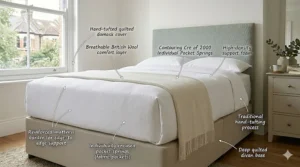
The Happy Beds Signature Platinum 2000 stands out immediately for its use of genuine natural fillings rather than synthetic alternatives. This orthopaedic pocket sprung mattress features 2000 individual springs encased in calico pockets, topped with layers of lambswool and silk beneath a Belgian damask cover. What makes this noteworthy for UK sleepers is how natural wool performs in our damp climate—it wicks moisture away from your body during those muggy August nights whilst providing insulation when temperatures drop in January.
The medium-firm tension uses a 1.4mm spring gauge, appropriate for sleepers up to approximately 16 stone. In practice, this means the mattress provides enough give to cushion pressure points on your shoulders and hips if you’re a side sleeper, whilst offering sufficient resistance to keep your spine aligned if you sleep on your back. The hand-tufted construction—where craftsmen literally pull tufts through the entire mattress depth—prevents the upholstery layers from shifting and creating lumps over time.
UK customers consistently praise its durability, with many reporting the mattress maintains its support characteristics beyond the 5-year mark. The main trade-off is weight—at roughly 35-40kg for a double, you’ll want a partner’s help when rotating it quarterly as recommended.
Pros:
✅ Natural fillings regulate temperature brilliantly in UK climate
✅ Hand-tufted construction prevents premature sagging
✅ Meets BS 7177:2008+A1:2011 fire safety standards
Cons:
❌ Heavy to rotate (important consideration for flats without lift access)
❌ Higher initial investment than synthetic alternatives
Value Assessment: Around £400-£550 depending on size. Worth every pound if you value natural materials and proven longevity over flashier features.
2. Memory Zone 2000 Pocket Hybrid — Motion Isolation Champion
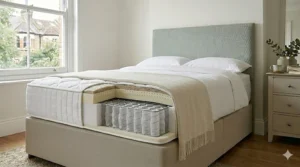
The Memory Zone 2000 Hybrid solves the problem most couples face: one person’s midnight bathroom trip shouldn’t wake the other. This mattress combines 2000 individual pocket springs with a 5cm layer of memory foam, but the genuinely clever bit is the foam encapsulation around the perimeter. This reinforced edge support means you can actually use the full width of your mattress without feeling like you’re about to roll off—surprisingly important in Britain’s smaller bedrooms where a double must function like a king.
Each spring operates as an independent piston, meaning movement doesn’t transfer across the mattress surface. The memory foam layer then absorbs any remaining vibration whilst contouring to your body shape. For UK buyers, the medium firmness rating works well for most sleep positions, though genuinely heavy individuals (18+ stone) might find it too soft for optimal support.
The mattress arrives rolled and compressed, which initially seems gimmicky until you’re navigating a narrow Victorian staircase in a terraced house. UK customers report it reaches 90% expansion within hours, though leaving it the full 72 hours ensures optimal performance. The removable, washable cover addresses a practical concern—British weather means tracking mud and damp through the bedroom is inevitable.
Pros:
✅ Foam encapsulation provides genuine edge-to-edge support
✅ Vacuum-packed delivery ideal for awkward staircases
✅ 5-year guarantee (better than many competitors)
Cons:
❌ Initial off-gassing smell (common with memory foam, dissipates within 48 hours)
❌ May feel too soft for stomach sleepers or heavier individuals
Value Assessment: Around £250-£400. Exceptional value proposition for couples prioritising motion isolation and easy delivery.
3. Vesgantti 2000 Pocket Hybrid — Budget-Conscious Engineering
Vesgantti might not have the brand recognition of Silentnight, but this 2000 pocket hybrid mattress punches well above its price point. The 7-zone ergonomic spring system divides the mattress into sections with varying support levels—firmer springs under your hips and lower back, softer springs under shoulders and legs. This zoning genuinely improves spinal alignment compared to uniform-tension mattresses, particularly beneficial if you’re switching between sleep positions throughout the night.
The construction layers breathable foam with egg-crate foam (those distinctive pyramid shapes) that promotes airflow. This addresses a specific British problem: our homes often lack air conditioning, so mattresses trap heat during summer. The CertiPUR-US certification and BS 7177:2008+A1:2011 compliance mean the foams contain no nasty chemicals and meet UK fire safety requirements.
UK reviewers consistently note this mattress feels firmer than advertised. If you’re drawn to “medium” descriptors, expect this to feel “medium-firm” in practice. That’s not necessarily negative—many who’ve upgraded from sagging old mattresses initially perceive proper support as “too firm” until their bodies adjust over 2-3 weeks. Worth noting for Scottish Highlands buyers: Vesgantti charges extra delivery fees for remote postcodes, though they don’t shy away from serving these areas entirely like some competitors.
Pros:
✅ 7-zone system provides targeted support at low cost
✅ Egg-crate foam significantly improves breathability
✅ 100-night trial period (generous for this price bracket)
Cons:
❌ Feels firmer than “medium” descriptor suggests
❌ Extra delivery charges for Scottish Highlands and islands
Value Assessment: Around £220-£450. Brilliant option for first-time buyers or those furnishing rental properties where premium features aren’t justified.
4. Silentnight Mirapocket 2000 Memory — The Back Pain Specialist
Silentnight‘s Mirapocket technology represents a step up from standard pocket springs. Rather than generic spring distribution, Mirapocket springs are zoned to provide firmer support in the centre third of the mattress (where your hips and lower back rest) whilst remaining softer at head and feet. Combined with a generous memory foam layer, this mattress specifically targets pressure point relief for those waking with aches.
The breathable border construction addresses memory foam’s traditional weakness—heat retention. Silentnight incorporates mesh borders that allow air circulation around the perimeter, preventing that trapped, sweaty feeling common with cheaper memory foam mattresses. For UK sleepers dealing with the damp cold, this balance between cushioning comfort and temperature regulation proves particularly valuable.
What separates this from cheaper alternatives is build quality. Made in Barnoldswick, Lancashire, this mattress features no-turn construction (you only rotate it, never flip it), proper edge reinforcement, and turning handles that actually withstand use. The 5-year guarantee reflects genuine confidence in durability. UK customers report this mattress maintains its support characteristics longer than foam-only alternatives, with many using them beyond 7 years.
Pros:
✅ Mirapocket zoning scientifically proven to improve spinal alignment
✅ Breathable construction prevents overheating
✅ UK-manufactured with strong quality control
Cons:
❌ Higher price point than imported alternatives
❌ Memory foam layer may feel too soft for dedicated stomach sleepers
Value Assessment: Around £400-£650. Premium pricing justified by superior engineering and proven back pain relief for many users.
5. Sareer 2000 Pocketo Medium — Straightforward Budget Option
The Sareer 2000 Pocketo represents no-nonsense pocket spring construction at accessible pricing. This mattress strips away luxury upholstery and focuses resources on the spring unit itself—2000 individual pocket springs in standard tension, hypoallergenic layers to prevent dust mite issues, and a medium firmness suitable for average-weight sleepers.
What you sacrifice compared to pricier models is depth. At 23cm versus 27-30cm for competitors, there’s less upholstery padding above the springs. This means you feel the spring support more directly—not necessarily uncomfortable, but distinctly firmer and less plush than memory foam hybrids. For back sleepers or those who’ve always preferred firm mattresses, this direct spring feel might actually be preferable.
The hypoallergenic treatment proves genuinely useful in British homes prone to damp. Dust mites thrive in moisture, and our climate provides perfect breeding conditions. The chemical treatment on this mattress’s fillings inhibits mite colonisation, helping allergy sufferers breathe easier at night. UK customers note this mattress works best on a solid platform base or closely-slatted frame—the thinner profile means wider slat gaps (over 7cm) allow uncomfortable pressure points.
Pros:
✅ Budget-friendly without sacrificing spring quality
✅ Hypoallergenic treatment effective for allergy sufferers
✅ Firm support ideal for back sleepers
Cons:
❌ Thinner upholstery means less plush comfort
❌ Requires proper base support (slats under 7cm apart)
Value Assessment: Around £180-£320. Best value if you prioritise spring support over luxury feel and need allergy protection.
6. Silentnight 2000 Box Top Deluxe — Side Sleeper Heaven
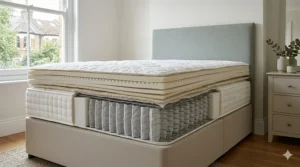
The Silentnight 2000 Box Top takes a maximalist approach with 38cm total depth—roughly 10-15cm thicker than standard mattresses. This extra height comes from 15cm of super-soft foam layers above the Mirapocket 2000 spring system. For side sleepers, this deep cushioning allows shoulders and hips to sink in whilst the springs below maintain spinal alignment.
The box top construction—where the foam layers are quilted into raised panels—creates distinct comfort zones across the surface. This isn’t just aesthetic; the quilting helps prevent foam layers shifting and creating lumps. UK customers love the immediate plush feel, though some note a peculiarity: despite being marketed as “soft,” the underlying spring support feels firmer than expected after the initial sink-in.
That thickness creates practical considerations for British bedrooms. Standard fitted sheets may not accommodate the depth—you’ll likely need “extra deep” or “40cm+” sheets. The mattress also sits quite high on your bed frame, which matters if you’ve got mobility concerns or share the bed with elderly relatives who struggle with higher climbing distances.
Pros:
✅ Exceptional pressure relief for side sleepers
✅ Box top construction prevents foam layer shifting
✅ Mirapocket zoning provides targeted support
Cons:
❌ Standard fitted sheets won’t fit (need extra-deep variants)
❌ Sits very high on frame (mobility consideration)
Value Assessment: Around £500-£750. Justified if side sleeping is your primary position and you struggle with shoulder/hip pain.
7. Premier 2000 Orthopaedic — Firm Support Traditionalist
The Premier 2000 Orthopaedic caters to those who want proper firm support without the sinking feeling of memory foam. This hand-tufted mattress features 2000 pocket springs beneath generous fillings of lambswool and cotton, all wrapped in 100% cotton Italian damask fabric. The hand-tufted construction—visible as dimpled patterns across the surface—prevents upholstery separation over years of use.
The medium/firm rating translates to genuinely firm support in practice. The spring gauge sits thicker than softer variants (approximately 1.5-1.6mm), providing resistance that keeps your spine aligned rather than allowing your body to sink. For back sleepers, stomach sleepers, or anyone above 14 stone, this firmness prevents the lower back hyperextension that causes morning stiffness.
Being hand-stitched in the UK means quality control surpasses mass-produced imported alternatives. The borders feature traditional side stitching that extends the sleeping surface right to the edge and strengthens perimeter durability. UK customers report this mattress maintains its shape and support beyond 8 years, with turning handles that don’t tear away after a few rotations.
Pros:
✅ Hand-tufted construction ensures long-term durability
✅ Natural fillings breathe well in UK climate
✅ Properly firm support for heavier individuals
Cons:
❌ Too firm for dedicated side sleepers
❌ Requires regular rotation (heavy to manoeuvre)
Value Assessment: Around £300-£470. Excellent value for those prioritising longevity and genuine firm support over trendy features.
Real-World Scenarios: Which Mattress Suits Your Situation?
The London Flat Share Couple (Budget: £300-£400) You’re navigating a three-storey walkup in Clapham, bedroom barely fits a double, and one of you leaves for work at 6am whilst the other works late shifts. The Memory Zone 2000 ticks every box: vacuum-rolled delivery conquers those stairs, foam encapsulation means edge-to-edge sleep space in your cramped room, and motion isolation prevents dawn disturbances. The 25cm depth fits standard sheets you’ve already got.
The Birmingham Family Furnishing a Spare Room (Budget: £200-£300) Grandparents visit quarterly, teenage nephew crashes occasionally, and you’d rather not splurge on a rarely-used mattress. The Sareer 2000 Pocketo provides proper spring support without premium pricing. The hypoallergenic treatment matters when different people with unknown sensitivities use the bed. Firm enough to suit multiple body weights, and the straightforward construction means it’ll still function fine in 5 years when you’re hosting more regularly.
The Manchester Back Pain Sufferer (Budget: £400-£600) Years of desk work have left you with chronic lower back issues, and cheap mattresses make mornings agony. The Silentnight Mirapocket 2000 Memory specifically addresses this with zoned spring support and pressure-relieving foam. Made in Lancashire means quality you can verify, and the breathable borders prevent overheating during your recovery sleep. Consider the investment against physiotherapy costs—proper sleep support often reduces treatment needs.
The Edinburgh Side Sleeper (Budget: £500+) You wake with shoulder pain regardless of pillow quality, and hip discomfort disrupts your sleep. The Silentnight 2000 Box Top provides the deep cushioning side sleepers require—shoulders and hips sink into soft layers whilst the spring system maintains spinal alignment. Yes, you’ll need deeper fitted sheets and endure ribbing from your Scottish sensibility about spending this much, but chronic pain costs more in lost productivity and diminished quality of life.
How to Choose a 2000 Pocket Sprung Mattress in the UK
1. Match Firmness to Your Body Weight, Not Preference
The mattress industry’s dirty secret: “firm” and “soft” descriptors mean nothing without context. A 10-stone person and a 16-stone person need different spring tensions. Look for specific spring gauge information—1.28mm wire gauge suits lighter builds, 1.4mm handles average weights up to 16 stone, and 1.6mm accommodates heavier individuals. Most 2000 spring mattresses use 1.4mm as standard, which explains why many feel too soft for larger people regardless of “firm” marketing claims.
2. Prioritise Upholstery GSM Over Spring Count Alone
You never actually touch the springs—every bit of comfort comes from upholstery layers above them. Total GSM (grams per square metre) indicates quality: under 1200 GSM signals thin, budget padding that compresses quickly; 1200-1800 GSM represents decent mid-range construction; 1800+ GSM characterises premium mattresses with generous natural fibre layers. UK retailers rarely publicise GSM figures, which tells you something. If a manufacturer won’t disclose it, assume they’re hiding thin padding behind impressive spring counts.
3. Verify UK Compatibility Beyond Just Measurements
International mattresses sold on Amazon.co.uk sometimes list dimensions without mentioning they’re US or EU models. Check three things: measurements match UK standard sizes (single 90×190cm, double 135×190cm, king 150×200cm); certification includes BS 7177:2008+A1:2011 rather than only US standards; and crucially, verify the product actually ships from UK warehouses for reasonable delivery rather than from China with 4-6 week estimates and potential customs complications post-Brexit.
4. Assess Edge Support Through Construction Details
“Edge support” appears in every product description, but actual construction varies wildly. Proper edge support comes from foam encapsulation (foam blocks around perimeter) or reinforced spring borders, not just marketing promises. This matters practically—edge support determines whether you and your partner can use the full mattress width in Britain’s smaller bedrooms, or whether you’re both crowding toward the centre to avoid that rolling-off sensation.
5. Consider Total Cost of Ownership in Pounds
A £250 mattress lasting 5 years costs £50 per year. A £500 mattress lasting 10 years costs £50 per year. Factor in replacement costs, delivery charges (often £30-£50 extra for Scottish Highlands, Northern Ireland, and remote postcodes), old mattress disposal fees (£30+ if council charges), and whether the warranty actually covers sagging (most require 2.5cm+ compression to honour claims, conveniently just beyond typical wear patterns).
Common Mistakes When Buying a 2000 Pocket Sprung Mattress
Ignoring the Spring Gauge Specification
Marketing focuses on spring count because bigger numbers sound impressive, but spring gauge (wire thickness) determines actual firmness. A 2000-spring mattress with thin 1.28mm gauge feels softer than a 1000-spring mattress with thick 1.6mm gauge. For British buyers above average weight—and let’s be honest, we’re not exactly known for Mediterranean builds—demanding gauge information before purchase prevents costly mistakes. Reputable manufacturers disclose this readily; evasiveness signals quality shortcuts.
Assuming “Orthopaedic” Means Medical-Grade
British trading standards offer little protection here. “Orthopaedic” on mattresses carries no regulated meaning—manufacturers slap this label on anything firmish, hoping you’ll associate it with spine health. Genuine orthopaedic support requires proper firmness for your weight, appropriate spring tension, and sufficient upholstery depth to prevent pressure points. The label alone guarantees nothing, particularly on sub-£300 mattresses where “orthopaedic” often compensates for thin comfort layers with overly-firm springs that create new problems whilst solving none.
Overlooking Climate Compatibility
British weather creates specific mattress challenges American-designed products ignore. Memory foam traps heat during rare hot spells but stays cold during our long damp months, making it uncomfortable October through April without heated bedrooms. Natural fillings like wool wick moisture brilliantly, addressing humidity problems in homes lacking proper ventilation. Mattresses with breathable borders or egg-crate foam layers perform better in UK climate than sealed foam blocks designed for Arizona’s dry heat.
Misunderstanding the 100-Night Trial
Those generous trial periods include catches. Most require you’ve used the mattress at least 30 nights before requesting return—your body needs adjustment time, fair enough. However, return logistics often require original packaging (already binned), collection fees (£50-£100), or restocking charges (10-20%). Some Amazon.co.uk sellers handle returns brilliantly; others make it deliberately painful. Check whether returns go through Amazon’s A-to-Z guarantee or direct to manufacturer, as this dramatically affects ease of process.
Neglecting Base Compatibility
Your mattress performs only as well as its supporting base. Slatted beds require slats closer than 7cm apart—wider gaps create pressure points as your weight sinks between slats. Platform beds or divans with solid surfaces provide ideal support for pocket sprung mattresses. If upgrading just your mattress whilst keeping an old base, inspect the base first. Sagging slats, broken wooden battens, or uneven divan surfaces sabotage even premium mattresses, and most warranties specify improper base support voids coverage.
Understanding Spring Gauge: The Technical Detail That Actually Matters
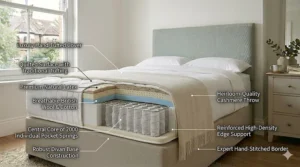
Spring gauge thickness represents the mattress industry’s most important specification you’ve probably never heard of. Measured in millimetres, it indicates the diameter of wire used to form each spring coil. According to British Standards specifications, standard pocket springs range from 1.28mm (softer) through 1.4mm (medium) to 1.6mm (firmer), with each 0.2mm increment creating noticeable firmness differences.
Here’s the practical significance: thicker wire requires more force to compress, creating firmer support. A 2000-spring mattress with 1.6mm gauge feels substantially firmer than another 2000-spring mattress with 1.28mm gauge, despite identical spring counts. This explains why some mattresses described as “medium” feel like sleeping on concrete whilst others labelled “firm” seem softer than expected—gauge matters more than generic firmness descriptors.
For British buyers, body weight determines appropriate gauge. Up to 11 stone typically suits 1.28mm gauge; 11-16 stone works well with 1.4mm gauge; above 16 stone generally requires 1.6mm gauge for proper support without excessive compression. Couples with significant weight differences face challenges here—zip-and-link systems offering split gauges solve this but cost substantially more than standard mattresses.
The problematic reality: most high street retailers won’t disclose spring gauge specifications. Manufacturers who use quality springs prominently display these figures; vague specifications signal compromises. When shopping on Amazon.co.uk, this information appearing in product descriptions indicates legitimate quality construction. Its absence warrants scepticism regardless of marketing superlatives.
2000 vs 1000 Pocket Springs: Does Doubling Actually Double Support?
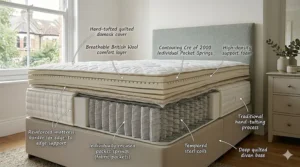
The psychological appeal of bigger numbers drives mattress marketing, but the relationship between spring count and sleep quality isn’t linear. A king-size mattress with 2000 springs contains roughly 13 springs per square foot; a 1000-spring king has about 6-7 per square foot. This doubled density provides genuinely improved body contouring and motion isolation, particularly beneficial for couples where one person’s movement previously disturbed the other.
However, diminishing returns kick in past certain thresholds. Research from British mattress manufacturers indicates the maximum practical spring count for a single layer in a king-size mattress sits around 2000 springs. Mattresses claiming 3000+ springs achieve this through double-layer construction (standard springs beneath, smaller mini-springs above) or suspension units, which changes the feel significantly compared to single-layer 2000-spring designs.
For UK buyers evaluating cost-benefit, the jump from 1000 to 2000 springs delivers noticeable improvements: better motion isolation, more precise body contouring, and reduced partner disturbance. The jump from 2000 to 3000+ springs provides marginal gains unless you specifically need the plush surface feel mini-springs create. Factor in pricing—2000-spring mattresses occupy the £200-£650 range on Amazon.co.uk; 3000+ spring models often exceed £800-£1200. That price difference buys considerable quality-of-life improvements elsewhere.
The more important consideration: spring quality matters as much as quantity. A 2000-spring mattress using cheap spunbond fabric pockets and thin gauge wire will perform worse than a well-constructed 1000-spring mattress using calico pockets and appropriate gauge. Obsessing over spring count whilst ignoring construction quality repeats the mistake of buying cars based solely on horsepower whilst ignoring suspension, tyres, and build quality.
Edge Support in Pocket Sprung Mattresses: Why It Matters in Smaller British Bedrooms
Edge support rarely features in casual mattress discussions, yet it dramatically affects usable sleep space—particularly relevant given British bedrooms average smaller than American or European equivalents. A double mattress measures 135cm wide, but without proper edge support, the usable width shrinks to perhaps 110-115cm as occupants avoid perimeter areas where they feel they might roll off.
Proper edge support comes through two construction methods: foam encapsulation or reinforced spring borders. Foam-encapsulated mattresses, like the Memory Zone 2000, wrap the spring unit in high-density foam blocks creating firm perimeter support. This allows sleeping right to the edge without that unsupported feeling. Reinforced spring borders use thicker-gauge springs or additional spring rows around perimeter, common in traditional British-made mattresses.
The practical benefit extends beyond just sleep surface. Strong edges prevent premature sagging around the perimeter—that characteristic “moat” formation where sides compress more than centres, eventually making the mattress uncomfortable even if the centre remains supportive. Given British homes’ tendency toward damp, which accelerates material degradation, robust edge construction proves especially valuable for longevity in UK climate conditions.
When evaluating edge support on Amazon.co.uk listings, look for specific construction mentions: “foam-encapsulated,” “reinforced perimeter,” or “edge support system” with details. Vague claims like “excellent edge support” without explaining how signal marketing rather than engineering. Reading customer reviews specifically mentioning edge stability provides reliable real-world validation beyond manufacturer claims.
Zoned Pocket Spring Systems: Marketing Gimmick or Genuine Innovation?
Zoned pocket spring systems divide mattresses into sections with varying spring tensions—typically firmer under hips and lower back, softer under shoulders and feet. The engineering logic holds: different body parts require different support levels for optimal spinal alignment. Your hips and midsection carry most body weight and need firmer resistance; shoulders benefit from softer springs allowing natural forward rotation when side sleeping.
Do these zones actually work? According to independent UK sleep research, zoned systems measurably improve spinal alignment compared to uniform-tension springs, particularly for side sleepers. The effect proves most pronounced for individuals with significant weight distribution variations—broader shoulders with narrower hips, or vice versa.
However, effective zoning requires precision manufacturing. Budget mattresses sometimes market “zoned support” whilst using identical springs throughout with slight upholstery variations creating minimal actual differentiation. Quality zoned systems, like Vesgantti’s 7-zone configuration or Silentnight’s Mirapocket zoning, use genuinely different spring gauges or densities across zones.
For British buyers, zoned systems provide particular value if you’re a side sleeper above 12 stone or suffer from lower back issues. The targeted support helps maintain neutral spine position throughout the night. Back sleepers and lighter individuals notice less dramatic benefits, though the improved pressure distribution still enhances overall comfort. At similar price points, zoned systems represent worthwhile upgrades; paying significant premiums purely for zoning over otherwise superior mattresses warrants scepticism.
UK Mattress Fire Safety Standards: What BS 7177 Actually Means
Every mattress sold legally in the UK must meet BS 7177:2008+A1:2011 fire safety standards. These regulations categorise mattresses by intended use: Low Hazard (domestic/home use), Medium Hazard (hotels, care homes), High Hazard (prisons, psychiatric facilities), and Very High Hazard (specialist high-risk settings).
For British buyers purchasing from Amazon.co.uk, Low Hazard compliance represents minimum legal requirement. This means mattresses resist ignition from cigarettes and match flames, protecting household safety. All mattresses covered in this guide meet these standards—you should see a BS 7177 label sewn into the border, typically near the foot end.
The practical significance extends beyond fire safety. Post-Brexit, UK regulations diverged from EU standards, with UKCA marking replacing CE marking. Legitimate UK-market mattresses display proper certification; grey-market imports lacking correct labelling potentially violate safety standards. When purchasing from Amazon.co.uk, verify listings mention BS 7177 compliance and preferably show images of the certification label.
Additionally, reputable manufacturers publish certification documentation. Vesgantti mattresses, for instance, clearly state BS 7177:2008+A1:2011 certification in specifications. Silentnight and Happy Beds being UK manufacturers naturally meet standards. Suspiciously cheap imported mattresses sometimes skip proper certification—saving £50 isn’t worth potential fire risk or invalidating home insurance through non-compliant products.
Long-Term Cost Analysis: What Actually Affects Mattress Lifespan in UK Homes
British climate presents specific challenges affecting mattress longevity beyond typical wear patterns. Humidity accelerates material degradation; pocket spring mattresses handle this better than foam-only alternatives as springs don’t absorb moisture. However, upholstery layers above springs—particularly natural fibres like wool or cotton—require proper ventilation preventing mould development.
Expected lifespan varies dramatically by construction quality. Budget mattresses (£150-£300 range) typically last 4-6 years before springs lose tension or upholstery compresses noticeably. Mid-range options (£300-£500) reasonably deliver 6-8 years. Premium mattresses (£500+) with proper maintenance often exceed 8-10 years. These figures assume appropriate care: regular rotation, adequate base support, and reasonable usage.
Calculate true cost-per-year, not just purchase price. A £200 mattress replaced every 5 years costs £40 annually plus delivery and disposal expenses. A £450 mattress lasting 9 years costs £50 annually—marginal difference for substantially better quality during ownership. Factor in intangible costs: poor sleep quality from degraded cheap mattresses affects work performance, mood, and health, potentially costing far more than mattress price differences.
For Scottish and Northern Irish buyers, delivery charges significantly impact total cost. Many Amazon.co.uk sellers add £30-£80 for remote postcodes. Free delivery offers often exclude Scottish Highlands, islands, and Northern Ireland entirely. Calculate total delivered cost including any disposal fees your local council charges (typically £25-£40), and whether you’ll need deeper fitted sheets (£20-£40 extra if moving from standard to deep mattresses).
Frequently Asked Questions
❓ Are 2000 pocket sprung mattresses suitable for adjustable bed bases?
❓ How does British climate affect pocket sprung mattress performance compared to memory foam?
❓ What's the minimum delivery time for 2000 pocket sprung mattresses on Amazon.co.uk?
❓ Can I use my existing bed frame with a 2000 pocket sprung mattress, or do I need a new base?
❓ Do 2000 pocket sprung mattresses help with back pain, or is that just marketing?
Conclusion: Making Your 2000 Pocket Sprung Decision
The mattress industry thrives on confusion—bigger numbers, fancier materials, and impressive-sounding technologies designed to overwhelm rather than inform. Strip away the marketing, and 2000 pocket sprung mattresses represent the sweet spot for most British buyers: sufficient spring density for proper body contouring and motion isolation, without the diminishing returns and premium pricing of 3000+ spring alternatives.
Your ideal choice depends on specific circumstances rather than universal “best” recommendations. Couples prioritising motion isolation in smaller bedrooms benefit enormously from models like the Memory Zone 2000 with foam encapsulation maximising usable sleep width. Those suffering back pain should seriously consider the Silentnight Mirapocket 2000‘s zoned support system despite higher cost—chronic pain affects every aspect of life, making the investment worthwhile. Budget-conscious buyers furnishing spare rooms or student accommodation find excellent value in the Sareer 2000 Pocketo, which delivers proper spring support without luxury features you’re not using anyway.
Remember that spring count alone doesn’t determine quality. Spring gauge, upholstery GSM, edge construction, and base compatibility all dramatically affect real-world performance. Prioritise mattresses disclosing specific construction details over those hiding behind vague marketing claims. Verify BS 7177 fire safety compliance, factor in total delivered cost including any remote area surcharges, and consider long-term value rather than just initial price.
British homes present unique challenges—damp climate, smaller bedrooms, narrow staircases, varied heating systems—that American-designed mattresses often ignore. The products recommended here specifically suit UK conditions, all available through Amazon.co.uk with reasonable delivery and verified customer reviews. Your body spends roughly one-third of its life on your mattress; choosing wisely affects sleep quality, physical health, and daily functioning far beyond simple comfort preferences.
✨ Don’t Miss These Exclusive Deals!
🔍 Take your sleep quality to the next level with these carefully selected 2000 pocket sprung mattresses. Click on any highlighted item to check current pricing and availability on Amazon.co.uk. These picks will help you find exactly what you need for restful British nights!
Recommended for You
- 7 Best Pocket Sprung Mattress UK: Expert Reviews 2026
- 7 Best Cooling Memory Foam Mattresses UK 2026: Stop Overheating
- 7 Best Memory Foam Mattress Under £300 UK 2026
Disclaimer: This article contains affiliate links. As an Amazon Associate, I earn from qualifying purchases. If you purchase products through these links, we may earn a small commission at no additional cost to you.
✨ Found this helpful? Share it with your mates! 💬🤗
