
In This Article
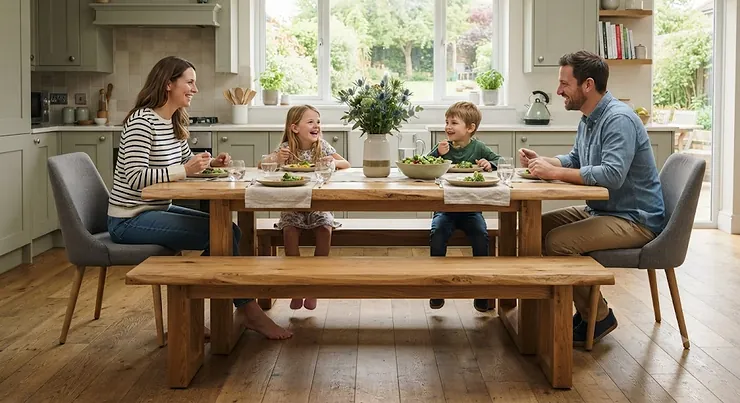
There’s a moment in most kitchen renovations where someone suggests ditching two dining chairs for a bench, and the room goes quiet. It sounds like a small swap. It isn’t, really — a bench changes how a table gets used, how many people you can squeeze in when your sister turns up with her partner uninvited, and whether your dining space reads as “considered” or “leftover chairs from three different house moves.”
This guide exists because finding the best dining bench for your specific table, room and household is genuinely fiddlier than it looks online. We’ve researched seven real benches currently listed on amazon.co.uk, checked genuine aggregated review sentiment rather than inventing any, and worked out which pick suits which situation — from a sub-£50 pine option to a solid oak set that’ll outlast several kitchen refits. Whether you’re chasing a specific look, a specific budget, or simply more seats at the table without more furniture, there’s a proper answer here rather than a generic “it depends.”
What Is a Dining Bench?
A dining bench is a long, backless or low-backed seat, usually made from wood or a wood-and-metal combination, designed to sit alongside a dining table in place of individual chairs. According to Wikipedia’s entry on the furniture type, a bench is simply a long seat on which several people can sit at the same time, typically made of wood but sometimes metal, stone or synthetic materials, with or without a backrest.
In a dining context specifically, benches usually run one side of a rectangular table (often paired with chairs on the other side or ends) or sit either side of a smaller table as a matching pair. They’re prized for flexibility — a bench can seat two adults comfortably or squeeze in three children at a push, which no fixed set of chairs can match.
Quick Comparison Table
| # | Product | Material | Price Range | Rating | Best For |
|---|---|---|---|---|---|
| 1 | KROKWOOD Tomas Solid Wood Bench | Solid beech or oak | £60-£100 | 4.6-4.8★ | Best all-round pick |
| 2 | Julian Bowen Coxmoor Bench, Oak | Solid American white oak | £70-£110 | 4.4-4.5★ | Classic coordinated oak set |
| 3 | Hallowood Furniture Waverly Oak Dining Bench | Solid wood, light oak finish | £70-£90 | 4.5-5.0★ | Light oak 2-seater |
| 4 | HOMCOM 102cm Wood Dining Bench | Pine wood | £45-£55 | 4.4★ | Tightest budget |
| 5 | Hallowood Furniture Dudley Dining Bench | Wood top, black metal legs | £75-£90 | 4.6-4.7★ | Industrial styling |
| 6 | CLIPOP Velvet Dining Bench 2-Seater | Velvet with metal frame | £75-£85 | 4.6-4.9★ | Softer, upholstered seating |
| 7 | Arlington Solid Mango Wood 140cm 3-Seater Bench | Solid mango wood, metal legs | £75-£85 | Strong sentiment | Bigger tables, extra seats |
Looking at the spread here, the KROKWOOD Tomas Solid Wood Bench stands out for genuinely high review volume alongside solid construction, which is a combination that’s harder to find than it should be at this price point. Budget-conscious buyers should note the HOMCOM 102cm Wood Dining Bench is the only pick under £55, though it trades solid hardwood for a lighter pine frame — a fair trade for many households, less so for others, which we’ll unpack below.
💬 Just one click — help others make better buying decisions too!😊
Top 7 Best Dining Benches: Expert Analysis
1. KROKWOOD Tomas Solid Wood Bench — best all-round pick with proven reliability
What sets the KROKWOOD Tomas Solid Wood Bench apart isn’t a single standout feature so much as consistency — hundreds of reviews backing up a product that simply does what it says, in genuinely solid timber rather than a printed effect.
On the spec sheet, that matters more than it sounds: available in beech or oak, with a stated maximum load of 250kg, this is a bench built to take genuine daily use rather than occasional overflow seating. The wipe-clean finish is a small but real convenience for a kitchen bench that will inevitably catch spills. Mounting hardware is included, and assembly is straightforward enough that most buyers report finishing it in well under an hour.
Who’s this for? Households who want a dependable, no-drama bench without needing to research obscure brands — the review volume here (well into the hundreds, consistently rated around 4.6 to 4.8 out of 5) gives a level of buying confidence that newer or thinly-reviewed benches simply can’t match. Reviewers consistently report that it looks and feels more expensive than the price suggests, and several specifically mention it as good value relative to comparable branded alternatives.
Pros:
- ✅ Genuinely solid wood construction in beech or oak
- ✅ High maximum load rating of 250kg
- ✅ Large, consistently strong review base for buying confidence
Cons:
- ❌ Oak version costs noticeably more than the beech option
- ❌ No backrest, so less suited to long, leisurely dinners
Typically priced in the £60-£100 range depending on size and wood choice, this is a genuinely strong value pick — check current price and stock before buying, as popular sizes have sold out before.
2. Julian Bowen Coxmoor Bench, Oak — best classic coordinated oak set
The Julian Bowen Coxmoor Bench, Oak leans on an established name in UK dining furniture, and it shows in the details — this is solid American white oak with a durable oiled finish, part of a wider Coxmoor range that includes a matching table, chairs and coffee table.
What most buyers overlook about buying from a coordinated furniture range is the long-term flexibility it offers: because the Coxmoor collection stays in production over several years, it’s genuinely possible to add matching pieces later rather than committing to everything on day one. The oiled oak finish also ages in a way that painted or lacquered benches can’t — light scuffs blend into the grain rather than chipping to reveal bare board.
This suits couples or families setting up a longer-term dining space who like the reassurance of buying from a recognised manufacturer with a wide review history across its range. Aggregated sentiment for the broader Coxmoor range sits consistently around 4.4 to 4.5 out of 5 across hundreds of ratings, with reviewers frequently commenting that the oak looks and feels more premium than the price implies, though a handful note the individual timber pieces used in construction are relatively slender rather than a single thick slab.
Pros:
- ✅ Solid American white oak, not an oak-effect finish
- ✅ Part of a coordinated range for future matching purchases
- ✅ Backed by an established manufacturer with a long review history
Cons:
- ❌ Pricing varies significantly between retailers — worth comparing before buying
- ❌ Simple self-assembly required, unlike some pre-assembled rivals
Prices for the standalone bench have ranged from around £70 up to £110 depending on retailer and promotion, so checking the current price at the time of purchase is worthwhile — even at the higher end, the oak construction and coordinated range go some way to justifying the spend.
3. Hallowood Furniture Waverly Oak Dining Bench — best light oak 2-seater
The Hallowood Furniture Waverly Oak Dining Bench brings a lighter, more contemporary oak tone than the deeper, traditional finishes common elsewhere in this category — a genuinely useful option for Scandi-leaning or brighter dining spaces.
Here’s what the spec sheet doesn’t fully convey: light oak finishes like this one reflect more ambient light than dark stains, which makes a real visual difference in dining rooms that don’t get much natural sun — a small detail, but one that changes how a room feels day to day rather than just in product photos. Built as a solid wooden 2-seater bench, it’s sized for pairing with a smaller table or for use as a second seating option alongside standard chairs.
This is a strong fit for households wanting a lighter, more modern take on solid wood rather than the darker traditional oak look, and who value buying from a smaller UK furniture specialist over a mass-market brand. Aggregated review sentiment is notably strong here, sitting between 4.5 and a perfect 5 out of 5 across its listings, albeit from a smaller review pool than higher-volume competitors — a pattern typical of newer listings from smaller sellers rather than a red flag in itself.
Pros:
- ✅ Light oak finish suits brighter, more contemporary dining rooms
- ✅ Strong review scores across its available listings
- ✅ Solid wooden construction rather than an oak-effect laminate
Cons:
- ❌ Smaller review sample size than higher-volume competitors
- ❌ Priced above the budget picks in this round-up
At roughly £70-£90 depending on retailer, this sits in solid mid-range territory — the value case rests on the finish and build quality rather than being the outright cheapest option here.
4. HOMCOM 102cm Wood Dining Bench — best budget buy
What the HOMCOM 102cm Wood Dining Bench gets right for a genuinely tight budget is not cutting corners on the bit that matters most for safety: it’s rated to a 220kg maximum load despite its low price, built from a pine wood frame with a protective paint coating and non-slip feet to protect flooring.
On the spec sheet, the 102 x 36 x 45cm footprint puts it squarely in standard dining-height territory, so it pairs comfortably with most UK dining tables without needing to check unusual measurements. The white-and-natural-wood-effect two-tone look is a deliberately simple, versatile design intended to slot into kitchen, hallway or entryway use as well as dining — genuinely useful if you’re not fully committed to a permanent dining bench yet.
This is the pick for renters, students, or anyone furnishing a first dining space on a proper budget without wanting to compromise on basic sturdiness. Reviewers rate it around 4.4 out of 5, with feedback generally praising ease of assembly and describing it as good value for money, though — as is typical at this price point — the pine construction is noticeably lighter-duty than the solid oak or beech options elsewhere in this list.
Pros:
- ✅ Genuinely the cheapest pick in this round-up
- ✅ Solid 220kg maximum load rating despite the low price
- ✅ Simple, versatile design that suits more than just dining rooms
Cons:
- ❌ Pine construction feels noticeably lighter-duty than hardwood rivals
- ❌ Limited colour options compared with pricier alternatives
At under £55 for most retailers at the time of research, this is hard to beat on pure budget terms — a sensible starting point rather than a compromise, provided your expectations match the price point.
5. Hallowood Furniture Dudley Dining Bench — best industrial styling
The Hallowood Furniture Dudley Dining Bench commits fully to an industrial look — a solid wooden top paired with black metal U-shaped legs — rather than trying to be a subtle, blend-into-anything option, and it’s better for that clarity of purpose.
What most buyers overlook about metal-legged benches is how much sturdier the U-shaped leg design is compared with simple straight legs: the wider base footprint resists the side-to-side wobble that plagues some slimmer-legged benches once several people are shuffling in and out over a meal. The wooden top itself is genuinely solid rather than a thin veneer, giving it real heft when you pick it up to reposition.
This suits dining rooms already leaning industrial or urban-loft in style — exposed brick, pendant lighting, that sort of thing — where a traditional oak bench would look visually out of place. It’s a less natural fit for cottage-style or classic country kitchens. Reviewer sentiment sits around 4.6 to 4.7 out of 5, with feedback generally positive on sturdiness and finish quality, reflecting a manufacturer with a consistent track record across its wider bench range.
Pros:
- ✅ Wide U-shaped metal legs resist wobble better than slim leg designs
- ✅ Genuinely solid wooden top, not a thin veneer
- ✅ Distinctive industrial look for urban or loft-style dining rooms
Cons:
- ❌ Black metal legs can show scuffs and scratches over time
- ❌ Style won’t suit traditional or cottage-style dining rooms
Typically priced in the £75-£90 range across its available sizes, this is a solid mid-range pick specifically for buyers who’ve already committed to an industrial aesthetic — it’s as much a style decision as a value one.
6. CLIPOP Velvet Dining Bench 2-Seater — best upholstered, softer option
Every other bench in this round-up is hard-topped; the CLIPOP Velvet Dining Bench 2-Seater is the deliberate exception, pairing a padded velvet seat with a stable metal frame for genuinely softer, more forgiving seating.
Here’s the practical upside that’s easy to miss: upholstered bench seats compress slightly under weight, which measurably reduces the pressure points that hard wooden benches can create over a long meal — genuinely useful if your household tends to linger at the table rather than eat and leave. The metal frame underneath keeps the whole thing stable despite the softer top, avoiding the wobble that some fully-upholstered furniture suffers from.
This is the pick for households prioritising comfort over classic “wood grain” dining aesthetics, or for anyone using the bench doubly as dining seating and an occasional bedroom or hallway perch — its styling and proportions genuinely suit both. Aggregated sentiment is strong, generally landing between 4.6 and 4.9 out of 5 across its colour variants, with reviewers frequently highlighting comfort and a more premium feel than the price suggests.
Pros:
- ✅ Padded velvet seat is noticeably more comfortable for longer meals
- ✅ Stable metal frame despite the softer upholstered top
- ✅ Doubles easily as bedroom, hallway or window-seat furniture
Cons:
- ❌ Velvet upholstery needs more careful cleaning than wipeable wood
- ❌ Less durable long-term than solid wood if used very heavily daily
In the £75-£85 range depending on colour, this sits in solid mid-range territory — the value case is comfort and versatility rather than raw durability, which is exactly the trade-off upholstered buyers are making peace with.
7. Arlington Solid Mango Wood 140cm 3-Seater Bench — best for bigger tables and extra seats
Where the Arlington Solid Mango Wood 140cm 3-Seater Bench pulls ahead of every other option here is sheer capacity — at 140cm long, this genuinely seats three adults rather than the two most benches on this list comfortably manage.
The spec sheet detail worth flagging: mango wood is a genuinely underrated material for furniture — dense, hard-wearing, and prized for a distinctive, varied grain pattern that means no two benches look quite identical, similar to the appeal of live-edge or reclaimed timber but at a more accessible price point. Paired with metal legs finished in a dark walnut stain, it reads as substantial rather than budget, despite sitting in the mid-price bracket.
This is the natural pick for larger households, anyone who regularly hosts, or dining spaces with a longer table and an awkward corner that a standard 2-seater bench simply can’t fill. Aggregated sentiment for the range is consistently positive, with buyers commonly highlighting the striking grain pattern and genuine stability across the full 140cm length as particular strengths, even under the weight of three adults sitting simultaneously.
Pros:
- ✅ Genuinely seats three adults, not just two
- ✅ Distinctive mango wood grain — no two benches look identical
- ✅ Stable across the full length even under a full three-person load
Cons:
- ❌ 140cm footprint needs a genuinely long table or wall run to suit
- ❌ Heavier and more cumbersome to move than shorter benches
At roughly £75-£85, this represents strong value for the extra seating capacity — worth the floor space if your table and room can genuinely accommodate the length.
Dining Bench Buying Guide: What to Check Before You Buy
A dining bench buying guide only earns its name if it goes beyond “pick one you like the look of,” so here’s what genuinely separates a good purchase from a regretted one.
Start with material honesty. As with most wood furniture categories, “oak” or “wood” on a listing can mean solid timber, a wood veneer over engineered board, or a printed wood-effect finish — all three appear across this category, at very different price points and durability levels. None is wrong, but knowing which you’re buying avoids disappointment later.
Next, check the stated maximum weight or load capacity where listed — it’s a more reliable durability signal than price alone, and it tells you plainly whether a bench is built for genuine daily family use or lighter, occasional seating. Assembly requirements matter too: most benches in this category need simple self-assembly, but a small number, particularly premium ranges, ship pre-built — a real convenience if you’re setting up a whole dining area at once and don’t fancy an evening with an Allen key.
Finally, weigh finish maintenance against your household’s realism. A wipe-clean solid wood or metal-legged bench, like the KROKWOOD Tomas Solid Wood Bench or Hallowood Furniture Dudley Dining Bench, suits messier households with children better than an upholstered option like the CLIPOP Velvet Dining Bench 2-Seater, however much more comfortable the latter is for long dinners.
✨ Don’t Miss These Exclusive Deals!
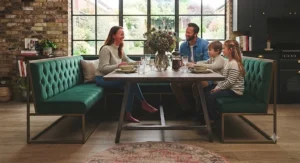
🔍 Take your dining space to the next level with these carefully selected benches. Click on any highlighted item to check current pricing and availability. These picks will help you fit more people round the table without cramming in more chairs!
How to Choose a Dining Bench for Your Table
Working through the decision in order, rather than by gut feeling alone, makes the choice noticeably easier.
- Measure your table’s length on the bench side first. A bench roughly 10-15cm shorter than the table edge it sits against generally looks proportionate without overhanging awkwardly.
- Match bench height to your table’s underside clearance. Standard dining tables sit around 71-76cm high; most benches are designed to leave a comfortable gap for knees once seated.
- Decide how many people genuinely need to sit on it. A 100cm bench like the HOMCOM 102cm Wood Dining Bench suits two adults; a 140cm option like the Arlington Solid Mango Wood 140cm 3-Seater Bench is built for three.
- Weigh backrest against flexibility. Backless benches, the majority in this category, tuck fully under the table when not needed, freeing floor space; backed benches trade that flexibility for longer-meal comfort.
- Factor in your household’s mess tolerance. Wipeable wood and metal-legged benches suit families with young children better than upholstered fabric options, however comfortable the latter feel.
- Set a genuine budget band before browsing, not a single number — pairs in this category realistically range from under £50 to over £100, and knowing your band in advance avoids scope creep once you start scrolling listings.
- Check current stock and size options before committing, since popular styles like the KROKWOOD Tomas Solid Wood Bench have sold out of specific sizes during periods of high demand.
Dining Bench Sizes and Dimensions
Getting the length right is the single most common sticking point in this category, so it’s worth treating dining bench sizes and dimensions as their own dedicated check rather than an afterthought.
Standard dining benches typically run 70-100cm for a 2-seater and 120-150cm for a 3-seater, with a seat depth around 30-36cm and a seat height of roughly 45cm to match standard UK dining table heights of 71-76cm. That 45cm seat height is broadly consistent with standard dining chair seat heights, so mixing a bench with existing chairs — a genuinely popular styling choice — rarely creates an awkward height mismatch.
If you’re planning a dining space in a smaller UK home, it’s worth knowing that room proportions in newer builds have generally shrunk over recent decades; the government’s own technical housing standards for new dwellings set minimum overall floor areas for new homes but leave the specific split between living, dining and kitchen space largely to the developer, which is part of why dining areas in newer flats and houses can end up tighter than expected. A slim bench pushed against a wall when not in use, rather than a set of chairs that need pulling fully out, can meaningfully help in exactly this scenario.
Table and Bench Pairing Guide
Pairing a bench with the right table is less about matching wood tones exactly and more about getting proportions and practical use right.
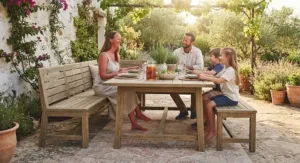
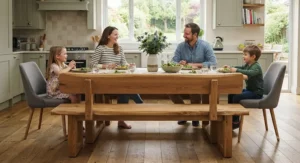
For a rectangular table, the classic pairing is a bench along one long side with chairs on the other and at the ends — this gives you the flexibility of a bench (easy to shuffle along, no fixed seat count) while keeping chairs for anyone who prefers back support. For smaller square or round tables, a genuine matching pair of benches either side, similar in spirit to the two-bench arrangement common with picnic-style tables, creates a more symmetrical, considered look.
Wood tone matching matters less than height and proportion — a Hallowood Furniture Waverly Oak Dining Bench in light oak can sit comfortably alongside a darker table if the overall room palette ties them together with rugs, chairs or accessories, rather than needing an identical timber match. What genuinely matters more is bench height relative to table height (checked as above) and bench depth relative to table depth — a bench that’s noticeably deeper than the table overhang looks visually clumsy regardless of how well the wood tones match. As a practical starting rule, aim for the bench to sit roughly 5-8cm shallower than the table’s overhang on that side, so knees clear comfortably without the bench looking oversized against the tabletop.
Bench vs Chairs: Pros and Cons
The bench-versus-chairs debate rarely has a single right answer, and it’s worth being honest about the genuine trade-offs rather than pretending one option wins outright.
Chairs offer individual back support, are easier for older household members or anyone with mobility considerations to get in and out of, and don’t require negotiating seat space with whoever’s sitting next to you. A full set of matching chairs also, for many people, simply looks more “finished” and traditional as a dining setup.
Benches, on the other hand, genuinely win on flexibility — a 140cm bench like the Arlington Solid Mango Wood 140cm 3-Seater Bench can seat two adults comfortably or three at a squeeze, something no fixed chair count can replicate. Benches also tuck fully under the table when not in use, which meaningfully opens up floor space in smaller dining rooms — a real, measurable benefit rather than just an aesthetic one. They’re typically easier to wipe down as a single surface too, particularly hard-topped options like the HOMCOM 102cm Wood Dining Bench.
For most households, the practical answer is neither purely benches nor purely chairs — mixing one bench with a few chairs, as covered in the pairing guide above, captures the flexibility of a bench without losing back support entirely. It’s telling that this mixed approach has become one of the more consistently recommended dining layouts among UK interior specialists in recent seasons, rather than a purely style-led trend.
Dining Room Furniture Trends for 2026
Dining room furniture trends for 2026 are leaning noticeably away from uniform matching sets and towards more deliberately mixed, textural setups — and dining benches sit right at the centre of that shift.
Mixed seating arrangements, where a bench pairs with two or three different chair styles rather than an identical set, are among the most consistently mentioned directions this year, reflecting a broader move away from formal, showroom-matched dining rooms towards spaces that feel gradually collected rather than bought in one trip. Natural, characterful wood finishes are also firmly back in favour — grain pattern and texture matter more than uniform colour, which is part of why materials like the mango wood used in the Arlington Solid Mango Wood 140cm 3-Seater Bench or the solid oak in the Julian Bowen Coxmoor Bench, Oak are having a genuine moment rather than flatter, more uniform finishes.
There’s also a renewed emphasis on dining spaces as genuinely used rooms rather than formal, occasional-use areas — a shift that favours flexible, easy-to-reconfigure furniture like benches over fixed chair sets. Industrial and metal-legged styles, such as the Hallowood Furniture Dudley Dining Bench, continue to hold their own within this broader move towards texture and character, particularly in open-plan kitchen-diners where a softer traditional look can feel visually out of step with exposed brick or industrial lighting choices.
Practical Usage Guide: Placement, Assembly & Maintenance
Getting a new bench right isn’t just about the unboxing — placement and the first few weeks of use set the pattern for how well it performs long-term.
For placement, position the bench against the table first and check the gap to any wall behind it — you’ll want at least 60-70cm of clearance for someone to get in and out comfortably, more if the room doubles as a walkway. For assembly, most benches in this category use simple bolt-and-cam fittings; tighten every fixing snugly on first build, then do a follow-up check after roughly a week of use, since normal vibration from sitting down and standing up commonly loosens initial assembly slightly.
For ongoing maintenance, wipe solid wood and painted finishes with a barely-damp cloth rather than harsh sprays, which can dull a lacquered or oiled surface over time. Oiled oak benches, like the Julian Bowen Coxmoor Bench, Oak, benefit from a light re-oiling every twelve months or so to keep the finish resisting moisture and everyday knocks. Upholstered options such as the CLIPOP Velvet Dining Bench 2-Seater should be vacuumed regularly and spot-cleaned promptly rather than left to soak in spills, since velvet in particular can water-mark if liquid sits too long. A common early mistake is skipping the manufacturer’s specific cleaning guidance and reaching for a generic all-purpose spray — always check the listing or included instructions first, since finishes vary more than people expect across this category.
Real-World Scenarios: Which Bench Suits Your Dining Space?
Scenario one — the small kitchen-diner. Floor space is tight, and every centimetre of clearance matters when chairs need pulling out. A slim, tuck-away bench like the HOMCOM 102cm Wood Dining Bench or KROKWOOD Tomas Solid Wood Bench makes practical sense here, freeing up walking space when not in active use.
Scenario two — the family with young children. Spills, sticky fingers and the occasional dropped plate are simply part of daily life. Wipeable, hard-topped options like the Hallowood Furniture Dudley Dining Bench or HOMCOM 102cm Wood Dining Bench cope far better here than upholstered alternatives, without sacrificing sturdiness.
Scenario three — the household that regularly hosts. Extra seating capacity matters more than a pristine, minimal look. This is exactly where the Arlington Solid Mango Wood 140cm 3-Seater Bench earns its place — genuine three-person capacity that a standard chair set simply can’t offer without buying more chairs.
Scenario four — the long, leisurely dinner household. If meals regularly run long and comfort matters more than wipe-clean practicality, the CLIPOP Velvet Dining Bench 2-Seater is the stronger fit, trading some durability for genuinely more comfortable extended seating.
Common Mistakes When Buying a Dining Bench
The single most common mistake is measuring the table but forgetting to check the room behind it — a bench that fits the table perfectly can still leave too little clearance to actually sit down comfortably if a wall or sideboard sits close behind.
A close second is assuming bench height will automatically match existing dining chairs; while most benches land around the standard 45cm seat height, it’s always worth checking the listing rather than assuming, particularly with upholstered options where cushion compression can shift the effective seat height slightly. Buyers also frequently underestimate how many people they actually want to seat, choosing a 2-seater bench when their real household or hosting needs would suit a 3-seater like the Arlington Solid Mango Wood 140cm 3-Seater Bench far better.
Finally, plenty of buyers pick a bench finish based purely on the product photo without checking the material description, then feel disappointed when a wood-effect finish scratches to reveal board underneath rather than more of the same timber. As covered in the buying guide above, that’s not a fault — it’s a different product tier, and checking the listing’s actual material description before buying avoids the mismatch between expectation and reality entirely.
What to Expect: Comfort & Real-World Performance
Specs on a listing rarely tell you how a bench actually feels twenty minutes into a family dinner, so it’s worth translating the key figures into real-world experience.
A backless hardwood bench, such as the KROKWOOD Tomas Solid Wood Bench, is genuinely comfortable for everyday meals but can start to feel firm over a longer two-hour dinner party, particularly without a cushion — worth knowing if you regularly host lengthy sit-down meals rather than quick family dinners. Upholstered options like the CLIPOP Velvet Dining Bench 2-Seater noticeably outperform hard benches here, with the padded top absorbing pressure in a way solid wood simply can’t.
Stability under real use also varies more than people expect. Wider, U-shaped metal-legged designs, like the Hallowood Furniture Dudley Dining Bench, tend to feel more planted when several people are shifting position or getting in and out mid-meal than slimmer straight-leg designs. Longer benches, meanwhile, benefit from genuinely solid construction across their full length — reviewers of the Arlington Solid Mango Wood 140cm 3-Seater Bench specifically note stability holding up even under three adults seated simultaneously, which isn’t a given at that length with lighter-duty builds.
Long-Term Cost & Maintenance
Sticker price only tells part of the story once realistic lifespan and upkeep enter the picture. A budget pine bench like the HOMCOM 102cm Wood Dining Bench might need replacing within three to five years under heavy daily family use, putting its realistic cost-per-year roughly in line with a mid-range hardwood bench bought once and kept for a decade.
Solid oak or beech pieces, such as the Julian Bowen Coxmoor Bench, Oak or KROKWOOD Tomas Solid Wood Bench, front-load the cost but can be lightly sanded and re-oiled rather than replaced outright, stretching realistic lifespan well beyond a decade with minimal ongoing spend. Upholstered options sit slightly differently — the metal frame on the CLIPOP Velvet Dining Bench 2-Seater is highly durable, but the velvet cover itself may need professional cleaning or eventual reupholstering sooner than a solid wood top would need refinishing, particularly in households with children or pets.
The practical takeaway: if you expect to keep the same dining setup for five-plus years, spending more upfront on solid hardwood tends to work out cheaper per year of ownership than repeatedly replacing budget benches. If you’re in a shorter-term rental or expect to redecorate within a couple of years, budget or mid-range options remain the more rational spend.
Safety & Regulations Guide
Solid wood and metal-framed dining benches themselves generally fall outside the UK’s specific upholstered-furniture fire safety rules, but it’s worth understanding the wider picture if you’re buying an upholstered option like the CLIPOP Velvet Dining Bench 2-Seater. In the UK, the Furniture and Furnishings (Fire) (Safety) Regulations 1988 set fire resistance requirements for domestic upholstered furniture sold across the UK, and reputable retailers will confirm compliance for any upholstered pieces they sell, including bench seating with fabric or velvet covers.
On stability, benches without a fixed backrest carry a small but real tip risk if someone stands on one end while the other is unweighted — worth a word of caution in households with energetic children who might be tempted to use a bench as a step stool. Checking the manufacturer’s stated maximum load, as covered throughout this guide, is the simplest practical safeguard here.
For sustainability-conscious buyers, it’s worth checking whether solid wood benches carry Forest Stewardship Council certification — FSC’s certification system covers more than 160 million hectares of forest globally and helps buyers choose timber products sourced from responsibly managed forests rather than unchecked logging. Look for the tick-tree logo on the product listing where this matters to your purchase.
Frequently Asked Questions
❓ What is the standard size for a dining bench?
❓ Are dining benches comfortable for long meals?
❓ Can I mix a dining bench with chairs at the same table?
❓ How much should I budget for a good dining bench?
❓ Do dining benches need to match the table exactly?
Conclusion
Choosing the best dining bench ultimately comes down to matching seating capacity, finish practicality and budget to how your household actually eats, rather than chasing a single universal winner. For most homes, the KROKWOOD Tomas Solid Wood Bench offers the safest, most proven combination of build quality and value. If your budget is genuinely tight, the HOMCOM 102cm Wood Dining Bench gets you a sturdy, functional seat without derailing the rest of your furniture spend. And if you regularly host or have a larger table to fill, the Arlington Solid Mango Wood 140cm 3-Seater Bench solves a seating-capacity problem that chairs alone simply can’t.
Whichever bench you land on, the underlying goal is the same: more flexible, genuinely usable seating that makes room for one more person at the table without a scramble for a spare chair.
Recommended for You
- Dining Bench and Chair Set Combination: 7 Best Picks for UK Homes (2026)
- Dining Bench for Kids: 7 Best Picks for Tidy Family Meals (2026)
- Small Dining Bench For Narrow Kitchen: 7 Clever UK Picks (2026)
Disclaimer: This article contains affiliate links. As an Amazon Associate, I earn from qualifying purchases. If you purchase products through these links, we may earn a small commission at no additional cost to you.
✨ Found this helpful? Share it with your friends! 💬🤗
