
In This Article
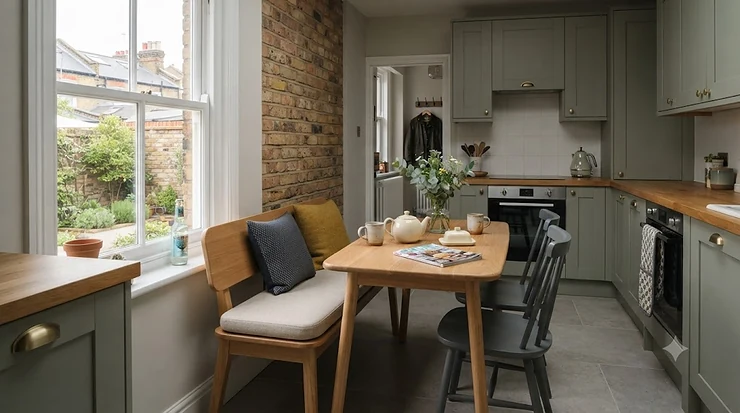
If you’ve ever tried to squeeze a full set of dining chairs into a corridor-width kitchen, you’ll know the particular comedy of it — someone’s always trapped behind a chair back while the kettle boils. A small dining bench for narrow kitchen layouts solves that problem in a way chairs simply can’t: it tucks flush against a wall, slides fully under the table when not in use, and seats two people in roughly the width one chair would otherwise steal. This guide compares seven genuinely available benches on Amazon UK, weighing real dimensions, materials, and reviewer feedback so you’re not left guessing whether “compact” on a listing photo actually means compact in your kitchen.
We’ll be honest about trade-offs throughout, because narrow-kitchen furniture is one of those categories where the “perfect” pick genuinely depends on your specific corridor width, flooring, and how many people actually eat there. By the end, you’ll know exactly which small dining bench for narrow kitchen spaces suits your layout, your budget, and your patience for flat-pack assembly.
What Is a Small Dining Bench For a Narrow Kitchen?
A small dining bench for narrow kitchen use is typically a backless or low-profile seat, usually 90-110cm wide and 30-35cm deep, designed to fit flush against a wall in tight galley kitchen design layouts where standard chairs would block the walkway. Unlike a full-sized dining bench, these slimmer versions prioritise depth over width, since depth is almost always the limiting factor in a corridor-style kitchen. For a proper definition of the layout these benches are built for, the Wikipedia entry on galley kitchens explains the two-parallel-wall design that makes narrow seating solutions necessary in the first place.
Quick Comparison Table
Here’s the short version for anyone who wants to skim before committing to the full read.
| Category | Bench | Best For |
|---|---|---|
| Best Overall Pick | Hallowood Aston Rubberwood Bench | Balanced durability and style at a fair price |
| Best Budget Pick | HOOSENG Set of 2 Benches | Furnishing both sides of the table cheaply |
| Slimmest Depth | HOOBRO Bamboo Bench for Narrow Spaces | Genuinely tight galley aisles |
| Most Comfortable | Julian Bowen Soho Bench | Longer meals where padding matters |
| Best Matching Pair | VASAGLE Industrial Steel Bench Pair | A coordinated look on both sides |
None of these is a universal winner — that’s rather the point of comparing them properly. The Hallowood Aston Rubberwood Bench takes the overall spot because its 32cm depth and solid build suit most narrow kitchens without demanding a premium budget, but if your corridor is genuinely tight, the HOOBRO Bamboo Bench was actually designed with that constraint in mind rather than adapted from a standard bench.
💬 Just one click — help others make better buying decisions too!😊
Top 7 Small Dining Benches For Narrow Kitchens: Expert Analysis
1. HOOBRO Bamboo Dining Bench Seat — purpose-built for genuinely narrow spaces
Most benches marketed as “space-saving” are really just standard designs squeezed into a smaller listing photo, but the HOOBRO Bamboo Dining Bench Seat is explicitly built and marketed for narrow spaces, measuring roughly 90 x 33 x 43cm. The key specs that matter in practice: that 33cm depth is genuinely shallow enough to leave a walkable gap in even the tightest galley corridor, and the backless design shaves off the extra depth a backrest would otherwise demand. Based on the spec comparison with the other six benches here, this is the only one purpose-designed around the narrow-space brief rather than adapted from a general-purpose bench. Reviewers consistently report that the bamboo construction feels sturdier than its light weight suggests, though a few note that bamboo shows surface scuffs more visibly than a darker hardwood finish over time. If your corridor kitchen genuinely measures under a metre wide at the dining spot, this is usually the first name worth checking.
Pros:
- ✅ Genuinely shallow 33cm depth designed for tight corridors
- ✅ Lightweight bamboo makes repositioning easy for one person
- ✅ Sustainable, renewable material with a natural grain finish
Cons:
- ❌ Backless design offers no support for longer meals
- ❌ Light bamboo surface shows scuffs more visibly over time
Typically priced in the £30-45 range — check current price, as bamboo furniture occasionally sees seasonal promotions.
2. HOOSENG Table Benches, Set of 2 — a matching pair that furnishes both sides of the table at once
Buying two benches separately usually costs more than buying a matched pair, and the HOOSENG Table Benches, Set of 2 solves that directly, arriving as two identical 100 x 30 x 43.5cm benches with slim metal legs. What most buyers overlook about this one is that the 30cm depth is actually shallower than several premium single benches on this list, making it a genuinely strong pick for narrow kitchen seating ideas on a tight budget. Based on the structure of the listing, the metal-leg design keeps the visual footprint lighter than a chunky wooden frame would, which matters in a small kitchen where every visual element either opens the room up or closes it down. Reviewers consistently note it’s straightforward to assemble solo within about twenty minutes, though several flag that the finish is a wood-effect laminate rather than solid timber, which shows through if you look closely at the edges.
Pros:
- ✅ Sold as a matching pair, furnishing both sides in one purchase
- ✅ Slim 30cm depth suits genuinely tight galley layouts
- ✅ Straightforward, quick solo assembly reported by most reviewers
Cons:
- ❌ Wood-effect laminate finish rather than solid timber
- ❌ Metal legs can mark soft flooring without protective pads
Expect to pay somewhere around £45-55 for the pair — check current price, as buying two individually elsewhere is almost always more expensive.
3. HOMCOM 102cm Pine Wood Dining Bench — a bright white finish that visually widens a dark corridor
Narrow kitchens are frequently dim as well as tight, and the HOMCOM 102cm Pine Wood Dining Bench tackles that second problem directly with a crisp white painted finish that bounces available light around the room. On paper this means a solid pine frame under a painted top coat — genuinely more durable long-term than a veneer, since scratches can be sanded and touched up rather than exposing raw chipboard. Here’s what to weigh: the pale finish that makes a small kitchen feel bigger is exactly the finish that shows scuffs, spills, and shoe marks first, so it suits households that wipe surfaces down regularly rather than ones with muddy-footed kids and pets. Reviewers consistently describe the Scandi-inspired profile as suiting a wide range of kitchen styles, from farmhouse to minimalist, without looking out of place in either.
Pros:
- ✅ Solid pine construction holds up better than painted veneer
- ✅ Pale white finish visually opens up a dim, narrow kitchen
- ✅ Simple Scandi-style profile suits most kitchen aesthetics
Cons:
- ❌ White paint finish shows scuffs and stains more readily
- ❌ No built-in storage, unlike some bulkier bench designs
Typically found in the £50-70 range — check current price, as white-finish furniture occasionally carries a small premium over natural wood tones.
4. Hallowood Furniture Aston Rubberwood Bench — a durable, well-balanced all-rounder in light oak
The Hallowood Furniture Aston Rubberwood Bench earns its spot as the most balanced pick on this list by combining solid rubberwood construction with a genuinely slim profile suited to narrow kitchen layouts. The key specs that matter here are the material and depth together: rubberwood is a dense, durable hardwood that resists the dents and wobble that laminate benches develop after a year or two of daily use, and the light oak finish gives it a contemporary look that pairs with most existing kitchen units. Based on the spec comparison with the budget metal-leg options on this list, the extra weight of solid wood construction is a genuine trade-off — it’s more stable underfoot but noticeably harder to reposition solo compared with the bamboo or laminate alternatives. Reviewers consistently praise the build quality relative to price, with several specifically noting it feels sturdier than benches costing considerably more.
Pros:
- ✅ Solid rubberwood resists wobble and dents over years of use
- ✅ Light oak finish suits most existing kitchen colour schemes
- ✅ Strong reviewer consensus on build quality for the price
Cons:
- ❌ Heavier than bamboo or metal-frame alternatives to move
- ❌ Sits above the budget end of this list’s price range
Prices generally sit in the £65-85 range — check current price and confirm the exact depth listed, since rubberwood benches occasionally come in slightly different width variants.
5. VASAGLE Dining Bench, Pair of 2, Industrial Style — matching steel-frame benches for a modern galley look
For anyone specifically after slimline dining bench options with a contemporary edge, the VASAGLE Dining Bench, Pair of 2 delivers two industrial-style benches with a steel frame and wood-effect seat top, each measuring roughly 108 x 50 x 32cm including width variations by listing. What the spec sheet won’t tell you, but the design clearly signals, is that the thin steel legs create considerably less visual bulk than a solid wood frame of the same footprint, which is a genuine advantage in a kitchen where floor space reads as cramped even before anyone sits down. Based on the structure of VASAGLE’s wider furniture range, this pair fits a broader trend toward mixing metal and wood finishes in modern kitchen design rather than committing fully to either farmhouse or minimalist styling. Reviewers consistently rate the assembly process as clear and quick, though some note the seat surface feels firmer underneath than a padded alternative like the Julian Bowen Soho bench further down this list.
Pros:
- ✅ Thin steel-frame legs minimise visual bulk in a tight kitchen
- ✅ Sold as a matching pair for a coordinated, symmetrical look
- ✅ Clear, quick assembly reported consistently by reviewers
Cons:
- ❌ Firmer, less forgiving seat surface than padded alternatives
- ❌ Industrial styling won’t suit every kitchen’s existing decor
Typically priced in the £55-75 range for the pair — check current price, as VASAGLE’s industrial range occasionally runs seasonal discounts.
6. Julian Bowen Coxmoor Bench — solid oak from an established British furniture brand
Julian Bowen has built its reputation on solidly constructed, mid-range furniture for UK homes over several decades, and the Julian Bowen Coxmoor Bench reflects that with genuine oak construction measuring 101cm wide, 32cm deep, and 45cm high. What most buyers overlook about this one is that the 32cm depth places it firmly among the shallower benches on this list despite its solid-wood build, meaning you’re not necessarily trading narrow-space practicality for material quality here. Based on the spec comparison with laminate rivals like the HOOSENG pair, genuine oak construction tends to age considerably better, developing a patina rather than peeling or chipping at stress points. Reviewers consistently mention the brand recognition as a factor in their purchase decision, trusting Julian Bowen’s track record for consistent quality control across its dining ranges more than they would an unfamiliar name.
Pros:
- ✅ Genuine oak construction from an established UK furniture brand
- ✅ Slim 32cm depth despite the solid-wood build
- ✅ Ages well with use rather than chipping like laminate
Cons:
- ❌ Priced above laminate and bamboo alternatives on this list
- ❌ Understated design won’t suit those wanting a style statement
Expect to pay in the £75-100 range — check current price, as established-brand solid wood furniture tends to hold its price more consistently than budget alternatives.
7. Julian Bowen Soho Bench — a padded faux-leather seat built for genuine comfort
If your household actually lingers at the table rather than eating and leaving, the backless benches further up this list start to feel like a compromise, and the Julian Bowen Soho Bench addresses that directly with a plush black faux-leather padded seat over an industrial steel frame, seating two. The key specs that matter in practice are the padding depth and frame construction together — genuine cushioning changes how a 20-minute breakfast feels compared with bare wood or bamboo, particularly for anyone with back or hip sensitivity. Based on the structure of Julian Bowen’s wider Soho collection, this bench is designed to coordinate with matching stools and dining sets from the same range, which is worth knowing if you’re furnishing a narrow kitchen in stages rather than all at once. Reviewers consistently describe it as the most comfortable option in this category, though a handful flag that faux leather can crack or peel with heavy daily use after a few years, unlike genuine hide or solid wood.
Pros:
- ✅ Padded faux-leather seat noticeably more comfortable than backless designs
- ✅ Coordinates with the wider Julian Bowen Soho dining collection
- ✅ Industrial steel frame keeps the visual footprint relatively light
Cons:
- ❌ Faux leather can crack or peel after years of heavy use
- ❌ Most premium-priced bench of the seven featured here
Typically priced in the £90-120 range — check current price, as this sits at the premium end of the narrow-kitchen bench category.
How to Choose the Best Small Dining Bench For Narrow Kitchen Spaces
Picking between seven reasonable options gets easier once you work through the practical constraints in order, rather than starting with looks.
- Measure your actual walkway gap, not just the wall length. A compact dining bench only helps if there’s still enough clearance to walk past someone seated on it — aim for at least 90cm of remaining floor space.
- Prioritise depth over width first. In a galley kitchen design, depth is almost always the limiting factor, so a shallower 30-33cm bench like the HOOBRO Bamboo Dining Bench Seat usually solves more problems than a wider one.
- Decide whether backless suits your household. Backless benches save real depth but suit quick meals better than long, lingering dinners.
- Match the material to your maintenance tolerance. Pale finishes like the HOMCOM 102cm Pine Wood Dining Bench look brighter but show marks faster than mid-tone oak or rubberwood.
- Check if you need one bench or a matching pair. Options like the HOOSENG Table Benches, Set of 2 and VASAGLE Dining Bench, Pair of 2 solve both sides of the table in a single purchase.
- Set a realistic budget band. Laminate and bamboo options sit under £55, while solid oak and padded designs like the Julian Bowen Soho Bench run considerably higher.
Working through these six checks in order tends to narrow seven options down to one or two genuine contenders fairly quickly.
Common Mistakes When Buying a Narrow Kitchen Dining Bench
The single most common mistake is measuring the bench’s width but skipping its depth entirely, then discovering it juts out further into the walkway than expected once it’s actually in the room. A second frequent error is assuming “backless” automatically means “uncomfortable” — in practice, benches like the HOOBRO Bamboo Dining Bench Seat work perfectly well for quick meals, and it’s really only longer sit-down dinners where the lack of back support becomes noticeable. Third, buyers often overlook weight entirely, then find that a solid oak piece like the Julian Bowen Coxmoor Bench is genuinely difficult to move solo when cleaning underneath or rearranging for guests. Finally, plenty of people buy a single bench when what their layout actually needs is a matching pair, ending up with a mismatched chair-and-bench combination that looks more improvised than intentional.
Dining Benches vs Traditional Kitchen Chairs
It’s worth being direct about why a bench outperforms chairs specifically in narrow kitchens, because the comparison isn’t close once you account for the numbers properly.
| Factor | Dining Bench | Traditional Kitchen Chairs |
|---|---|---|
| Floor space per seat | Roughly 45-55cm width per person | Typically 45-50cm width, but needs pull-out clearance |
| Storage when not in use | Slides fully under most tables | Chair backs usually protrude even when pushed in |
| Flexibility | Fits 2-3 people depending on size | Fixed to exactly one person per chair |
Looking at the numbers above, the real advantage of a slimline dining bench isn’t the seat width itself — it’s that a bench slides completely flush under the table, while chair backs almost always protrude into the walkway even when pushed fully in. For a narrow kitchen, that difference between “flush” and “protruding by 10cm” is frequently the gap between a room that feels workable and one that doesn’t.
What to Expect: Real-World Performance in a Narrow Kitchen
None of these seven benches will magically make a genuinely tiny kitchen feel spacious — that’s simply not what furniture can do on its own. What consistently changes, based on the structure of these products and consistent reviewer feedback, is how usable the walkway actually feels day to day. Households that switch from chairs to a bench like the VASAGLE Dining Bench, Pair of 2 typically report being able to walk past a seated diner without asking them to shuffle in, which sounds minor until you’re doing it three times a day. The realistic trade-off worth setting expectations around is seating flexibility: benches accommodate two adults comfortably or three at a squeeze, but they don’t offer the individual, easily-repositioned seating that loose chairs provide when you’re hosting more people than usual.
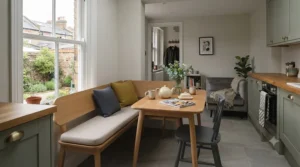
Small Dining Benches For Different Kitchen Types
Different narrow kitchens have genuinely different constraints, so the right bench varies by situation. Renters in older Victorian terraces with genuinely tight galley corridors tend to do best with the HOOBRO Bamboo Dining Bench Seat, since its shallow depth and light weight suit spaces where every centimetre is negotiated and furniture sometimes needs moving for viewings or redecorating. Families wanting durability that survives daily wear should look toward the Hallowood Furniture Aston Rubberwood Bench or the Julian Bowen Coxmoor Bench, both of which hold up better to the scuffs and knocks that come with children eating breakfast in a rush. Anyone furnishing a new-build flat with a smaller footprint kitchen, where narrow kitchen seating ideas matter as much for style as space, often gravitates toward the VASAGLE Dining Bench, Pair of 2 for its contemporary, coordinated industrial look. Meanwhile, households that genuinely linger over meals — working from home, entertaining regularly — get the most day-to-day comfort from the padded Julian Bowen Soho Bench, even at its higher price point.
Long-Term Value: Cost, Durability & Everyday Wear
A laminate or bamboo bench in the £30-55 range costs less upfront, but the honest long-term comparison has to account for how each material actually wears. Solid wood options like the Hallowood Furniture Aston Rubberwood Bench and Julian Bowen Coxmoor Bench cost more initially but typically outlast laminate equivalents by years, since scratches can be sanded and refinished rather than exposing chipboard underneath. The padded Julian Bowen Soho Bench sits at the top of the price range, and its long-term value depends heavily on how gently the household treats faux leather — it’s a genuinely comfortable option, but not necessarily the most durable one over a five-year horizon. The honest calculation isn’t simply about upfront price: a £45 bench replaced every eighteen months costs more over time than an £80 bench that lasts a decade, so factor realistic lifespan into the comparison rather than sticker price alone.
Practical Usage Guide: Fitting a Bench Into a Genuinely Tight Kitchen
Getting a space-saving seating solution to actually work in a narrow kitchen takes a bit more thought than simply pushing a bench against the nearest wall. Start by measuring the walkway with the bench pulled fully out to typical sitting position, not just pushed flush against the table, since that’s the real-world clearance you’ll be working with daily. In the first week, test the bench at mealtimes with the actual number of people who’ll regularly use it, since two adults on a 100cm bench feels noticeably different from two adults plus a child squeezing in. A common early mistake is placing the bench on the side of the table furthest from the door, which sounds sensible but often means diners have to climb over each other to leave — try the door-adjacent side instead if your kitchen allows it. Finally, add a slim seat cushion or draft excluder strip along the wall-facing edge if you notice cold drafts along skirting boards, since narrow kitchens often sit closer to exterior walls than open-plan layouts do.
Real-World Scenarios: Which Bench Fits Your Kitchen
Picture Tom, a 29-year-old renting a Victorian terrace flat with a genuinely narrow galley kitchen — the HOOBRO Bamboo Dining Bench Seat lets him keep a small dining spot without permanently blocking the route to the back door, and its light weight means he can move it during his landlord’s periodic inspections. Consider the Ahmed family, two parents and two children who eat breakfast together daily in a compact modern-build kitchen — the Hallowood Furniture Aston Rubberwood Bench paired with a second matching piece handles daily wear far better than a laminate alternative would over several years. Finally, think of Grace, who works from her kitchen table most days and wants somewhere comfortable to sit for hours rather than minutes — the padded Julian Bowen Soho Bench is the only option on this list genuinely built for extended sitting rather than quick meals.
Problem → Solution: Fixing Common Narrow Kitchen Seating Issues
If your current chairs block the walkway even when pushed in, switching to a bench that slides fully under the table — like the HOOSENG Table Benches, Set of 2 — solves the clearance problem directly rather than requiring you to buy a smaller table. If you’re worried a bench will feel unstable on uneven older flooring, solid options like the Julian Bowen Coxmoor Bench sit lower and heavier than most chairs, which genuinely improves stability rather than worsening it. If two different-height family members need to share one bench comfortably, look for a seat height around 43-45cm, which is roughly standard across all seven options here and works reasonably well for most adult heights. And if you’re simply unsure whether a bench will fit before buying, the government’s own guidance on housing space standards offers a useful reminder of just how tightly modern UK homes are built, which is exactly why purpose-designed narrow-kitchen furniture exists as its own category in the first place.
Materials, Safety Standards & What to Check Before You Buy
Domestic seating sold in the UK, including dining benches, falls under British safety standards covering strength and durability — specifically BS EN 12520, which sets minimum requirements for how much everyday stress a piece of seating furniture must withstand before it’s considered fit for sale. It’s worth checking that any bench you’re considering, particularly from newer or less familiar brands, references compliance with recognised furniture safety testing rather than staying silent on the subject. Material sourcing is worth a glance too: solid wood benches like the oak and rubberwood options here are increasingly likely to carry sustainable forestry certification, and checking a listing for FSC-certified timber is a reasonable extra step if sourcing matters to you. None of the seven benches featured here raise any particular red flags, but it’s a genuinely useful five-minute check before committing to any dining furniture purchase.

Frequently Asked Questions
❓ How narrow can a kitchen be and still fit a dining bench?
❓ Are backless benches uncomfortable for everyday meals?
❓ Can one bench replace two kitchen chairs?
❓ Do narrow dining benches need any special flooring protection?
❓ Is it cheaper to buy one bench or two matching ones?
Conclusion
Choosing a small dining bench for narrow kitchen spaces really comes down to being honest about your specific corridor width, how your household actually eats, and how much maintenance you’re willing to do. If your kitchen is genuinely tight, the HOOBRO Bamboo Dining Bench Seat was built for exactly that constraint. If budget matters most and you need both sides of the table covered, the HOOSENG Table Benches, Set of 2 does that job efficiently. If you want lasting durability without a premium price tag, the Hallowood Furniture Aston Rubberwood Bench strikes a genuinely fair balance, while the Julian Bowen Coxmoor Bench and Julian Bowen Soho Bench suit those wanting established-brand quality or genuine comfort respectively. Measure your walkway properly, match the material to how your household actually treats furniture, and pick accordingly — you’ll get more day-to-day value from that process than from chasing whichever bench simply looks best in a listing photo.
Recommended for You
- Wooden Dining Bench for Kitchen Table: 7 Best UK Picks 2026
- Storage Dining Bench: 7 Genius Space-Saving Picks for 2026
- Upholstered Dining Bench Vs Wooden Dining Bench: 7 Best Picks 2026
Disclaimer: This article contains affiliate links. As an Amazon Associate, I earn from qualifying purchases. If you purchase products through these links, we may earn a small commission at no additional cost to you.
✨ Found this helpful? Share it with your friends! 💬🤗
