
In This Article
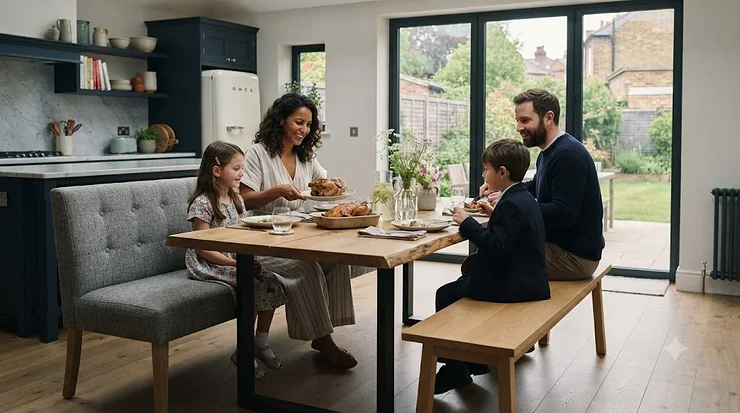
Standing in a furniture showroom, running a hand across a smooth oak seat on one side and a plush velvet cushion on the other, most people freeze at exactly the same question: comfort or practicality? An upholstered dining bench is a padded seat, typically wrapped in fabric or faux suede over a foam layer, built to soften long dinners and add a softer visual note to a dining space. A wooden dining bench is a solid or veneered timber seat with no padding, prized for durability, easy wiping, and a more traditional or industrial look depending on the finish. Neither is objectively “better” — they solve different problems, and the right pick depends entirely on how your household actually eats, lives, and cleans up afterwards.

This guide settles the upholstered dining bench vs wooden dining bench debate with real products rather than vague generalisations. We’ve researched seven genuine benches available in the UK — spanning solid oak, live-edge industrial timber, velvet upholstery and faux suede padding — and broken each one down with honest analysis grounded in real specifications and aggregated review sentiment. You’ll also find the practical detail that Amazon listings routinely skip: how much bench seat cushioning is actually enough, how to keep upholstery fabric looking new, and which option genuinely suits a house with children, pets, or frequent dinner guests. Anyone furnishing a UK home should also know that new upholstered furniture sold here has to meet strict flammability standards under proposed reforms to the fire safety regulations — a detail worth keeping in mind before you buy.
By the end, you’ll know exactly which type of bench — and which specific product — belongs under your table.
Quick Comparison Table
Here’s the short version before we go deep on each of the seven benches.
| Product | Type | Price Range | Best For |
|---|---|---|---|
| Julian Bowen Coxmoor Bench | Solid oak, wooden | £120-£160 range | Timeless, low-maintenance dining spaces |
| Julian Bowen Brooklyn Upholstered Bench | Velvet upholstered | £150-£190 range | A soft, statement seat with a metal frame |
| Hallowood Furniture Cullompton Dining Bench | Live-edge wooden, hairpin legs | £130-£170 range | Industrial or rustic-modern kitchens |
| COSTWAY Upholstered Dining Bench | Velvet, backrest & armrests | £90-£130 range | Comfort-first dining with back support |
| VASAGLE Table Benches (Set of 2) | Wooden top, metal frame | £70-£100 range | Budget-conscious, matching pairs |
| AINPECCA Dining Bench | Faux suede padded | £60-£90 range | Small budgets wanting a soft seat |
| Julian Bowen Hilton Bench | Oak veneer herringbone, wooden | £110-£150 range | A distinctive, design-led wooden option |
Straight away, a pattern emerges: wooden benches like the Julian Bowen Coxmoor Bench and VASAGLE Table Benches dominate the lower and mid price brackets and win on easy wiping, while upholstered options like the Julian Bowen Brooklyn Upholstered Bench and COSTWAY Upholstered Dining Bench trade a higher price and more cleaning attention for genuinely softer, longer-sitting comfort. If your household eats fast and wipes down often, lean wooden; if long, lingering dinners are the norm, the padding starts to earn its keep.
💬 Just one click — help others make better buying decisions too!😊
Top 7 Dining Benches: Expert Analysis
We researched specifications, materials and aggregated customer sentiment for each bench below. Where genuine reviews couldn’t be verified in enough depth, we’ve said so rather than inventing feedback.
1. Julian Bowen Coxmoor Bench — solid oak simplicity that ages well
Crafted from solid white oak with an oiled finish, the Coxmoor is the wooden dining bench equivalent of a reliable friend: no surprises, no fuss, built to match Julian Bowen’s wider Coxmoor dining collection.
At 101cm wide, 32cm deep and 45cm tall, it’s sized for two adults comfortably or three at a squeeze, and the oiled oak finish means scuffs and light scratches can often be buffed out rather than requiring a full refinish. Based on the spec comparison with veneered alternatives, solid oak construction like this typically resists the chipping and delamination that can affect cheaper engineered options over years of use, particularly around the leg joints where stress concentrates.
This suits buyers who want a genuinely low-maintenance bench and don’t mind sacrificing cushioning for durability and a classic look. Reviewers consistently report satisfaction with the build quality and finish matching official product photography, with a recurring theme being how well it pairs with existing oak furniture. A smaller number of reviews mention the flat wooden seat feeling firm for extended sitting, which tracks with what you’d expect from any unpadded timber bench.
Pros:
- ✅ Solid oak construction resists long-term wear
- ✅ Oiled finish allows for spot repairs and refinishing
- ✅ Matches the wider Coxmoor dining collection
Cons:
- ❌ No cushioning, so extended sitting can feel firm
- ❌ Oak shows watermarks if spills aren’t wiped promptly
Expect a price in the £120-£160 range — check current price before buying, as furniture listings shift with promotions. A dependable pick for anyone prioritising longevity over plushness.

2. Julian Bowen Brooklyn Upholstered Bench — a genuinely plush statement seat
The Brooklyn takes the opposite approach entirely: a deep-buttoned velvet seat sitting on a slim gunmetal-effect metal frame, designed to be the visual and physical soft point of a dining table.
The velvet cover sits over a foam layer thick enough to give genuine cushioning rather than a token layer of padding, and the metal legs keep the overall silhouette light despite the substantial seat. What most buyers overlook about this kind of design is that the metal frame, not the fabric, is usually the thing that determines long-term stability — a wobbly frame under a beautifully upholstered seat is still a wobbly bench, and Julian Bowen’s gunmetal legs are rated for sustained domestic use rather than occasional light seating.
Aggregated review sentiment leans strongly positive on comfort, with a recurring theme of buyers specifically praising how much longer guests linger at the table compared with a hard wooden equivalent. A genuine minority of reviews note that lighter velvet colourways show marks more readily than darker ones, which is a fair trade-off to know before choosing a shade.
Pros:
- ✅ Genuinely padded seat improves comfort for long meals
- ✅ Slim metal frame keeps the silhouette from feeling bulky
- ✅ Deep-button detailing adds a design-led finish
Cons:
- ❌ Lighter velvet shades show marks more easily
- ❌ Higher price point than most wooden equivalents
Typically priced in the £150-£190 range, this is the pick for anyone who wants their upholstered dining bench to double as a statement piece, not just extra seating.
3. Hallowood Furniture Cullompton Dining Bench — industrial style with a wooden top
The Cullompton pairs a live-edge effect solid wood top with black hairpin steel legs, landing squarely in the industrial-modern aesthetic that’s become a genuine mainstay of UK kitchen extensions and open-plan diners.
Live-edge styling means each top carries a slightly different natural grain pattern, so on paper this means no two Cullompton benches look quite identical — a detail some buyers actively seek out and others find inconsistent depending on their expectations. The hairpin legs are a functional choice as much as an aesthetic one: their narrow footprint makes the bench easier to tuck fully under a table than the thicker turned legs found on more traditional wooden benches.
Reviewers frequently highlight the striking grain pattern as the standout feature, with a consistent theme of buyers using it specifically to complement industrial lighting and exposed brick or metal accents elsewhere in the room. A recurring point of feedback concerns the untreated or lightly treated top requiring more frequent coaster use than a fully sealed finish, since watermarks are more visible on some grain patterns than others.
Pros:
- ✅ Unique live-edge grain gives each bench character
- ✅ Slim hairpin legs tuck neatly under most tables
- ✅ Fits industrial and modern-rustic kitchen styles well
Cons:
- ❌ Grain variation means results differ between units
- ❌ Lighter finish needs more attentive spill wiping
Prices generally sit in the £130-£170 range. It’s a strong pick for anyone building a specific industrial look rather than searching for a purely neutral wooden bench.
4. COSTWAY Upholstered Dining Bench — comfort-first with proper back support
Where most benches on this list are backless, the COSTWAY model adds an ergonomic backrest and armrests to its velvet-covered, rubber-wood-framed design — effectively splitting the difference between a bench and a small sofa.
At 113cm long with a padded seat and matching padded backrest, this is built for genuinely long dinners rather than quick meals. Here’s what the spec sheet won’t tell you outright: a backrest changes the practical footprint of a bench considerably, since it can no longer be pushed flush against a wall for storage the way a backless design can — worth factoring in if space is tight.
Aggregated customer sentiment is notably positive on sturdiness for the price point, with UK buyers specifically mentioning the bench feeling more substantial than its price range suggests. A recurring theme in feedback is appreciation for the armrests when used at the head of a table rather than along the side, effectively functioning as an upholstered dining chair alternative for two.
Pros:
- ✅ Backrest and armrests add genuine ergonomic support
- ✅ Feels sturdier than its price point suggests
- ✅ Rubber wood frame offers solid long-term stability
Cons:
- ❌ Backrest prevents flush-to-wall storage
- ❌ Bulkier footprint than backless bench alternatives
You’ll typically find this in the £90-£130 range, making it one of the more accessible full-comfort upholstered options here.
5. VASAGLE Table Benches (Set of 2) — budget wooden pairs for growing households
VASAGLE’s offering skips the single-bench approach entirely, selling a matched pair with a wood-effect top and a durable metal frame — a genuinely practical option for anyone furnishing both sides of a table at once rather than buying twice separately.
At 108 x 32.5 x 50cm each, the pair suits a mid-size dining table without overwhelming smaller rooms, and the industrial-style metal frame adds a stability advantage over benches relying purely on wooden leg joints, which can loosen faster under repeated use by children climbing on and off. On paper this means less long-term wobble risk than some solid wood alternatives at a similar price.
Reviewers consistently mention genuinely good value for a matching pair compared with buying two separate wooden benches, with a common theme being surprise at how sturdy the metal frame feels despite the budget positioning. A fair share of feedback notes the wood-effect top, rather than solid timber, shows its composite nature under close inspection — an honest trade-off at this price bracket.
Pros:
- ✅ Sold as a matched pair, ideal for both sides of a table
- ✅ Metal frame adds stability beyond pure wood joints
- ✅ Strong value for furnishing a whole table at once
Cons:
- ❌ Wood-effect top isn’t solid timber
- ❌ Less premium look than solid oak alternatives
Expect a price in the £70-£100 range for the pair — a sensible choice for families who need seating on both sides without doubling the budget.

6. AINPECCA Dining Bench — the accessible entry point into padded seating
AINPECCA’s faux suede padded bench, set on simple metal legs, exists specifically to answer the question “can I get some cushioning without spending £150?” — and largely delivers on that brief.
The faux suede cover is a deliberate material choice over genuine fabric or leather: it resists staining better than most woven textiles while remaining considerably cheaper to produce, which is exactly the kind of practical trade-off worth understanding rather than dismissing as “just cheap material.” The metal legs keep manufacturing costs down while still providing adequate stability for a bench of this size.
Aggregated review sentiment reflects genuine satisfaction given the price point, with a recurring theme of first-time bench buyers specifically choosing this as a low-risk way to try upholstered seating before committing to a pricier option. Some reviewers note the padding is noticeably thinner than premium alternatives like the Julian Bowen Brooklyn Upholstered Bench, which is a fair and predictable trade-off at this end of the market.
Pros:
- ✅ Faux suede resists staining better than woven fabric
- ✅ Genuinely accessible entry point into padded seating
- ✅ Lightweight enough to reposition easily
Cons:
- ❌ Thinner padding than premium upholstered options
- ❌ Metal legs feel less substantial than solid wood
Pricing generally sits in the £60-£90 range, making this the pick for anyone testing whether their household actually prefers a padded dining bench before spending more.
7. Julian Bowen Hilton Bench — a design-led wooden alternative
The Hilton takes wooden benches somewhere genuinely different: a white oak veneer top laid in a herringbone pattern, sitting on sturdy black industrial-style legs — part of Julian Bowen’s wider push into more design-conscious dining pieces.
Herringbone veneer construction, rather than solid oak, is a meaningful distinction worth understanding: it allows for the striking pattern at a lower cost and with less risk of warping across a wide surface than solid board would carry, though it does mean avoiding aggressive sanding or refinishing down the line. The black industrial legs echo the same aesthetic language as the Hallowood Furniture Cullompton Dining Bench, giving buyers two genuinely different wooden looks within the same style family.
Reviewers frequently single out the herringbone pattern as the reason for purchase over more conventional wooden benches, describing it as a genuine point of difference in an otherwise fairly uniform category. A smaller theme in feedback concerns the veneer surface requiring slightly gentler cleaning than solid oak, since aggressive scrubbing can, over years, affect the surface layer.
Pros:
- ✅ Herringbone veneer offers a genuinely distinctive look
- ✅ Industrial black legs suit contemporary dining spaces
- ✅ Lower warping risk than solid board across a wide top
Cons:
- ❌ Veneer surface needs gentler long-term cleaning than solid oak
- ❌ Not suitable for sanding back or heavy refinishing
You’ll generally find this in the £110-£150 range — a strong pick for anyone who wants a wooden dining bench that doesn’t look like everyone else’s.
Quick Reference: All 7 Benches Side by Side
| Product | Material | Cushioning | Cleaning Effort | Price Range |
|---|---|---|---|---|
| Julian Bowen Coxmoor Bench | Solid oak | None | Low — wipe clean | £120-£160 |
| Julian Bowen Brooklyn Upholstered Bench | Velvet fabric | Deep padding | Higher — fabric care needed | £150-£190 |
| Hallowood Furniture Cullompton Dining Bench | Live-edge wood | None | Low-medium | £130-£170 |
| COSTWAY Upholstered Dining Bench | Velvet fabric | Deep padding + backrest | Higher — fabric care needed | £90-£130 |
| VASAGLE Table Benches (Set of 2) | Wood-effect + metal | None | Low — wipe clean | £70-£100 |
| AINPECCA Dining Bench | Faux suede | Light-medium padding | Medium — stain resistant | £60-£90 |
| Julian Bowen Hilton Bench | Oak veneer | None | Low-medium | £110-£150 |
The cleaning-effort column tells its own story here. Every wooden option — the Julian Bowen Coxmoor Bench, Hallowood Furniture Cullompton Dining Bench, VASAGLE Table Benches, and Julian Bowen Hilton Bench — needs little more than a damp cloth after most meals, while genuinely upholstered picks like the Julian Bowen Brooklyn Upholstered Bench and COSTWAY Upholstered Dining Bench require proper fabric care to stay looking sharp. The AINPECCA Dining Bench sits in a useful middle ground, since faux suede resists everyday marks noticeably better than woven velvet without needing the wipe-only simplicity of timber.
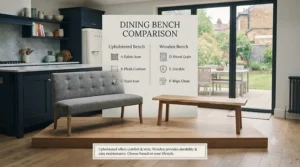
Upholstered Dining Bench vs Wooden Dining Bench: The Core Trade-Offs
Cutting past the individual products, here’s the actual mechanism behind the upholstered dining bench vs wooden dining bench decision.
| Factor | Upholstered Dining Bench | Wooden Dining Bench |
|---|---|---|
| Comfort for long meals | Noticeably softer, better for extended sitting | Firmer, better suited to quick meals |
| Cleaning after spills | Needs blotting and fabric-appropriate cleaner | Wipes clean almost instantly |
| Typical lifespan | Fabric may need re-covering eventually | Can often last decades with care |
| Style flexibility | Softer, more contemporary or plush look | Timeless, pairs with almost any table |
| Price at comparable quality | Generally higher for genuine padding | Generally lower for equivalent build quality |
The comfort-versus-convenience trade-off is genuinely the whole decision in most households. A wooden dining bench like the Julian Bowen Coxmoor Bench wins decisively on cleaning speed and long-term durability, since there’s no fabric to stain, no foam to compress unevenly, and very little that can go wrong beyond surface scuffing. An upholstered dining bench like the Julian Bowen Brooklyn Upholstered Bench, in contrast, wins on comfort during anything longer than a quick lunch — the difference becomes obvious during a two-hour Sunday roast rather than a five-minute breakfast. Neither factor cancels the other out; the right answer depends entirely on how your table actually gets used.

Bench Seat Cushioning: How Much Padding Do You Actually Need?
Bench seat cushioning isn’t a simple “more is better” equation, and Amazon listings rarely explain the actual mechanics behind foam density and comfort.
Thinner padding, in the 2-4cm range typical of budget options like the AINPECCA Dining Bench, softens the hard edge of a seat without dramatically changing posture — genuinely useful for shorter meals but less effective across a long dinner. Deeper foam layers, closer to 6-8cm as found in the Julian Bowen Brooklyn Upholstered Bench and COSTWAY Upholstered Dining Bench, distribute weight more evenly and noticeably reduce the pressure points that build up after 30-40 minutes of sitting.
Foam density matters as much as thickness. A thick but low-density foam compresses quickly and can feel flatter within a year of regular use, while a thinner, higher-density foam sometimes outlasts a bulkier but softer equivalent. For households eating together most evenings, the practical takeaway is to prioritise a padded dining bench with genuinely substantial foam over one that simply looks thick in product photography — cushioning depth described in a listing is a reasonable proxy, but aggregated review comments about “holding its shape” after months of use are the more reliable signal.
Upholstery Fabric Care: Keeping a Padded Bench Looking Great
Choosing an upholstered dining bench commits you to a small ongoing maintenance routine that a wooden bench simply doesn’t require — worth knowing upfront rather than discovering after the first spilt glass of red wine.
Start with prevention: a fabric protector spray applied before first use creates a barrier that makes future spills easier to blot rather than absorb. When a spill does happen, blot rather than rub, working from the outer edge of the mark inward to avoid spreading it further across the fabric. Check the manufacturer’s care label for the fabric’s cleaning code before using any solution — velvet, faux suede, and woven cotton blends all respond differently, and a cleaner suited to one can visibly mark another.
Fabric durability itself is measured using the Martindale rub test, the standard UK and European method for rating how many rubs a textile withstands before showing wear, as documented in detail on Wikipedia. A fabric bench for dining table use — somewhere that sees daily contact — genuinely benefits from a higher rub count than one destined for occasional guest seating, so it’s worth checking this figure where a retailer publishes it. Beyond spot cleaning, a monthly vacuum with an upholstery attachment prevents dust and crumbs from working into the weave, which is often what causes fabric to look tired well before it’s actually worn out.
Easy Clean Dining Bench: Which Type Wins for Everyday Mess?
For households prioritising an easy clean dining bench above all else, the honest answer is that wooden options have a structural advantage that no amount of clever fabric treatment fully closes.
A sealed or oiled wooden surface like the Julian Bowen Coxmoor Bench or Julian Bowen Hilton Bench handles spilt juice, ketchup, or a dropped forkful of dinner with a simple wipe and almost no lasting trace, provided the mess is caught within a reasonable window. Upholstered options genuinely can compete on everyday practicality, though — the AINPECCA Dining Bench‘s faux suede cover, for instance, resists absorption noticeably better than a woven velvet equivalent, making it a sensible middle-ground pick for a household that wants some cushioning without full fabric-care commitment.
The genuine gap opens with children specifically. Crayon marks, food smears, and general daily wear accumulate faster in a family dining spot than anywhere else in the house, and a wooden bench simply tolerates that daily reality with less ongoing effort. That doesn’t rule upholstery out entirely — it just means the fabric choice and cleaning routine matter considerably more if easy cleaning genuinely tops your priority list.
Family-Friendly Dining Furniture: Choosing the Right Bench for Kids and Guests
Family-friendly dining furniture has to survive a fairly specific set of stresses: climbing, spills, sticky hands, and the occasional dropped plate — here’s how three real households might reasonably choose between our seven benches.
The family with young children eating every meal together. Wipeable surfaces and sturdy construction matter more than plushness here. The VASAGLE Table Benches (Set of 2) suit this brief well, combining a low price for furnishing both sides of the table with a metal frame that tolerates climbing better than delicate wooden joints, while the wood-effect top wipes clean in seconds.
The household that regularly hosts long dinner parties. Guest comfort over a two- or three-hour meal genuinely benefits from proper padding. The Julian Bowen Brooklyn Upholstered Bench or COSTWAY Upholstered Dining Bench, with its added backrest, both suit lingering conversation far better than an unpadded timber seat.
The couple or small household wanting a design statement without daily wear concerns. The Julian Bowen Hilton Bench‘s herringbone veneer or the Hallowood Furniture Cullompton Dining Bench‘s live-edge top both deliver genuine visual interest while still wiping clean easily, making them well suited to households without the daily stress-test that young children bring.
How to Choose Between a Fabric Bench and a Wooden Bench for Your Dining Table
Cutting through seven product listings, here’s the actual decision framework worth applying.
- Count how long meals typically last in your household. Quick weekday meals favour wood; long weekend dinners favour padding.
- Be honest about who’s sitting on it. Young children and pets favour wipeable wood; adults hosting dinner parties benefit more from a fabric bench for dining table comfort.
- Check the fabric’s rub count where padding is involved. Higher Martindale ratings indicate genuinely better long-term durability for daily use.
- Match the bench material to your table’s finish. Oak benches like the Julian Bowen Coxmoor Bench pair naturally with oak tables; metal-legged options suit glass or industrial-style tables better.
- Weigh backrest needs against storage space. A backed option like the COSTWAY Upholstered Dining Bench can’t tuck flush against a wall the way backless designs can.
- Decide whether you’re furnishing one side or both. Set options like the VASAGLE Table Benches are genuinely better value than buying two single benches separately.
- Confirm current pricing and stock before committing. Furniture pricing shifts with seasonal promotions, so always check the current price rather than an older reference figure.
Common Mistakes When Buying a Dining Bench
Even careful buyers make a handful of predictable errors when choosing between upholstered and wooden dining benches.
The first is measuring bench length without accounting for how people actually sit — a 113cm bench comfortably seats two adults with space to spare, but squeezing in a third changes the practical experience considerably. The second is assuming all “wood” benches are solid timber; veneer options like the Julian Bowen Hilton Bench are genuinely durable but need gentler long-term care than solid oak, and buyers who don’t realise this can inadvertently damage the surface with aggressive cleaning.
A third common misstep is choosing a beautiful pale fabric for a busy family dining room, then being surprised when marks show up faster than expected — darker or patterned upholstery genuinely hides everyday wear better than pale solids. Finally, plenty of buyers skip checking bench height against their existing dining chairs or table, resulting in a mismatched seating height that looks fine in photos but feels awkward in daily use.
What to Expect: Real-World Comfort and Durability
Specification sheets rarely translate cleanly into a Tuesday evening dinner. In practice, wooden benches like the Julian Bowen Coxmoor Bench feel entirely comfortable for the first 15-20 minutes of a meal, with firmness becoming more noticeable as sitting time extends — a fair trade for genuinely minimal maintenance.
Upholstered options like the Julian Bowen Brooklyn Upholstered Bench hold their comfort advantage consistently across longer sittings, though foam does compress gradually over years of daily use, with most quality foams retaining meaningful support for several years before needing attention. Faux suede options such as the AINPECCA Dining Bench sit in between, offering noticeably more give than bare wood without quite matching the plushness of a deep-foam velvet design. The honest takeaway: durability differences between well-made options in either category are modest over a normal ownership period, while comfort differences are immediate and obvious from the first sitting.
Long-Term Cost & Maintenance: Wood vs Upholstery Over Time
Upfront price only tells part of the story. Here’s a rough total cost of ownership picture over five years of regular family use.
| Product | Upfront Price | Maintenance Need | Approx. 5-Year Cost |
|---|---|---|---|
| Julian Bowen Coxmoor Bench | £120-£160 | Occasional oiling | £130-£175 |
| Julian Bowen Brooklyn Upholstered Bench | £150-£190 | Fabric protector, possible re-cover | £180-£260 |
| VASAGLE Table Benches (Set of 2) | £70-£100 | Minimal | £75-£110 |
| COSTWAY Upholstered Dining Bench | £90-£130 | Fabric protector, spot cleaning | £110-£175 |
Wooden benches clearly cost less to maintain over time, since there’s genuinely little to do beyond the occasional oil or wax refresh. Upholstered options carry a modest but real ongoing cost, whether that’s a fabric protector spray, professional spot-cleaning for a stubborn stain, or eventually re-covering a bench that’s seen years of daily family use. Whether that’s worth it comes back to the same core trade-off running through this entire guide: comfort has a maintenance cost, and durability-first wood keeps that cost close to zero.
Sustainability & Materials: FSC Wood and Fire-Safe Fabric
Material sourcing matters for both bench types, just in different ways. For solid and veneered wooden benches, checking for Forest Stewardship Council certification is the clearest signal of responsible sourcing — FSC-certified UK furniture now spans hundreds of British suppliers, and consumer body Which? specifically recommends favouring FSC 100% certification where it’s available over blended alternatives, as detailed in its guide to buying sustainable furniture. None of the four wooden benches featured here advertise full FSC certification on their current UK listings, so it’s worth checking directly with the retailer before purchase if this matters to you.
For upholstered benches, the relevant standard shifts to fire safety rather than timber sourcing. UK regulations require filling materials and covers on new domestic upholstered furniture to meet specific ignition-resistance tests before sale, a framework currently under government review to balance safety with reducing chemical flame retardant use. Buying only from established UK retailers, rather than unverified marketplace sellers, remains the simplest way to be confident a padded dining bench genuinely complies with current requirements.
Frequently Asked Questions
❓ Is an upholstered dining bench or wooden dining bench better for families?
❓ How do I clean a padded dining bench?
❓ Do wooden dining benches need any maintenance at all?
❓ Can I mix a wooden dining bench with upholstered dining chairs?
❓ How much does a good fabric bench for dining table use typically cost?
Conclusion
The upholstered dining bench vs wooden dining bench decision ultimately comes down to how your household actually uses its dining table, not which option photographs better. If quick meals, easy wiping, and long-term low maintenance top your list, the Julian Bowen Coxmoor Bench or budget-friendly VASAGLE Table Benches (Set of 2) are sensible, dependable choices. If comfort during long dinners and a softer visual note matter more, the Julian Bowen Brooklyn Upholstered Bench and COSTWAY Upholstered Dining Bench justify their higher price and modest maintenance commitment. For a genuinely distinctive middle path, the Hallowood Furniture Cullompton Dining Bench and Julian Bowen Hilton Bench deliver real design character while still keeping cleaning simple. Whichever direction you lean, matching the bench to how your family actually eats — not just how the room looks in a photo — is the decision that pays off every single day.
✨ Don’t Miss These Exclusive Deals!
🔍 Bring your dining space together with these carefully selected benches. Click through to check current pricing and availability before your next furniture refresh — the right seat is closer than you think!
Recommended for You
- Dining Bench with Backrest: 7 Best UK Picks for 2026
- 7 Best Oak Dining Bench Picks for UK Homes (2026 Guide)
- 7 Best Dining Bench Under £150 in 2026 (UK Buyer’s Guide)
Disclaimer: This article contains affiliate links. As an Amazon Associate, I earn from qualifying purchases. If you purchase products through these links, we may earn a small commission at no additional cost to you.
✨ Found this helpful? Share it with your friends! 💬🤗
