
In This Article
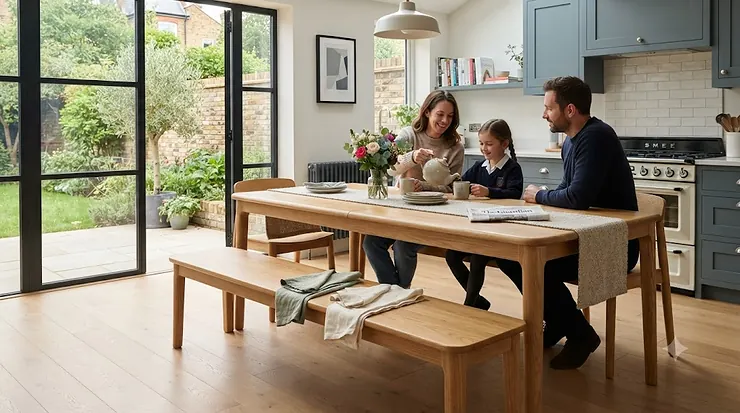
There’s a particular kind of chaos that happens when six people try to squeeze around a four-chair dining table. Someone perches on a stool. Someone else eats standing at the counter, pretending they prefer it that way. An oak dining bench solves this quietly and permanently, swallowing two or three extra guests without you having to buy a single new chair.
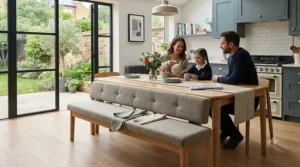
So what exactly counts as an oak dining bench? It’s a backless (or occasionally low-backed) seat, made wholly or partly from oak, designed to sit alongside a dining table and seat two to three people on a shared surface. The best ones do more than fill a gap in your seating plan — they bring genuine warmth and grain character to a room that a matching set of chairs simply can’t replicate.
Oak has earned its reputation the hard way. It’s one of the hardest, most durable native timbers used in British furniture-making, and it’s been the backbone of English joinery for centuries — the Woodland Trust notes that oak produces some of the most durable timber found in Britain’s woodlands. That durability is exactly why it’s still the default choice for anyone shopping for a dining bench that needs to survive muddy trainers, dropped forks and the occasional toddler using it as a launchpad. Below, we’ve researched seven real oak dining bench options available in the UK, compared them honestly on construction, finish and price, and worked out who each one genuinely suits.
Quick Comparison
Here’s the overview before we get into specifics — enough to narrow things down fast if you already know roughly what you’re after.
| Bench | Best For | Finish | Price Range |
|---|---|---|---|
| Homegear Solid Oak Wooden Dining Bench | Fully solid oak on a budget | Natural | Under £120 |
| Hallowood Furniture Waverly Oak Dining Bench | Compact spaces, 2-seater | Lacquered | £90-130 range |
| Julian Bowen Coxmoor Bench | Reliable, well-reviewed all-rounder | Oiled | £80-100 range |
| RoselandFurniture Fran Oak Dining Bench | Farmhouse and rustic kitchens | Natural | £100-150 range |
| Hallowood Furniture Dudley Dining Bench | Industrial-style dining rooms | Wood-top + black metal | £90-140 range |
| Julian Bowen Hockley Bench | Matching a trestle-style table | Black frame, oak seat pad | £90-130 range |
| vidaXL Solid Oak Dining Bench (Grey) | Modern, Scandi-style interiors | Grey painted | £150-200 range |
Looking at the spread, the Homegear Solid Oak Wooden Dining Bench is the most straightforward entry point if your priority is genuine solid oak without paying for extras like matched collections or unusual finishes. At the other end, the vidaXL Solid Oak Dining Bench carries a higher price for its grey painted finish, which trades a bit of that classic oak grain visibility for a look that suits contemporary interiors far better than raw wood tones would. If you’re choosing based on style versus budget, the Julian Bowen Coxmoor Bench sits in a genuine sweet spot, backed by one of the strongest review counts on this list.
💬 Just one click — help others make better buying decisions too!😊
Top 7 Oak Dining Benches: Expert Analysis
We dug into real listings, verified specs, and aggregated customer feedback for each of these — no invented reviews, no guesswork on materials.
1. Homegear Solid Oak Wooden Dining Bench — best for genuinely solid oak on a budget
This is about as straightforward as an oak dining bench gets: no veneer, no composite panels, just oak sourced from sustainably managed forests, built to a compact 101cm x 32cm x 45cm footprint. What most buyers overlook about “solid oak” claims generally is that plenty of budget benches use oak veneer over a cheaper core — this one doesn’t, which matters if you’re planning to keep it for years and want the surface to age like real timber rather than peel like a sticker.
The construction is simple: four straight legs, a single-plank-style seat, no frills. Based on the spec sheet, that simplicity is exactly the point — fewer joints and components generally means fewer failure points over a decade of daily use, which is a meaningful practical consideration for a piece of furniture that’s going to take a beating from chair-scooting and knee-bumping every single mealtime.
Reviewers consistently report that assembly is quick and the finished bench feels noticeably sturdier than its price suggests, with several specifically praising how well it seats three people at a squeeze despite its compact dimensions. A recurring theme in aggregated feedback is that buyers are pleasantly surprised by the build quality relative to cost, though it’s worth noting the range doesn’t offer multiple finish or colour options — what you see is what you get.
Pros:
- ✅ Genuinely solid oak construction, not veneer over a cheaper core
- ✅ Compact footprint that still seats three at a squeeze
- ✅ Sourced from sustainably managed forests
Cons:
- ❌ Limited to one finish, so no colour customisation
- ❌ Minimalist styling won’t suit more ornate or traditional dining rooms
At under £120, this is one of the most affordable genuinely solid oak dining bench options here, and the value proposition is strong precisely because you’re not paying for veneer dressed up as the real thing.
2. Hallowood Furniture Waverly Oak Dining Bench — best for compact spaces and 2-seater setups
Hallowood built the Waverly range around a solid oak frame — legs, rails and top structure — finished with oak veneer panels on the visible surfaces, then sealed under a hard-wearing lacquer. Here’s what to weigh: the veneer-over-solid-frame approach is a genuine cost-saving technique used across the furniture industry, not a corner-cutting trick, since it lets manufacturers use less prime timber on the parts that don’t take direct wear while keeping the structural frame fully solid.
At 100cm wide and designed to seat two, this is one of the smaller options here, which makes it a strong fit for smaller dining tables, breakfast nooks, or anyone tucking a bench under a table when it’s not in use. The lacquered finish is genuinely low-maintenance — a quick wipe keeps it looking presentable, without the periodic re-oiling that raw or oiled finishes need.
Hallowood backs the Waverly range with a one-year quality guarantee, which is a reasonable vote of confidence from a brand that runs four physical stores as well as its online presence. Aggregated reviewer sentiment highlights straightforward flat-pack assembly and a finish that holds up well to everyday spills, though a fair criticism is that the veneer top, while durable under lacquer, isn’t something you’d want to sand back and refinish decades down the line the way you could with a fully solid top.
Pros:
- ✅ Solid oak frame with a durable, low-maintenance lacquered finish
- ✅ Compact size ideal for smaller tables and tighter dining spaces
- ✅ Backed by a one-year quality guarantee from an established UK retailer
Cons:
- ❌ Veneer top panels mean less long-term refinishing potential than solid tops
- ❌ 100cm width limits seating to two rather than three
In the £90-130 range, it’s competitively priced for a lacquered, low-maintenance bench, and the compact size means it won’t dominate a smaller room the way longer benches can.
3. Julian Bowen Coxmoor Bench — best reliable, well-reviewed all-rounder
Julian Bowen has been in the UK furniture trade for over 30 years, and the Coxmoor Bench reflects that experience: solid American white oak throughout, finished in a rich oiled coating that soaks into the grain rather than sitting on top of it like a lacquer would. The real-world meaning behind that distinction is straightforward — an oiled finish enhances the natural texture and depth of the wood grain, giving it a warmer, more tactile feel than a glossier lacquered surface.
At 101cm wide, 32cm deep and 45cm high, it’s a standard-proportioned bench designed to pair with the wider Coxmoor dining collection, though it works perfectly well as a standalone piece alongside almost any table of a similar height. What most buyers overlook about oiled oak specifically is that it does require occasional reapplication — typically once every year or two depending on use — to keep the surface protected, which is a small extra step compared with a “wipe and forget” lacquered finish.
This is genuinely one of the best-reviewed products on this list: it holds a 4.5-star average across more than 500 customer reviews, an unusually large and consistent sample size for a mid-range dining bench. Reviewers consistently report that the bench feels substantial and well-built for its price point, with several specifically highlighting how the natural grain variation gives each bench its own individual character.
Pros:
- ✅ Solid American white oak with a warm, grain-enhancing oiled finish
- ✅ Backed by an unusually large and consistently positive review base
- ✅ Standard proportions that pair with most existing dining tables
Cons:
- ❌ Oiled finish needs periodic reapplication to stay protected
- ❌ Natural grain variation means no two benches look identical
At around £84 based on current listings, this sits toward the lower-mid end of the price range while offering genuinely solid construction — arguably the strongest value-for-review-score combination on this entire list.
4. RoselandFurniture Fran Oak Dining Bench — best for farmhouse and rustic kitchens
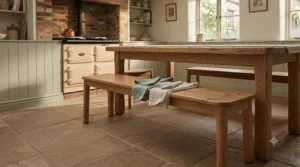
Roseland Furniture, established in Cornwall in 2010, built the Fran range around a minimalistic, rustic aesthetic — natural wood tones, simple lines, and a 120cm length that comfortably seats three. It’s explicitly designed to double up: equally at home tucked under a dining table as it is providing extra seating in a hallway or boot room.
Based on the spec comparison with the shorter benches on this list, the extra 20cm of length here is the standout practical feature — it’s the difference between squeezing two people in and comfortably seating three, which matters more than it sounds for anyone who regularly hosts. The rustic finish leans into oak’s natural grain and colour variation rather than disguising it, which suits farmhouse, Scandi and country-kitchen styling particularly well.
Here’s what to weigh honestly: Roseland Furniture’s broader customer reviews on independent platforms are solid but mixed, generally landing around 4 stars, with occasional feedback about inconsistent quality control on specific product runs. That’s worth factoring in alongside the positive comments about value for money and design, which appear far more frequently in aggregated feedback than complaints do.
Pros:
- ✅ 120cm length comfortably seats three rather than two
- ✅ Rustic natural finish that showcases oak’s grain rather than hiding it
- ✅ Versatile enough to double as hallway or entryway seating
Cons:
- ❌ Broader brand reviews are solid but occasionally flag inconsistent quality control
- ❌ Rustic aesthetic won’t suit more formal or contemporary dining rooms
In the £100-150 range, it’s a reasonable mid-tier pick, and the extra length genuinely earns its place in the price compared with shorter 100cm alternatives.
5. Hallowood Furniture Dudley Dining Bench — best for industrial-style dining rooms
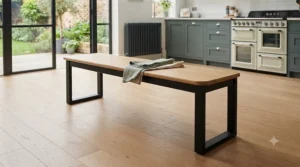
The Dudley bench takes a different approach entirely: a wooden top paired with black metal U-shaped legs, aimed squarely at industrial and modern-eclectic interiors rather than traditional oak styling. What the spec sheet won’t tell you, but the design language makes obvious, is that this is a bench built for rooms that already lean toward exposed brick, pendant lighting and matte black fixtures — pairing it with a classic farmhouse oak table would likely clash rather than complement.
The metal legs are rated to a genuinely reassuring 250kg maximum load, which is well above what most households will ever need but reflects solid engineering rather than marketing fluff. Assembly is designed to be quick, with all hardware included, and the smooth wood-top surface wipes clean easily — a practical bonus for households with young children prone to spills.
Aggregated customer feedback highlights the striking visual contrast between the warm wood top and cool black metal legs as the main draw, alongside genuine sturdiness once assembled. A fair caveat: buyers specifically wanting an all-oak, all-timber look should note the metal-leg construction means this bench reads as “wood-topped industrial” rather than “traditional solid oak,” so it’s a style choice as much as a material one.
Pros:
- ✅ Striking industrial look that pairs well with modern eclectic interiors
- ✅ Metal legs rated to a robust 250kg maximum load
- ✅ Backed by a one-year quality guarantee and quick, hardware-included assembly
Cons:
- ❌ Metal-leg construction won’t suit buyers wanting an all-timber traditional look
- ❌ Distinctive style is a specific aesthetic that limits its versatility
In the £90-140 range, it’s priced comparably to the more traditional options here, making the choice largely a matter of which aesthetic your dining room already leans towards.
6. Julian Bowen Hockley Bench — best for matching a trestle-style table
The Hockley Bench pairs a painted black metal trestle frame with a 20mm solid oak seat pad, splitting the difference between the fully industrial Dudley bench above and the all-timber options elsewhere on this list. It’s designed specifically to tuck neatly under the matching Julian Bowen Hockley Dining Table, though it works perfectly well as a standalone piece for anyone who likes the black-frame-and-oak-top combination.
Here’s what to weigh: because the seat pad itself is solid oak rather than veneer, you still get genuine timber contact and grain character where it actually matters — where you sit — even though the visible frame is painted metal rather than wood. Based on the spec comparison with the fully wooden benches on this list, that’s a reasonable compromise for anyone who wants a touch of industrial styling without sacrificing the tactile feel of real oak entirely.
Julian Bowen’s 30-plus years in UK furniture manufacturing lend genuine credibility here, and the brand’s track record across its wider range — including the well-reviewed Coxmoor Bench above — suggests consistent quality control. The main honest limitation is that it’s designed as part of a matched collection, so buyers pairing it with a differently styled table should check the proportions and finish work together before committing.
Pros:
- ✅ Solid 20mm oak seat pad delivers genuine timber contact where it counts
- ✅ Space-saving design tucks neatly under matching trestle-style tables
- ✅ Backed by an established, long-standing UK furniture brand
Cons:
- ❌ Painted metal frame means less of an “all-oak” look overall
- ❌ Designed as part of a matched collection, so pairing with other tables needs care
Priced in the £90-130 range, it’s a fair mid-market option for anyone specifically drawn to the black-frame, oak-top aesthetic rather than a fully timber build.
7. vidaXL Solid Oak Dining Bench (Grey) — best for modern, Scandi-style interiors
vidaXL, a Netherlands-founded retailer operating across more than 30 markets, takes solid oak construction and finishes it in a contemporary grey painted coating rather than leaving the natural grain exposed. The bench measures 95cm x 32cm x 45cm, with square oak legs providing what the listing describes as robust support beneath a clean, minimalist rectangular seat.
What most buyers overlook about painted-oak furniture generally is that you’re still getting all the structural durability benefits of solid oak — hardness, wear resistance, longevity — while trading away the visible grain pattern for a flat, uniform colour that suits pared-back Scandinavian and contemporary interiors far more naturally than raw wood tones do. If your dining room leans grey, white and muted rather than warm and rustic, this is the bench on this list built specifically for that palette.
Reviewer and listing feedback describes the construction as straightforward and the finish as consistent, with the square-leg design adding genuine visual stability alongside physical stability. The honest trade-off, worth being upfront about, is that a painted finish will show chips differently to a natural or oiled one — touch-ups can be trickier to blend seamlessly than simply re-oiling a bare oak surface would be.
Pros:
- ✅ Solid oak construction with a clean, contemporary grey finish
- ✅ Square-leg design suits minimalist and Scandi-style dining rooms
- ✅ Consistent, uniform colour that’s easier to match to existing decor
Cons:
- ❌ Painted finish hides the natural grain that’s central to oak’s classic appeal
- ❌ Chip touch-ups are trickier to blend than with natural or oiled finishes
At £150-200, it’s the premium pick on this list, reflecting both the finish quality and the more design-led, contemporary positioning compared with the traditional options above.
Practical Usage Guide: Setting Up and Caring for Your New Oak Bench
Getting an oak dining bench home is only step one — how you set it up and maintain it determines whether it looks this good in ten years or starts showing its age within two. During the first 30 days, avoid placing it directly against a radiator or in a spot that gets prolonged direct sunlight, since both accelerate the natural expansion, contraction and colour fading that solid wood is prone to. A common mistake is assuming a lacquered or painted finish means you can skip coasters and placemats entirely — you still can’t, since hot dishes and acidic spills can mark even a protected surface if left too long.
For solid wood furniture care specifically, the routine is refreshingly simple: dust regularly with a soft, dry cloth, wipe spills away promptly with a barely damp cloth, and avoid silicone-based polishes, which build up residue over time rather than genuinely protecting the surface. If your bench has an oiled finish, like the Julian Bowen Coxmoor Bench, plan to re-oil it roughly once a year to keep the timber nourished; lacquered and painted finishes, like the Hallowood Furniture Waverly Oak Dining Bench and vidaXL Solid Oak Dining Bench, need far less intervention beyond routine cleaning.
Real-World Scenarios: Which Oak Dining Bench Fits Your Space
Sometimes it’s easier to picture yourself in a specific situation than to compare specs in the abstract. Here are three realistic scenarios.
If you’re working with a small kitchen table and mainly need seating for two without the bench dominating the room, the Hallowood Furniture Waverly Oak Dining Bench is the most sensibly proportioned choice here — compact, low-maintenance, and easy to tuck away. If you regularly host family dinners and need to squeeze in an extra guest without buying more chairs, the RoselandFurniture Fran Oak Dining Bench‘s 120cm length is the practical standout, comfortably fitting three where shorter benches would leave someone perched on the edge. And if your dining room is already built around a grey-and-white, contemporary colour scheme, the vidaXL Solid Oak Dining Bench is the only option here specifically finished to match that aesthetic rather than working against it.
Buyer’s Decision Framework: A Quick Priority Checklist
If you’re still torn between options, work through these priorities in order rather than trying to weigh everything at once. If budget is your primary constraint, choose the Homegear Solid Oak Wooden Dining Bench because it delivers genuinely solid construction without paying for extras. If seating capacity matters most, choose a 120cm-plus option like the RoselandFurniture Fran Oak Dining Bench because length translates directly into how many people comfortably fit. If your dining room has a defined aesthetic already — industrial, Scandi, traditional — choose the bench whose finish was built for that look specifically, rather than assuming any oak bench will blend in regardless of style. And if low ongoing maintenance matters more than showcasing natural grain, prioritise a lacquered or painted finish over an oiled one, since it demands noticeably less upkeep over the years.
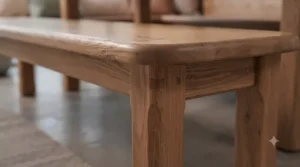
How to Choose an Oak Dining Bench: 6 Expert Criteria
Picking the right bench comes down to matching real specifications to your actual situation, not just picking whatever looks nicest in a product photo.
- Measure before anything else. A solid oak bench for dining table use needs to match both the table height and the clearance underneath it if you want it to slide away neatly — measure both before ordering, not after it arrives.
- Decide between solid and veneer-topped construction. Fully solid options like the Homegear bench offer more long-term refinishing potential; veneer-over-solid-frame options like the Waverly can be more cost-effective without meaningfully compromising durability for most households.
- Match the finish to your maintenance appetite. Oiled finishes look and feel wonderful but need annual attention; lacquered and painted finishes are lower-maintenance but slightly less “alive” to the touch.
- Check the weight rating if you have an active household. Benches with metal-leg construction, like the Dudley, often publish clear maximum load figures — useful information that timber-leg benches don’t always state explicitly.
- Consider length against your actual seating needs. A 100cm bench comfortably seats two; anything from 120cm upward is where you start reliably fitting three.
- Read reviews for consistency, not just star rating. A bench with hundreds of consistent reviews, like the Julian Bowen Coxmoor Bench, tells you more about reliable quality control than a smaller sample with an equally high average.
Common Mistakes When Buying a Solid Oak Bench for Dining Table Use
The most frequent mistake is buying based on the table’s width alone without checking the bench’s own footprint against the specific chairs or table legs it needs to sit alongside — a bench that’s a perfect match for the tabletop can still collide awkwardly with a pedestal base or splayed table legs. A close second is assuming “oak” on a listing always means fully solid construction; as covered honestly above, many genuinely good benches use oak veneer over a solid frame, which isn’t a problem in itself, but it’s worth knowing which you’re buying so expectations around refinishing match reality.
Another common misstep is choosing a finish based purely on looks without factoring in the maintenance commitment — an oiled finish like the Coxmoor Bench‘s looks beautiful in photos, but buyers who skip the annual reapplication tend to see the surface dry out and lose its lustre faster than expected. Finally, some buyers underestimate how much a bench’s aesthetic locks in a room’s style; a striking industrial piece like the Dudley can be difficult to reverse out of once a traditional oak table’s already been chosen to go with it.
Oak Dining Bench vs Bench Chairs: Benefits vs Traditional Alternatives
It’s worth being clear-eyed about what you’re trading when you choose a bench over a matching set of dining chairs.
| Factor | Oak Dining Bench | Individual Dining Chairs |
|---|---|---|
| Seating Capacity | 2-3 people per bench, flexible spacing | Fixed one person per chair |
| Storage Footprint | Slides fully under table when not in use | Each chair needs its own floor space |
| Cost per Seat | Lower — one bench replaces 2-3 chairs | Higher — priced individually |
| Comfort for Long Meals | No back support (unless specified) | Back support standard on most designs |
The cost-per-seat difference is the clearest practical advantage here: fitting three extra people around a table with a single RoselandFurniture Fran Oak Dining Bench costs a fraction of buying three additional chairs, and it reclaims floor space when guests leave. The trade-off is comfort during longer meals — most benches, aside from specifically backed designs, don’t offer the lower-back support a good dining chair does, which is worth weighing if you regularly host multi-course dinners rather than quick family meals.
✨ Ready to Upgrade Your Dining Space?
🔍 Click through on any of the benches above to check current pricing and availability, and pick the one that actually matches your table, your household, and the look you’re going for — not just the first one that catches your eye.
What to Expect: Real-World Oak Bench Durability
Oak bench durability tends to show up in stages rather than all at once, and knowing what’s normal helps you tell genuine wear from a manufacturing problem. In the first few months, expect the finish to bed in — lacquered surfaces settle and oiled surfaces darken slightly as the oil fully cures, which is completely normal rather than a sign of a poor-quality piece. Over the following year or two, minor surface marks from cutlery, plates and everyday use are also entirely expected on any dining furniture; oak’s natural hardness means these tend to stay superficial rather than deepening into structural damage the way softer woods can.
What genuinely predicts long-term durability is joint quality rather than the timber itself — a bench with well-fitted joints, like the reinforced construction on the Homegear Solid Oak Wooden Dining Bench, will typically outlast a poorly joined bench made from an identical grade of oak. Wobble that develops within the first year is usually a fixable assembly issue rather than a fundamental flaw, and it’s worth tightening fixings before assuming the worst.
Oak Dining Bench Finish Options Explained
Oak dining bench finish options broadly fall into three categories, and each changes both the look and the maintenance routine considerably. Natural or lightly waxed finishes, like the Homegear bench, showcase the timber’s raw grain and colour most directly, but they’re the most vulnerable to staining and need the most attentive care. Oiled finishes, seen on the Julian Bowen Coxmoor Bench, soak into the wood rather than sitting on the surface, enhancing the natural grain and texture while still offering reasonable protection — the trade-off is that periodic reapplication, typically annually, keeps that protection intact.
Lacquered finishes, used on the Hallowood Furniture Waverly Oak Dining Bench, sit as a clear protective layer on top of the wood, creating a smooth, water-resistant surface that’s genuinely low-maintenance but slightly masks the tactile texture underneath. Painted finishes, like the grey coating on the vidaXL Solid Oak Dining Bench, go furthest in the other direction — full colour coverage that suits contemporary interiors but essentially trades away visible grain character entirely in exchange for a clean, uniform look.
Oak vs Pine Furniture: Which Wood Wins for a Dining Bench?
This comparison comes up constantly, since pine is the other timber most commonly used in budget and mid-range UK dining furniture. Oak is significantly harder and denser than pine, which translates directly into better resistance to dents, scratches and the general wear-and-tear a dining bench takes on over years of daily use — pine, by contrast, is a softer timber that marks more easily under the same conditions.
Where pine genuinely wins is upfront cost: it’s typically cheaper than oak across comparable furniture ranges, which is why it remains popular for budget dining sets and children’s furniture where longevity matters less than price. Oak also tends to show off a more pronounced, prized grain pattern, which is part of why it’s remained the default choice for furniture intended to last a lifetime rather than a few years — the classic English oak grain that’s shaped centuries of British furniture-making simply isn’t something pine replicates. For a piece of furniture that takes as much daily impact as a dining bench, oak’s extra durability generally justifies the higher upfront cost, particularly for households with children or frequent guests.
Solid Wood Furniture Care: Long-Term Maintenance & Value
Thinking about solid wood furniture care as an ongoing relationship rather than a one-off purchase changes how you’ll treat your bench over the years. Regulating the room’s humidity matters more than most buyers expect — solid oak expands and contracts with temperature and moisture changes, so keeping your bench away from radiators and avoiding extreme swings in heating helps prevent the small cracks and gaps that can otherwise develop over time.
Sustainability is worth factoring into long-term value too. Furniture carrying Forest Stewardship Council certification, which several UK retailers now offer across their ranges, provides assurance that the timber has been sourced from responsibly managed forests rather than contributing to deforestation — a meaningful consideration if you’re planning to keep a piece for decades rather than a few years. It’s also worth knowing that UK furniture retailers and importers operate under legal obligations here: businesses placing timber products on the market must demonstrate the wood was legally harvested under the UK’s timber regulations, which gives buyers a reasonable baseline of confidence even without specific eco-certification on a given product. Compared with replacing cheaper furniture every few years, a well-maintained solid oak bench that’s re-oiled or occasionally refinished represents a genuinely rational long-term investment rather than a bigger upfront spend for its own sake.

FAQ
❓ What's the difference between solid oak and oak veneer?
❓ How long does an oak dining bench last?
❓ Do I need to oil or seal my oak dining bench?
❓ Is oak better than pine for a dining bench?
❓ Can an oak dining bench go under any table?
Conclusion
Every bench on this list solves the same basic problem — not enough seats around the table — but they get there in genuinely different ways, from the no-frills solidity of the Homegear Solid Oak Wooden Dining Bench to the contemporary grey finish on the vidaXL Solid Oak Dining Bench. The right pick isn’t the most expensive or the most reviewed one in isolation; it’s whichever matches your table’s dimensions, your household’s daily wear, and the finish you’re genuinely willing to maintain.
Start by measuring your space and being honest about how much upkeep you want to commit to — that single step, more than any style preference, is what determines whether an oak dining bench earns its keep for the next twenty years or ends up traded in within two.
Recommended for You
- 7 Best Dining Bench Under £150 in 2026 (UK Buyer’s Guide)
- Dining Chairs for Every Budget: 7 Brilliant Picks for 2026
- Carver Chairs for Dining Table: 7 Best Picks for 2026 (Buyer’s Guide)
Disclaimer: This article contains affiliate links. As an Amazon Associate, I earn from qualifying purchases. If you purchase products through these links, we may earn a small commission at no additional cost to you.
✨ Found this helpful? Share it with your friends! 💬🤗
