
In This Article
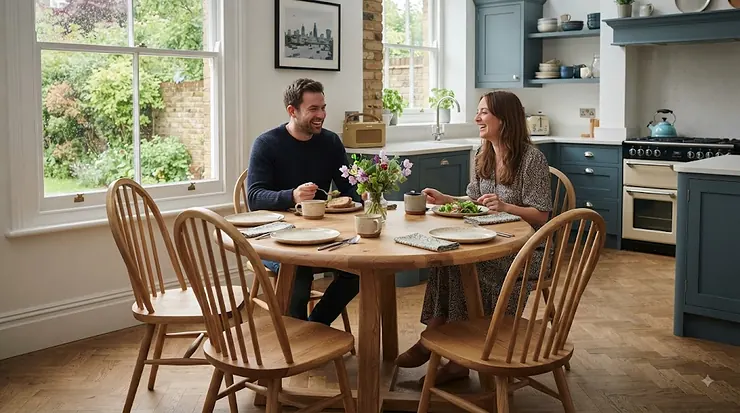
There’s a reason windsor dining chairs have outlasted about four different centuries of furniture fashion. Farmhouse kitchens loved them, Georgian townhouses loved them, and somehow your nan’s dining room still has at least one knocking about. What is a windsor chair, exactly? It’s a solid wooden seat with legs, a back, and sometimes arms all pushed straight into drilled holes in that seat — no separate frame, no fussy joints holding the whole thing together. That single trick is why they’re so tough, and why the design has barely changed since it first turned up near the Thames in the early 1700s.
This guide walks through seven genuinely available windsor dining chairs sold through amazon.co.uk, from honest £70-a-pair starters to premium oak sets that’ll see out a mortgage. You’ll get real spec breakdowns, honest analysis of who each chair actually suits, and a proper look at windsor chairs with arms versus the standard side-chair versions. We’ll also cover country kitchen furniture styling, what solid wood joinery actually buys you, and where windsor chair comfort genuinely holds up against padded alternatives — and where it doesn’t. No invented reviews, no fantasy pricing. Just what the spec sheets and aggregated buyer sentiment actually say.
Quick Comparison: Windsor Dining Chairs at a Glance
| Chair | Wood / Finish | Price Range | Best For |
|---|---|---|---|
| Julian Bowen Windsor Dining Chairs | Rubberwood, honey lacquer | Under £150 (pair) | Classic look on a tight budget |
| Julian Bowen Cotswold Dining Chairs | Solid oak, natural finish | £150-£250 (pair) | Farmhouse-style natural oak |
| Hallowood Furniture Solid Oak Spindle Chairs | Solid oak | £180-£320 (pair) | Buyers wanting genuine oak longevity |
| Dhole Windsor Spindle Back Dining Chairs | Solid hardwood | Under £180 (set of 2) | Colour choice and flexible set sizes |
| Julian Bowen Coxmoor Oak Dining Chairs | Solid white oak, padded faux leather seat | £200-£320 (pair) | Extra seated comfort |
| Beliani Wooden Dining Chair | Rubberwood/beech | £150-£280 (set) | Design-led, Scandinavian-adjacent look |
| Julian Bowen Ibsen Dining Chairs | Rubberwood, light oak lacquer, padded seat | £180-£300 (pair) | Contemporary shaker-windsor hybrid |
Looking at the spread above, the gap between the cheapest and most expensive pair isn’t really about durability — most of these use similarly dense hardwoods. It’s about finish quality, seat comfort, and whether the maker bothers to pad the seat pan. Budget-conscious buyers furnishing a first home will get more mileage out of the Julian Bowen Windsor Dining Chairs or Dhole Windsor Spindle Back Dining Chairs, while anyone who eats at the table for an hour-plus most nights should look at the padded options further down this list.
💬 Just one click — help others make better buying decisions too!😊
Top 7 Windsor Dining Chairs: Expert Analysis
1. Julian Bowen Windsor Dining Chairs — the classic honey-lacquered original
This is about as close as amazon.co.uk gets to the textbook windsor silhouette: a shaped solid seat, turned spindle back, and a honey lacquer finish that reads as traditional without tipping into “cottagecore stage set.” Julian Bowen builds these from rubberwood, a dense plantation hardwood that takes stain and lacquer evenly, which is why the honey tone looks consistent across a whole set rather than patchy like some cheaper pine alternatives.
Key specs worth knowing: the chairs arrive flat-packed for self-assembly, use a shaped (not flat) seat pan for a touch more comfort than a plain board, and the honey lacquer is durable enough to wipe clean rather than needing polish. In practice, the shaped seat matters more than the spec sheet lets on — it’s the difference between a chair you tolerate for twenty minutes and one you’re happy to sit at through a full family meal.
This is honestly the pick for anyone furnishing a first dining table or a holiday let, where the brief is “looks properly windsor, survives daily use, doesn’t need a loan.” Aggregated buyer sentiment around Julian Bowen’s budget ranges consistently mentions straightforward self-assembly and a finish that holds up well, alongside occasional notes about hardware packs arriving short a screw or two — worth checking the box on delivery rather than assuming it’s complete.
Pros:
- ✅ Authentic windsor silhouette at an accessible price
- ✅ Shaped seat pan adds real comfort over flat boards
- ✅ Durable wipe-clean lacquer finish
Cons:
- ❌ Self-assembly required, and instructions can be terse
- ❌ Rubberwood shows dents more readily than oak over years of use
Expect to pay under £150 for a pair at the time of research; prices may vary, so always check current price before ordering. For the money, this is hard to beat as a genuine windsor entry point.

2. Julian Bowen Cotswold Dining Chairs — natural oak farmhouse charm
Step up from lacquered rubberwood and you land on the Julian Bowen Cotswold Dining Chairs, finished in natural oak rather than a stained coating. That distinction actually matters: a natural oak finish shows the timber’s real grain and colour variation, so no two chairs in the set look quite identical — which is either a feature or a minor annoyance depending on how fussy you are about matching sets.
The frame construction follows the same round-tenon windsor logic — spindles and legs drilled directly into the seat — but Cotswold’s turned spindles are slightly thicker than the entry-level Windsor range, giving the back a sturdier, less spindly look in person. That’s a real structural benefit too: thicker spindles resist the wobble that develops in cheaper turned-wood chairs after a few years of being pulled out and pushed in.
Based on the spec comparison, this range suits buyers building a proper farmhouse or country-kitchen look who want the natural oak tone without paying premium oak-veneer prices. Reviewers commonly flag the natural finish as the standout, alongside sturdy joints; a smaller number mention the finish marking more visibly than a lacquered chair if liquids are left standing, which tracks with how open-grain natural finishes behave generally.
Pros:
- ✅ Natural oak grain gives genuine farmhouse character
- ✅ Thicker turned spindles resist long-term wobble
- ✅ Coordinates with Julian Bowen’s wider Cotswold dining range
Cons:
- ❌ Natural finish is more porous, needs prompt spill wiping
- ❌ Colour variation between chairs in a set is normal, not a defect
At the time of research, expect a £150-£250 range per pair — check current price for the latest figure. Good value if the natural-wood look is the priority over uniform colour matching.
3. Hallowood Furniture Solid Oak Spindle Chairs — real oak built to last
Hallowood is a UK solid-wood specialist with physical stores in Banbury, Evesham, Redditch and Worcester, and their oak dining chair ranges lean firmly into genuine oak rather than oak-effect veneers over engineered board. That’s the headline distinction from most of this list: solid oak, right through, not a lacquered rubberwood core dressed up to look the part.
What that means practically is weight and rigidity. Solid oak dining chairs are noticeably heavier to lift than rubberwood equivalents, and that extra mass translates into a chair that simply doesn’t flex or creak under a heavier adult the way lighter timbers can after a few years. The spindle-back design keeps the classic windsor profile while the oak joinery — legs and spindles set into a shaped solid seat — is what actually resists the loosening that afflicts cheaper glued-frame chairs.
Here’s what most buyers overlook about solid oak seating: it’s genuinely a decades purchase, not a five-year one, provided it’s kept away from direct radiator heat (which dries and cracks solid timber over time). For anyone who’s tired of replacing a “wood-effect” dining set every few years, this is the honest upgrade. Aggregated feedback on Hallowood’s oak ranges tends to praise build weight and finish quality; the trade-off buyers mention most is the higher price point compared with rubberwood alternatives.
Pros:
- ✅ Genuine solid oak, not veneer or oak-effect coating
- ✅ Noticeably more rigid than lighter hardwood alternatives
- ✅ Backed by an established UK solid-wood specialist
Cons:
- ❌ Higher price bracket than rubberwood windsor chairs
- ❌ Heavier chairs are harder to move for regular rearranging
Price ranges here typically sit around £180-£320 for a pair at the time of research; always check current price given oak material costs fluctuate. Worth the outlay for a kitchen table that sees genuinely heavy daily use.
4. Dhole Windsor Spindle Back Dining Chairs — best budget colour choice
The Dhole Windsor Spindle Back Dining Chairs range is built from solid hardwood and sold in multiple set sizes — pairs, fours, sixes and even eights — plus a genuinely useful spread of finishes including white, black and natural brown. That flexibility is the whole appeal: most windsor ranges lock you into one or two finishes, but Dhole lets a kitchen with painted cabinetry match its chairs to the room rather than the other way round.
Construction follows the familiar windsor formula of spindles and legs set into a solid seat, and Dhole also offers a narrower “7 spindle” back variant alongside the standard spread — a subtle style choice that reads slightly more contemporary than the wide traditional fan-back. What the spec sheet won’t tell you, but the range structure suggests, is that this brand is optimised for buyers who want to furnish a larger table (six or eight seats) without the cost scaling the way premium oak ranges do.
This is the pick for anyone kitting out a big farmhouse table or a rental property where colour-matching to existing decor matters more than heirloom-grade timber. On value, Dhole undercuts most oak alternatives on a per-seat basis once you’re buying in sets of six or more.
Pros:
- ✅ Widest colour and finish choice on this list
- ✅ Scales well for larger tables (sets up to eight)
- ✅ Solid hardwood construction at a budget price point
Cons:
- ❌ Painted/coloured finishes can chip with heavy daily knocks
- ❌ Less premium in hand than genuine oak alternatives
Expect a set of two in the under-£180 range at the time of research, scaling proportionally for larger sets — check current price for exact set sizing and colour availability.
5. Julian Bowen Coxmoor Oak Dining Chairs — best padded comfort upgrade
The Julian Bowen Coxmoor Oak Dining Chairs swap the bare shaped seat for a padded faux leather seat pad on a solid white oak frame, finished with a durable oiled coating rather than a high-gloss lacquer. This is the chair to reach for if the honest answer to “how long do you actually sit at the table” is “well over an hour most evenings” — because that’s exactly where unpadded windsor seats start to lose their appeal.
The oiled oak finish is worth flagging on its own: unlike a lacquered coating that sits on top of the wood, an oiled finish soaks in and needs occasional reapplication (roughly annually with normal use) to keep the timber protected. It’s slightly more maintenance than a lacquered chair, but it also ages more gracefully — oiled oak tends to develop a warmer patina rather than showing scratches as starkly as a glossy surface would.
Based on the spec comparison, this is the strongest all-rounder for a family that actually lingers at the table — homework, Sunday roasts, the lot. Aggregated review sentiment on padded oak dining chairs in this bracket generally highlights the seat comfort improvement as the deciding factor buyers mention when justifying the higher spend over unpadded windsor alternatives.
Pros:
- ✅ Padded faux leather seat meaningfully improves long-sit comfort
- ✅ Solid white oak frame with durable oiled finish
- ✅ Faux leather wipes clean far more easily than fabric
Cons:
- ❌ Requires occasional oil reapplication to maintain the finish
- ❌ Costs noticeably more than unpadded windsor equivalents
At the time of research, pairs typically sit in the £200-£320 range — check current price, as oak and leather-alternative material costs both move independently.
6. Beliani Wooden Dining Chair — best design-led alternative
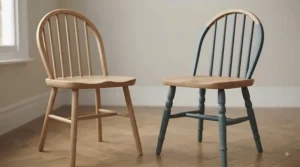
Beliani takes a slightly different angle on the traditional windsor shape: rubberwood or beechwood construction, cleaner Scandinavian-influenced lines, and a colour palette that stretches well beyond the usual oak-and-honey spectrum. If the rest of your dining room leans more mid-century than farmhouse, this is the range that won’t fight the room.
Beliani’s own material guidance is genuinely useful here — beechwood chairs finish smoothly and hold their shape reliably, rubberwood is dense and affordable and takes stain evenly, while their pine options are lighter and warmer-looking but softer and more prone to denting. That’s an honest trade-off worth weighing before choosing a finish, rather than assuming “wood is wood.”
Who should care about this range: buyers who want the structural logic of a windsor-style spindle chair — sturdy, no complicated joinery to fail — without the cottage aesthetic that comes bundled with most traditional ranges. It’s also worth noting Beliani ships direct with a lengthy returns window, which matters if you’re buying dining chairs sight-unseen and want a genuine safety net.
Pros:
- ✅ Design flexibility beyond traditional oak/honey tones
- ✅ Beech and rubberwood options offer genuine finish choice
- ✅ Long returns window reduces risk of an online purchase
Cons:
- ❌ Less “authentic period windsor” in appearance than oak ranges
- ❌ Pine variants dent more easily than beech or rubberwood options
Typical price ranges sit around £150-£280 depending on set size and finish at the time of research; check current price for the specific colourway you want.
7. Julian Bowen Ibsen Dining Chairs — best contemporary shaker-windsor hybrid
The Julian Bowen Ibsen Dining Chairs aren’t a pure windsor in the strictest sense — Julian Bowen positions the range as a contemporary take on shaker style — but the construction shares enough DNA (turned legs, a padded seat set into a solid rubberwood frame, light oak lacquer) that it’s a genuinely useful comparison point for anyone torn between traditional windsor and something a touch more modern.
Constructed from rubberwood with a light oak lacquered finish and a fabric-padded seat, Ibsen splits the difference between the bare-wood comfort of a classic windsor and the fully upholstered comfort of a modern dining chair. The padded seat is the standout practical feature — it’s noticeably softer underfoot than the Coxmoor’s faux leather pad, though less wipe-clean-friendly if you’ve got young children at the table.
What most buyers overlook about hybrid ranges like this is that they let you keep a cohesive “wood dining chair” look through the whole table while still getting genuine seat comfort — a compromise that suits households split between someone who wants “proper wooden chairs” and someone who wants padding. Aggregated feedback on Julian Bowen’s padded ranges is broadly positive on comfort and finish, with the main recurring theme being that fabric seats need more regular cleaning than the leather-alternative options above.
Pros:
- ✅ Genuinely soft padded seat, more forgiving than bare wood
- ✅ Light oak finish coordinates with most traditional dining tables
- ✅ Contemporary shaker lines suit both period and modern rooms
Cons:
- ❌ Fabric seat pad needs more regular cleaning than wipe-clean options
- ❌ Not a strict period windsor if authenticity is the priority
Expect a £180-£300 range per pair at the time of research — check current price before buying, particularly around seasonal furniture sales.
Practical Usage Guide: Setting Up and Maintaining Windsor Dining Chairs
Getting a new set of windsor dining chairs right starts before you even open the box. Most ranges on this list ship flat-packed, and the single most common assembly mistake is fully tightening one bolt before checking the whole frame sits square — do every joint up finger-tight first, stand the chair on a flat floor, then torque everything down evenly. Rushing this step is exactly how you end up with the wobble people wrongly blame on the chair design rather than their own assembly.
Maintenance depends entirely on finish. Lacquered chairs (Julian Bowen’s Windsor and Ibsen ranges, most Beliani and Dhole finishes) just need a damp cloth and the occasional wipe with wood-safe cleaner — never silicone-based furniture polish, which builds up a slick film on lacquer over time. Natural or oiled finishes (Cotswold, Coxmoor, and most Hallowood oak) genuinely benefit from a light feed of furniture oil every 6-12 months depending on how much daily sun and heat the room gets; skipping this is the single biggest reason natural-finish chairs look tired after a couple of years while an identical, well-oiled chair still looks sharp.
The first 30 days matter more than people expect. New timber joints settle slightly as the wood adjusts to your home’s humidity, so it’s worth doing a quick bolt-check after the first month, particularly on chairs that get moved around a lot (pulled out, pushed in, dragged across the floor). It sounds fussy, but a five-minute check now genuinely prevents the “my chair’s gone wobbly” complaint that shows up in negative reviews six months later — and it’s almost always a loose fixing, not a manufacturing fault.
Real-World Scenarios: Which Windsor Chair Fits Your Home
The first-flat furnisher, budget under £400 for four chairs: Go straight to the Julian Bowen Windsor Dining Chairs or Dhole Windsor Spindle Back Dining Chairs. Both deliver the authentic look without the oak price tag, and at this life stage, chairs that survive a couple of house moves matter more than heirloom joinery.
The growing family with a big farmhouse table, six-to-eight seats, kids and mess: The Dhole Windsor Spindle Back Dining Chairs in a set of six or eight, or the Julian Bowen Coxmoor Oak Dining Chairs if budget allows for the wipe-clean faux leather pads. Painted or lacquered finishes shrug off crayon and ketchup far better than natural oiled oak in a household with young children.
The long-term homeowner replacing a tired dining set for the last time: This is where the Hallowood Furniture Solid Oak Spindle Chairs earn their higher price. Genuine solid oak simply outlasts rubberwood by decades when properly maintained, and if you’re not planning to move again, the extra spend amortises to almost nothing per year of use.

How to Choose Windsor Dining Chairs
Choosing between windsor ranges comes down to five practical criteria, in roughly this order of importance:
- Frame material — solid oak outlasts rubberwood by a wide margin but costs more; rubberwood is a perfectly sound choice for most households and takes finishes evenly.
- Seat comfort — decide honestly how long people actually sit at your table. Padded ranges like Coxmoor and Ibsen earn their premium if meals regularly run past 45 minutes.
- Finish maintenance appetite — lacquered and painted finishes are lower-maintenance; natural and oiled finishes look better long-term but need occasional feeding.
- Set size and colour flexibility — larger tables benefit from ranges like Dhole that scale to six or eight without a steep per-chair cost jump.
- Arms or no arms — decide whether you want one or two carver (armed) chairs at the table ends before ordering, since most ranges sell these as a separate line item.
Working through these in order avoids the single most common buying mistake: falling for a finish photo before checking whether the frame material and seat type actually suit how the table gets used day to day.
Windsor Dining Chairs vs Other Traditional Wooden Dining Chairs
Windsor chairs aren’t the only traditional wooden option, and it’s worth being honest about how they stack up against ladder-back and Chippendale-style alternatives, both common on amazon.co.uk. Ladder-back chairs use horizontal slats stacked up a vertical frame rather than a spindle fan, which generally looks slightly more formal and works well with darker, more traditional dining tables. Structurally, though, ladder-backs rely on more glued joints between rails and uprights, which is exactly the kind of joint that windsor construction avoids by drilling spindles straight into a solid seat.
That construction difference is the real story. According to the Windsor chair entry on Wikipedia, the design is defined by its solid wooden seat into which the back and legs are round-tenoned, in contrast to chairs whose back legs and uprights run as one continuous piece. Fewer separate joints generally means fewer failure points over years of daily use — one reason windsor chairs have a reputation for outlasting more elaborately joined traditional styles.
Where ladder-back and Chippendale-style chairs win is aesthetics for very formal dining rooms; the taller, straighter backs suit a period townhouse look that a windsor’s rounded spindle fan doesn’t quite replicate. If your dining room leans country kitchen rather than formal dining room, windsor construction is very hard to beat on the durability-to-price ratio.
Windsor Chairs With Arms: When (and Why) to Add a Carver
A traditional windsor set almost always includes the option of a carver — the armed version of the same chair, usually reserved for the head(s) of the table. Most of the ranges above, including Julian Bowen’s collections and Hallowood’s oak spindle range, sell matching carvers as a separate purchase rather than bundling them into standard sets, so it’s worth checking availability before you commit to a full table’s worth of standard chairs only to find the matching armed version has sold out.
Here’s what most buyers overlook about windsor chairs with arms: they’re genuinely wider than standard side chairs, typically by several centimetres per side, so measure your table’s end clearance before assuming a carver will fit comfortably at each end. Comfort-wise, arms do make a real difference for anyone who lingers at the table — they give somewhere to rest your elbows and make getting up from the table noticeably easier, which matters more than people expect for older relatives or anyone with mobility considerations.
The typical setup is two carvers at the table ends and standard side chairs along the length, partly for cost (carvers usually cost more per chair) and partly because a full table of armed chairs simply won’t push in flush to most standard dining tables. If comfort is genuinely the priority over pure aesthetics, prioritising one or two carvers over an extra side chair is usually money well spent.
Solid Wood Joinery: What Makes a Windsor Chair Last
The joinery is really the whole story with windsor construction, and it’s worth understanding why it works so well. Traditional windsor chairs use round mortise-and-tenon joints — essentially, a rounded peg (the tenon) on the end of each spindle or leg, drilled into a matching round hole (the mortise) in the solid seat. As the Wycombe Museum’s chair collection explains, the term “Windsor” specifically describes this construction method — wooden sticks, legs and arm pieces all inserted into a wooden seat — rather than any one specific decorative style.
What the spec sheet won’t tell you is that this joint type gets stronger, not weaker, as the wood settles over its first year or two, provided the timber was properly dried before construction. As the surrounding wood in the seat contracts slightly with age and normal indoor humidity, it grips the inserted tenon tighter — which is the opposite of how many glued rail-and-panel joints behave, since glue bonds can degrade with repeated humidity swings while a well-fitted round joint generally doesn’t.
This is also why solid timber selection matters more in windsor construction than in most furniture styles. Oak, beech and ash all take the round-tenon joint well; softer woods like pine can work but are more prone to the tenon compressing the surrounding hole over years of heavy use, which is part of why most premium windsor ranges specify hardwood over softwood for the structural spindles and legs, even when the seat itself uses a different timber.
Windsor Chair Comfort: What to Expect Day to Day
Comfort is the question every windsor buyer eventually asks, usually after ordering, and the honest answer is “better than you’d expect from a bare wood seat, worse than a padded dining chair, for meaningfully longer than you’d guess.” The shaped seat pan used across most of the ranges above — a shallow dish or saddle carved into the solid seat — genuinely does the job it’s designed for, distributing weight more evenly than a flat board would.
Where windsor comfort tends to fall short is longer sitting sessions: working from the table, extended family gatherings, or anyone who eats slowly. This is exactly the gap that padded ranges like the Julian Bowen Coxmoor Oak Dining Chairs and Julian Bowen Ibsen Dining Chairs are built to close, and reviewers consistently note the difference is noticeable within the first sitting, not something that only shows up after weeks of use.
Back support is the other honest trade-off. A windsor spindle back flexes very slightly and offers good lower-back contact for upright dining posture, but it’s not built for reclining the way an upholstered dining chair with a solid backrest is. For most households eating meals in the 20-40 minute range, unpadded windsor comfort is genuinely fine; households that linger significantly longer should weight their decision toward the padded options on this list.

Country Kitchen Furniture: Styling Windsor Chairs at Home
Windsor dining chairs are practically the founding piece of country kitchen furniture, and there’s a reason the pairing has stuck for centuries: the turned spindle silhouette softens a room that’s otherwise full of hard surfaces — worktops, splashbacks, tiled floors — without looking fussy or overly ornate. Pairing natural or oak-finished windsor chairs (Cotswold, Hallowood) with a farmhouse-style extending table is the classic combination, and it works particularly well against painted (rather than glossy) cabinetry.
For a more contemporary country-kitchen look, mixing finishes is a genuinely underused trick: pair painted or coloured windsor chairs (Dhole’s coloured range works well here) with a natural or reclaimed wood table, rather than matching everything exactly. It avoids the slightly showroom-uniform look that a perfectly matched set can create, and it’s an easy way to bring in an accent colour that ties to cabinetry or wall paint without committing to a fully upholstered chair.
Practically, country kitchens see more spills and foot traffic than formal dining rooms, which is another argument for lacquered or painted finishes over natural oiled oak in genuinely high-use kitchen settings — save the natural oak ranges for a separate dining room that sees lighter daily wear.
Common Mistakes When Buying Windsor Dining Chairs
Buyers repeatedly make the same handful of errors when shopping this category, and most are easily avoided with a bit of forethought. First, measuring the table but not the room: windsor chairs with their fanned spindle backs take up more visual and physical space than slim modern dining chairs, so a table that comfortably seats six slim upholstered chairs might only take four windsor chairs without feeling cramped.
Second, ignoring seat height mismatch. Windsor chair seat heights vary by a few centimetres between ranges, and pairing a taller-seated chair with a lower table (or vice versa) creates an uncomfortable knee angle that no amount of cushion fixes. Always check the specific seat height listed against your table’s clearance before ordering, particularly if mixing chairs from different ranges.
Third, underestimating finish maintenance before buying a natural or oiled range, then being disappointed when it needs more care than a lacquered alternative. And finally, forgetting to check carver (armed chair) availability and width before committing to a full-table order — as covered above, carvers are usually sold separately and are noticeably wider than standard chairs.
Long-Term Cost & Maintenance: Total Cost of Ownership
Judged purely on upfront price, the budget rubberwood ranges win easily. But total cost of ownership tells a slightly different story once you factor in realistic replacement cycles. A well-maintained solid oak set, like the Hallowood Furniture Solid Oak Spindle Chairs, reasonably lasts 15-20+ years with occasional oiling; a budget rubberwood set typically performs well for 5-10 years before joints start loosening under heavy daily use, at which point most households simply replace rather than repair.
Run that out over two decades and the numbers narrow considerably: two rubberwood replacement cycles can end up costing close to what one oak set would have, before even factoring in the hassle of reordering, reassembling and disposing of the old set. That said, this maths only favours oak if you’re genuinely staying in the same home for the long haul — for renters or anyone likely to move within five years, the lower upfront cost of rubberwood ranges remains the more sensible choice.
Maintenance costs are modest either way. Furniture oil for natural-finish chairs runs to a few pounds a year at most, and wood-safe cleaner for lacquered finishes is a similarly small ongoing cost. The real cost differentiator isn’t maintenance spend — it’s how many times you end up buying the set over a couple of decades.
Safety & Regulations: What UK Buyers Should Know
Any windsor dining chair sold with an upholstered or padded seat pad — including the Julian Bowen Coxmoor Oak Dining Chairs and Julian Bowen Ibsen Dining Chairs in this guide — falls within scope of UK furniture fire safety law. Under the Furniture and Furnishings (Fire) (Safety) Regulations, most recently updated by the 2025 amendment, domestic upholstered furniture sold in the UK — including seat pads and padded chair coverings — must meet flammability requirements and carry the correct fire safety labelling at the point of sale.
Practically, this means any legitimate UK retailer selling padded windsor chairs should display fire safety labelling on the seat pad, usually a small tag sewn into the underside or edge of the padding. It’s worth a quick check on arrival, particularly with smaller or newer sellers, since the label confirms the filling and cover materials have been tested rather than just assumed safe.
For fully wooden (unpadded) windsor chairs, fire safety regulation doesn’t apply in the same way, since there’s no upholstery in scope. Worth noting separately: buyers concerned about sustainable sourcing should look for FSC-certified timber where listed, which confirms the wood came from responsibly managed forests rather than unverified sources — increasingly common across UK furniture ranges as sourcing transparency improves.
✨ Don’t Miss These Exclusive Deals!
🔍 Take your dining room to the next level with these carefully selected chairs. Click on any highlighted item to check current pricing and availability. These pieces will help you create an authentic country kitchen look your family will actually enjoy sitting in for years.
Features That Actually Matter (And Those That Don’t)
Marketing copy for dining chairs loves to talk up “elegant curves” and “timeless design,” which sounds nice but tells you nothing useful. What actually matters: frame material (oak versus rubberwood), joint type (round-tenon windsor construction versus glued rail joints), and seat construction (shaped/padded versus flat board). Everything else is largely aesthetic preference.
What doesn’t matter nearly as much as listings imply: exact spindle count. Marketing around “9-spindle” versus “7-spindle” backs frames this as a meaningful quality signal, but it’s mostly a style choice affecting how airy or solid the back looks — both counts, when properly built, perform equivalently for support and durability. Similarly, “hand-finished” claims on mass-manufactured budget ranges are worth reading sceptically; genuine hand-finishing is real on premium and artisan ranges, but the term gets applied loosely across the market.
What’s worth paying attention to that often gets buried in listings: the actual seat height and depth measurements, and whether a range specifies solid wood throughout versus solid wood with an engineered-board seat. Both details tell you far more about how the chair will actually perform in your home than any amount of “classic elegance” copy.

Frequently Asked Questions
❓ What is the difference between a windsor chair and a normal dining chair?
❓ Are windsor dining chairs comfortable for everyday use?
❓ Do windsor dining chairs come with arms?
❓ What wood is best for windsor dining chairs?
❓ How do you maintain solid wood windsor dining chairs?
Conclusion
Windsor dining chairs earn their staying power the honest way: fewer joints to fail, a construction method that’s barely changed since it first appeared centuries ago, and a look that suits everything from a countryside farmhouse kitchen to a modern terrace with a reclaimed oak table. Across the seven ranges covered here, the real decision isn’t which chair looks nicest in a product photo — it’s an honest assessment of your budget, how long people actually sit at your table, and how much finish maintenance you’re genuinely willing to do.
Budget buyers and first-time furnishers should look hard at the Julian Bowen Windsor Dining Chairs or Dhole Windsor Spindle Back Dining Chairs for authentic looks without the oak price tag. Anyone who lingers at the table should prioritise the padded comfort of the Julian Bowen Coxmoor Oak Dining Chairs or Julian Bowen Ibsen Dining Chairs. And households planning to stay put for the long haul should seriously weigh the total cost of ownership case for genuine solid oak, like the Hallowood Furniture Solid Oak Spindle Chairs — a chair that, properly maintained, will likely outlast the kitchen it’s sitting in.
Whichever range fits your home and budget, the core appeal of windsor dining chairs hasn’t changed in three hundred years: solid wood, simple joinery, and a design tough enough to survive daily family life. That’s worth more than any amount of marketing gloss.
Recommended for You
- Velvet Dining Chairs: 7 Best Buys for a Stylish 2026 Dining Room
- Cross Back Dining Chairs Set of 2: 7 Best Picks for 2026 (UK)
- 7 Best Dining Chairs Under £100 in 2026: Honest Buyer’s Guide
Disclaimer: This article contains affiliate links. As an Amazon Associate, I earn from qualifying purchases. If you purchase products through these links, we may earn a small commission at no additional cost to you.
✨ Found this helpful? Share it with your friends! 💬🤗
