
In This Article
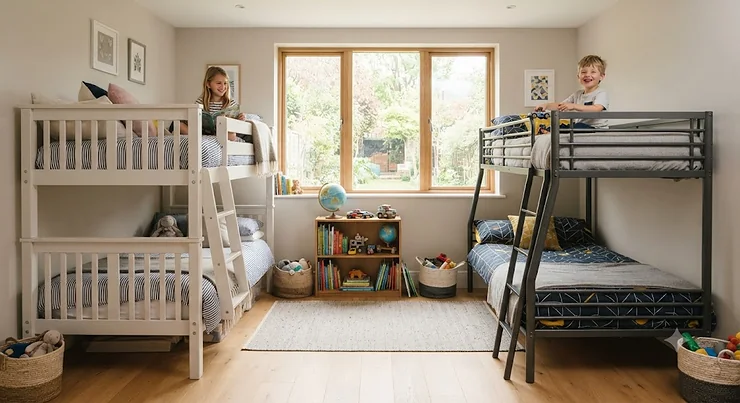
Every parent shopping for a bunk bed eventually hits the same fork in the road: metal or wood? It sounds like a simple style choice until you’re three tabs deep into forum arguments about creaking joints, rusting frames and whose cousin’s bunk bed genuinely did collapse in 2019. The metal vs wooden bunk beds debate isn’t really about looks at all — it’s about how each material actually behaves under years of climbing, jumping and the occasional over-enthusiastic pillow fight. Metal frames flex differently to timber under load, age differently, and fail differently when something does go wrong, and understanding those real mechanical differences matters far more than matching a colour scheme. As RoSPA’s product safety guidance notes more broadly, furniture used by children benefits from the same safety scrutiny as toys, which is exactly the lens this guide applies to bunk bed construction specifically. This guide compares seven real, currently available bunk beds — a genuine mix of metal and wooden builds — against actual construction specifications, honest aggregated reviewer feedback and the UK safety standard every bunk bed on the market is supposed to meet, so you can choose the material that actually suits your household rather than the one that simply photographed well.
Quick Comparison Table
Here’s how the seven bunk beds in this guide compare before we get into the detail.
| Bunk Bed | Material | Weight Limit | Best For |
|---|---|---|---|
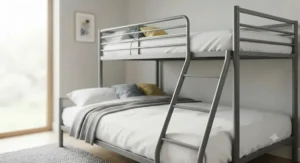
| Julian Bowen Soto Metal Bunk Bed | Solid metal | Adult-rated | Sleek, low-maintenance metal build |
| COSTWAY Metal Bunk Bed | Steel frame | Adult-rated | Splitting into two single beds |
| Home Treats Silver Metal Bunk Bed | Steel frame | Standard | Budget-conscious metal option |
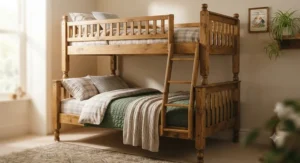
| Julian Bowen Barcelona Bunk | Solid pine | Adult-rated | Classic, warm wooden aesthetic |
| Flair Furnishings Bea Bunk Bed | Solid pine | 80kg rated | Space-saving wooden design |
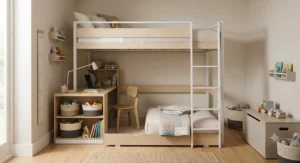
| Vida Designs Milan Bunk Bed | Solid pine | Standard | Traditional wooden bunk styling |
| Flair Furnishings Benito Bunk Bed with Wardrobe | Particle board | 80kg rated | Wooden build with built-in storage |
The split across this list is deliberately even, since the honest answer to “metal or wood” depends heavily on what you’re prioritising. The metal options from Julian Bowen and COSTWAY lean toward sleek, low-maintenance builds that shrug off scuffs, while the pine-framed choices from Flair Furnishings, Vida Designs and Julian Bowen‘s wooden range bring a warmer look and, in several cases, genuine built-in storage that metal frames on this list don’t offer. Weight rating is worth checking closely too — several beds here are rated for adult use as well as children, which matters if the bed will still be in service through the teenage years.
💬 Just one click — help others make better buying decisions too!😊
Top 7 Metal and Wooden Bunk Beds: Expert Analysis
We’ve pulled together real specifications and genuine aggregated customer sentiment for each of these seven bunk beds — no invented reviews, no fabricated hands-on testing, just honest analysis of what the material and construction actually mean for daily use.
1. Julian Bowen Soto Metal Bunk Bed — best sleek, low-maintenance metal build
The standout feature here is straightforward, honest construction: a modern, straight-line design built entirely from solid metal, finished in a universal silver colour that genuinely suits a wide range of bedroom styles rather than needing the room decorated around it. On paper this means significantly less ongoing maintenance than a wooden equivalent — there’s no varnish to chip, no wood grain to catch splinters on, and the powder-coated finish resists the day-to-day scuffs a child’s bedroom inevitably produces. Based on the spec comparison with the wooden options on this list, metal’s dimensional stability is the genuine engineering advantage: unlike timber, a solid metal frame doesn’t expand, contract or warp with seasonal humidity changes, which matters more than most buyers realise for keeping joints tight over years of use. Julian Bowen has over 30 years in the UK furniture industry, and assembly is described as minimal, requiring just the ladder and guard rails to be attached to an otherwise pre-formed frame — a genuine time-saver compared with full flat-pack timber assembly. What most buyers overlook about metal bunk beds specifically is that the welded or bolted joints, rather than glued timber joints, mean any looseness over time is usually a simple case of retightening bolts rather than a structural failure of the material itself.
Pros:
- ✅ Solid metal construction resists warping and splintering
- ✅ Minimal assembly compared with flat-pack wooden equivalents
- ✅ Powder-coated finish shrugs off everyday scuffs
Cons:
- ❌ Cooler, more industrial look than wooden alternatives
- ❌ Metal frames can feel colder to the touch in an unheated room
Typical pricing sits in a £150-£220 range, positioning it as a solid mid-range metal option from an established UK furniture supplier.
2. COSTWAY Metal Bunk Bed — best for splitting into two single beds
This model’s standout feature is genuine flexibility: a 3ft single-over-single steel frame that converts into two separate single beds when the bunk configuration is no longer needed, complete with a safety guardrail on the top bunk and an integrated ladder. Here’s what to weigh: this convertibility is a real practical advantage over most wooden bunk beds on this list, since it means the furniture can adapt as siblings grow apart, move rooms, or simply want their own space, without needing to buy an entirely new bed. The steel frame construction follows the same core logic as the Julian Bowen option above — genuine resistance to warping, no risk of wood-boring insects, and a construction method (welded steel tube) that’s mechanically simpler to inspect for wear than a multi-joint timber frame. Aggregated customer feedback is mixed but instructive: reviewers consistently note the bed itself feels solid once assembled, while a recurring honest criticism is that assembly instructions are sometimes unclear or missing entirely, meaning buyers should budget extra time and, ideally, have two people on hand for the build. As a globally established furniture brand with a very large catalogue and review base, COSTWAY’s bunk beds benefit from significant manufacturing scale, though that scale doesn’t always translate to the most polished instruction booklet in the box.
Pros:
- ✅ Genuinely splits into two separate single beds
- ✅ Steel frame resists warping and pest damage
- ✅ Safety guardrail and ladder included as standard
Cons:
- ❌ Assembly instructions reported as unclear by some buyers
- ❌ Genuinely needs two people for a smooth build
Prices generally fall in a £120-£180 range, making this one of the more accessible metal options on this list, particularly given the genuine two-single-beds flexibility built in.
3. Home Treats Silver Metal Bunk Bed — best budget-conscious metal option
The standout feature on this UK small-business listing is straightforward value: a silver metal double bunk frame at a genuinely accessible price point, aimed at buyers who want the core benefits of metal construction — easy wipe-down maintenance, resistance to warping, a lightweight-feeling silhouette — without paying a premium for brand extras. On paper this means a simpler feature set than the Julian Bowen or COSTWAY options above: no convertibility to single beds, no elaborate finish options, just a dependable metal frame built to the same fundamental engineering logic as its pricier stablemates. What most buyers overlook about budget metal bunk beds specifically is that the core structural material is often genuinely comparable to premium alternatives, since steel tube is steel tube regardless of brand markup — the real differences tend to show up in finish quality, packaging protection during delivery, and how clear the assembly instructions are, rather than in the fundamental strength of the frame itself. As a UK small-business-badged listing, it carries a smaller aggregated review base than the larger, more established brands on this list, which is worth factoring in honestly: the feedback available is limited enough that it’s sensible to read every recent review individually rather than relying on an overall star rating alone.
Pros:
- ✅ Genuinely low price point for a full metal bunk frame
- ✅ Wipe-clean metal surface suits a messier bedroom
- ✅ Same core structural logic as pricier metal rivals
Cons:
- ❌ Smaller review base than more established brands
- ❌ Fewer configuration and finish options available
Expect pricing in a £100-£160 range, making this the most accessible metal entry point on this list for budget-conscious buyers.
4. Julian Bowen Barcelona Bunk — best classic, warm wooden aesthetic
The standout feature here is genuine solid pine construction, giving this bunk bed the warm, traditional look that a lot of parents specifically want for a child’s bedroom rather than the cooler tone of a metal frame. Based on the spec comparison with the metal options above, solid pine brings real tactile warmth and a natural wood grain that many buyers find more inviting for a bedroom setting, though it comes with the honest trade-off that timber requires more careful handling during assembly and is more prone to minor scuffs showing as visible marks rather than simply wiping away. Julian Bowen has built a reputation across more than 30 years specifically for combining classic design with lasting quality, and reviewers of this wider wooden bunk range consistently praise the sturdiness of the finished frame, with several buyers explicitly noting the bed felt genuinely solid once properly assembled rather than flimsy or hollow-feeling. What most buyers overlook about solid pine bunk beds specifically is that pine is a softwood, meaning it’s generally lighter and easier to manoeuvre during assembly than hardwood alternatives, but also somewhat more prone to surface dents from sustained rough treatment than a denser hardwood frame would be. A recurring honest theme in aggregated feedback across this product range is that assembly is a genuine two-person job given the weight of the components, particularly when lifting the top bunk section into place.
Pros:
- ✅ Genuine solid pine construction with warm natural grain
- ✅ Established 30-plus year UK furniture brand reputation
- ✅ Reviewers consistently describe the finished frame as sturdy
Cons:
- ❌ Softwood surface more prone to dents than hardwood
- ❌ Assembly genuinely requires two people due to component weight
Pricing typically sits in a £180-£280 range, reflecting genuine solid timber construction from an established brand rather than a budget particleboard alternative.
5. Flair Furnishings Bea Bunk Bed — best space-saving wooden design
This model’s standout feature is a genuinely space-conscious design crafted from solid pine, with shaker-style panelled headboards and footboards that give it a cosy, considered look well suited to smaller bedrooms where every centimetre matters. On paper this means solid timber construction without the bulkier footprint some wooden bunk beds carry, and the deep ladder design specifically aims to make climbing to the top bunk easier and safer for younger children, encouraging independent use with less parental hovering required. Flair Furnishings is a Yorkshire-based UK supplier whose products undergo what the brand describes as rigorous testing to meet high standards, and this particular model is rated for a maximum weight of 80kg, positioning it as suitable for both children and lighter adult use. Aggregated reviewer sentiment is strongly positive, with feedback specifically praising the ease of assembly relative to other wooden bunk beds and describing the finished product as sturdy and stylish once built; the modern grey and classic white colour options are also frequently mentioned as fitting easily into a wide range of existing bedroom decor. Here’s what to weigh: at 80kg maximum weight, this leans toward the lighter end of adult-rated capacity compared with some rivals on this list, so it’s worth checking that figure carefully if an adult will regularly use the bed rather than just a child.
Pros:
- ✅ Solid pine construction in a space-saving footprint
- ✅ Deep ladder design aids safe, independent climbing
- ✅ Strong aggregated reviewer praise for assembly ease
Cons:
- ❌ 80kg weight limit lower than some heavier-rated rivals
- ❌ Shaker-style panelling shows scuffs more visibly than plain frames
Typical pricing falls in a £150-£220 range, representing solid value for genuine pine construction from a UK-based supplier with a strong quality-testing reputation.
6. Vida Designs Milan Bunk Bed — best traditional wooden bunk styling
The standout feature here is a classic, unmistakably traditional silhouette built from solid pine wood, giving this bunk bed a timeless look that tends to age gracefully alongside a child’s changing bedroom tastes rather than feeling dated within a couple of years. On paper this means a construction approach very similar to the Julian Bowen and Flair Furnishings wooden options on this list, relying on solid timber joints and a straightforward ladder-and-guardrail safety configuration rather than any particularly novel design flourishes. Based on the spec comparison with more feature-heavy alternatives, the Milan’s relative simplicity is arguably its strength: fewer moving parts, fewer finishes to wear unevenly, and a design that’s been in the wider Vida Designs range long enough to have a well-established track record among buyers specifically searching for a straightforward, no-fuss wooden bunk. What most buyers overlook about simpler, classically styled bunk beds is that they tend to hold resale or hand-me-down value better than heavily themed or trend-led designs, since a plain white solid pine frame suits the next child’s bedroom just as well as it suited the last one. This makes it a sensible pick for families planning to pass the bed down between multiple children over several years rather than replacing it once tastes change.
Pros:
- ✅ Solid pine construction with a timeless, classic silhouette
- ✅ Simple design ages well through changing bedroom tastes
- ✅ Well-suited to being handed down between siblings
Cons:
- ❌ Fewer standout features than storage-integrated rivals
- ❌ Plain design may feel less exciting to older children
Expect pricing in a £160-£240 range, making it a dependable mid-range wooden option for families prioritising longevity of style over novelty.
7. Flair Furnishings Benito Bunk Bed with Wardrobe — best wooden build with built-in storage
The standout feature on this model is genuinely integrated storage: a solid particle board structure incorporating a full two-door wardrobe with a metal hanging rail, generous underbed storage space, and a small shelf for books and trinkets, all built directly into the bunk bed frame itself. On paper this means it solves two problems at once for a small bedroom — sleeping space and clothes storage — in a way none of the standalone bunk beds elsewhere on this list attempt to. Here’s what to weigh: particle board, while dimensionally very stable and cost-effective, is a genuinely different material to the solid pine used in the Julian Bowen, Flair Bea and Vida Designs options above, trading some of solid wood’s tactile warmth and repairability for a smoother, more uniform finish and typically a lower price per unit of material than equivalent solid timber furniture. Rated to support a maximum weight of 80kg with a stated overall frame capacity up to 800kg distributed across the structure, this is built with genuine heavy-duty use in mind, and the broad ladder steps with easy-to-grab handles are specifically designed to support safe, independent access for children learning to use the top bunk. This is the clearest pick on this list for families in a genuinely space-constrained bedroom who need the bunk bed to function as a complete storage solution, not just a place to sleep.
Pros:
- ✅ Integrated wardrobe and underbed storage in one unit
- ✅ Broad ladder steps with secure, easy-to-grab handles
- ✅ Stated frame capacity well above typical bunk bed ratings
Cons:
- ❌ Particle board lacks solid wood’s tactile warmth and repairability
- ❌ Largest, most complex assembly of any bed on this list
This sits at the premium end of the range, generally £280-£400 depending on colourway, reflecting the genuine added value of built-in wardrobe and storage functionality alongside the bed itself.
Practical Usage Guide: Assembly and the First 30 Days
Getting assembly right matters more for a bunk bed than almost any other piece of furniture in the house, given a child will be sleeping several feet above the floor on it every night. Whichever material you choose, follow the torque sequence in the instructions rather than tightening one bolt fully before moving to the next — steel-framed options like the Julian Bowen Soto Metal Bunk Bed and wooden frames like the Julian Bowen Barcelona Bunk both rely on even pressure across all joints for genuine long-term stability, and uneven tightening is a common cause of early creaking. Budget a genuine afternoon and a second pair of hands for assembly regardless of material; reviewers across this entire list consistently flag lifting the top bunk section into place as a two-person task, and rushing this step with one person risks both injury and a poorly seated frame. In the first 30 days, resist the urge to fully load underbed storage or a wardrobe unit like the one on the Flair Furnishings Benito Bunk Bed with Wardrobe before double-checking every fixing has settled and remains tight, since new furniture joints — wooden or metal — often need a small follow-up tightening pass after the first week of real use. Finally, walk through the manufacturer’s climbing and top-bunk rules with your child from day one, regardless of how sturdy the frame is, since correct use matters just as much as construction quality for genuine long-term safety.
Real-World Scenario: Matching Material to Your Household
Picture three families shopping this exact list. First, a family with a child who has allergies or asthma, where dust and potential mould in soft furnishings are an ongoing concern — for them, a wipe-clean metal frame like the Home Treats Silver Metal Bunk Bed or COSTWAY Metal Bunk Bed genuinely reduces one source of household dust compared with a textured wooden frame, since metal doesn’t hold dust in grain or joints the way timber can. Second, a family furnishing a bedroom they want to feel warm and traditional, perhaps as part of a wider cottage-style or classic bedroom scheme — here, the solid pine construction of the Vida Designs Milan Bunk Bed or Julian Bowen Barcelona Bunk fits the aesthetic brief far better than a metal frame ever could, regardless of the material’s other merits. Third, a family in a genuinely small bedroom needing to solve both sleeping and clothes storage in one footprint — the integrated wardrobe on the Flair Furnishings Benito Bunk Bed with Wardrobe solves a problem neither the metal nor the simpler wooden options on this list even attempt to address. Matching material to your household’s actual priorities, rather than assuming one material is objectively “better,” is the detail most bunk bed guides skip entirely.
Problem → Solution: Common Bunk Bed Frustrations Solved
Problem: the bed frame keeps creaking after a few months of use. This is almost always a loose joint rather than a material failure — recheck every bolt and fixing on metal frames like the Julian Bowen Soto Metal Bunk Bed, and check that wooden joints on frames like the Julian Bowen Barcelona Bunk haven’t loosened as the timber settles into daily use. Problem: my children have outgrown sharing a room but I don’t want to buy a whole new bed. Prioritise convertible designs specifically built for this, such as the COSTWAY Metal Bunk Bed, which splits cleanly into two separate single beds without needing replacement furniture. Problem: the wooden frame is showing scuffs and dents faster than expected. This is a genuine, honestly stated trade-off of solid pine versus metal; a wipe-clean metal option like the Home Treats Silver Metal Bunk Bed resists this kind of surface wear far better if scuffing is a serious concern. Problem: the bedroom is too small for both a bed and a wardrobe. Look specifically at integrated-storage designs like the Flair Furnishings Benito Bunk Bed with Wardrobe, which solves this exact space problem by combining both functions in one frame. Problem: assembly instructions are confusing or a step feels unclear. Photograph each stage as you go so you can retrace your steps if needed, and don’t hesitate to contact the manufacturer directly — reviewers across several brands on this list note that a quick message to customer support resolved unclear instruction issues.
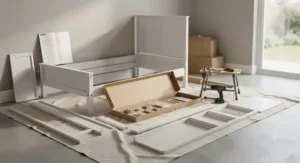
Bunk Bed Material Guide: What Metal and Wood Are Actually Made Of
A genuinely useful bunk bed material guide starts with what’s actually inside each frame, since “metal” and “wood” both cover a surprisingly wide range of real-world construction quality. Metal bunk beds on the market are typically built from welded or bolted steel tube, usually finished with a powder coating that provides both colour and a degree of scratch resistance — the Julian Bowen Soto Metal Bunk Bed and COSTWAY Metal Bunk Bed both follow this construction logic, with quality differences between brands usually coming down to tube wall thickness and weld quality rather than the base material itself. Wooden bunk beds construction materials split into two genuinely distinct categories worth understanding clearly: solid timber, typically pine as used in the Julian Bowen Barcelona Bunk, Flair Furnishings Bea Bunk Bed and Vida Designs Milan Bunk Bed, is cut and shaped from whole wood, while engineered board, such as the particle board used in the Flair Furnishings Benito Bunk Bed with Wardrobe, is manufactured from compressed wood particles bonded with resin. Solid pine offers genuine natural grain, tactile warmth and the ability to be sanded and refinished if it’s damaged, while particle board offers excellent dimensional stability and is typically more cost-effective for larger, storage-integrated designs where solid timber would be prohibitively heavy and expensive. Neither material is inherently “better” in an absolute sense; the right choice depends on which trade-offs, aesthetic and practical, matter most for your specific bedroom and household.
Wood vs Metal Strength: What the Engineering Actually Says
Getting into wood vs metal strength properly means separating two genuinely different engineering questions: raw material strength, and how that strength translates into a finished bunk bed frame. Structural steel significantly outperforms solid pine in raw tensile and compressive strength, and steel’s strength is also uniform in every direction, whereas wood is anisotropic, meaning its strength varies considerably depending on whether force is applied along or across the grain. In practical bunk bed terms, however, this raw material advantage doesn’t automatically translate into a “better” finished bed, since both the Julian Bowen Soto Metal Bunk Bed and the Julian Bowen Barcelona Bunk are engineered, tested and rated to the same UK safety standard regardless of material, meaning both are designed with sufficient safety margin for their intended use. What the engineering does clarify is where each material’s real-world weaknesses lie: metal’s main long-term vulnerability is corrosion if the powder coating is chipped and moisture reaches bare steel, while solid wood’s main vulnerability is moisture-driven warping, splitting along the grain under concentrated stress, and gradual loosening of glued or doweled joints as the timber naturally expands and contracts with humidity. For a typical UK bedroom with stable indoor humidity and no direct water exposure, both materials perform reliably when properly constructed and maintained, which is precisely why properly certified bunk beds in both materials continue to sell successfully side by side.
Durability Comparison: Bunks Under Daily Use
A genuine durability comparison bunks face day to day looks quite different from a laboratory strength test, since real-world durability is shaped as much by how a bed is used as by what it’s made from. Metal frames like the COSTWAY Metal Bunk Bed and Home Treats Silver Metal Bunk Bed generally show their age through surface wear first — scratched powder coating, slightly loosened bolts — while the underlying structural tube typically remains sound for many years provided rust hasn’t set in at any chipped or scratched points. Solid wooden frames like the Flair Furnishings Bea Bunk Bed and Vida Designs Milan Bunk Bed tend to show wear differently, with surface dents and scuffs appearing more readily on softwood pine, while the structural joints themselves, if originally well-fitted, often remain sound provided the frame isn’t repeatedly over-tightened or loosened during moves. Particle board construction, as used in the Flair Furnishings Benito Bunk Bed with Wardrobe, sits in a distinct durability category: extremely stable under normal indoor conditions, but genuinely more vulnerable than solid wood or metal if it’s ever exposed to sustained damp, since swelling in engineered board is less reversible than in solid timber. Across every material on this list, the single biggest real-world durability factor reported in aggregated reviews isn’t the raw material at all — it’s assembly quality, with beds assembled carefully and re-checked after the first weeks of use consistently outlasting those where fixings were left loose from day one.
Wooden or Metal Bunks Better? The Honest Verdict by Household Type
There’s no single honest answer to whether wooden or metal bunks better suit every family, and any guide claiming otherwise is oversimplifying a genuinely situational decision. For households prioritising low maintenance, easy cleaning and a slightly more contemporary look, metal options like the Julian Bowen Soto Metal Bunk Bed and COSTWAY Metal Bunk Bed are the stronger fit, particularly in households with dust sensitivities or a preference for minimal upkeep. For households wanting a warmer, more traditional bedroom feel, or planning to hand the bed down between multiple children over many years, solid pine options like the Vida Designs Milan Bunk Bed and Julian Bowen Barcelona Bunk genuinely suit that brief better, offering a timeless look metal frames don’t replicate. For households in genuinely tight bedrooms needing built-in storage as well as sleeping space, the wooden, storage-integrated Flair Furnishings Benito Bunk Bed with Wardrobe solves a problem neither pure metal nor simpler wooden frames address at all. Budget-conscious families weighing both materials should note that entry-level pricing is broadly comparable across metal and wood, so material choice on a tight budget usually comes down to aesthetic preference and maintenance priorities rather than one material being consistently cheaper than the other.
Longevity of Bunk Beds: How Long Should Yours Actually Last?
Realistic expectations around the longevity bunk beds should deliver depend heavily on build quality and how well the frame is maintained, rather than material alone dictating a fixed lifespan. A well-assembled, properly maintained metal frame like the Julian Bowen Soto Metal Bunk Bed can reasonably be expected to remain structurally sound for well over a decade, provided the powder-coated finish stays intact and any chips are touched up before rust can take hold. Solid pine frames such as the Flair Furnishings Bea Bunk Bed and Vida Designs Milan Bunk Bed offer comparable realistic longevity when kept in stable indoor humidity, with the genuine advantage that minor surface damage can often be sanded and refinished rather than requiring replacement, extending usable life in a way metal touch-ups can’t quite match. Particle board construction, including the Flair Furnishings Benito Bunk Bed with Wardrobe, typically has a somewhat shorter realistic ceiling than solid timber or metal if subjected to repeated disassembly and reassembly across multiple house moves, since engineered board doesn’t tolerate repeated fixing and refixing into the same holes as gracefully as solid wood or metal. Across the board, the beds most likely to be handed down successfully between siblings, according to aggregated buyer feedback, are those where assembly was done carefully the first time and fixings were periodically rechecked, reinforcing that maintenance habits matter at least as much as the underlying material for genuine long-term value.
Safety and Regulations: What BS EN 747 Actually Requires
Every bunk bed sold in the UK, regardless of material, is expected to meet BS EN 747, the British and European safety, strength and durability standard specifically covering bunk beds and high beds. This standard, explained in detail by furniture industry body FIRA, addresses genuine risk factors including entrapment gaps that could catch a young child, guard rail height relative to mattress depth, and structural load testing designed to simulate years of real use rather than a single static weight check. SATRA’s guidance on testing to the current EN 747-1:2024 standard specifically highlights the risk of a child’s body becoming wedged or trapped at or above sleeping-surface height as a core focus of the testing regime, which applies equally to metal frames like the COSTWAY Metal Bunk Bed and wooden frames like the Julian Bowen Barcelona Bunk. Practical safety checks worth making regardless of which material you choose include confirming guard rails sit well above mattress height on both sides of the top bunk, checking gaps between rails and bed base are neither wide enough to trap a limb nor so narrow they pinch, and using only a mattress within the manufacturer’s specified maximum depth, since an over-thick mattress can effectively cancel out an otherwise compliant guard rail’s protection. It’s also worth confirming any specific listing states compliance with the current standard explicitly, since this is a straightforward, verifiable detail reputable manufacturers are generally happy to display clearly.
Common Mistakes When Buying a Bunk Bed
The single most common mistake is choosing material purely on aesthetic preference without checking the specific weight rating against who’ll actually be using the bed, particularly when a bunk bed is expected to serve a child through into their teenage years. A close second is underestimating assembly time and manpower, treating a bunk bed like a simple flat-pack item when reviewers across metal and wooden options alike consistently flag it as a genuine two-person, multi-hour job. Buyers also frequently overlook checking the specific listing’s stated compliance with current safety standards, assuming all bunk beds are automatically equivalent when construction quality, and therefore genuine safety margin, does vary between brands. Another recurring error is buying based on room measurements alone without accounting for door swing, stairwell width and hallway turns the bed’s largest components need to travel through during delivery, which is a surprisingly common and entirely avoidable last-minute headache. Finally, some buyers skip periodically rechecking fixings after the first few weeks of use, missing the single easiest, cheapest way to extend a bunk bed’s genuine structural lifespan regardless of whether it’s built from metal or wood.
Benefits vs Traditional Alternatives
| Option | Typical Cost | Maintenance | Best For |
|---|---|---|---|
| Metal bunk bed (this guide) | £100-£220 | Low, wipe-clean surface | Households prioritising easy upkeep |
| Wooden bunk bed (this guide) | £150-£400 | Moderate, occasional refinishing | Traditional aesthetic, hand-me-down use |
| Two separate single beds | £150-£400 (combined) | Depends on material chosen | More floor space, no shared frame |
| Loft or high-sleeper bed | £200-£450 | Depends on material chosen | Single child, extra floor space beneath |
Set against these alternatives, the core case for either a metal or wooden bunk bed over two separate single beds comes down to genuine floor space saved, which matters most in smaller UK bedrooms and shared sibling rooms specifically. Against a loft or high-sleeper bed, a bunk bed offers two full sleeping positions in a similar footprint, at the cost of the top bunk being permanently occupied rather than freeing up floor space beneath it as a loft bed does for a single child. Choosing between metal and wood specifically, as this guide covers, then comes down to the maintenance, aesthetic and longevity trade-offs detailed throughout rather than one material being a categorically superior choice over the other in every household.
✨ Ready to choose the right bunk bed for your family?
🛏️ Find Your Perfect Bunk Bed Today!Take your children’s bedroom to the next level with a bunk bed properly matched to your material preference, weight needs and storage requirements. Click through to check current pricing and availability on any of the seven picks above, and get ready for a genuinely well-chosen bed.
FAQ
❓ Are metal or wooden bunk beds stronger?
❓ Do metal bunk beds rust over time?
❓ How long do wooden bunk beds typically last?
❓ Which is easier to assemble, metal or wooden bunk beds?
❓ What safety standard should a UK bunk bed meet?
Conclusion
The metal vs wooden bunk beds decision ultimately comes down to matching real material trade-offs to your household’s actual priorities, not picking whichever looks best in a single photograph. For low-maintenance, easy-clean living, the Julian Bowen Soto Metal Bunk Bed and COSTWAY Metal Bunk Bed deliver genuine practical advantages, while the Home Treats Silver Metal Bunk Bed offers the same core benefits at a more accessible price. For warmth, tradition and long-term hand-me-down value, the Julian Bowen Barcelona Bunk, Flair Furnishings Bea Bunk Bed and Vida Designs Milan Bunk Bed all deliver genuine solid pine construction worth the slightly higher maintenance. For families needing built-in storage as well as sleeping space, the Flair Furnishings Benito Bunk Bed with Wardrobe solves a problem neither material alone can. Whichever you choose, checking the specific listing’s compliance with BS EN 747 and taking assembly seriously remain the two decisions that matter more than material for genuine long-term safety and durability. It’s also worth a quick check of the gov.uk furniture and furnishings safety regulations if you’re ever buying second-hand or from an unfamiliar seller, since these set the broader compliance framework reputable UK bunk bed manufacturers work within.
Recommended for You
- Bunk Bed With Storage Reviews 2026: 7 Best Space-Saving Picks
- Safe Bunk Beds for Toddlers: 7 Low-Height Picks for 2026
- Best Bunk Beds UK 2026: 7 Safe, Sturdy Picks That Won’t Wobble
Disclaimer: This article contains affiliate links. As an Amazon Associate, I earn from qualifying purchases. If you purchase products through these links, we may earn a small commission at no additional cost to you.
✨ Found this helpful? Share it with your friends! 💬🤗
