
In This Article
If you’re living in a British home—whether that’s a Victorian terrace in Manchester, a modern flat in Edinburgh, or a semi-detached in the Home Counties—you’ve likely encountered the same frustration: where on earth do you store everything? The average UK bedroom measures just 11 square metres, considerably smaller than its American or European counterparts. Chuck in a double bed, a wardrobe that never quite closes properly, and perhaps a chest of drawers, and you’ve precious little floor space left for actually, you know, living.
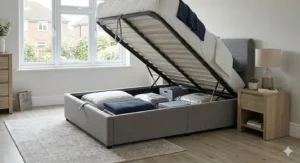
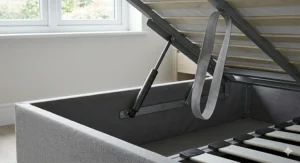
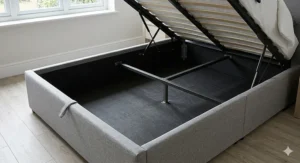
Enter the ottoman storage bed under £500—quite possibly the cleverest piece of furniture the Brits didn’t invent but absolutely should have. According to research by Which?, the UK’s leading consumer champion, storage remains one of the top concerns for British homeowners when furnishing bedrooms. These beds transform dead space beneath your mattress into cavernous storage that can swallow winter duvets, off-season clothing, spare bedding, and all those random boxes you’ve been shoving under the bed anyway. What most buyers overlook is that a decent ottoman bed doesn’t just hide clutter; it fundamentally changes how you use your bedroom. No more tripping over storage boxes. No more wrestling wardrobes into awkward alcoves. Just lift the mattress—gas struts do the heavy lifting—and there’s your storage, accessible in seconds.
The £500 price point is rather a sweet spot for UK buyers in 2026. Below this threshold, you’ll find perfectly serviceable beds from brands like Vida Designs, Panana, and Blisswood—all sold on Amazon.co.uk with Prime delivery—that combine solid construction with contemporary design. These aren’t bargain-basement throwaway pieces; they’re engineered to handle British living conditions, from damp winters in Newcastle to compact spaces in London Zone 3. What you sacrifice compared to premium models costing £800-plus is usually upholstery quality and brand prestige, not fundamental functionality or durability.
I’ve spent considerable time researching the ottoman bed market on Amazon.co.uk, reading through hundreds of UK customer reviews, and analysing what actually makes these beds tick in real British homes. This guide cuts through the marketing fluff to help you find an affordable ottoman bed that delivers genuine value, whether you’re furnishing your first flat, kitting out a spare room, or finally addressing that master bedroom storage crisis.
Quick Comparison: Top Ottoman Storage Beds Under £500
| Model | Size Range | Price Range (GBP) | Lift Type | Best For |
|---|---|---|---|---|
| Vida Designs Valentina | Single to King | £180-£280 | End lift | Budget-conscious buyers seeking classic design |
| Panana Upholstered Ottoman | Double to King | £230-£350 | End/Side lift | Families needing robust construction |
| GFW Classic Leather | Single to King | £175-£400 | Side/End lift | Easy-clean faux leather preference |
| Blisswood Velvet Ottoman | Single to King | £190-£320 | End lift | Style-focused on trend aesthetics |
| Vida Designs Veronica | Double to King | £210-£300 | End lift | Mid-range velvet luxury feel |
| Comfy Deluxe Side Lift | Small Double to King | £200-£380 | Side lift | Tight spaces against walls |
| Merax Hydraulic Storage | Double to King | £220-£340 | End lift | Smooth lifting mechanism priority |
From this comparison, the Vida Designs Valentina emerges as the value champion for buyers prioritising cost without sacrificing fundamental quality. However, if you’re tackling a bedroom with limited side space—common in terraced housing—the Comfy Deluxe Side Lift justifies its slightly higher price by opening from the side rather than the foot. Budget buyers should note that most models in the £180-£250 bracket deliver comparable storage capacity; the price differences primarily reflect upholstery materials (linen versus velvet) and brand positioning rather than structural superiority.
💬 Just one click — help others make better buying decisions too! 😊
Top 7 Ottoman Storage Beds Under £500: Expert Analysis
1. Vida Designs Valentina Ottoman Bed – Best Overall Value
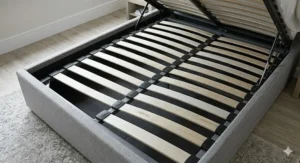
The Vida Designs Valentina consistently tops my recommendation list for buyers seeking dependable quality without premium pricing. This bed offers the fundamentals done properly: a sturdy wooden slatted base, reliable gas-lift hydraulics, and UKFR-certified upholstery in breathable linen fabric. Available in light grey, charcoal, and beige colourways, it slots into most British bedroom aesthetics without demanding the décor revolve around it.
Key specifications: The frame sits at approximately 100-110cm height (varies by size), constructed from engineered wood with metal support rails. The gas-lift mechanism uses dual hydraulic pistons rated for mattresses up to 25kg—adequate for most memory foam and pocket spring mattresses sold in the UK. Storage depth measures around 20-24cm depending on size, comfortably accommodating a 13.5 tog winter duvet folded once.
Expert commentary: What distinguishes the Valentina in this price bracket is its sprung wooden slats rather than rigid boards. This matters more than you’d think—sprung slats provide better mattress ventilation (crucial in damp British climates where mould can develop beneath solid bases) and a slightly softer sleep surface. I’d match this bed with budget-conscious couples furnishing their first home together, or parents kitting out teenage bedrooms where style matters but budgets are tight. The UKFR certification means it meets UK fire resistance standards—not just a tick-box exercise but genuine peace of mind.
Customer feedback: UK reviewers consistently praise the straightforward assembly (1.5-2 hours for two people) and solid feel once constructed. Several mention the gas struts require a mattress on top to compress properly during first use—a common characteristic across this price range, not a defect. A few buyers note the headboard height is modest at around 85cm, which works brilliantly if you’ve got a thick mattress (25cm+) but might look a touch low with a thinner 15cm mattress.
Pros:
✅ UKFR fire safety certified for British regulations
✅ Sprung slats enhance mattress ventilation and comfort
✅ Multiple neutral colours suit most UK bedroom schemes
Cons:
❌ Headboard somewhat low for very thin mattresses
❌ Assembly instructions occasionally vague on slat orientation
Price verdict: In the £180-£280 range (size dependent), this represents exceptional value. You’re getting UK-compliant safety standards, proven reliability from a brand with hundreds of positive Amazon.co.uk reviews, and construction that should comfortably last 7-10 years with normal use.
2. Panana Upholstered Ottoman Bed – Best for Durability
The Panana Upholstered Ottoman takes a slightly different approach than the Valentina, prioritising structural robustness over design flourishes. This bed features reinforced corner brackets and thicker side rails—details you won’t notice until you’re moving house three years later and realise the frame hasn’t developed any creaks or wobbles.
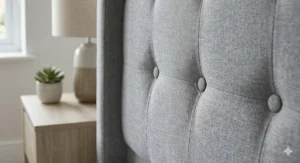
Key specifications: Frame constructed from 15mm engineered wood panels with metal L-brackets at critical stress points. The hydraulic gas lift system uses heavier-duty pistons than budget competitors, noticeable when you first lift the mattress—there’s more resistance, but also more control when lowering. Available in grey linen or silver velvet, with crystal-button detailing on the headboard that adds visual interest without venturing into overly fussy territory. Storage depth approximately 22-26cm across different sizes.
Expert commentary: Panana has built its reputation on durability rather than cutting-edge design, and it shows in the engineering. The base uses 12 sprung wooden slats (versus 9-10 on cheaper models), distributing weight more evenly and reducing the likelihood of sagging over time. This bed suits families with children who might be more robust with furniture, or anyone planning to keep the bed for a decade rather than replacing it when redecorating. Worth noting: Panana products often ship from UK warehouses, meaning faster delivery and easier returns compared to some competitors importing from continental Europe.
Customer feedback: UK buyers highlight exceptional sturdiness—several reviews mention adults sitting on the closed ottoman base without any flex or concern. The crystal headboard detailing divides opinion; some find it adds elegance, others think it’s a bit much for minimalist bedrooms. Assembly takes slightly longer than simpler models (2-2.5 hours) due to the reinforced construction, but most reviewers consider this time well spent given the end result.
Pros:
✅ Reinforced frame construction outlasts budget competitors
✅ Heavier-duty gas pistons provide better control
✅ Often ships from UK warehouses for faster delivery
Cons:
❌ Crystal headboard detailing not to everyone’s taste
❌ Slightly longer assembly time due to extra reinforcements
Price verdict: At £230-£350 depending on size, you’re paying a modest premium over basic models. That extra £30-50 buys you construction that should comfortably exceed 10 years of daily use—a worthwhile investment if you’re not planning to replace furniture every few years.
3. GFW Classic Leather Ottoman – Best Easy-Clean Option
The GFW Classic Leather Ottoman shifts from fabric upholstery to faux leather, which fundamentally changes the maintenance equation. If you’ve got young children, pets, or simply prefer furniture that wipes clean with a damp cloth rather than requiring upholstery cleaner, this bed delivers practical luxury.
Key specifications: Upholstered in PU faux leather (polyurethane coating on woven backing), available in white, black, or grey. Frame construction mirrors mid-range fabric models: engineered wood with metal support, sprung slats, dual gas-lift pistons. The faux leather adds perhaps 1-2kg to the overall weight but doesn’t significantly impact the lifting mechanism. Storage depth around 20cm—slightly less than fabric alternatives due to the leather’s additional thickness reducing internal clearance.
Expert commentary: Faux leather beds get unfairly dismissed as looking cheap, but GFW’s execution here is rather convincing at arm’s length. The material has a subtle grain texture that avoids the plasticky sheen of budget vinyl. More importantly, it’s genuinely practical for British living conditions. Spill your morning tea? Wipe it off. Dog jumps on the bed with muddy paws? Clean cloth sorts it. This bed makes enormous sense for families with young children in that chaotic 2-6 age range where everything becomes a crime scene. Also worth considering if you’ve got allergies—fabric upholstery can harbour dust mites and allergens, whilst faux leather simply doesn’t provide the same habitat.
Customer feedback: UK reviewers particularly appreciate the easy-clean properties, with several parents mentioning they chose this bed specifically after battling fabric bed stains on previous models. The faux leather does develop a slight “squeaky” quality when new, which most reviewers report diminishes within 2-3 weeks as the material breaks in. In centrally heated British homes, the leather can feel slightly cool to touch in winter mornings—not uncomfortable, just noticeable if you’re sitting up in bed.
Pros:
✅ Wipes clean with damp cloth—ideal for families
✅ Doesn’t harbour dust mites or allergens like fabric
✅ Convincing grain texture avoids cheap appearance
Cons:
❌ Slight squeaky quality when new (diminishes with use)
❌ Can feel cool to touch in winter mornings
Price verdict: The £175-£400 range (size dependent) positions this competitively with fabric alternatives. You’re not paying a faux leather premium; you’re making a maintenance-preference choice at similar pricing to cloth-upholstered equivalents.
4. Blisswood Velvet Ottoman Bed – Best Contemporary Style
The Blisswood Velvet Ottoman targets buyers who want their bedroom furniture to look expensive without the accompanying price tag. This bed features a sunrise-panel headboard design with soft-touch velvet upholstery in colours like dark grey, beige, and light grey—thoroughly on-trend for 2026’s interior design preferences leaning towards warm minimalism.
Key specifications: Velvet upholstery over high-density foam padding creates that plush, sink-in headboard feel. The sunrise panel design features vertical channelling that adds visual depth without overwhelming smaller rooms. Metal support frame with sprung wooden slats (11 slats for double size, 13 for king), dust-proof base lining to keep stored items clean. Hydraulic gas lift rated for standard UK mattresses up to 22kg. Storage depth approximately 24-26cm—among the more generous in this price bracket.
Expert commentary: Blisswood has positioned itself as the “affordable luxury” option for UK buyers, and the velvet upholstery delivers on that promise more convincingly than you’d expect under £350. The fabric has a directional nap that catches light differently depending on viewing angle, creating subtle visual interest. This bed suits style-conscious buyers furnishing modern flats or renovated period properties where contemporary furniture needs to hold its own against original features. The deeper storage capacity makes it particularly suitable for compact living where this bed needs to store seasonal clothing as well as bedding. Worth noting: velvet requires more maintenance than linen or leather—you’ll want to vacuum it monthly with an upholstery attachment to prevent dust accumulation in the pile.
Customer feedback: UK reviewers consistently mention the bed looks more expensive than it cost, with the velvet upholstery receiving particular praise. Some note the velvet shows wear patterns faster than linen in high-contact areas (where you lean against the headboard regularly), though this develops gradually over 2-3 years rather than immediately. Assembly is straightforward, though the dust-proof base lining requires careful alignment during construction to avoid wrinkles.
Pros:
✅ Velvet upholstery delivers premium appearance
✅ Generous 24-26cm storage depth
✅ Dust-proof base lining protects stored items
Cons:
❌ Velvet requires regular vacuuming maintenance
❌ High-contact areas show wear faster than linen
Price verdict: At £190-£320 across sizes, Blisswood offers compelling value for style-focused buyers. You’re getting aesthetics that compete with £500-600 beds whilst accepting slightly higher maintenance requirements.
5. Vida Designs Veronica Ottoman – Best Mid-Range Velvet Option
The Vida Designs Veronica sits in Vida’s velvet range, offering a step up from their linen Valentina model whilst remaining comfortably under £500. This bed balances upholstery quality with proven Vida construction, creating a reliable mid-range option for buyers who want velvet luxury without venturing into premium pricing.
Key specifications: Available in silver velvet, dark grey, or beige, with a smooth gas-lift mechanism and button-tufted headboard detailing. Frame uses Vida’s standard engineered wood construction with sprung slats (10 slats for double, 12 for king). The velvet differs from Blisswood’s offering—slightly shorter pile creates a smoother, more uniform appearance that some prefer for formal bedrooms. Storage depth around 22cm, adequate for standard bedding storage.
Expert commentary: Vida Designs occupies an interesting market position: large enough to benefit from economies of scale (keeping prices competitive), established enough to have refined their designs through multiple iterations. The Veronica represents this evolution—it’s not trying to reinvent ottoman beds, just deliver a thoroughly competent velvet option at sensible pricing. This bed suits buyers who’ve decided they want velvet specifically, perhaps after seeing similar beds in John Lewis or Dunelm at higher prices, but don’t want to stretch their budget beyond £300. The UKFR certification again provides peace of mind for safety-conscious British households.
Customer feedback: UK reviewers note the velvet quality sits between budget and premium—it’s not quite as plush as Blisswood’s deeper pile, but it’s more durable and easier to maintain. Assembly instructions receive mixed reviews, with some buyers reporting they’re written for a different model (side-opening versus end-opening), though the actual construction process remains straightforward if you ignore the pictures and focus on logical assembly order. Several reviewers mention receiving king-size beds when they ordered doubles—seemingly a warehouse error rather than systemic issue, but worth checking your delivery carefully.
Pros:
✅ UKFR certified for UK fire safety compliance
✅ Shorter velvet pile more durable than deep pile alternatives
✅ Proven Vida construction quality
Cons:
❌ Instructions occasionally mislabelled (easy to work around)
❌ Occasional delivery mix-ups reported (check on arrival)
Price verdict: The £210-£300 range positions this as excellent value for buyers specifically seeking velvet upholstery. You’re getting reliable construction and on-trend materials without premium brand markup.
6. Comfy Deluxe Side Lift Ottoman – Best for Tight Spaces
The Comfy Deluxe Side Lift Ottoman addresses a problem most end-lift beds ignore: what happens when your bedroom layout puts the foot of the bed against a wall, or so close to a window that lifting from the end is impossible? This bed lifts from the left or right side (you choose during assembly), making it invaluable for awkward British bedroom layouts.
Key specifications: Available in faux leather or fabric options, with the side-lift mechanism using slightly different hinge positioning than end-lift models. This requires reinforced side rails to handle the leverage forces, making the bed marginally heavier (perhaps 3-4kg more than equivalent end-lift models) but also more robust. Gas pistons are positioned asymmetrically to balance the side-lifting motion. Storage depth around 20cm, with the side-lift mechanism taking slightly more internal clearance than end-lift alternatives.
Expert commentary: Side-lift ottomans occupy a specialist niche, and Comfy Deluxe has rather cornered this market on Amazon.co.uk. The engineering is sound—I’ve not encountered any reviews suggesting the side-lift mechanism is less durable than end-lift alternatives, despite the different stress patterns. This bed is absolutely essential for certain bedroom configurations: period properties with fireplaces at the foot of the bed, box rooms where the only sensible bed placement puts the foot against the window, or any layout where you’ve got perhaps 40cm of clearance at the foot (enough to walk past, not enough to lift a mattress). Worth noting: you need around 60-70cm of clear space on the lifting side, so measure carefully before ordering.
Customer feedback: UK buyers universally praise the side-lift functionality, with many mentioning they specifically chose this bed because standard ottomans wouldn’t work in their space. The faux leather version receives particularly strong reviews from families. Some reviewers note the gas pistons are exceptionally powerful—necessary to lift the mattress sideways against gravity—which means you absolutely need the mattress in place to compress them; attempting to close an empty bed requires considerable strength.
Pros:
✅ Side-lift mechanism solves impossible bedroom layouts
✅ Reinforced construction handles different stress patterns
✅ Available in faux leather or fabric options
Cons:
❌ Requires 60-70cm clear space on the lifting side
❌ Very powerful gas pistons challenging to close when empty
Price verdict: At £200-£380, you’re paying a £20-50 premium over equivalent end-lift models. That’s entirely reasonable given the specialist engineering and smaller production volumes for side-lift beds. If your bedroom layout demands side-lift functionality, this bed delivers genuine problem-solving value.
7. Merax Hydraulic Storage Bed – Best Lifting Mechanism
The Merax Hydraulic Storage Bed makes its reputation on one specific feature: exceptionally smooth gas-lift operation. Whilst other beds in this price bracket use functional-but-basic hydraulic pistons, Merax specifies higher-quality components that provide noticeably more refined operation.
Key specifications: Frame construction similar to mid-range competitors (engineered wood, metal supports, sprung slats), but the hydraulic system uses pistons with progressive resistance—they’re easier to initiate at the start of the lift, then provide controlled resistance as the mattress rises to prevent it slamming open. Available in grey or beige velvet, with a contemporary low-profile headboard design. Storage depth around 23cm.
Expert commentary: The superior lifting mechanism makes this bed particularly suitable for buyers with limited upper body strength, older users, or anyone who accesses the storage frequently. The progressive resistance means you’re not fighting against the pistons at the start of the lift (a common complaint with budget gas struts), but you’re also not battling to control a rapidly-rising mattress at the end of the motion. This bed makes sense for retirement-age buyers downsizing to smaller properties, or anyone with mobility considerations who needs storage to be genuinely accessible rather than technically possible but awkwardly difficult. The mechanism adds perhaps £30-40 to the cost versus basic alternatives, but transforms the daily usability.
Customer feedback: UK reviewers consistently highlight the smooth operation, with several comparing it favourably to more expensive beds they’ve owned previously. The velvet upholstery quality sits in the middle of the pack—better than budget options, not quite matching premium alternatives. Assembly is straightforward, with clearer-than-average instructions. A few buyers note the low-profile headboard (around 75cm height) looks sleek in photographs but provides limited back support for sitting up in bed reading.
Pros:
✅ Progressive resistance hydraulics significantly smoother
✅ Easier operation for those with limited strength
✅ Clear assembly instructions reduce construction frustration
Cons:
❌ Low-profile headboard limited for sitting up in bed
❌ Modest premium over basic gas-lift alternatives
Price verdict: The £220-£340 range represents fair value if smooth operation matters to you. The £30-40 premium over basic models buys tangibly better daily usability, particularly valuable if you access storage weekly rather than seasonally.
How to Choose the Perfect Ottoman Storage Bed for Your British Home
Selecting an ottoman bed involves more than scrolling through Amazon.co.uk listings and picking the one with the most stars. British homes present specific challenges—compact rooms, damp climates, period property quirks—that demand thoughtful consideration. Here’s how to navigate the decision.
Consider your room’s actual dimensions, not theoretical space. Measure carefully, accounting for radiators, skirting boards, and that slightly-not-square corner every British bedroom seems to have. Most ottoman beds add 10-15cm to the footprint of the mattress size due to the frame construction. A standard UK double mattress measures 135cm × 190cm, but the bed frame will typically occupy 145-150cm × 200-205cm. More critically, you need lifting clearance—around 100cm at the foot for end-lift models, 70cm on the side for side-lift alternatives. Don’t forget to account for opening doors and drawers on other furniture.
Match the lifting mechanism to your bedroom layout. End-lift beds are mechanically simpler and generally cheaper, but they’re useless if your bed sits with its foot against a wall or radiator. Side-lift models solve this problem but require clear space on the chosen side—not ideal if your bedroom is genuinely tiny. Some UK buyers with severely constrained spaces might need to accept that an ottoman bed won’t work, and drawer-based storage beds represent a better solution.
Prioritise British-specific considerations. Check for UKFR certification—this isn’t bureaucratic box-ticking but confirmation the upholstery meets UK fire resistance standards under the Furniture and Furnishings (Fire) (Safety) Regulations 1988 (as amended in 2025). For damp-prone British climates, favour sprung slats over solid bases to ensure airflow beneath the mattress. If you’re in a particularly humid region (looking at you, west Scotland and Cornwall), consider faux leather upholstery over fabric to reduce mould risk. And verify the bed can handle UK electrical standards if you’re adding bedside lamps or USB charging—some imported furniture has awkward cutouts for EU or US power sockets.
Assess the gas-lift mechanism quality during your first use. When you receive the bed, test the hydraulics before fully making it up. The pistons should lift smoothly with gentle upward pressure and lower in a controlled manner rather than dropping abruptly. If the mechanism feels sticky, overly stiff, or drops too quickly, contact the seller immediately—these issues worsen with time rather than improving.
Factor in assembly assistance. Most ottoman beds rate as two-person assembly jobs taking 1.5-2.5 hours. Some UK buyers pay for Amazon’s assembly service (typically £20-40) or hire local handymen (£40-70), particularly worthwhile for larger king-size models that get awkward to manoeuvre. If you’re assembling yourself, clear more space than you think you’ll need and have a cordless drill ready—some screws are surprisingly obstinate with the included Allen keys.
Ottoman Beds vs Traditional Storage Solutions: The British Context
Walk into any British bedroom circa 2020, and you’d likely find a chaotic mix of underbed storage boxes, overstuffed wardrobes, and perhaps a chest of drawers blocking the radiator. Ottoman beds consolidate this jumble into one integrated solution, but that doesn’t automatically make them superior for every situation.
Ottoman beds excel in compact British bedrooms where floor space is precious. A double ottoman bed occupies the same footprint as a standard double bed frame but provides storage equivalent to roughly 0.4-0.6 cubic metres—comparable to a medium-sized chest of drawers without consuming any floor space. For London flats, terraced houses, or converted loft bedrooms, this space efficiency is transformative. You’re reclaiming perhaps 1-1.5 square metres of floor area previously occupied by storage furniture.
Traditional drawer beds offer easier daily access. If you’re storing items you access weekly—seasonal clothing rotation, current bedding sets, frequently-used luggage—drawers prove more convenient than lifting the entire mattress. Ottoman beds work brilliantly for bulky items accessed seasonally (winter duvets, electric blankets, guest bedding), but they’re overkill if you’re just storing socks and jumpers.
Wardrobes and chests maintain visual mass that some rooms need. This sounds counterintuitive, but interior designers recognise that entirely clearing floor space can make rooms feel unfinished or stark, particularly in period properties with high ceilings. A Victorian bedroom with 3-metre ceilings and ornate cornicing can actually benefit from substantial furniture providing visual weight. Ottoman beds work beautifully in modern flats with 2.3-metre ceilings but can look a bit lost in grand period bedrooms unless paired with complementary furniture.
British damp conditions favour ottoman storage for certain items. Fabric stored in traditional under-bed boxes can develop that characteristic musty smell from lack of air circulation, particularly in ground-floor bedrooms or properties with damp issues. Ottoman beds with dust-proof base linings protect stored items whilst allowing better air circulation around the bed frame itself. This makes them particularly suitable for storing spare bedding and winter clothes in British climates.
Cost considerations favour ottoman beds for new setups. If you’re furnishing from scratch, an ottoman bed (£200-400) plus a basic wardrobe (£100-200) provides comprehensive storage for roughly £300-600. Achieving equivalent storage with a standard bed (£150-250), chest of drawers (£150-300), and larger wardrobe (£250-400) costs £550-950. However, if you already own functional storage furniture, replacing it solely to buy an ottoman bed makes limited financial sense unless you’re genuinely strapped for space.
The Hidden Storage Revelation: What £500 Actually Buys You in 2026
The ottoman bed market has matured considerably since these beds first gained popularity in the UK around 2015-2017. What’s changed isn’t the fundamental concept—gas-lift mechanisms accessing under-bed storage has remained constant—but rather what £500 buys you in terms of quality, features, and longevity.
Construction quality has improved across the price spectrum. Budget ottoman beds sold on Amazon.co.uk in 2026 use engineered wood and metal reinforcements that were previously reserved for mid-range models. The practical impact: a £250 ottoman bed today should comfortably last 8-10 years with normal use, whereas equivalent pricing in 2018-2019 might have delivered 4-6 years before framework flexing or gas strut failure. This improvement stems from Chinese and UK manufacturers refining their production processes and responding to early quality complaints.
The £500 ceiling represents a value sweet spot. Above £500, you’re increasingly paying for brand prestige, designer fabrics, or British manufacturing rather than functional superiority. A £600-800 ottoman bed from John Lewis or Made.com will feature superior upholstery, potentially solid wood components, and design cachet—worthwhile if those factors matter to you, but the actual storage capacity and lifting mechanism often mirror £300-400 alternatives. Below £180, construction corners get cut in ways that genuinely impact longevity: thinner frame materials, basic gas struts that weaken faster, budget fabrics that pill or tear.
UK buyers benefit from increased competition on Amazon.co.uk. Brands like Vida Designs, Panana, Blisswood, and GFW compete aggressively on pricing whilst maintaining adequate quality standards to sustain positive reviews. This competitive pressure keeps ottoman beds under £500 genuinely affordable whilst previous market leaders (Dreams, Bensons for Beds) have been forced to justify their premium pricing with tangible quality improvements rather than mere brand recognition.
The damp British climate remains the great equaliser. Even £1,000 ottoman beds face the same mould and moisture challenges as £300 alternatives if the bedroom lacks adequate ventilation. The primary determinants of long-term condition are environmental (bedroom humidity, heating patterns, air circulation) rather than purchase price. A £250 ottoman bed in a well-ventilated bedroom with consistent heating will outlast a £600 model in a damp, poorly-heated room. This makes ottoman beds particularly democratic purchases—you’re not automatically getting inferior longevity by choosing budget options.
Assembly and Setup: What British Buyers Actually Experience
Assembly instructions and reality often diverge, particularly with flatpack furniture. Here’s what UK buyers report about the actual assembly experience, stripped of manufacturer optimism and marketing speak.
Budget 1.5-2 hours for two people, minimum. Manufacturers typically claim 60-90 minutes, which assumes you’re assembling furniture professionally, have all tools immediately to hand, and encounter zero complications. Real UK buyers report 1.5-2.5 hours more typically, with king-size models occasionally stretching to 3 hours if you’re methodical rather than rushed. Factor in tea breaks and you’re looking at half an afternoon.
The hardest part is aligning the gas struts during initial installation. Most ottoman beds require you to attach the hydraulic pistons whilst simultaneously holding the base at a specific angle to align mounting holes. This genuinely requires two people—one supporting the weight, the other fastening the bolts. Several UK reviewers mention discovering this the hard way after attempting solo assembly. Having a third person or a stepladder to prop the base helps enormously.
Instructions quality varies wildly, even within the same brand. Vida Designs receives praise for their clearer recent instructions but criticism for older manuals that illustrate a different model. Panana’s instructions are reportedly thorough but dense—detailed diagrams help but can overwhelm less-experienced furniture builders. Blisswood gets mixed reviews: some buyers find them clear, others report missing steps or incorrect part numbers. The universal advice from UK buyers: lay out all components first, identify each part, and follow the logical construction sequence even if the manual suggests a different order.
Pre-drilled holes are usually accurate but occasionally misaligned. Most buyers report no issues, but perhaps 5-10% of reviews mention holes that don’t quite line up, requiring force (potentially damaging) or creative solutions (drilling new holes). This seems more common with budget brands and likely reflects quality control variations in manufacturing batches rather than systemic design flaws.
The bed looks incomplete until you add the mattress. Because gas struts are compressed by the mattress weight, an empty ottoman bed sits with the base awkwardly elevated. This alarms some buyers who think they’ve assembled it incorrectly. Place the mattress on top, and the gas struts compress to the correct closed position—entirely normal behaviour that should be explained in instructions but often isn’t.
Real-World Ottoman Bed Scenarios: Who Should Buy What
Different UK households have different ottoman bed requirements. Here’s how to match products to actual living situations rather than theoretical ideal buyers.
London Zone 2-4 flat dwellers in their 20s-30s: You’re dealing with compact bedrooms (often 8-10 square metres), limited wardrobe space, and probably rotating seasonal clothing in and out of storage. The Vida Designs Valentina in double size offers excellent value, adequate storage for off-season clothes and spare bedding, and contemporary aesthetics that suit rented accommodation where you can’t paint walls or replace carpets. Prioritise easy-clean upholstery if you’re eating breakfast in bed regularly—faux leather or linen wipes cleaner than velvet.
Suburban families with children (ages 3-12): You need robust construction that survives children using the bed as a trampoline, easy-clean surfaces for inevitable spills, and sufficient storage for seasonal clothing rotation as children grow. The GFW Classic Leather in faux leather delivers practical durability, whilst Panana’s reinforced construction offers peace of mind. Avoid velvet upholstery—it looks lovely initially but shows wear from sticky fingers and constant contact.
Retirement-age buyers downsizing from larger properties: You’re likely moving from a 3-4 bedroom house to a 2-bedroom flat or bungalow, needing to consolidate possessions whilst maintaining accessibility. The Merax Hydraulic Storage Bed with its smooth progressive-resistance lifting mechanism makes storage genuinely accessible rather than theoretically possible but awkwardly difficult. Prioritise side-lift models if mobility or reach limitations make end-lift challenging.
Students in university accommodation or first independent living: Budget is tight, you’ll likely move again within 1-3 years, and you need maximum storage in minimum space. The Blisswood Velvet Ottoman offers contemporary style at budget pricing, with assembly simple enough for two friends to manage. Accept that this bed might not accompany you for a decade—it needs to survive 2-3 years and several house moves, which it will comfortably manage.
Period property owners balancing character and functionality: Your Victorian terrace or Edwardian semi has high ceilings, original features, and awkward room shapes. Ottoman beds work brilliantly for storage but need careful aesthetic consideration. The Vida Designs Veronica in darker velvet colours can complement period features without looking jarringly modern, whilst the Comfy Deluxe Side Lift solves layout problems when chimneybreasts or alcoves constrain bed placement.
Maintenance and Longevity: The 10-Year Perspective
Ottoman beds aren’t disposable furniture, despite their affordable pricing. With appropriate maintenance, a £300 ottoman bed purchased in 2026 should remain functional until 2034-2036, though it might show wear requiring minor repairs or refurbishment.
Gas strut maintenance extends lifespan significantly. The hydraulic pistons are the primary failure point on ottoman beds, typically weakening after 5-8 years depending on usage frequency. You’ll notice this as increased difficulty lifting the mattress or the base closing more slowly than when new. Good news: gas struts are replaceable components costing £15-30 per pair from hardware retailers, and installation takes perhaps 30 minutes. Budget for replacing them once during the bed’s lifespan rather than discarding the entire bed when they weaken.
Upholstery care depends entirely on material choice. Linen and cotton blends benefit from quarterly vacuuming with an upholstery attachment to remove dust and prevent gradual discolouration. Velvet requires more frequent attention—monthly vacuuming and occasional brushing with a soft-bristle brush to maintain pile direction. Faux leather needs periodic wiping with a damp cloth and very occasional conditioning with faux leather treatment products (£6-10, available at most supermarkets) to prevent cracking. The British climate’s humidity actually helps leather substitutes remain supple, unlike dry heated environments where they crack faster.
Framework durability exceeds expectations at this price point. UK reviewers reporting 5+ years of ownership consistently note that properly assembled ottoman beds develop minimal creaking or loosening. The engineered wood and metal construction proves remarkably stable. Occasional tightening of bolts (perhaps annually) takes 15 minutes and prevents gradual loosening that could otherwise progress to framework flex.
Storage area cleanliness requires minimal effort. The dust-proof linings included on better models (Blisswood, some Vida Designs variants) genuinely reduce dust accumulation. An annual quick vacuum of the storage area when rotating seasonal items keeps it fresh. British buyers in coastal areas or damp climates might consider placing moisture absorber crystals (£4-6 from Wilko or Argos) in the storage compartment to prevent that characteristic musty smell developing on stored fabrics.
The mattress matters more than the bed for long-term comfort. Ottoman beds don’t create comfort; they support whatever mattress you place on top. Budget £150-300 for a decent pocket spring or hybrid mattress if you’re furnishing from scratch—skimping here undermines the entire sleep experience. The bed frame should last a decade; most mattresses need replacing after 7-9 years regardless of the bed supporting them.
Common Mistakes When Buying Ottoman Beds in the UK
Certain pitfalls recur with enough frequency in UK buyer reviews to warrant specific warnings. Here’s what to avoid.
Underestimating assembly difficulty leads to frustration. Thinking “How hard can it be?” and attempting solo assembly of a king-size ottoman bed inevitably ends with shouted profanities and strained muscles. These beds are engineered for two-person assembly—the second person isn’t optional padding but functionally necessary, particularly when aligning gas struts and holding components steady during fastening. If you genuinely have no one to assist, budget £40-70 for local handyman assembly rather than struggling alone.
Ignoring room measurements beyond bed dimensions. Measuring your bedroom and confirming the bed frame fits is necessary but insufficient. You also need clearance for: opening the lifting mechanism (100cm at the foot or 70cm on the side), accessing bedside tables, opening bedroom doors and wardrobes, and navigating around the bed without performing gymnastics. A bed that technically fits but leaves 20cm between the frame and the wardrobe doors creates daily frustration.
Choosing upholstery based on photographs rather than practical requirements. Velvet looks stunning in product photography but demands maintenance and shows wear in high-contact areas. If you routinely sit up in bed leaning against the headboard, you’ll create visible wear patterns within 18-24 months on velvet but barely noticeable marks on linen. Similarly, light-coloured upholstery suits aspirational bedroom aesthetics but shows marks and requires more cleaning effort than darker shades—consider your actual lifestyle rather than Instagram-worthy ideals.
Overlooking UKFR certification when prioritising price. Fire safety regulations in the UK require upholstered furniture to meet specific flame-resistance standards. UKFR certification confirms compliance. Budget models from questionable sellers occasionally lack this certification to shave £20-30 off the price. This isn’t abstract regulatory pedantry—the 2017 Grenfell Tower fire and subsequent investigations highlighted how non-compliant furniture accelerates fire spread. Verify UKFR certification, particularly on the cheapest options.
Assuming all £200-300 ottoman beds are interchangeable. Within any price bracket, construction quality, material selection, and feature sets vary considerably. A £250 bed from an established brand with hundreds of positive UK reviews represents different value than a £250 bed from an unknown seller with 12 reviews (potentially fake). Check review counts, review distribution (are they all recent or spread over months/years?), and whether reviewers are UK-based rather than international.
Neglecting to verify Amazon.co.uk stock versus imported goods. Some Amazon.co.uk listings are fulfilled by Amazon from UK warehouses (fast delivery, easier returns) whilst others ship from EU or Asian warehouses (longer delivery, complicated returns, potential customs charges post-Brexit). The product listing should specify “Dispatched from and sold by Amazon” or “Dispatched from and sold by [UK Seller]”—if it’s vague about origin, contact the seller before ordering.
UK Regulations and Safety Standards for Ottoman Beds
Understanding British safety requirements helps you navigate the ottoman bed market with confidence, particularly when distinguishing legitimate budget options from potentially problematic imports.
UKCA marking replaced CE marking post-Brexit. Since January 2023, furniture sold in England, Scotland, and Wales should carry UKCA (UK Conformity Assessed) marking rather than EU’s CE marking, confirming compliance with UK safety and manufacturing standards. Northern Ireland has different requirements due to the protocol maintaining alignment with some EU regulations. Practically speaking, most ottoman beds sold on Amazon.co.uk in 2026 carry UKCA marking, though you might still encounter CE-marked stock being sold down—legally acceptable during the transition period but verify the seller can provide updated documentation.
The Furniture and Furnishings (Fire Safety) Regulations 1988 (as amended) govern upholstery. These regulations, commonly referenced as UKFR, require upholstered furniture sold in the UK to resist ignition and slow fire spread. Compliant ottoman beds include fire-resistant interlining beneath the visible upholstery fabric and must carry permanent labelling confirming compliance. This labelling should remain attached to the bed—don’t remove it even if it looks untidy, as you might need to demonstrate compliance if making an insurance claim following a fire.
British Standard BS EN 1725:2015 covers domestic beds and mattresses. This standard specifies durability testing for bed frames, including static load tests (can the frame support expected weight without structural failure?) and cyclic load tests (does the frame remain stable after repeated use?). Ottoman beds from reputable manufacturers should reference compliance with this standard, though smaller importers might not explicitly mention it. Practically, if a bed accumulates dozens of positive UK reviews over 12+ months mentioning it remains sturdy, it’s likely meeting these standards regardless of explicit certification.
Consumer Rights Act 2015 provides stronger protection than you might realise. If your ottoman bed develops faults within six months of purchase, the law presumes the fault existed at the time of sale and the seller must remedy it (repair, replacement, or refund). Between six months and six years, you retain rights but must demonstrate the fault resulted from manufacturing defects rather than wear and tear. For ottoman beds in the £200-400 range, this means you can reasonably expect 4-5 years of fault-free service—if the gas struts fail after 18 months, that’s warranty-covered; if they weaken gradually after five years, that’s expected wear and tear.
Trading Standards and the Competition and Markets Authority oversee advertising compliance. If ottoman bed listings make claims that prove materially false (e.g., advertising “solid wood construction” when it’s engineered wood, or claiming “1000kg weight capacity” unsupported by testing), you can report sellers to Trading Standards. Practically, reputable brands on Amazon.co.uk have strong incentives to avoid misrepresentation—negative reviews and potential account suspension outweigh any short-term sales gains from misleading advertising.
FAQ: Your Ottoman Bed Questions Answered
❓ Do ottoman beds work with any mattress type?
❓ How much storage space does an ottoman bed actually provide in practical terms?
❓ Are ottoman beds suitable for elderly users or those with mobility limitations?
❓ Can you access ottoman bed storage if the bed is positioned against a wall?
❓ Do ottoman beds comply with UK fire safety regulations for rented accommodation?
Conclusion: Your Path to the Perfect Ottoman Storage Bed Under £500
The ottoman bed market in 2026 offers British buyers exceptional value, with £300-400 delivering construction quality and features that were previously confined to £600-800 premium models. Whether you’re furnishing a compact London flat, kitting out a suburban family bedroom, or solving storage challenges in a period property, there’s an ottoman bed under £500 that meets your specific requirements.
The Vida Designs Valentina remains my top recommendation for buyers prioritising straightforward value—you’re getting UKFR-certified safety, proven reliability, and construction that should comfortably last 8-10 years for around £180-£280. For families needing exceptional durability, the Panana Upholstered Ottoman justifies its modest premium with reinforced construction that withstands the chaos of daily family life. And if your bedroom layout demands specialist solutions, the Comfy Deluxe Side Lift solves impossible spatial constraints that would otherwise rule out ottoman beds entirely.
What matters most isn’t finding the absolute cheapest ottoman bed on Amazon.co.uk, but rather selecting the model that genuinely solves your specific storage challenges whilst fitting your budget, aesthetic preferences, and practical requirements. An ottoman bed that perfectly suits your London flat might prove entirely wrong for someone’s Manchester terrace or Edinburgh tenement.
Before clicking purchase, revisit three critical questions: Have you measured not just bed dimensions but lifting clearance? Does the upholstery material match your actual maintenance willingness rather than aspirational ideals? And have you verified UKFR certification for British safety compliance? Answer these honestly, choose accordingly, and you’ll be enjoying clutter-free bedroom storage for the next decade.
Recommended for You
- 7 Hydraulic Ottoman Bed Problems UK Buyers Face 2026
- Are Ottoman Beds Worth It? 7 UK Models Tested (2026)
- 7 Best Cheapest King Size Beds UK Under £400 (2026 Guide)
Disclaimer: This article contains affiliate links. As an Amazon Associate, I earn from qualifying purchases. If you purchase products through these links, we may earn a small commission at no additional cost to you.
✨ Found this helpful? Share it with your mates! 💬🤗
