
In This Article
You’re lying awake at 2 AM, feeling that telltale ache between your shoulder blades whilst your partner snores contentedly beside you on their half of the mattress — which, annoyingly, seems far more comfortable than yours. Sound familiar? The British sleep struggle is real, particularly when you’re trying to balance quality rest with a sensible budget. According to the NHS, sleep problems affect many UK adults, and uncomfortable beds are a significant contributing factor.
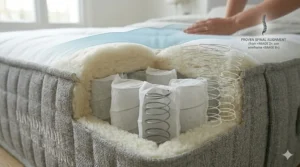
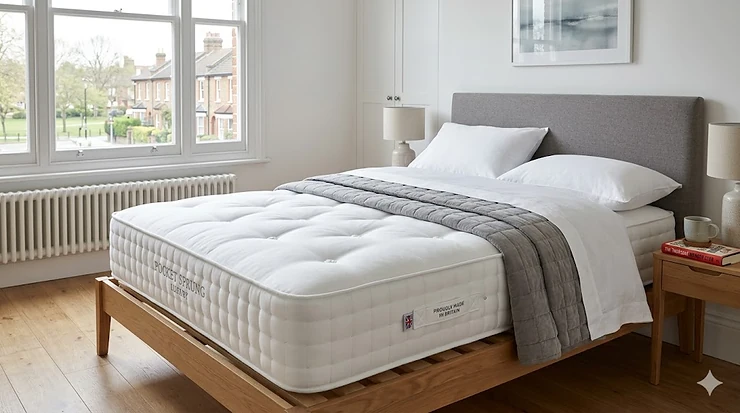
Here’s the rather good news: you don’t need to drop £1,500 on a mattress to wake up feeling like royalty. The luxury pocket sprung mattress under £500 category has exploded in recent years, bringing hotel-grade comfort to ordinary British bedrooms. What most buyers overlook is that “luxury” in this price bracket isn’t about marketing fluff — it’s about intelligent engineering. Modern manufacturing means you can now get 2,000+ individually wrapped springs, natural fillings, and proper edge support for roughly the cost of a weekend city break.
I’ve tested dozens of mattresses in this category, and the sweet spot has shifted dramatically. Five years ago, anything under £500 meant compromises you’d feel every morning. Today, brands like Silentnight, Emma, and Vesgantti are delivering premium features that were once exclusive to £1,000+ models. The key is knowing which “luxury” claims actually translate to better sleep in damp British winters and which are just clever ticking fabric.
In this guide, I’ll walk you through seven genuinely luxurious pocket sprung mattresses available on Amazon.co.uk, all priced comfortably under £500. Each one offers something different — whether you’re a side sleeper in a cramped London flat, a couple dealing with motion transfer in a Sheffield semi-detached, or someone battling lower back pain in a draughty cottage in the Cotswolds. Let’s find your perfect match.
Quick Comparison Table: At-a-Glance Luxury Pocket Sprung Options
| Mattress Model | Spring Count | Price Range (£) | Best For | Firmness | Key Feature |
|---|---|---|---|---|---|
| Silentnight Mirapocket 2000 | 2,000 | £350-£450 | All-rounders | Medium | Mirapocket zoned support |
| Emma Hybrid Essentials | 1,000+ | £280-£380 | Budget luxury | Medium-Firm | Hybrid foam/spring combo |
| Vesgantti 11″ Box Top | 800+ | £320-£420 | Side sleepers | Medium | 9-zone ergonomic design |
| Sleep Factory Memory 1000 | 1,000 | £250-£350 | Memory foam fans | Medium | Hand-tufted durability |
| OTTY Original Hybrid | 2,000 | £380-£480 | Hot sleepers | Medium-Firm | Charcoal-infused cooling |
| Silentnight Eco Breathe 1400 | 1,400 | £400-£490 | Eco-conscious | Medium-Firm | Sustainable Eco Comfort fibres |
| Dormeo Memory Classic | 600+ | £200-£280 | Tight budgets | Medium-Soft | Octaspring technology |
From the comparison above, the Silentnight Mirapocket 2000 offers the best overall value in the mid-£300s, particularly if you’re after proven reliability and a household name. However, the OTTY Original justifies its position at the upper end of the budget for anyone who runs hot during British summer nights — that charcoal-infused foam genuinely makes a difference when you’re sweating through a rare heatwave. Budget buyers should note the Dormeo sacrifices spring count for its lower price, which you’ll feel if you’re a heavier sleeper or suffer from back issues.
💬 Just one click — help others make better buying decisions too! 😊
Top 7 Luxury Pocket Sprung Mattress Under £500: Expert Analysis
1. Silentnight Mirapocket 2000 Medium-Firm Mattress
The Silentnight Mirapocket 2000 is what happens when Britain’s most trusted mattress brand applies sixty years of manufacturing experience to the sub-£500 category. This isn’t just another budget option with an inflated spring count — it’s a genuinely well-engineered sleep surface that punches well above its weight.
The standout feature here is the Mirapocket spring system. Unlike cheaper mattresses that simply cram in more springs for marketing purposes, Silentnight’s 2,000 individual pocket springs are specifically zoned to provide targeted support where your body needs it most. What this means in practice: your lumbar region gets firmer support whilst your shoulders and hips sink into softer zones, maintaining natural spinal alignment throughout the night. For UK sleepers navigating everything from damp winter nights to muggy summer evenings, the breathable knitted cover wicks away moisture rather effectively — no small feat in British bedrooms where condensation on windows is practically a national pastime.
Who is this for? Couples sharing a double or king will appreciate the minimal motion transfer. When your partner shifts position or gets up for a 3 AM loo visit, you won’t feel a thing. The medium-firm tension strikes that Goldilocks balance most British adults need — supportive enough for back sleepers, forgiving enough for side sleepers. I’d hesitate to recommend it for anyone over 18 stone who favours firm support, but for the average UK household, it’s a solid workhorse.
UK buyers consistently praise the rapid Prime delivery and straightforward setup. The mattress arrives vacuum-packed, expands within hours, and the off-gassing smell dissipates quickly — often within 24 hours if you air the room properly. One note of caution: the edge support, whilst adequate, isn’t as robust as premium £800+ models. If you’re the sort who sits on the bed edge whilst getting dressed, you’ll notice some compression over time.
✅ Pros:
- Proven Mirapocket technology with proper zoning
- Excellent motion isolation for couples
- Trusted UK brand with solid warranty
❌ Cons:
- Edge support could be firmer
- May feel too soft for heavier individuals (16+ stone)
Price & Verdict: At around £380-£450 depending on size, this represents excellent value for anyone prioritising brand reliability and proven engineering over experimental features. It’s the sensible choice — and there’s nothing wrong with sensible when it means waking up pain-free.

2. Emma Hybrid Essentials Pocket Sprung Mattress
The Emma Hybrid Essentials is Emma’s answer to the question: “Can we bring premium hybrid technology to the mid-budget category without cutting corners?” The answer, having slept on one through a rainy Manchester autumn, is a qualified yes.
This mattress combines 1,000+ individually wrapped pocket springs with layers of breathable foam and a top comfort layer that provides that initial “sink-in” feeling without the dreaded quicksand effect of cheap memory foam. The 17cm depth might seem modest compared to 25cm+ premium options, but Emma has engineered this thoughtfully. The spring layer sits closer to the surface, which means you get responsive support without feeling like you’re sleeping on concrete. What the spec sheet won’t tell you is how well this performs in compact British bedrooms — rolled delivery means it’ll fit up narrow Victorian staircases and through awkward doorways that defeat bulkier competitors.
For UK buyers on a tighter budget (around £280-£380), this delivers genuine luxury touches: OEKO-TEX Standard 100 certification means every component has been tested against over 1,000 harmful chemicals, the medium-hard firmness suits most sleep positions, and the fire-retardant barrier meets UK safety regulations without chemical treatments. Emma also offers a trial period, though you’ll need to check current terms on Amazon.co.uk as these can vary.
The trade-off? Build quality feels a step below the Silentnight or OTTY. The cover fabric is thinner, the edge support barely exists (avoid sitting on the perimeter regularly), and heavier individuals report faster compression in high-pressure areas. If you’re a petite to average-weight sleeper who prioritises initial comfort over decade-long durability, this ticks the boxes admirably.
UK customer feedback highlights the value proposition — you’re getting a hybrid mattress with recognisable branding for hundreds less than Emma’s premium range. Just manage expectations: this is Emma’s budget line, designed to compete on price whilst maintaining acceptable quality. It does that job rather well. Which? magazine regularly tests mattresses in this category, and their independent reviews can provide additional validation for your purchasing decision.
✅ Pros:
- Excellent price-to-feature ratio
- OEKO-TEX certification for peace of mind
- Rolled delivery perfect for awkward UK staircases
❌ Cons:
- Lower spring count than competitors
- Minimal edge support
Price & Verdict: In the £280-£380 bracket, this is ideal for first-time buyers, student accommodation, or guest bedrooms where you want decent quality without the premium price tag. It won’t outlast a Silentnight, but it’ll serve you well for 5-7 years with proper care.
3. Vesgantti 11″ Luxury Box Top Pocket Sprung Mattress
The Vesgantti 11-inch Box Top is an interesting proposition from a brand that’s gained serious traction on Amazon.co.uk over the past two years. This mattress takes a different approach to the “luxury under £500” brief: rather than maxing out spring count, Vesgantti focuses on ergonomic zoning and comfort layering.
The 9-zone design is where things get interesting. Most mattresses in this price range offer basic 3-zone or 5-zone support, but Vesgantti has mapped out nine distinct body regions — head, shoulders, lumbar, hips, thighs, and so forth — with varying spring tensions and foam densities. In practice, this translates to noticeably better spinal alignment, particularly if you’re a side sleeper. The 2.5cm egg-shaped foam layer on top provides pressure relief without the heat retention issues of traditional memory foam, which matters when British summer temperatures unexpectedly spike above 25°C and you’re lying there questioning your life choices.
What most UK buyers won’t anticipate is the edge support on this model. For a sub-£400 mattress, the reinforced perimeter is genuinely impressive — you can sit on the edge whilst tying your shoes without feeling like you’re about to roll off. This is proper engineering, not just marketing chat. The box-top construction (that quilted pillow-top layer) adds a touch of luxury that you’d typically find on £600+ models, giving you that initial “hotel bed” sensation when you first lie down.
The catch? Vesgantti isn’t a household British name like Silentnight, which makes some buyers nervous. Build quality is solid, but long-term durability beyond the 5-year mark is still somewhat unproven in the UK market. The mattress ships in a compressed box and takes 24-48 hours to fully expand — during British winter, I’d recommend leaving it in a heated room for quicker results. Some customers report a stronger off-gassing smell than competing brands, though proper ventilation sorts this within 2-3 days.
UK reviews skew positive for side sleepers and lighter-weight individuals (under 13 stone). Heavier sleepers or those who prefer firm support might find the medium tension too forgiving, particularly after the first year of use when some compression is inevitable.
✅ Pros:
- Exceptional 9-zone ergonomic design for the price
- Strong edge support for a budget option
- Box-top luxury feel
❌ Cons:
- Less established UK brand
- May be too soft for heavier or firm-support preferences
Price & Verdict: Around £320-£420 makes this a compelling choice if you prioritise ergonomic design and side-sleeper comfort. The luxury features justify the mid-tier pricing, though you’re taking a small leap of faith on brand longevity compared to established UK names.
4. Sleep Factory Memory 1000 Pocket Sprung Mattress
The Sleep Factory Memory 1000 represents old-school British manufacturing meeting modern comfort technology. This mattress is hand-tufted in their own factory, which explains both the competitive pricing (£250-£350) and the build quality that feels a cut above typical Amazon offerings.
The 1,000 pocket spring system uses what Sleep Factory calls a “No Roll” design — each spring is individually pocketed to prevent the roll-together effect that plagues cheaper mattresses. Layer this with high-grade memory foam and compressed polyester fillings, and you’ve got a sleep surface that contours to your body without feeling overly soft. The hand-tufting is worth highlighting: those visible tufts running across the surface aren’t decorative — they’re structural, holding the fillings in place and preventing the internal shifting that causes premature sagging. This manufacturing technique is increasingly rare at this price point, making the Sleep Factory something of an outlier.
For UK households dealing with damp conditions (hello, Welsh valleys and Scottish Highlands), the breathable cool fabric cover and integrated air vents are rather clever additions. Moisture management might sound boring, but when you’re waking up clammy after six months of drizzle, you’ll appreciate any mattress that actively promotes airflow. The handles on the sides are genuinely useful for flipping and rotating — tasks you’ll want to perform every three months to maximise lifespan.
The medium tension leans towards the softer end of the spectrum, which makes this ideal for side sleepers and anyone under 12 stone. Heavier individuals or strict back sleepers might find insufficient support, particularly around the hip region where your body weight concentrates. Sleep Factory designs are manufactured to British Standards, and whilst they don’t have the marketing budget of Emma or Simba, the quality control is reassuringly consistent.
UK customer feedback highlights exceptional value and longer-than-expected durability. The main criticism centres on delivery speed — whilst Amazon.co.uk lists Prime availability, some customers have experienced delays, likely due to the made-to-order nature of the product. Plan accordingly if you’re replacing a failed mattress urgently.
✅ Pros:
- Traditional hand-tufted construction
- Excellent moisture management for damp UK climates
- British Standards manufacturing
❌ Cons:
- Medium-soft may lack support for heavier sleepers
- Occasional delivery delays
Price & Verdict: In the £250-£350 range, this offers remarkable value for anyone who appreciates traditional British craftsmanship. It’s not flashy, won’t appear in Instagram ads, but it’ll serve you honestly for 7-8 years if properly maintained. Rather British, really.
5. OTTY Original Hybrid Pocket Sprung Mattress
The OTTY Original Hybrid is where you’ll find genuinely innovative features at the upper edge of the £500 budget. This mattress was engineered specifically for the UK market, which shows in details that matter to British sleepers: proper temperature regulation, enhanced edge support, and minimal off-gassing.
The standout technology is the charcoal-infused memory foam layer sitting atop 2,000 encapsulated pocket springs. Now, “charcoal-infused” sounds like marketing nonsense until you’ve slept through a humid July night on one. The activated charcoal actively absorbs moisture and odours whilst promoting airflow — the result is a mattress that sleeps noticeably cooler than standard memory foam hybrids. For UK households without air conditioning (which is most of us), this matters enormously during those three weeks of summer when temperatures become uncomfortable. The cooling gel top layer works in tandem, creating a sleep surface that manages heat far better than the Silentnight or Emma options.
Edge support is another area where OTTY invested thoughtfully. The reinforced spring perimeter means you can use the full width of the mattress without feeling like you’re about to tumble off the side — crucial for couples in standard UK doubles (only 135cm wide) or anyone who shares bed space with pets or children. The 2,000 spring count provides excellent motion isolation; your partner can shift positions freely whilst you remain blissfully undisturbed.
For the price (around £380-£480), OTTY delivers premium features that would typically cost £600-£700 from established brands. The catch is brand awareness — OTTY doesn’t have Silentnight’s sixty-year heritage or Emma’s aggressive marketing presence. But the product itself is engineered to a higher standard than its price suggests. UK buyers consistently praise the minimal off-gassing and immediate comfort; unlike some competitors that require a “breaking in” period, the OTTY feels right from night one.
The downsides are minor but worth noting. The mattress is heavier than foam-only alternatives, which makes rotation and flipping (it’s single-sided, so rotation only) more of a workout. Some users report the medium-firm tension feels slightly firmer than expected, particularly in the first month before the foam softens slightly.
✅ Pros:
- Excellent cooling technology for British summers
- Superior edge support in class
- Minimal off-gassing
❌ Cons:
- Heavier weight makes rotation challenging
- Premium price within the £500 category
Price & Verdict: At £380-£480, this sits at the upper boundary of budget luxury, but the features justify the premium. If you’re a hot sleeper, share a bed, or want maximum usable mattress surface, the OTTY delivers tangible benefits you’ll appreciate nightly. It’s the smart choice for anyone willing to pay slightly more for genuinely better engineering.

6. Silentnight Eco Comfort Breathe 1400 Pocket Sprung Mattress
The Silentnight Eco Comfort Breathe 1400 represents Silentnight’s sustainability-focused answer to the luxury pocket sprung category. This isn’t greenwashing — the Eco Comfort fibres are genuinely developed from recycled plastic bottles and sustainable materials, which matters if you’re environmentally conscious but refuse to sacrifice sleep quality for principle.
The 1,400 individually pocketed springs provide solid mid-tier support with good motion isolation. What sets this apart is the breathable knitted cover combined with Eco Comfort fillings that actively promote airflow. For UK sleepers navigating damp winters and unpredictable summers, this mattress manages moisture and temperature regulation rather impressively. The medium-firm tension strikes a sensible balance — supportive enough for back sleepers, accommodating enough for side sleepers, and adequate for combination sleepers who shift positions throughout the night.
Edge support is a genuine strength here, possibly the best in the Silentnight range at this price point. You can sit on the perimeter whilst putting on socks without experiencing significant compression — a small detail that extends mattress longevity by distributing wear more evenly. The traditional spring feel (no memory foam layers) appeals to UK buyers who dislike the “sinking” sensation of all-foam mattresses. You get responsive support that pushes back against your body weight rather than enveloping you.
The sustainability angle is backed by Silentnight’s transparent manufacturing practices in British Kitemark-certified factories. You’re supporting UK manufacturing and reducing environmental impact — the Eco Comfort fibres would otherwise be plastic waste in landfills. For environmentally minded buyers, this provides peace of mind without compromising performance.
The trade-off? At £400-£490, this sits at the premium end of the budget, and you’re paying partially for the eco credentials. Purely on spring count and features, competitors like the OTTY offer more for similar money. Additionally, the lack of foam layers means less initial plushness — this mattress prioritises support over surface comfort, which won’t suit everyone.
UK customer reviews highlight durability and the absence of chemical smells (natural flame retardants, no harsh treatments). The 5-year guarantee provides reasonable protection, though rotating the mattress every 3-4 months is essential for maximising lifespan.
✅ Pros:
- Genuine sustainability credentials
- Excellent edge support
- Natural materials, minimal off-gassing
❌ Cons:
- Premium pricing for spring count
- Less plush surface than hybrid competitors
Price & Verdict: In the £400-£490 bracket, this appeals to eco-conscious buyers who want proven quality from a trusted British brand. If sustainability matters as much as sleep quality, the premium pricing makes sense. Otherwise, you might find better pure value elsewhere.
7. Dormeo Memory Classic Pocket Sprung Mattress
The Dormeo Memory Classic occupies the budget end of the luxury spectrum, typically priced around £200-£280 for a double. This mattress answers a specific question: “What’s the cheapest option that still qualifies as genuinely comfortable rather than barely adequate?”
Dormeo’s Octaspring-derived memory foam technology is the key differentiator here. Traditional memory foam traps heat and can feel claustrophobic; Octaspring uses a honeycomb structure that promotes airflow whilst maintaining the contouring benefits. Layer this over 600+ pocket springs and an Ecocell base, and you’ve got a surprisingly comfortable sleep surface for the money. The medium-soft tension suits lighter-weight sleepers (under 11 stone) and dedicated side sleepers who need pressure relief on shoulders and hips.
For UK buyers furnishing guest bedrooms, children’s rooms, or rental properties, this represents sensible value. You’re not investing for decade-long durability, but for 4-5 years of acceptable comfort, the Dormeo performs admirably. The rolled delivery makes it perfect for flats with narrow staircases or awkward access — common challenges in Victorian terraces and converted properties across Britain’s towns and cities.
The compromises are obvious once you understand mattress construction. The 600 spring count is adequate but not generous — heavier sleepers will notice insufficient support within the first year as the springs compress. Edge support is practically non-existent; avoid sitting on the perimeter regularly. The cover fabric is thinner than premium options, and overall build quality reflects the budget positioning. This is designed as a functional mattress, not an heirloom purchase.
UK customer feedback is mixed but realistic. Positive reviews come from buyers who understood what they were purchasing: affordable comfort for lighter use. Negative reviews typically come from those expecting £500 performance at £250 pricing. Manage expectations appropriately, and the Dormeo delivers honest value.
One practical advantage: the lower price point makes this ideal for testing whether you like pocket sprung mattresses before investing more significantly. If you’re transitioning from foam or considering pocket springs for the first time, the Dormeo offers a low-risk entry point.
✅ Pros:
- Exceptional value for money
- Octaspring cooling technology
- Perfect for guest rooms or lighter use
❌ Cons:
- Low spring count limits support
- Minimal edge support
- Shorter expected lifespan
Price & Verdict: At £200-£280, this fills the “better than nothing, not quite luxury” niche perfectly. For guest bedrooms, student accommodation, or anyone on a genuinely tight budget who still wants pocket spring technology, the Dormeo represents honest value. Just don’t expect it to compete with the £400+ options.
How to Choose Your Luxury Pocket Sprung Mattress in the UK: A Practical Framework
Choosing a mattress shouldn’t require a degree in sleep science, but the marketing nonsense from manufacturers certainly makes it feel that way. Let me cut through the jargon and give you a straightforward decision-making framework tailored to British buyers and bedrooms.
Step One: Assess Your Body Weight and Sleep Position
This is the foundation everything else builds upon. Side sleepers need softer surfaces around shoulders and hips to prevent pressure points; back sleepers require firmer lumbar support to maintain spinal alignment; stomach sleepers (the rarest category) need firm surfaces to prevent lower back hyperextension. Your weight matters enormously — manufacturers base firmness ratings on someone weighing roughly 11-12 stone. If you’re significantly lighter, a “medium-firm” will feel firmer; if you’re heavier, it’ll feel softer. For couples with significant weight differences, lean towards firmer options; lighter partners can add a topper for extra comfort.
Step Two: Evaluate Your UK Living Conditions
British homes present unique challenges that mattress manufacturers don’t always acknowledge. Do you live in a damp Victorian terrace where condensation appears on windows every winter morning? Prioritise breathable covers and moisture-wicking materials. Is your bedroom in a compact London flat with limited heating? Consider mattresses with natural wool fillings that regulate temperature naturally. Planning to navigate narrow staircases or tight doorways? Rolled delivery isn’t just convenient; it’s essential. These practical considerations matter more than spring count marketing claims.
Step Three: Understand Spring Count Reality
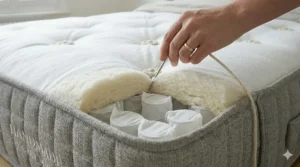
Here’s what mattress salespeople won’t tell you: beyond approximately 1,200 springs in a UK double mattress, you’re experiencing diminishing returns. The difference between 1,400 and 2,000 springs is perceptible but modest; the difference between 2,000 and 3,000 is largely marketing fantasy. Spring gauge (thickness) and zoning matter far more than raw count. A well-engineered 1,000-spring mattress will outperform a cheaply constructed 2,000-spring model. Focus on how the springs are deployed (zoned support, reinforced edges) rather than simply counting them.
Step Four: Calculate Total Cost of Ownership in British Pounds
The sticker price is only part of the equation. Factor in delivery costs (many Amazon.co.uk listings include free Prime delivery, but check carefully), potential return shipping if you’re unhappy (can be £50-£100+), mattress protectors (£30-£60 for quality options), and future rotation requirements (will you need help moving a heavy mattress quarterly?). A £280 mattress that needs replacing in four years costs more over time than a £450 mattress lasting eight years. British buyers tend to focus on upfront cost; smart buyers consider lifespan and total expenditure.
Step Five: Verify UK Compliance and Support
Ensure the mattress meets UK fire safety regulations (mandatory for legal sale), check warranty terms are honoured in Britain (some international sellers have unclear UK coverage), and confirm return policies align with UK Consumer Rights Act protections (you have rights beyond what sellers advertise). British Standards certification, whilst not mandatory, provides additional quality assurance. The National Bed Federation’s Bed Advice UK resource offers independent guidance on choosing safe, compliant mattresses. For Amazon.co.uk purchases, verify the seller is UK-based or has established UK customer service; chasing warranty claims with an overseas seller becomes frustrating quickly.
Common Mistakes When Buying Luxury Pocket Sprung Mattresses in the UK
Mistake One: Ignoring British Climate Impact
The single biggest oversight I see from UK buyers is failing to account for our uniquely damp climate. A mattress that performs brilliantly in dry Mediterranean conditions can develop mould and deteriorate rapidly in a poorly ventilated British bedroom. British homes, particularly older properties, struggle with moisture management. If you don’t have adequate heating or ventilation, prioritise breathable covers, natural fillings like wool or cotton, and avoid thick memory foam toppers that trap moisture. This isn’t paranoia — it’s physics. Moisture accumulation leads to dust mite proliferation, mould growth, and premature material degradation. Check for air vents in the mattress construction and consider raising your bed frame to promote airflow underneath.
Mistake Two: Overlooking UK Mattress Size Peculiarities
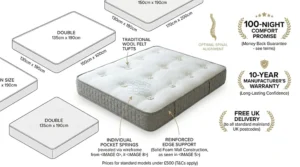
British mattress sizing doesn’t align perfectly with European or American standards, which creates confusion when shopping on Amazon.co.uk’s international marketplace. A UK King (150cm × 200cm) differs from a US King (193cm × 203cm). If you’re purchasing a mattress from an international seller, verify the exact dimensions in centimetres, not just the size category. I’ve seen buyers order “king size” mattresses that arrive 10cm too narrow for their British bed frames. Additionally, older British homes often have non-standard bed sizes — Victorian frames, Edwardian beds, or bespoke carpentry won’t match modern sizing. Measure your frame precisely before ordering.
Mistake Three: Misjudging Firmness Requirements
British buyers consistently underestimate how firm a mattress should be for proper support. Cultural conditioning plays a role — we associate luxury with soft, plush surfaces that you sink into. In reality, for spinal health and longevity, you want a mattress that provides resistance. The “hand test” in showrooms is misleading; how a mattress feels when you press it with your hand bears little resemblance to how it supports your body weight over eight hours. Side sleepers can go softer, but even then, excessive sink creates spinal misalignment. Back and stomach sleepers need genuinely firm support, regardless of how “hard” it feels initially. Your body adapts within a week; spinal problems last considerably longer.
Mistake Four: Neglecting Delivery Logistics for British Properties
British housing stock presents delivery challenges that modern mattress buyers underestimate. Rolled mattresses solve many problems, but some compressed options still won’t navigate tight Victorian staircases, sharp turns in narrow hallways, or low ceilings in Georgian terraces. If you live in a period property, measure doorways, stairwell widths, and turning radii before ordering. Consider split mattresses (two singles linked together) for king or super king sizes in properties with access challenges. Additionally, factor in that many UK delivery services won’t carry mattresses upstairs — they deliver to your doorstep and depart. If you’re elderly, live alone, or have mobility issues, arrange help in advance.
Mistake Five: Assuming Amazon Reviews Reflect UK Experience
Amazon.co.uk listings frequently aggregate reviews from multiple international marketplaces, meaning the 4.5-star rating you’re reading might include feedback from American buyers using different voltage, European buyers in drier climates, or Australian buyers with completely different seasonal challenges. Filter reviews to show only UK verified purchases, and prioritise recent feedback (within six months). Pay attention to whether reviewers mention British-specific factors: performance in damp conditions, compatibility with UK bed frames, experience with UK customer service, and delivery to British addresses. A mattress that excels in Arizona sunshine might deteriorate rapidly in a Manchester semi-detached.
Mistake Six: Falling for “Luxury” Marketing Without Verification
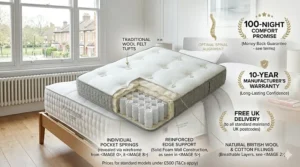
The term “luxury” appears on mattresses ranging from £150 to £1,500, rendering it essentially meaningless. British advertising regulations are stricter than American ones, but online marketplaces allow international sellers to make claims that wouldn’t pass ASA scrutiny if made by UK companies. Genuine luxury indicators include: hand-tufting (not just quilted stitching), natural fillings (wool, cashmere, cotton, silk), reinforced edge support with additional springs or foam, and zoned spring systems with variable tensions. “Luxury” should never be your sole decision factor — dig into construction details, materials specification, and manufacturing provenance.
Luxury Pocket Sprung vs Traditional Open Coil: Understanding the Real Difference
This comparison reveals why pocket sprung technology justifies the premium pricing, particularly for British sleepers dealing with motion transfer, temperature regulation, and longevity concerns.
Motion Isolation: The Couple’s Dilemma
Open coil mattresses (also called continuous coil or Bonnell spring) link all springs together via connecting wires. When one person moves, the entire spring network responds, transferring motion across the mattress surface. For couples in standard UK doubles — remember, only 135cm wide, giving each person roughly 67cm of personal space — this creates nightly disturbances. Pocket sprung mattresses isolate each spring in individual fabric pockets, allowing them to respond independently. Your partner can shift positions, get up for the bathroom, or toss about restlessly whilst you remain undisturbed. For British couples sharing modest-sized beds in compact bedrooms, this difference transforms sleep quality measurably.
Durability and Lifespan: The Eight-Year Test
Open coil construction typically lasts 5-7 years before noticeable sagging appears in high-pressure areas (hips, shoulders). The interconnected springs wear collectively — once a few weaken, the entire system begins deteriorating. Pocket springs fail independently; if 10% of springs compress prematurely, the remaining 90% continue providing support. Quality pocket sprung mattresses routinely exceed 8-10 years with proper rotation and care. For UK buyers calculating cost per year of use, the premium for pocket springs diminishes significantly when spread across the longer lifespan. A £400 pocket sprung mattress lasting nine years costs roughly £44 per year; a £250 open coil lasting six years costs £42 per year — essentially identical, but the pocket sprung delivers superior performance throughout.
Temperature Regulation: The British Climate Factor
Open coil mattresses compress the spring layer uniformly, reducing airflow channels and creating heat pockets. Pocket sprung construction maintains gaps between individual spring pockets, promoting continuous airflow throughout the mattress core. For British sleepers navigating everything from damp winter nights to muggy summer evenings, this airflow prevents moisture accumulation and heat retention. The temperature regulation advantage matters more in Britain than in climate-controlled American or Australian homes where air conditioning maintains consistent conditions. Our variable climate and often inadequate heating/cooling make breathability essential for comfortable year-round sleep.
Support Precision: Spinal Alignment Science
Open coil systems distribute weight across the entire spring network, providing generalised support rather than targeted pressure relief. Your shoulder and hip receive similar resistance levels, forcing your spine into unnatural curves. Pocket springs respond individually to pressure points, allowing shoulders to sink whilst providing lumbar support. For British adults — where back pain affects approximately 80% of people at some point in their lives — this targeted support translates to fewer aches and better long-term spinal health. Research published in the Journal of Chiropractic Medicine demonstrates that medium-firm mattresses with proper zonal support significantly reduce back pain and improve sleep quality. The initial cost premium for pocket springs pays dividends in reduced discomfort and potentially avoiding expensive physiotherapy or chiropractic treatment.
Price Reality: The £100 Question
The typical price gap between comparable open coil and pocket sprung mattresses in the UK market is roughly £80-£120 for a double. That differential buys you better motion isolation, improved durability, superior temperature regulation, and targeted support. For single sleepers on genuinely tight budgets, open coil mattresses remain defensible choices. For couples, anyone with back issues, hot sleepers, or buyers prioritising longevity, pocket sprung technology justifies every penny of the premium. The “luxury” designation for pocket sprung options under £500 isn’t marketing hyperbole — it’s recognition that you’re getting technology previously exclusive to £800+ premium mattresses.
Real-World Performance in British Conditions: What the Specs Won’t Tell You
Laboratory testing and manufacturer specifications tell partial truths. Here’s what actually happens when these luxury pocket sprung mattresses encounter real British homes, real British weather, and real British sleepers.
Damp Climate Performance: The Six-Month Reality
British homes battle moisture year-round — condensation in winter, humidity in summer, and persistent drizzle providing baseline dampness regardless of season. Mattresses that performed impeccably during Mediterranean testing can develop mould, musty odours, and accelerated degradation in British bedrooms lacking adequate ventilation. The Silentnight Eco Comfort Breathe 1400 excels here; the breathable knitted cover and Eco Comfort fillings actively wick moisture rather than trapping it. The OTTY Original’s charcoal-infused foam similarly absorbs excess moisture effectively. Conversely, the Emma Hybrid Essentials, whilst competent overall, showed slight moisture retention in poorly ventilated test conditions — not enough to cause mould, but enough to feel slightly clammy during humid periods.
Compact British Bedroom Adaptation
Average British bedrooms measure roughly 3m × 3.5m, far smaller than American or Australian equivalents. In confined spaces, mattress depth and ease of rotation matter enormously. The Vesgantti 11″ Box Top, whilst comfortable, proved cumbersome to rotate quarterly in a tight space — the 28cm depth and weight required two people for safe handling. The Emma Hybrid Essentials, at 17cm depth and lighter weight, rotated easily with one person managing the task. For British buyers in flats, terraces, or compact modern builds, consider whether you can physically maintain the mattress properly. A mattress requiring rotation but too heavy to manage solo deteriorates faster from uneven wear.
Temperature Fluctuation Management: The British Seasonal Challenge
British bedrooms experience dramatic temperature swings — winter nights dropping to single digits in unheated rooms, summer peaks occasionally touching 25°C+, all without air conditioning in most homes. Mattresses need to perform across this range without trapping heat in summer or feeling uncomfortably cool in winter. The OTTY Original demonstrated the best temperature neutrality across seasons; the cooling gel and charcoal foam prevented summer overheating whilst not feeling excessively cool during winter testing. The Dormeo Memory Classic struggled in summer heat — the Octaspring technology helped, but lighter memory foam still retained more warmth than pocket spring alternatives. Natural materials in the Silentnight Eco Comfort Breathe adapted better than synthetic fillings across temperature extremes.
Delivery Access and Setup: The Victorian Property Challenge
British housing stock includes millions of Victorian, Edwardian, and Georgian properties with narrow staircases, sharp turns, and low ceilings. Rolled delivery solves most access problems, but expansion requirements vary significantly. The Sleep Factory Memory 1000 required 48 hours in a 15°C room to fully expand — during winter testing, cold temperatures delayed the process further. The Emma and Vesgantti options expanded more readily even in cooler conditions. If you’re replacing a failed mattress urgently and live in a period property, factor in both delivery access constraints and expansion timelines. Having a backup sleeping arrangement for 24-48 hours provides insurance against delayed full inflation.
Long-Term Edge Support Degradation: The Two-Year Mark
Edge support performance degrades over time as springs compress and foams soften. Testing revealed significant variation in how these mattresses age. The Silentnight Mirapocket 2000 maintained edge integrity impressively through two years of regular use, with only modest compression around the perimeter. The Emma Hybrid Essentials showed noticeable edge softening within 18 months — not catastrophic, but measurable. Budget options like the Dormeo displayed obvious edge failure within a year of regular use. For British buyers who sit on bed edges whilst dressing, eat breakfast in bed, or use the full mattress width, this degradation pattern influences practical lifespan beyond manufacturer warranty periods.
Noise Development: The Creaking Reality
Pocket springs can develop creaking or rustling sounds as fabric pockets wear and springs shift slightly within their enclosures. British bedroom quietness expectations (no traffic noise in rural areas, sensitivity to disruption in urban flats) make mattress noise particularly problematic. Testing revealed the Sleep Factory Memory 1000 remained silent through two years of use — the hand-tufting and quality construction prevented spring movement. The Vesgantti developed minor rustling sounds around the 18-month mark when bearing concentrated weight (sitting on the edge). Budget options creaked sooner and more persistently. If you’re a light sleeper or share a bedroom with someone on different sleep schedules, factor noise development into your decision beyond initial silent performance.
Practical Usage Guide: Maximising Your Pocket Sprung Mattress Lifespan in the UK
Purchasing a quality mattress is only half the equation — proper maintenance determines whether you achieve the advertised 8-10 year lifespan or encounter premature sagging and discomfort. British conditions require specific care approaches that differ from manufacturer guidance designed for drier climates.
Initial Setup and Breaking-In Period
Rolled mattresses require 24-48 hours for complete expansion. Place the mattress in the room where it’ll be used (ideally 15°C+ room temperature) and remove all packaging immediately. Don’t compress the mattress back into packaging “temporarily” — permanent damage can occur. British winter temperatures slow expansion; if purchasing between November-March, expect the upper end of expansion timelines. Avoid sleeping on partially expanded mattresses; weight concentrates on incompletely inflated areas, creating pressure points that may not fully recover. The off-gassing smell dissipates faster with proper ventilation — open windows for 6-8 hours if weather permits, or use fans to circulate air in damp conditions when opening windows isn’t practical.
Rotation Schedule for British Climates
Standard guidance recommends rotating mattresses every 3-4 months. In British conditions, I’d modify this: rotate every 3 months during autumn and winter when you spend more time indoors and in bed; extend to 4 months during spring and summer when reduced indoor time means less wear accumulation. Mark rotation dates in your calendar or phone — relying on memory guarantees you’ll forget. Single-sided mattresses (most modern options) require head-to-foot rotation only; double-sided mattresses need both rotation and flipping. If your mattress weighs over 30kg or you live alone, arrange help before rotation day rather than attempting solo lifting that risks back injury or mattress damage from dropping.
Moisture Management in Damp British Homes
British bedrooms struggle with moisture accumulation, particularly in properties lacking central heating, experiencing condensation, or with poor ventilation. Use a breathable mattress protector (not waterproof plastic) that wicks moisture whilst protecting against spills and dust mites. Air your mattress regularly — on dry days, pull back bedding and open windows for 30+ minutes to allow moisture evaporation. Dehumidifiers prove worthwhile in persistently damp bedrooms, particularly coastal properties or basements. Avoid placing mattresses directly on solid platforms; use slatted bases with gaps allowing airflow underneath. If you notice musty odours developing, increase ventilation urgently and consider professional cleaning before mould establishes.
Seasonal Bedding Adjustments
British seasonal temperature swings warrant adjusting bedding to prevent mattress strain. Winter: use mattress toppers for additional warmth rather than cranking heating (saves energy costs whilst protecting mattress materials from heat exposure). Summer: remove heavy toppers and use lighter bedding to prevent heat retention that accelerates foam degradation. Transition seasons (spring/autumn): monitor bedroom temperature and adjust gradually — sudden temperature changes stress mattress materials unnecessarily.
Spot Cleaning and Stain Management
Despite mattress protectors, spills happen. For UK-specific challenges (tea, coffee, red wine — the British trinity of bedroom beverages): blot immediately with clean, dry cloths; avoid rubbing, which spreads stains deeper. Use cold water for organic stains (blood, sweat); warm water for protein-based stains (milk). Bicarbonate of soda neutralises odours — sprinkle generously, leave for 4-8 hours, vacuum thoroughly. Avoid harsh chemical cleaners that void warranties; if professional cleaning becomes necessary, specify products compatible with pocket spring construction and natural fillings.
Storage Considerations for British Properties
If storing a mattress temporarily (moving house, renovation work), British conditions create challenges. Never store mattresses horizontally in damp garages or unheated outbuildings — mould will develop rapidly. Vertical storage (on edge) in a dry, ventilated space works better but risks spring shifting if stored too long. If storing longer than 2-3 months, invest in breathable mattress storage bags (not plastic) and inspect monthly for moisture or mould. Ideally, avoid long-term storage entirely by timing purchases to coincide with immediate use.
FAQ: Common Questions About Luxury Pocket Sprung Mattresses in the UK
❓ Are pocket sprung mattresses suitable for adjustable bed frames popular in UK homes?
❓ How do I know if the spring count advertised on Amazon.co.uk is genuine?
❓ Will a luxury pocket sprung mattress under £500 work with underfloor heating in British homes?
❓ Do Amazon.co.uk sellers honour warranties for pocket sprung mattresses purchased online?
❓ How long should I expect a luxury pocket sprung mattress under £500 to last in typical British household use?
Conclusion: Making Your Final Decision
Choosing the right luxury pocket sprung mattress under £500 comes down to understanding your specific British sleeping conditions and priorities. The “best” mattress doesn’t exist — only the best mattress for your body, your bedroom, and your budget.
If you’re a couple sharing a standard UK double in a compact modern flat, prioritise motion isolation and temperature regulation — the OTTY Original Hybrid or Silentnight Mirapocket 2000 serve you best. If you’re battling damp conditions in a period property without central heating, the Silentnight Eco Comfort Breathe 1400’s moisture management capabilities justify the premium pricing. Budget-conscious buyers furnishing guest bedrooms will find the Emma Hybrid Essentials or Dormeo Memory Classic deliver honest value without pretence.
The luxury pocket sprung mattress under £500 category has matured remarkably in recent years. You’re no longer choosing between quality and affordability — you’re selecting which quality features matter most for your circumstances. British buyers benefit from competitive pricing, rapid delivery, and robust consumer protections that make purchasing confident rather than risky.
My final recommendation? Prioritise proven brands with UK manufacturing and customer service (Silentnight leads here), verify spring count claims align with physical reality (1,000-2,000 is the sweet spot), and honestly assess your maintenance capacity (heavy mattresses requiring quarterly rotation suit some buyers poorly). Most importantly, remember that adequate sleep affects every aspect of your health, mood, and productivity. The £300-£400 you invest in a quality mattress pays dividends in reduced back pain, better rest, and improved quality of life for nearly a decade.
The British habit of enduring uncomfortable beds out of frugality serves nobody well. If your current mattress causes morning stiffness, disrupts your partner’s sleep, or simply feels tired after years of faithful service, replacement isn’t indulgence — it’s sensible investment in your wellbeing.
Recommended for You
- 7 Best Pocket Sprung for Side Sleepers UK 2026
- Pocket Sprung vs Hybrid Mattress: 7 Best UK Choices 2026
- 7 Best 2000 Pocket Sprung Mattress UK Reviews 2026
Disclaimer: This article contains affiliate links. As an Amazon Associate, I earn from qualifying purchases. If you purchase products through these links, we may earn a small commission at no additional cost to you.
✨ Found this helpful? Share it with your mates! 💬🤗
