

In This Article
Standing in the mattress aisle—or scrolling through thousands of Amazon.co.uk listings—you’re confronted with a bewildering choice. Pocket sprung or hybrid? Both promise a decent night’s kip, but they deliver comfort in fundamentally different ways.
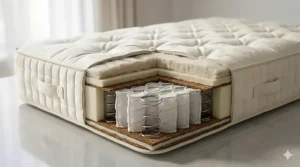
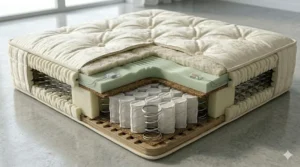
The pocket sprung vs hybrid mattress debate matters more than you might think. Get it wrong, and you’ll be waking up with a stiff back, a lighter wallet, and that peculiar British stoicism where you soldier on with the wrong mattress for years rather than admit defeat. What most buyers overlook is this: pocket sprung mattresses offer targeted support through individually wrapped springs, whilst hybrid mattresses layer memory foam or latex atop those springs for additional pressure relief. It’s not just marketing waffle—the construction genuinely affects how you sleep, particularly if you’re sharing a bed or dealing with the dodgy back that seems to afflict half the UK population over 40.
Here’s what the spec sheets won’t tell you: pocket sprung mattresses excel in breathability, making them rather good for Britain’s unpredictable climate where you’re alternating between muggy summer nights and damp winter chill. Hybrid mattresses, meanwhile, add that cushioning layer that side sleepers desperately need, especially if you’ve got wider hips or shoulders. In this guide, we’ve researched actual products available on Amazon.co.uk, checked UK customer reviews, and provided the practical interpretation that transforms confusing specifications into actionable buying decisions. Whether you’re in a Manchester semi-detached, a London flat, or a Scottish cottage, you’ll find mattresses suited to British homes, British budgets, and British sleeping habits.
Quick Comparison: Pocket Sprung vs Hybrid Mattress
| Feature | Pocket Sprung | Hybrid | Best For |
|---|---|---|---|
| Construction | Individual springs in fabric pockets | Springs + foam/latex layers | Hybrid suits those wanting both support and cushioning |
| Feel | Firmer, more responsive | Balanced, contouring | Pocket sprung for firm preference; hybrid for medium feel |
| Breathability | Excellent airflow | Good (varies by foam type) | Pocket sprung for hot sleepers |
| Motion Isolation | Good | Excellent | Hybrid reduces partner disturbance more effectively |
| Price Range (Double) | £200-£900 | £300-£1,200 | Pocket sprung offers better budget options |
| Durability | 7-10 years | 7-10 years | Similar lifespan when quality is comparable |
| Best Sleeping Position | Back, stomach, combo | Side, back, combo | Position matters more than you think |
From the comparison above, you’ll notice pocket sprung mattresses win on breathability and typically cost £100-£200 less for equivalent quality. However, if you’re a side sleeper who wakes with numb shoulders, that extra investment in a hybrid’s foam layer isn’t optional—it’s essential. Budget buyers should note that whilst you can find decent pocket sprung options around £300 for a double, hybrid mattresses under £400 often sacrifice foam quality, leading to sagging within 18 months. Worth paying attention to spring count too: anything below 1,000 springs in a double mattress is cutting corners, regardless of type.
💬 Just one click — help others make better buying decisions too! 😊
Top 7 Mattresses: Expert Analysis for UK Sleepers
1. Silentnight 1000 Pocket Geltex Mattress
The Silentnight 1000 Pocket Geltex Mattress combines 1,000 individual pocket springs with a Geltex comfort layer that’s neither traditional memory foam nor latex—it’s a gel-infused foam that stays cooler and responds faster. This is Silentnight’s clever answer to hot sleepers who find memory foam suffocating but still want pressure relief.
What sets this apart for UK buyers is the breathable Eco Comfort Fibres layer, made from recycled bottles, which regulates temperature remarkably well through Britain’s seasonal swings. The medium-firm feel suits back sleepers and lighter-weight side sleepers, though heavier individuals might find it too yielding after 6-12 months. UK customers consistently praise its edge support—handy when you’re sitting on the bed putting your shoes on—and the fact it’s manufactured in Lancashire means parts and warranty support are genuinely accessible.
The spec sheet shows 1,000 pocket springs for a double, which translates to decent motion isolation but not the absolute best if your partner’s a proper fidget. What the listing won’t tell you: at 23 cm depth, this won’t fit extra-deep fitted sheets, and the Geltex layer has a break-in period of about 2-3 weeks where it feels firmer than its final state.
Customer feedback from UK buyers highlights comfort for couples and value for money, though some note it’s slightly softer than expected. For British bedrooms where space is limited and central heating fluctuates, the breathability genuinely makes a difference—you’re not waking up clammy at 3 am when the boiler’s been running all evening.
Pros:
✅ Excellent temperature regulation for UK climate
✅ Made in Britain with accessible warranty support
✅ Strong edge support for sitting
Cons:
❌ May be too soft for heavier sleepers
❌ Geltex layer has noticeable break-in period
Price: Around £400-£600 for a double. Represents solid value in the mid-range pocket sprung category.
2. Emma Hybrid Original Mattress
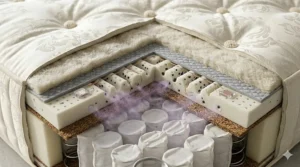
The Emma Hybrid Original layers supportive pocket springs beneath multiple foam comfort layers, including the brand’s Airgocell foam that’s designed to combat the heat retention issues that plague traditional memory foam. This is Emma’s entry-level hybrid, positioned as the sensible choice for combination sleepers who switch positions throughout the night.
For UK buyers, the 200-night trial is genuinely useful—British consumer law requires only 14 days for online purchases, so Emma’s extended period removes the pressure of making a snap decision. The medium-firm rating (around 6-7 out of 10) suits most sleepers, though proper side sleepers with broader shoulders might want the softer Emma Premium instead. At 22 cm depth, it fits standard UK fitted sheets without fuss.
What makes this relevant for British homes is the hybrid construction managing both the damp spring and autumn (where breathability matters) and the central-heated winter (where you don’t want to be roasting). The foam layers provide enough contouring for pressure relief without that quicksand sensation you get with cheap memory foam. UK customer reviews frequently mention it’s firmer than expected—if you’re used to a soft mattress, this will feel quite supportive initially.
The spec includes pocket springs (count isn’t specified, which is slightly frustrating) and multiple foam layers totalling 22 cm. Edge support is adequate but not exceptional—sitting on the very edge compresses more than Silentnight’s offerings. Worth noting: Emma mattresses arrive vacuum-packed and take 24-48 hours to fully expand, and there’s a slight off-gassing smell for the first few days, though it’s not as pungent as some cheaper foam mattresses.
Pros:
✅ 200-night trial exceeds UK legal requirements
✅ Balanced feel suits combination sleepers
✅ Good temperature regulation for foam hybrid
Cons:
❌ Firmer than marketing suggests
❌ Edge support adequate but not outstanding
Price: Typically around £400-£700 for a double. Check current Amazon.co.uk availability and pricing.
3. Simba Hybrid Original Mattress
The Simba Hybrid Original features the brand’s patented titanium Aerocoil springs combined with a comfort layer of Simba-Pure foam and a breathable sleep surface. Simba positions this as the scientific choice, backed by data from 10 million sleepers (though how much of that data actually informed the design is anyone’s guess).
What UK buyers appreciate is the 200-night trial and 10-year guarantee, both of which exceed industry standards. The medium-firm feel (around 6 out of 10) accommodates back and side sleepers reasonably well, though stomach sleepers might want something firmer to prevent lower back strain. At 25 cm depth, it’s slightly taller than the Emma, so check your bed frame clearance if you’ve got a particularly low frame.
For British homes, particularly urban flats where partner disturbance is a concern, the Aerocoil springs do deliver impressive motion isolation—better than standard pocket springs. The breathable cover manages temperature well, though some UK customers in particularly cold regions note it doesn’t trap heat as effectively as memory foam for winter comfort. The mattress arrives rolled and vacuum-packed, typical of boxed mattresses, and expands fully within 24 hours.
The spec includes 2,500 mini-springs (Aerocoils) plus a base layer of standard pocket springs, creating a hybrid within a hybrid. Edge support is strong, and the removable, washable cover at 40°C is genuinely useful for British households dealing with the inevitable tea spillage. What they don’t advertise: the Simba-Pure foam has a subtle lavender scent for the first few weeks, which some find soothing and others find unnecessary.
UK customer feedback praises support and comfort, with particular mention of reduced back pain for side sleepers. A few note it’s slightly too firm initially but softens after a month of use.
Pros:
✅ Exceptional motion isolation for couples
✅ Removable, washable cover (40°C)
✅ Strong edge support
Cons:
❌ Premium pricing for entry-level hybrid category
❌ Initial firmness may require adaptation period
Price: Around £600-£900 for a double, positioning it in the premium segment.
4. Sealy 1400 Pocket Posturepedic Mattress
The Sealy 1400 Pocket Posturepedic Mattress offers 1,400 individual pocket springs with Sealy’s Posturepedic technology, which reinforces the centre-third of the mattress where most body weight concentrates. This is pure pocket sprung construction without foam layers, designed for those who want traditional spring support without hybrid complications.
For UK buyers, particularly those with orthopaedic concerns, the targeted support proves genuinely beneficial. The medium-firm to firm rating suits back and stomach sleepers, whilst side sleepers with average builds can manage comfortably. At 28 cm depth, this is a properly tall mattress—check your fitted sheets can accommodate it. Sealy manufactures this range in the UK, which means warranty claims and customer service are handled domestically rather than routed through European call centres.
What works for British bedrooms is the micro-quilted knit cover that’s soft enough for comfort without adding excessive heat retention. The breathability of pure pocket sprung construction means hot sleepers—common in poorly ventilated British housing—won’t wake up sweating. However, this also means it provides less insulation in winter, so if your bedroom’s on the chilly side, you’ll need decent bedding to compensate.
The spec shows 1,400 pocket springs in a double, which delivers excellent motion isolation for a non-hybrid mattress. Edge support is robust thanks to the Posturepedic reinforcement. What Sealy doesn’t emphasise: this mattress is single-sided and rotation-only, meaning you can’t flip it to extend its life as you could with older mattress designs.
UK customer reviews consistently mention relief from back pain and the long-term durability—several reviewers report 7-8 years of use without significant sagging. A minority find it too firm, particularly lighter-weight sleepers under 60 kg.
Pros:
✅ Excellent for back pain and orthopaedic support
✅ Exceptional breathability for hot sleepers
✅ UK manufacturing for warranty accessibility
Cons:
❌ Too firm for lightweight and dedicated side sleepers
❌ Lacks the cushioning comfort of hybrid alternatives
Price: In the £500-£800 range for a double. Solid investment for traditional spring preference.
5. Happy Beds Gel Memory Pocket 2000 Hybrid Mattress
The Happy Beds Gel Memory Pocket 2000 Hybrid Mattress combines 2,000 pocket springs with a gel-infused memory foam layer, targeting the budget-conscious buyer who still wants proper hybrid construction. Happy Beds positions itself as the affordable British alternative to premium brands, manufactured in the UK to keep costs down.
What makes this relevant for UK buyers is the aggressive pricing—typically £100-£150 less than Emma or Simba equivalents for comparable specifications. The 2,000 pocket spring count is genuinely impressive at this price point, delivering motion isolation that rivals mattresses costing double. The gel memory foam layer aims to solve traditional memory foam’s heat retention problem, and whilst it’s not as effective as Geltex or latex, it’s a marked improvement over standard memory foam.
For British homes where budgets are tight but comfort expectations remain high, this represents excellent value. The medium rating (around 5-6 out of 10) suits most sleeping positions, though proper side sleepers might want a touch more cushioning. At 25 cm depth, it fits standard UK bedding without issue. The 10-year guarantee and 100-night trial provide reasonable confidence, though Happy Beds’ customer service is less polished than established brands.
The spec includes 2,000 individual pocket springs plus a 5 cm gel memory foam layer. Edge support is adequate but not exceptional—heavier individuals will notice more compression when sitting on the edge. What they don’t advertise: the gel memory foam has a noticeable break-in period of 2-4 weeks, during which it feels firmer than its settled state.
UK customer feedback highlights outstanding value for money, with particular praise for the spring count at this price. Some mention off-gassing for the first few days (typical of memory foam) and that the mattress sleeps warmer than advertised, particularly in summer.
Pros:
✅ Exceptional value with 2,000 pocket springs
✅ UK-manufactured with domestic support
✅ Good motion isolation for the price
Cons:
❌ Gel foam less effective at cooling than premium alternatives
❌ Edge support adequate but not robust
Price: Around £300-£450 for a double, making it the budget pick in this comparison.
6. OTTY Hybrid 2000 Mattress
The OTTY Hybrid 2000 Mattress layers 2,000 pocket springs beneath memory foam and a cooling fabric cover, positioning itself as the British-designed challenger to established brands. OTTY’s USP is balancing premium features with mid-range pricing, undercutting Simba and Emma whilst maintaining comparable specifications.
For UK buyers, the 100-night trial and 10-year guarantee provide adequate confidence to try it risk-free. The medium-firm rating (around 6-7 out of 10) suits back and combination sleepers particularly well, whilst side sleepers find sufficient pressure relief for shoulders and hips. At 27 cm depth, it’s taller than average—ensure your bed frame accommodates it comfortably.
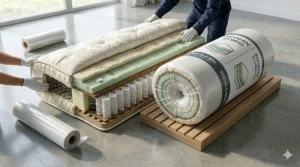
What works for British bedrooms is OTTY’s attention to temperature regulation. The hybrid construction allows airflow through the spring layer, whilst the memory foam uses cooling gel infusion to counter heat retention. Not revolutionary, but genuinely effective for those night sweats that plague the British summer—all three weeks of it. The mattress arrives compressed in a box, typical of online brands, and takes 24-48 hours to fully expand.
The spec shows 2,000 pocket springs in even a double mattress, which is impressive and delivers excellent motion isolation for couples. The memory foam layer isn’t as thick as premium hybrids (around 4 cm), but it’s sufficient for most sleepers. Edge support is good but not exceptional—sitting on the very edge shows more compression than Sealy or Silentnight offerings.
UK customer reviews praise the balance of support and comfort, with several mentioning improved sleep quality after switching from older spring mattresses. A few note the memory foam layer develops slight body impressions after 12-18 months, though this doesn’t necessarily affect comfort—it’s more visible than problematic.
Pros:
✅ Premium spring count at mid-range pricing
✅ Good temperature regulation for hybrid
✅ Effective motion isolation for couples
Cons:
❌ Memory foam layer thinner than premium competitors
❌ Visible body impressions develop over time
Price: Typically £400-£650 for a double. Strong contender in the mid-range category.
7. Inofia Hybrid Pocket Sprung Mattress
The Inofia Hybrid Pocket Sprung Mattress combines pocket springs with memory foam in a budget-friendly package that’s become surprisingly popular on Amazon.co.uk. Inofia isn’t a household name like Silentnight, but their mattresses accumulate thousands of UK customer reviews, suggesting genuine market traction.
What makes this relevant for budget-conscious UK buyers is the aggressive pricing—often £150-£200 less than established brands for similar specifications. The medium firmness suits most sleeping positions, though it leans slightly softer than advertised, which side sleepers appreciate and stomach sleepers find less ideal. At 23 cm depth, it fits standard UK bedding without fuss.
For British homes, particularly spare bedrooms or student accommodation where budget is paramount, this represents reasonable value. The hybrid construction provides better support than cheap all-foam alternatives, and the pocket springs reduce partner disturbance adequately. However, quality control is less consistent than established brands—some UK customers report excellent durability, whilst others note sagging after 18 months.
The spec typically includes 800-1,000 pocket springs (varies by model) plus a memory foam comfort layer. Edge support is the weak point—sitting on the edge shows noticeable compression, and heavier individuals will find the mattress less supportive overall. What they don’t advertise: the memory foam has stronger off-gassing than premium brands, requiring 48-72 hours airing before use.
UK customer feedback is mixed but leans positive for the price. Many highlight it’s perfect for guest rooms or children’s beds where longevity isn’t the primary concern. Some note the mattress sleeps warmer than expected, and the memory foam layer compresses more quickly than higher-quality foams.
Pros:
✅ Budget-friendly pricing for hybrid construction
✅ Adequate for guest rooms and rental properties
✅ Decent initial comfort for the cost
Cons:
❌ Quality control less consistent than established brands
❌ Durability concerns—sagging reported within 2 years
Price: Around £180-£300 for a double. Best suited for temporary or budget-conscious situations.
Real-World Application: Matching Mattress to Your British Lifestyle
Choosing between pocket sprung vs hybrid mattress isn’t just about specifications—it’s about how you actually live. Let’s examine three typical UK sleeping scenarios and match them to the right mattress technology.
The London Flat Sharer (Late 20s, 60kg, Side Sleeper)
You’re in a Victorian conversion in Zone 2, sharing with two others, and your bedroom’s barely larger than the double bed itself. Space is tight, budget’s around £400-£500, and you need something that’ll arrive boxed because lugging a traditional mattress up three flights of narrow stairs isn’t happening. The flat oscillates between overheated (ancient radiators with no thermostatic control) and freezing (landlord’s stingy with repairs).
Recommendation: Emma Hybrid Original or OTTY Hybrid 2000. Both arrive compressed, expand within 24 hours, and the hybrid construction balances temperature regulation better than pure memory foam. As a side sleeper, you need that foam comfort layer to cushion shoulders and hips—pure pocket sprung would leave you with numb arms by morning. The medium-firm rating prevents you sinking too deeply, crucial in a small bedroom where you’re perched on the bed’s edge to reach your wardrobe.
The Manchester Suburb Family (Mid 40s, Couple, One Light Sleeper)
You’re in a three-bed semi with teenagers down the hall, and one of you is a proper fidget whilst the other wakes if a mouse sneezes two houses over. Budget’s £600-£800, and you’re willing to invest in decent sleep now that the kids are older and money’s less tight. The bedroom’s got reasonable space, and you’ve finally got a king-size frame after years of cramming into a double.
Recommendation: Simba Hybrid Original or Sealy 1400 Pocket Posturepedic. Motion isolation is paramount here, and Simba’s Aerocoil technology genuinely reduces partner disturbance more effectively than standard pocket springs. However, if the light sleeper prefers a firmer, more traditional feel, Sealy’s pure pocket sprung construction with 1,400 springs provides excellent motion control without hybrid cushioning. Factor in that both are manufactured domestically, meaning warranty claims won’t involve shipping mattresses to Europe—rather important when one of you finally admits the mattress isn’t working after six months of British “mustn’t grumble” stoicism.
The Rural Scotland Cottage (Retired Couple, Orthopaedic Concerns, Back Sleepers)
You’re in a converted cottage outside Inverness, both dealing with dodgy backs that flare up in cold weather, and you need proper support rather than fashionable memory foam nonsense. Budget’s flexible around £700-£900, and you want something that’ll last 8-10 years because you’re done with replacing mattresses every few years. The bedroom’s frequently chilly—Scottish heating costs being what they are—and you prefer sleeping on the firmer side.
Recommendation: Sealy 1400 Pocket Posturepedic definitively. The Posturepedic technology targets the centre-third reinforcement that orthopaedic backs need, and pure pocket sprung construction won’t trap heat the way foam layers do—less relevant in Scotland, but the breathability prevents that sweaty discomfort when you layer on winter bedding. The firm rating provides the support your backs require, and Sealy’s UK manufacturing means parts and service are actually accessible in Scotland rather than theoretical. At 28 cm depth, it’s a properly traditional mattress that won’t leave you feeling like you’re sleeping on a camping mat.
How to Choose the Right Mattress Type for British Conditions
Selecting between pocket sprung vs hybrid mattress requires evaluating factors beyond marketing claims. Here’s the practical framework for UK buyers:
1. Sleeping Position Determines Construction Type
Side sleepers need cushioning at shoulders and hips. Hybrid mattresses provide that foam comfort layer essential for pressure relief—pure pocket sprung will leave you with numb shoulders by morning. Back sleepers can manage either type, though many prefer the responsive feel of pocket springs. Stomach sleepers require firmness to prevent lower back strain, making pocket sprung the better choice unless you find a firm hybrid.
2. Temperature Regulation Matters in British Bedrooms
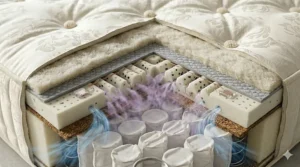
UK homes oscillate between overheated (central heating blasting) and freezing (heating off). Pocket sprung mattresses breathe better, crucial if you’re a hot sleeper or your bedroom traps heat. Hybrid mattresses with gel-infused or cooling foams manage temperature adequately, but cheaper hybrids with standard memory foam become uncomfortably warm in summer. Consider your bedroom’s actual temperature year-round, not just the season when you’re shopping.
3. Partner Disturbance Requires Motion Isolation
If one of you fidgets whilst the other wakes easily, motion isolation becomes non-negotiable. Hybrid mattresses generally outperform pocket sprung in this regard, though high-quality pocket springs (1,400+ in a double) narrow the gap considerably. Test this practically: if you’re replacing a mattress due to partner disturbance, hybrid construction addresses that specific complaint more effectively.
4. Budget and Quality Correlate More Than Marketing Suggests
You can find budget pocket sprung mattresses from £200, but anything below £300 for a double sacrifices spring count and durability. Budget hybrids under £350 typically use cheaper foam that compresses within 18 months. Conversely, paying £900+ doesn’t automatically mean better sleep—beyond £700 for a double, you’re often funding brand premium rather than meaningful quality improvements. The sweet spot sits around £400-£600 for quality construction that’ll last 7-8 years.
5. British Home Size Affects Delivery Practicality
Victorian conversions, narrow staircases, and compact bedrooms mean compressed, boxed mattresses often prove more practical than traditional delivery. Most hybrids and modern pocket sprung mattresses arrive vacuum-packed, expanding within 24-48 hours. Traditional retailers still deliver full-size, but navigating a king-size mattress up three flights of stairs in a Zone 3 terrace requires logistics you don’t want to contemplate.
Common Mistakes When Buying Mattresses in the UK
British buyers make predictable errors when selecting mattresses, often because we’d rather suffer in silence than return something.
Assuming “Medium” Means the Same Across Brands
What Silentnight calls medium-firm, Emma might rate as firm, and IKEA might consider medium-soft. UK consumer law protects you with a 14-day cooling-off period for online purchases, but many retailers offer 100-200 night trials that exceed legal requirements. Use them. If the mattress isn’t right after a month, return it rather than convincing yourself you’ll adapt.
Ignoring Spring Count on Pocket Sprung Mattresses
Marketing emphasises “pocket sprung technology” without specifying spring count. Below 1,000 springs in a double mattress, you’re not getting adequate support or motion isolation. Quality pocket sprung mattresses feature 1,200-1,400+ springs in a double, with premium options reaching 2,000+. More springs mean better weight distribution and partner motion control—worth the £100-£150 premium.
Overlooking Mattress Height and Fitted Sheet Compatibility
British bedding comes in standard fitted sheet sizes, but mattresses now range from 20 cm to 35 cm depth. Buy a 28 cm mattress, and your 25 cm fitted sheets won’t fit properly, leading to that annoying corner-popping situation at 3 am. Check mattress depth before purchasing and ensure your existing bedding accommodates it, or budget for new sheets—another £30-£50 you weren’t expecting.
Choosing Based on Partner’s Preference Instead of Individual Needs
One of you needs firm support for a dodgy back; the other’s a side sleeper requiring cushioning. British compromise often means both of you sleeping poorly on a medium mattress that suits neither. Consider different mattress types per person (possible with adjustable beds or simply accepting you need different mattresses) or prioritise the person with specific orthopaedic requirements—your partner can adapt more easily than someone with chronic back pain.
Forgetting About UK Warranty and Returns Logistics
Amazon.co.uk sells mattresses from UK retailers and international sellers. Check whether returns require shipping the mattress back (expensive and awkward) or whether the company collects it. UK-manufactured mattresses from established brands typically offer straightforward warranty claims; unknown brands imported from Asia often make returns prohibitively difficult. Read the warranty terms before purchasing, not after you’ve realised there’s a problem.
Underestimating British Weather Impact on Mattress Longevity
Damp British weather means mattresses in poorly ventilated bedrooms accumulate moisture, leading to premature sagging and potential mould issues. Pocket sprung mattresses generally resist this better due to superior airflow, whilst foam mattresses in ground-floor bedrooms or basement conversions require more vigilant maintenance. Use a mattress protector, rotate regularly (every 3 months), and ensure adequate bedroom ventilation—particularly relevant in older British housing stock where moisture management is problematic.
Pocket Sprung vs Hybrid: The Detailed Breakdown
Understanding construction differences between pocket sprung vs hybrid mattress helps you evaluate marketing claims against actual utility.
Pocket Sprung Construction and Performance
Pocket sprung mattresses feature individual springs sewn into fabric pockets, allowing each spring to respond independently to pressure. This independent movement creates several advantages: targeted support where your body needs it, reduced motion transfer compared to continuous coil systems, and superior breathability due to airflow between springs. Which? testing confirms that quality matters significantly—cheap pocket springs use thinner gauge steel that compresses more quickly, whilst premium versions employ thicker steel for longevity.
For UK buyers, pocket sprung excels in temperature regulation. British bedrooms fluctuate between overheated (central heating) and cold (heating off overnight), and the natural airflow prevents heat buildup. Back sleepers and stomach sleepers particularly benefit from the responsive support that maintains spinal alignment without excessive sinkage. The main limitation is pressure relief—side sleepers with wider shoulders or hips often find pure pocket sprung too firm at pressure points.
Spring count matters more than most marketing admits. A 800-spring double mattress provides basic support; 1,200 springs deliver good motion isolation; 1,400+ springs approach premium performance. More springs mean finer-grained response to your body, reducing pressure concentration and improving partner motion control.
Hybrid Construction and Practical Implications
Hybrid mattresses layer foam (memory foam, latex, or proprietary foams) atop a pocket sprung base. This combination aims to deliver pocket springs’ support with foam’s pressure relief. The foam layer typically ranges from 3-7 cm thickness—thicker isn’t automatically better, as excessive foam creates that quicksand sensation many UK buyers dislike, according to independent UK mattress experts.
For British homes, hybrid construction manages the temperature regulation challenge with varying success. Gel-infused memory foam, latex, or proprietary cooling foams reduce heat retention compared to standard memory foam, though they’ll never breathe as well as pure pocket springs. However, that foam layer provides crucial cushioning for side sleepers, reducing shoulder and hip pressure that pure springs can’t address adequately.
The practical advantage for couples is motion isolation. Foam layers absorb movement more effectively than springs alone, meaning your partner’s 3 am bathroom visit disturbs you less. Edge support varies considerably—cheaper hybrids compress noticeably when sitting on the edge, whilst premium versions reinforce perimeter springs to maintain stability.
Which Technology Suits Your Actual Needs?
If you’re a hot sleeper in a poorly ventilated British bedroom, pocket sprung wins decisively. If you’re a side sleeper waking with numb shoulders, hybrid’s foam layer isn’t optional—it’s essential. If you share a bed with a restless partner, hybrid’s motion isolation justifies the typically £100-£200 premium. If you prefer traditional mattress feel and bounce, pocket sprung delivers that responsive support without foam complications.
Price-to-performance ratio favours pocket sprung in the budget category. Quality pocket sprung mattresses start around £300-£350, whilst comparable hybrid quality requires £400-£450 minimum. However, in the premium segment (£600-£900), the gap narrows considerably, and hybrid construction often delivers better overall satisfaction for the majority of sleepers.
Long-Term Ownership: Maintenance and Durability in the UK
Mattress longevity in British conditions requires understanding both construction vulnerabilities and proactive maintenance.
Expected Lifespan and Degradation Patterns
Quality pocket sprung mattresses last 8-10 years when maintained properly, whilst hybrid mattresses typically reach 7-9 years before foam compression reduces support. The foam layer in hybrids represents the weak point—cheaper foams compress within 18-24 months, creating body impressions that affect comfort. Premium foams last considerably longer, justifying the initial cost premium.
British weather accelerates mattress degradation in poorly ventilated bedrooms. Ground-floor bedrooms, basement conversions, and older housing stock with questionable damp-proofing expose mattresses to moisture that pocket springs tolerate better than foam. If your bedroom shows condensation on windows in winter, rotate your mattress every 2-3 months rather than the standard 3-4 months, and invest in a breathable mattress protector.
Maintenance Requirements for British Conditions
Rotate pocket sprung and hybrid mattresses every 3 months (90 degrees each time) to distribute wear evenly. Most modern mattresses are single-sided—you rotate but don’t flip them. Use a mattress protector from day one, as UK retailer warranties often exclude stains, and that inevitable tea spillage voids your guarantee if unprotected.
Vacuum your mattress quarterly using the upholstery attachment, removing dust mites that thrive in British homes. Open bedroom windows for 20-30 minutes daily when possible, improving airflow and reducing moisture accumulation—particularly important in centrally heated homes where humidity builds up overnight. If you’re in a damp-prone area (ground floor, poorly ventilated), consider a dehumidifier for the bedroom during winter months.
When to Replace Rather Than Persist
British stoicism means we tolerate inadequate mattresses far longer than we should. Replace your mattress if you wake with back pain that improves throughout the day (sign the mattress isn’t supporting you properly), if visible sagging exceeds 2-3 cm depth, or if you sleep noticeably better in hotels or friends’ houses. Seven years is a reasonable replacement interval for quality mattresses; cheaper mattresses may need replacement at 5 years.
Partner disturbance increasing over time suggests the mattress’s motion isolation has degraded—foam compression in hybrids or spring fatigue in pocket sprung both reduce performance. If one of you starts sleeping on the sofa to avoid disturbing the other, that’s your mattress telling you it’s finished. Don’t persist out of misplaced frugality—proper sleep affects work performance, mood, and health significantly enough that replacing an inadequate mattress pays for itself in improved quality of life.
Frequently Asked Questions
❓ Is a hybrid mattress better than pocket sprung for UK buyers?
❓ How many pocket springs should a good double mattress have?
❓ Do hybrid mattresses sleep hot in British bedrooms?
❓ Are Amazon.co.uk mattresses genuine quality or cheap imports?
❓ Should I buy a firm or medium mattress for back pain in the UK?
Conclusion: Making Your Mattress Decision for British Sleep
The pocket sprung vs hybrid mattress debate resolves not through specifications but through honest assessment of how you actually sleep. Side sleepers need that foam comfort layer hybrids provide—pure pocket sprung leaves you with numb shoulders regardless of spring count. Hot sleepers in poorly ventilated British bedrooms benefit from pocket sprung breathability that foam layers can’t match. Couples dealing with partner disturbance find hybrid motion isolation worth the £100-£200 premium.
What transforms acceptable sleep into genuinely restorative rest is matching mattress technology to your specific needs rather than buying what’s marketed most aggressively. The Simba Hybrid Original delivers if you want premium motion isolation and don’t mind paying for it. The Sealy 1400 Pocket Posturepedic suits those who prefer traditional spring support with orthopaedic benefits. The Emma Hybrid Original splits the difference with balanced performance at mid-range pricing. Budget-conscious buyers find the Happy Beds Gel Memory Pocket 2000 offers impressive specifications for the money, accepting some compromises in foam quality and edge support.
Remember that British consumer protection gives you 14 days minimum to return online purchases, whilst many mattress retailers offer 100-200 night trials exceeding legal requirements. Use this time honestly—sleeping on a mattress for three weeks reveals issues a five-minute shop test can’t. If it’s not working, return it rather than convincing yourself you’ll adapt. Proper sleep affects work performance, relationships, and health too significantly to compromise on something you’ll use 2,500+ hours per year.
Consider your bedroom’s actual conditions: temperature fluctuations, ventilation quality, space constraints, and delivery practicality all influence which mattress works in practice versus theory. That Victorian conversion with three flights of narrow stairs makes boxed mattresses non-optional. The ground-floor bedroom with condensation issues favours pocket sprung breathability. The king-size bed in a semi-detached where one of you fidgets makes hybrid motion isolation essential.
The right mattress isn’t the one with the most impressive specifications—it’s the one that addresses your specific sleeping challenges whilst fitting your budget and British home realities.
✨ Don’t Miss These Exclusive Deals!
🔍 Take your sleep quality to the next level with these carefully selected mattresses. Click on any highlighted item to check current pricing and availability on Amazon.co.uk. These picks will help you find exactly what you need for a proper night’s kip!
Recommended for You
- 7 Best 2000 Pocket Sprung Mattress UK Reviews 2026
- 7 Best Pocket Sprung Mattress UK: Expert Reviews 2026
- 7 Best Cooling Memory Foam Mattresses UK 2026: Stop Overheating
Disclaimer: This article contains affiliate links. As an Amazon Associate, I earn from qualifying purchases. If you purchase products through these links, we may earn a small commission at no additional cost to you.
✨ Found this helpful? Share it with your mates! 💬🤗
