
In This Article
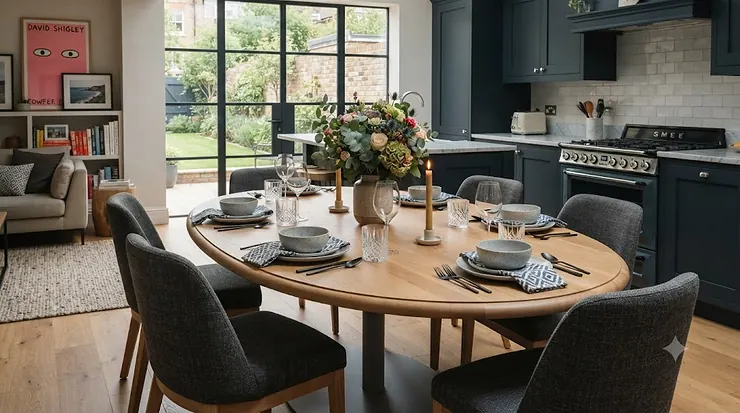
There’s a particular kind of confidence that comes from a table that doesn’t wobble, doesn’t fold, doesn’t have a leaf tucked away in the airing cupboard gathering dust. A fixed dining table is exactly that: one solid, unmoving surface that’s ready for breakfast, homework, laptop work and Sunday roasts without any assembly required. If you’ve spent the last twenty minutes scrolling through extending mechanisms and butterfly leaves wondering why it all feels so complicated, you’re not alone, and honestly, you don’t need any of it.
So what is a fixed dining table? It’s a non-extending dining table with a permanently sized tabletop and a static frame — no sliding leaves, no folding sections, no moving parts to wear out. It’s built as one complete unit from day one, which is exactly why solid wood construction suits the format so well.
This guide walks through seven genuinely available solid dining table options on amazon.co.uk, spanning tight budgets to properly premium territory, with honest analysis of specs, aggregated review sentiment and where each one earns its keep. We’ll also cover how sturdy dining furniture is actually built, what separates a permanent dining set that lasts fifteen years from one that wobbles by Christmas, and the practical questions people ask before committing. No fluff, no invented testimonials — just useful, sourced guidance for a piece of furniture you’ll likely own for a decade or more.
Quick Comparison Table
Before diving into the full reviews, here’s a snapshot of how the seven tables stack up against each other on size, material and who they suit best.
| Table | Material | Seats | Price Range | Best For |
|---|---|---|---|---|
| Furniturebox Lynton | Solid rubberwood, oak stain | 6 | around £270-£290 | Budget-conscious families |
| Argos Home Ashdon | Solid pine, oak stain | 4 | around £130-£160 | Small kitchens & flats |
| Corona Waxed Pine | Solid Mexican pine | 4-6 | around £150-£220 | Rustic farmhouse look |
| Julian Bowen Boden | Oak-finish hardwood | 4-6 | around £150-£200 | Everyday all-rounder |
| Julian Bowen Hockley | Solid oak top, rubberwood frame | 6-8 | around £350-£450 | Large family gatherings |
| Julian Bowen Coxmoor | Solid white oak | 4 | around £300-£400 | Genuine oak butcher-block fans |
| Habitat Trezy | Solid oak | 6 | around £600-£750 | Premium, design-led buyers |
Looking at the spread, the story here is really about weight and wood species doing the heavy lifting on price. The Habitat Trezy sits at nearly three times the cost of the Argos Home Ashdon, and a decent chunk of that gap comes down to the 49kg of solid oak in the Trezy versus the Ashdon’s lightweight 18kg pine frame — more timber, more machining, more cost. If your household needs a genuinely permanent dining set that won’t budge when a toddler leans on it, weight is actually a useful proxy for sturdiness, which is worth bearing in mind as you read on.
💬 Just one click — help others make better buying decisions too!😊
Top 7 Fixed Dining Tables: Expert Analysis
1. Furniturebox Lynton Oak Effect Dining Table — best budget six-seater fixed table
The Furniturebox Lynton proves you don’t need to spend big to get a table that seats six comfortably. Built from 100% solid rubberwood with an oak-effect stain, it skips the veneer shortcuts entirely and gives you an honest slab of timber under that light, contemporary finish. The mildly angled legs give it a soft mid-century edge, while the straight-lined top keeps things simple enough to suit a farmhouse kitchen or a boho-styled dining nook without looking out of place in either. Reviewers consistently report that it’s sturdy for the price point, easy to assemble solo, and holds up well to daily family use — aggregated ratings sit in the 4.8-out-of-5 range across more than fifty verified purchases on B&Q’s marketplace listing, which is a genuinely strong showing for something this affordable. What most buyers overlook about this model is that it’s also available in a smaller size and a darker walnut stain, so if the “large” dimensions don’t suit your room, Furniturebox hasn’t left you stuck with one option.
Pros:
- ✅ Solid rubberwood, not a veneer over MDF
- ✅ Seats six without stretching the budget
- ✅ Strong aggregated review scores (4.8+/5)
Cons:
- ❌ Flat-pack assembly required on delivery
- ❌ Oak-effect stain, not genuine oak grain
At around £270-£290, this is one of the strongest value plays in the whole line-up — check current pricing before you buy, as furniture prices shift more often than you’d expect.

2. Argos Home Ashdon Solid Pine Dining Table — lightest compact option for small spaces
If your dining area is a corner of the kitchen rather than a dedicated room, the Argos Home Ashdon solid pine table is worth a proper look. At just 18kg it’s genuinely light to reposition, yet it’s still built from solid pine rather than a lightweight composite, which is a distinction that matters more than people realise. Based on the spec comparison with heavier oak alternatives, this table trades some long-term scuff resistance for portability — pine is a softer wood than oak, so it marks more easily, but it’s also far easier to move when you’re rearranging a small flat. Aggregated reviews mention it’s “solid and attractive” and note that buyers downsizing from heavier antique oak tables found it a welcome, manageable replacement. FSC-certified sourcing is confirmed on the product listing too, so if responsibly managed forestry matters to your purchase, that’s a genuine point in its favour — you can read more about how FSC certification works for UK furniture if you want the full picture.
Pros:
- ✅ Genuinely lightweight at 18kg — easy to move
- ✅ Solid pine, not composite or MDF
- ✅ FSC-certified sourcing confirmed
Cons:
- ❌ Seats only four, not ideal for larger families
- ❌ Pine marks more easily than oak
Prices tend to sit in the £130-£160 range at the time of research, making this one of the most accessible genuinely solid options on this list.
3. Corona Solid Pine Waxed Dining Table — best rustic farmhouse character on a budget
The Corona Solid Pine Waxed Dining Table leans hard into a distressed, Mexican-style waxed finish that’s been a fixture of budget British dining rooms for decades, and there’s a reason the style has stuck around. What most buyers overlook about the Corona range is that the character marks — the slightly uneven wax, the visible grain variation — aren’t flaws so much as the entire point of the design; this is a table built to look lived-in from day one. Reviewers consistently note the finished product feels sturdy once assembled, though a notable minority flag that assembly itself can be fiddly, with blunt screws and undersized pre-drilled holes causing frustration for some buyers. That’s a legitimate practical concern worth budgeting extra patience for, rather than something to gloss over. On the upside, once built, owners describe it as genuinely solid and good value, and the waxed finish is forgiving of everyday marks in a way a lacquered surface simply isn’t.
Pros:
- ✅ Solid pine construction throughout
- ✅ Distinctive rustic character, not generic
- ✅ Waxed finish hides everyday marks well
Cons:
- ❌ Some reviewers report fiddly assembly
- ❌ Requires occasional re-waxing to maintain finish
Expect to pay somewhere in the £150-£220 range depending on size and retailer, with the 5ft version sitting toward the lower end.
4. Julian Bowen Boden Oak Dining Table — best all-rounder for everyday family meals
The Julian Bowen Boden rectangular table earns its “all-rounder” tag through sheer unfussiness — a classic oak finish, clean lines, and a tabletop generous enough for everyday meals without dominating a mid-sized dining room. At 150cm wide and 90cm deep, on paper this means comfortable seating for four with room to squeeze in a fifth and sixth at a push, which several reviewers confirm in practice. What the spec sheet won’t tell you, but reviewers note repeatedly, is how straightforward the build actually is: several buyers mention completing assembly in minutes with nothing more than screwing on the legs, which is refreshingly low-drama for flat-pack furniture. Reviewers consistently report a wipeable, durable top that copes well with daily family use, and more than one mentions finding it notably cheaper through Amazon than other retailers stocking the same range — worth a quick price comparison before you commit either way.
Pros:
- ✅ Genuinely quick, simple self-assembly
- ✅ Durable, easy-wipe oak-finish top
- ✅ Comfortably seats four to six
Cons:
- ❌ Oak finish rather than fully solid oak throughout
- ❌ A snug fit for six around the standard top
The Julian Bowen Boden typically sits in the £150-£200 range, and reviewers frequently flag it as good value against comparably sized rivals — always worth checking current pricing across a couple of retailers first.
5. Julian Bowen Hockley Solid Oak Trestle Table — best for large farmhouse-style gatherings
Trestle-leg tables have a rustic, almost communal quality to them, and the Julian Bowen Hockley leans into that with a 25mm solid oak top sitting over sturdy trestle-style legs finished in black. Based on the spec comparison with the other tables here, the Hockley is the heaviest of the mid-range picks at 42kg, and that mass genuinely matters: a heavier table sits more solidly under a group of people leaning on it during a long dinner, resisting the wobble that lighter flat-pack designs are prone to. At 190cm long and 90cm deep, it comfortably seats six with room to squeeze in extras for a proper family gathering, which is exactly the audience this design is aimed at. Independently verifiable customer review data for this specific model is limited at the time of writing, so rather than invent sentiment that doesn’t exist, it’s worth judging this one primarily on its build spec — a genuine 25mm solid oak top is a meaningfully thicker, more substantial surface than the 18-20mm veneered tops common at this price point, and that thickness translates directly into resistance against everyday knocks.
Pros:
- ✅ Genuine 25mm solid oak tabletop
- ✅ Farmhouse trestle-leg design seats 6-8
- ✅ Heavy 42kg build resists everyday wobble
Cons:
- ❌ Limited verified customer review data available
- ❌ Bulkier footprint needs a proper-sized room
At around £350-£450, the Hockley sits mid-pack on price but arguably over-delivers on tabletop thickness for that money — worth checking current stock and pricing given the range’s popularity.
6. Julian Bowen Coxmoor Solid Oak Dining Table — best genuine butcher-block oak top
The Julian Bowen Coxmoor is built entirely from solid white oak with a butcher-block-style top and an oiled finish that lets the natural grain do the talking. Reviewers consistently praise the appearance — the mix of oak shades across the block-jointed top reads as genuinely characterful rather than uniform and manufactured, and several owners specifically call out how sturdy and compact the legs feel compared with other tables that jut out awkwardly. A common complaint in user reviews, though, is inconsistency between individual units: some buyers report receiving tables with visibly more knots or a darker, patchier oil finish than others, suggesting quality control varies more than you’d want at this price. On paper this means it’s worth inspecting your delivery promptly and raising any concerns quickly, since Amazon’s replacement process is generally reported as smooth when issues do arise. What’s not in dispute is the honesty of the construction: this is “all oak,” as one reviewer put it, right down to the block structure beneath the surface, and assembly is reported as genuinely quick, often around 15 minutes for one person.
Pros:
- ✅ Solid white oak throughout, not veneer
- ✅ Distinctive butcher-block visual character
- ✅ Fast, straightforward self-assembly
Cons:
- ❌ Some reported inconsistency in wood grade
- ❌ Oiled finish needs periodic reapplication
Pricing typically runs £300-£400 depending on size variant, positioning the Coxmoor as a genuine mid-premium solid oak option rather than an oak-effect compromise.
7. Habitat Trezy Solid Oak Dining Table — best premium sculptural design
At the top of this line-up sits the Habitat Trezy, an in-house Habitat design built from solid oak with distinctive large cutout legs that bring an organic, almost architectural quality to the piece. Weighing a substantial 49kg, this is by a distance the heaviest table on this list, and that’s not incidental — it reflects a genuinely thick, dense construction rather than a lightweight frame dressed up to look premium. Here’s what to weigh up before committing: independently verifiable review volume specifically for the Trezy is thin at the time of writing, which is worth flagging honestly rather than papering over with invented sentiment. What can be verified from the product specification is a two-year manufacturer’s guarantee (longer than most of the budget options here), FSC-certified sourcing, and dimensions — 150cm by 85cm — that comfortably seat six without feeling cramped. For buyers prioritising design pedigree and are prepared to pay for genuinely substantial solid oak construction, this is the pick; for anyone chasing pure value, one of the mid-range Julian Bowen options will likely deliver more table for the money.
Pros:
- ✅ Substantial 49kg solid oak construction
- ✅ Distinctive, design-led sculptural legs
- ✅ Two-year manufacturer’s guarantee included
Cons:
- ❌ Premium price relative to specification gains
- ❌ Limited independent review volume currently available
Expect to pay in the £600-£750 range at the time of research, reflecting the material weight and in-house design work rather than any brand markup alone.
Practical Usage Guide: Setting Up Your Fixed Dining Table
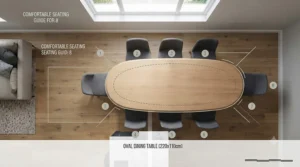
Getting a permanent dining set right starts before the box is even opened. Measure your room properly first: allow roughly 90-100cm of clearance on every side so chairs can be pulled fully out and people can walk behind seated diners without an awkward sideways shuffle. Most flat-pack fixed tables arrive with the legs detached, so lay the tabletop face-down on a soft blanket or old duvet before attaching them — this single step prevents the surface scratches that show up in a disappointing number of “damaged on arrival” complaints across review sections. Once assembled, don’t skip checking every fixing is properly tightened; a slightly loose leg bolt is the single most common cause of the wobble people wrongly blame on the table itself rather than the assembly.
For the first thirty days, resist the urge to load the table with heavy decorative items or lean your full weight on one corner while it settles — solid wood, unlike engineered board, continues to acclimatise to your home’s humidity for a few weeks after unboxing. A common first-30-days mistake is skipping coasters and placemats because “it’s proper wood, it’ll be fine” — it won’t, at least not for hot mugs and condensation rings on an oiled or waxed finish. Wipe with a barely damp cloth rather than a wet one, and if your table has an oiled finish like the Julian Bowen Coxmoor, plan on reapplying food-safe oil every six to twelve months to keep the surface protected and looking its best.
Real-World Scenarios: Which Table Suits Your Household
Picture a young couple in a two-bedroom flat with a galley kitchen — that’s the Argos Home Ashdon territory, where 18kg of movable solid pine beats a heavier oak table that’s a pain to shift every time the sofa bed comes out for guests. Now picture a family of five in a semi-detached house, hosting grandparents most Sundays: the Furniturebox Lynton or Julian Bowen Hockley both make more sense here, with genuine six-to-eight seat capacity and enough structural weight to survive years of homework, spilled juice and the occasional standing-on-a-chair incident. Finally, picture a design-conscious couple in a converted period property who want the dining table to function as the room’s visual anchor — that’s exactly the brief the Habitat Trezy is built for, where the sculptural leg design and premium solid oak justify the higher spend because the table is doing double duty as a design statement, not just a surface to eat off.
Budget, household size and how often you entertain should genuinely drive this decision more than aesthetics alone. A stunning table that’s too small for your real gathering size, or too heavy to ever reposition in a small flat, will frustrate you within months regardless of how good it looks in the listing photos.
Problem to Solution: Fixing Common Fixed Dining Table Issues
Problem: The table wobbles on an uneven floor. Solution: adjustable floor glides, available cheaply as an add-on purchase, screw into the base of most table legs and let you fine-tune each corner independently rather than shimming with folded card.
Problem: Watermarks or heat rings have appeared on the surface. Solution: on oiled finishes like the Julian Bowen Coxmoor, light sanding with fine-grit paper followed by a fresh coat of food-safe oil will usually lift most marks; on a stained or lacquered finish like the Furniturebox Lynton, this is harder to reverse, which is exactly why coasters matter from day one.
Problem: Scratches from moving chairs across the top edge. Solution: felt pads on chair legs prevent most of this, and it’s a five-minute fix that pays for itself many times over across the table’s lifespan.
Problem: The table feels too small once family size grows. Solution: this is the genuine trade-off of buying fixed over extending — if you suspect your seating needs will grow within a couple of years, size up now rather than assuming you’ll simply squeeze people in later.
Problem: Assembly instructions are unclear or fixings are missing. Solution: photograph the parts against the instruction diagram before starting, and contact the seller immediately if anything’s short — most of the brands featured here, including Julian Bowen and Furniturebox, have a track record of replacing missing parts quickly when contacted directly.
Buyer’s Decision Framework
If your household seats four or fewer daily and space is tight, choose a compact solid pine table like the Argos Home Ashdon because portability and footprint matter more than seating headroom you’ll rarely use. If you regularly host six or more and want a table that shrugs off years of family use without complaint, choose a heavier solid oak design like the Julian Bowen Hockley or Furniturebox Lynton, because structural mass is doing real work against everyday wobble. If budget is genuinely secondary to design and you want a piece that functions as the room’s centrepiece, choose the Habitat Trezy, because premium solid oak construction and distinctive legs are exactly what that higher price is buying. And if you’re still torn between a fixed table and something that extends, ask yourself honestly how often your seating needs actually fluctuate — if the answer is “rarely,” a fixed table will almost always outlast an extending mechanism built with moving parts.
How to Choose a Fixed Dining Table
- Measure the room, not just the table. Allow clearance on all sides for chairs and walking space — a table that looks right in photos can dominate a smaller room.
- Decide on wood species before finish. Solid oak resists everyday knocks better than solid pine, but pine is lighter and often more affordable — match the wood to your household’s daily wear.
- Check the tabletop thickness in the spec sheet. Anything from 25mm upwards, like the Julian Bowen Hockley, tends to feel noticeably more substantial underfoot and under load than thinner 18-20mm tops.
- Weigh up finish type against maintenance appetite. Oiled finishes look wonderful but need reapplication; lacquered or stained finishes are lower-maintenance but harder to repair if damaged.
- Confirm genuine seating capacity, not marketing capacity. A table “seating six” on paper can feel cramped in practice — check width-per-person figures where listed.
- Read aggregated review sentiment, not just star ratings. A 4.8-star average with fifty reviews tells you more than a 5-star average with three.
- Factor in delivery and assembly realities. Solid wood tables are heavy — check whether delivery is kerbside-only and whether you’ll need a second pair of hands to assemble.
Common Mistakes When Buying a Fixed Dining Table
The single most frequent mistake buyers make is anchoring on a table’s listing photo before checking its actual footprint against their room. A rectangular fixed dining table that reads as “cosy farmhouse” in a styled photoshoot can swallow a third of a small dining area in reality. The second common mistake is assuming “solid wood” and “solid wood construction” always mean the entire piece is genuine timber — some listings use the phrase to describe only the legs or frame, with an MDF or veneer top doing the visible work. Reading the full specification, not just the headline material claim, avoids this trap.
A third mistake is underestimating how much a fixed table’s permanence actually matters for smaller households: buying the biggest table available “to be safe” often backfires, since a permanent dining set can’t shrink back down the way an extending table can when it’s just you and a partner most evenings. Finally, plenty of buyers skip checking the aggregated review sentiment around assembly difficulty, then find themselves frustrated on delivery day by fixings that don’t quite match the instructions — a problem that’s avoidable simply by reading a handful of recent reviews before ordering.
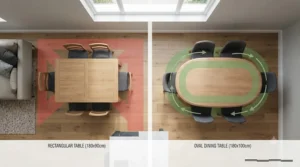
Fixed Dining Table vs Extending Dining Table
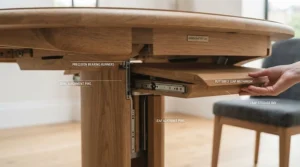
The core trade-off is straightforward: a fixed dining table gives you structural simplicity and typically better long-term stability, while a non-extending dining table by definition can’t grow to accommodate a bigger gathering without bringing in a second table. Extending tables solve the flexibility problem with sliding leaves or butterfly mechanisms, but those moving parts are also the first thing to develop play or misalignment over years of use — several of the extending tables researched for comparison in this space showed exactly that pattern in aggregated review complaints, with reviewers noting a “small degree of play” in flip-top or leaf mechanisms after a year or two of regular use.
For a household whose seating needs are genuinely stable — the same four, five or six people, week in, week out — a fixed table is usually the better long-term investment, because you’re not paying for hardware you’ll rarely use and there’s simply less that can go wrong mechanically over a decade of ownership. For households whose numbers swing wildly between a quiet Tuesday and a twelve-person Christmas dinner, an extending design earns its keep despite the added complexity. Sturdy dining furniture, in either category, ultimately comes down to the same fundamentals: solid materials, honest joinery, and a design that isn’t trying to do more than the price point genuinely supports.
Solid Wood Construction: What It Means for Long-Term Value
Solid wood construction isn’t just a marketing phrase — it describes furniture built from continuous timber all the way through, rather than a thin veneer glued over composite board. The practical upshot is repairability: a scratch or scorch mark in a genuinely solid oak top like the Julian Bowen Coxmoor can usually be sanded back and re-oiled, while the same damage on a veneered surface often can’t be fixed without replacing the whole panel. Oak in particular has a long track record in British furniture-making precisely because of this durability — it’s the same hardwood that’s supported British woodland craftsmanship for centuries, prized historically for exactly the strength and resilience that makes it a sound choice for a table that’s expected to last.
The trade-off, as covered earlier with the Habitat Trezy and Julian Bowen Hockley, is weight and cost — genuine solid wood construction requires more raw timber and more machining time than a veneered alternative, and that shows up directly in the price. Total cost of ownership tends to favour solid construction over a long enough timeframe, though: a well-maintained solid oak table can realistically last twenty-plus years and be refinished multiple times along the way, while a veneered table with a similar upfront saving typically needs full replacement once the surface layer is damaged beyond repair, often within five to ten years of regular use.
Sturdy Dining Furniture for Family Life
Sturdy dining furniture earns that label through a combination of factors that go beyond just “is it heavy.” Joint construction matters enormously — screwed and doweled leg joints, visible on tables like the Julian Bowen Boden, distribute weight more evenly than simple glued butt joints. Tabletop thickness matters too, which is why the 25mm oak top on the Julian Bowen Hockley feels noticeably more resistant to flex under load than thinner alternatives. And base design plays a role most buyers don’t consider until they’ve lived with a table for a year: four straight legs are simple and cheap, but a trestle or cross-frame base, like that on the Hockley, typically resists the side-to-side wobble that develops in simpler leg designs after repeated use.
For families with young children specifically, rounded or gently chamfered table edges reduce the risk of bumps, and a lower centre of gravity — again, favouring heavier tables like the Hockley or Trezy over lighter budget pine options — means less risk of tipping if a toddler pulls themselves up using the tabletop edge. None of this means budget options are automatically unsuitable for family life; the Furniturebox Lynton, for instance, earns consistently strong review sentiment specifically from family buyers despite its lower weight, largely because the angled leg design distributes load well for its price point.
Long-Term Cost & Maintenance
Thinking in cost-per-year rather than upfront price changes the calculation considerably. A Argos Home Ashdon at around £130-£160 that needs replacing within eight years works out to roughly £16-£20 a year. A Habitat Trezy at £600-£750 that genuinely lasts twenty years, refinished once along the way for perhaps £50-£80 in oil and sandpaper, works out closer to £33-£41 a year — more expensive overall, but not dramatically so once the maths accounts for longevity, and that’s before factoring in resale or hand-me-down value that solid oak furniture often retains far better than budget pine.
Maintenance costs themselves are modest across the board: food-safe oil for an oiled finish runs a few pounds per application, felt furniture pads cost next to nothing, and a proper wood polish for lacquered finishes lasts most households a year or more per bottle. The genuine long-term cost risk sits with structural failure rather than surface wear — a wobbling leg joint that’s ignored for years can eventually crack, turning a repairable problem into a replacement one. Catching and tightening loose fixings every few months is the single cheapest maintenance habit that meaningfully extends any fixed dining table’s working life.
Safety, Sustainability & Sourcing Guide
Solid wood dining tables themselves sit outside the scope of the UK’s upholstered furniture flammability rules, since those regulations specifically target filling materials and covers rather than solid timber frames and tabletops — but if you’re pairing your table with upholstered dining chairs, it’s worth knowing those chairs do need to comply with the Furniture and Furnishings Fire Safety Regulations, which the UK government has been actively reforming through 2026 to reduce reliance on chemical flame retardants while maintaining safety standards.
On sourcing, look for FSC certification on the product listing where sustainability matters to your purchase — both the Argos Home Ashdon and Habitat Trezy confirm this on their specifications, meaning the timber can be traced back to responsibly managed forests rather than unverified “sustainable” claims that some listings use more loosely. Given that most tree species used in UK furniture manufacturing are actually imported, that traceability is genuinely meaningful rather than a box-ticking exercise, and it’s a detail worth checking before you buy if it factors into your decision at all.
Features That Actually Matter (And Those That Don’t)
Tabletop thickness, joint type and overall weight genuinely predict how a fixed dining table will hold up — these are the specs worth reading carefully before you buy. Wood species matters too, but mostly for maintenance style and aesthetic rather than raw durability; a well-built pine table can outlast a poorly-built oak one despite oak’s inherent hardness advantage. What matters far less, despite how prominently it’s often marketed, is the exact finish colour or “designer collection” naming — a Scandi-toned oak table and a traditional golden oak table are frequently built from identical underlying construction, with the colour difference coming down to nothing more than the stain applied at the factory.
Similarly, elaborate leg carving or decorative detailing rarely correlates with structural quality, and can sometimes indicate the opposite, since intricate shaping is often applied to composite or veneered legs that wouldn’t hold fine detail if cut from solid timber. If a listing leans heavily on visual flourish language without mentioning tabletop thickness, joint construction or overall weight, that’s usually worth reading as a gap in the spec sheet rather than an oversight.
Frequently Asked Questions
❓ What is a fixed dining table?
❓ Is a fixed dining table better than an extending one?
❓ What is the best wood for a solid dining table?
❓ How long does solid wood dining furniture actually last?
❓ Do fixed dining tables need special care?
Conclusion
A fixed dining table isn’t the flashiest purchase you’ll make for your home, but it’s arguably one of the most-used pieces of furniture you’ll own, and getting it right pays off every single day for years. Whether that means the budget-friendly practicality of the Argos Home Ashdon, the family-ready heft of the Julian Bowen Hockley, or the design-led investment of the Habitat Trezy, the right choice really comes down to matching genuine household size, available space and long-term budget rather than chasing the most striking listing photo. Solid wood construction, honest joinery and a tabletop thick enough to shrug off years of family life will always matter more than surface styling — get those fundamentals right and the rest of the decision becomes a lot easier.
✨ Don’t Miss These Exclusive Deals!
🔍 Take your dining room search further with the seven solid wood tables covered above. Click through on any highlighted pick to check current pricing and availability, and find the permanent dining set that’ll anchor family meals for years to come!
Recommended for You
- Best Extending Dining Table 2026: 7 Top Picks Ranked
- Cabin Bed vs Mid Sleeper 2026: 7 Real Picks Compared (UK)
- Cabin Bed With Desk UK: 7 Brilliant Picks for 2026
Disclaimer: This article contains affiliate links. As an Amazon Associate, I earn from qualifying purchases. If you purchase products through these links, we may earn a small commission at no additional cost to you.
✨ Found this helpful? Share it with your friends! 💬🤗
