
In This Article
Right, let’s be honest about something first: buying dining chairs is one of those jobs that sounds simple until you actually try it. You open a shopping app, type in a search, and within seconds you’re drowning in a sea of nearly identical wooden legs and beige upholstery, all somehow claiming to be “the perfect addition to any home.” Dining chairs for every budget is a genuinely useful way to think about the problem, because the honest truth is that price alone tells you almost nothing about comfort, durability, or whether a chair will still be standing up to Sunday roasts in five years’ time.
So what does it actually mean? Dining chairs for every budget refers to a curated spread of seating options — from sub-£100 sets to premium solid oak pieces — chosen specifically so shoppers with different budgets, room sizes and lifestyles can find a chair that fits their needs without overspending or under-buying. It’s not about finding the cheapest chair full stop; it’s about finding the right chair for your money.
Over the course of this guide, we’ve dug through real product listings, genuine specifications and aggregated customer sentiment from UK retailers to bring you seven chairs worth considering, plus the buying knowledge that usually only comes after you’ve made a few expensive mistakes. Good sitting posture matters more than most people realise too — NHS guidance on seating and ergonomics notes that poor posture in sitting can aggravate back and neck pain, which is one more reason not to just grab the first chair that looks nice in a thumbnail. Whether you’re kitting out a first flat on a shoestring or finally treating your dining room to something with a bit of presence, there’s a sensible option ahead — and a clear-eyed explanation of why it earns its place.
Quick Comparison Table
| # | Product | Tier | Price Range | Material | Best For |
|---|---|---|---|---|---|
| 1 | VASAGLE LDC094B01 | Budget | Under £90 for a pair | Steel frame, particleboard | Renters and quick refreshes |
| 2 | SONGMICS LDC087CZ01 | Budget–mid | £80-£130 | Velvet, metal legs | Small spaces wanting armrests |
| 3 | COLAMY Modern Dining Chairs | Budget | £90-£140 for a set | Rubberwood, fabric | Families needing multiples |
| 4 | Julian Bowen Ibsen | Mid-range | £110-£170 for a pair | Rubberwood, light oak finish | Shaker-style kitchens |
| 5 | Hallowood Furniture Aston | Mid-range | £120-£180 for a pair | Solid wood, fabric pad | Traditional dining rooms |
| 6 | Julian Bowen Coxmoor | Premium | £180-£260 for a pair | Solid white oak, faux leather | Long-term investment buyers |
| 7 | VASAGLE EKHO UKDC162K101 | Premium | £160-£240 for a pair | Steel frame, PU leather | Statement seating |
Looking at the spread above, there’s a clear jump in build quality between the entry-level steel-and-particleboard chairs and the solid oak pieces further down the table, and that jump is exactly what you’re paying for. The budget and budget-mid options are perfectly serviceable for renters, students or anyone testing out a layout before committing, while the mid-range and premium picks reward buyers who plan to keep their chairs for a decade or more. Notice, too, that “premium” here doesn’t always mean “wood” — the VASAGLE EKHO proves that a well-specified upholstered chair can compete with solid oak on presence, even if the long-term durability story is different.
💬 Just one click — help others make better buying decisions too!😊
Top 7 Dining Chairs for Every Budget: Expert Analysis
1. VASAGLE LDC094B01 — sturdy industrial style on a tight budget
The rustic brown and black colourway on this VASAGLE set gives it a warehouse-café look that punches well above its price point. Built around a steel frame with a particleboard seat and back panel, this chair is rated to a 100kg static weight capacity per chair, and the 105-degree curved backrest is angled specifically to reduce the “bolt upright” stiffness that cheaper chairs often suffer from. At 44cm seat height and an overall footprint of 43.5 x 43 x 95.5cm, it’s proportioned for a standard UK dining table without needing any adjustment.
Based on the spec comparison with similarly priced alternatives, this is a genuinely sensible pick for anyone who wants two matching chairs without committing serious money — students, renters, or anyone kitting out a breakfast nook rather than a formal dining room. Reviewers consistently report that assembly is straightforward and that the finished chairs look more expensive than their price suggests, with several UK buyers specifically praising how well they “match beautifully” alongside existing dining sets and describing them as comfortable and sturdy once built.
The particleboard construction is the trade-off here: it won’t take the knocks of a rambunctious household forever, but for the price, that’s an acceptable compromise rather than a dealbreaker. Expect to pay under £90 for the pair, which represents strong value for anyone prioritising style-per-pound over decade-long durability.
Pros:
- ✅ Angled backrest genuinely improves sitting comfort
- ✅ Straightforward flat-pack assembly reported by buyers
- ✅ Industrial look punches above its price point
Cons:
- ❌ Particleboard less durable than solid wood long-term
- ❌ Limited colourway choice compared to rivals
2. SONGMICS LDC087CZ01 — best budget pick with proper armrests
Armrests are the detail most budget dining chairs skip entirely, which is exactly why this SONGMICS velvet armchair stands out. The metal-legged frame supports a genuinely generous 120kg maximum load, and the green and ink-black colourway gives it a slightly more design-led look than the average budget upholstered chair. Velvet upholstery at this price point is unusual, and it changes the whole feel of a dining setup — this isn’t just a seat, it reads more like a proper armchair that’s been sized for the table.
What most buyers overlook about armed dining chairs is how much easier they make sitting down and standing up, particularly for older relatives or anyone recovering from a hip or knee procedure — the armrests take real weight off the knees during that transition. Based on the metal-leg construction and the load rating, this chair is best suited to households wanting a slightly elevated look without stepping up to solid wood pricing, or for anyone furnishing a smaller dining space where two or four statement chairs matter more than a full matching set of eight.
Velvet does need a little more care than wipeable synthetic leather — spills should be blotted rather than rubbed, and a fabric protector spray is a sensible investment on day one. Prices typically sit in the £80-£130 range depending on quantity ordered, putting it firmly in “affordable upgrade” territory rather than true rock-bottom budget.
Pros:
- ✅ Armrests included — rare at this price tier
- ✅ High 120kg load rating for the price
- ✅ Velvet finish looks more premium than cost suggests
Cons:
- ❌ Velvet requires more careful spill maintenance
- ❌ Metal legs can mark hard flooring without pads
3. COLAMY Modern Dining Chairs — best value for furnishing a full table
Furnishing six or eight dining spots without blowing the budget is where this COLAMY set earns its keep. Built with a sturdy rubberwood frame and wooden legs, topped with an upholstered fabric seat and a gently curved backrest, it’s designed to look considerably more expensive than a typical bulk-buy chair. The soft cushion seat adds a layer of comfort that hard-seated budget alternatives simply don’t offer, which matters more than people expect once you’re sitting through a two-hour family dinner.
Here’s what the spec sheet won’t tell you outright: rubberwood, sometimes called parawood, is a genuinely solid choice for budget furniture because it’s a dense hardwood by-product of rubber plantations, meaning it’s both sturdier than particleboard and more sustainably sourced than many people assume — worth checking listings for Forest Stewardship Council certification if sustainable sourcing matters to you. This chair suits families needing to furnish an entire table on one budget line, cafés or home offices wanting a cohesive look across multiple seats, and first-time buyers who’d rather spend on the table itself.
Coverage tends to run in sets rather than single units, so factor that into your total spend — but per-chair cost still lands well within budget territory, typically £90-£140 for a set once split across the household.
Pros:
- ✅ Rubberwood frame sturdier than particleboard rivals
- ✅ Cushioned seat adds real comfort at low cost
- ✅ Cohesive look ideal for larger tables
Cons:
- ❌ Sold primarily in multi-packs, less flexible
- ❌ Fabric colour options more limited than premium ranges
4. Julian Bowen Ibsen — best shaker-style pick for classic kitchens
Julian Bowen has built a solid reputation in UK furniture retail, and the Ibsen dining chair shows why — it’s a contemporary take on the classic shaker silhouette, built from rubberwood with a light oak lacquered finish and a fabric-padded seat. At 94cm high, 55cm wide and 45cm deep, it’s sized to pair specifically with the matching Julian Bowen Ibsen dining table, though it works equally well alongside other light oak or painted-wood tables already in a UK dining room.
What separates this from cheaper wooden chairs is the lacquered finish, which resists scuffing and everyday wear noticeably better than raw or lightly stained wood — the sort of detail that only becomes obvious after a year of daily use rather than on day one. Reviewers consistently describe the chairs as nice-looking and easy to assemble, which for flat-pack furniture is honestly half the battle won. Based on the shaker-style design, this chair suits anyone furnishing a farmhouse, Scandi-lite or classic country kitchen where a slightly softer, more traditional silhouette fits better than sharp modern lines.
The fabric seat pad is a practical middle ground between hard wood and full upholstery — comfortable enough for long meals without the maintenance demands of velvet or leather. Expect a price range of roughly £110-£170 for a pair, positioning it as an accessible step up from pure budget seating.
Pros:
- ✅ Lacquered finish resists everyday scuffs well
- ✅ Classic shaker style suits multiple kitchen styles
- ✅ Fabric pad balances comfort and easy care
Cons:
- ❌ Ships flat-packed, so assembly time required
- ❌ Light oak finish shows watermarks if not wiped promptly
5. Hallowood Furniture Aston — best mid-range all-rounder
The Aston pairs a solid wooden frame with a warm cream fabric seat pad, landing squarely in that sweet spot where a chair looks properly grown-up without tipping into premium pricing. Hallowood Furniture has built a name specifically around solid wood dining pieces for the UK market, and the Aston’s light oak tone is versatile enough to sit alongside oak, walnut or painted dining tables without clashing.
Based on the solid wood construction, this chair should outlast the particleboard and MDF alternatives further down the budget scale by a meaningful margin — solid timber simply handles repeated stress at the joints better over years of use, provided it isn’t left somewhere damp. The warm cream seat pad softens what could otherwise be a fairly formal-looking chair, making it a sensible pick for households wanting something that photographs well for a dinner party but doesn’t feel precious about everyday family meals.
What most buyers overlook when comparing solid wood chairs is joint construction — mortise-and-tenon or dowel joints, properly glued, are what actually determines whether a chair wobbles after eighteen months of use, far more than the timber species itself. This is a strong option for anyone furnishing a proper dining room rather than a casual eating nook, expect to pay in the £120-£180 range for a pair, which for solid wood construction represents genuinely fair value against comparable pieces from bigger-name UK retailers.
Pros:
- ✅ Solid wood frame built for long-term durability
- ✅ Cream fabric pad suits formal and casual settings
- ✅ Light oak tone versatile across table finishes
Cons:
- ❌ Sits at the upper end of mid-range pricing
- ❌ Fabric colour choice narrower than budget rivals
6. Julian Bowen Coxmoor — best premium pick for long-term investment
Solid white oak with a durable oiled finish is where the Coxmoor separates itself from almost everything else on this list — this is proper hardwood construction, not a veneer or a rubberwood substitute dressed up to look the part. The padded brown faux leather seat adds a contemporary, slightly masculine edge that works particularly well in open-plan kitchen-diners with an industrial or Scandinavian aesthetic, and the wider Coxmoor range includes co-ordinating tables and storage, so buyers can build out a full matching set over time.
Here’s what an oiled finish means in practice that a lacquered chair can’t offer: minor scratches and dents can actually be sanded and re-oiled at home rather than requiring a full refinish, extending the realistic lifespan of the chair by years. Based on the solid oak build and finish quality, this is the chair for buyers thinking in decades rather than a five-year furniture cycle — households who’ve been burned before by chairs that wobbled or split within a couple of years, and who’d rather pay more once than replace twice.
Faux leather is a deliberate practicality choice here too: it wipes clean far more easily than fabric or genuine leather, without the higher price tag of the latter or the maintenance headache of the former. Pricing typically falls in the £180-£260 range for a pair, which sits at the upper end of what most UK households would consider for dining seating — but the oak frame genuinely justifies it for anyone planning to keep these chairs for the long haul.
Pros:
- ✅ Solid oak construction built to outlast lacquered rivals
- ✅ Oiled finish allows at-home repair of scuffs
- ✅ Faux leather seat wipes clean easily
Cons:
- ❌ Highest price point among the seven picks
- ❌ Heavier chairs, less practical if you move often
7. VASAGLE EKHO UKDC162K101 — best statement chair for design-led dining rooms
This is VASAGLE’s design-forward EKHO collection, and it shows — segmented backrests with quilted stitching sit on a matte black steel frame, finished with a full, thick cushion filled with high-resilience sponge that’s engineered specifically not to sag with regular use, unlike the cheaper foam found in entry-level upholstered chairs. It’s the sort of chair that photographs beautifully for an interiors feed, but the build quality behind that look is more substantial than the styling alone might suggest.
What the spec sheet won’t tell you, but the construction implies, is that high-resilience sponge costs meaningfully more to manufacture than standard foam, and it’s precisely the component that determines whether a cushion still feels supportive after two years rather than developing a permanent dip where you sit. Based on the matte black steel frame and quilted PU leather finish, this chair suits buyers who want a genuinely photogenic dining room — dark, moody colour schemes, mid-century or contemporary interiors, or anyone replacing a mismatched hand-me-down set with something that finally looks intentional.
PU leather offers most of the wipe-clean practicality of faux leather elsewhere on this list, while the quilted detailing lifts the visual interest considerably above a plain upholstered panel. Typical pricing runs £160-£240 for a pair, putting it in direct competition with the Coxmoor above — the choice between the two really comes down to whether you want oak’s decade-plus durability or the EKHO’s more contemporary, statement-piece styling.
Pros:
- ✅ High-resilience sponge resists long-term sagging
- ✅ Quilted stitching adds genuine design interest
- ✅ PU leather wipes clean with minimal effort
Cons:
- ❌ Steel frame lacks oak’s decades-long lifespan
- ❌ Dark colourway shows dust more than lighter fabrics
Practical Usage Guide: Setup, Care & The First 30 Days
Getting new dining chairs from box to table properly is where a surprising number of buyers go wrong, usually by rushing assembly to get the table ready for dinner the same evening. Before you even open the box, lay out every bolt, cam lock and Allen key on a flat surface and check the parts list — missing or swapped hardware is one of the most common complaints in flat-pack furniture reviews, and it’s far easier to flag with the seller before you’ve started drilling than after.
Tighten every joint twice: once during initial assembly, and again after a week of normal use, because wood and composite materials settle slightly under repeated weight-bearing, and joints that felt snug on day one can loosen just enough to start wobbling by day ten. For upholstered chairs — velvet, PU leather or fabric — apply a fabric or leather protector before the first meal is ever eaten at the table, not after the first spill; it’s dramatically easier to prevent a stain than to lift one out afterwards. Felt or rubber floor protectors on every leg are non-negotiable if you have hardwood or laminate flooring, since bare metal or wood legs will scratch or dent flooring within weeks of daily dragging.
Common first-month mistakes worth avoiding: over-tightening bolts to the point of stripping the thread, skipping the recommended weight limit when older kids decide to climb, and leaving fabric or leather chairs directly under a sunny window, which fades upholstery unevenly over a surprisingly short time. A rotating maintenance habit — checking bolts every three months and wiping surfaces weekly — keeps most dining chairs performing well past their expected lifespan for the cost of about five minutes a month.
Real-World Scenarios: Matching the Right Chair to Your Life
The first-flat renter: Two people, a small kitchen-diner table, and a strict “must survive at least three house moves” budget. The VASAGLE LDC094B01 or COLAMY Modern Dining Chairs make the most sense here — light enough to carry down stairs alone, cheap enough that a scuff during moving day isn’t a crisis, and stylish enough not to feel like a compromise in the meantime.
The growing family: Four to six chairs needed, kids old enough to climb but young enough to spill, and a table that gets used for homework as much as dinner. The Hallowood Furniture Aston or Julian Bowen Ibsen strike the right balance — solid enough to handle daily abuse, wipeable fabric pads that forgive the occasional juice spill, and a look that won’t feel dated once the kids are teenagers.
The design-conscious professional couple: A smaller table, an open-plan kitchen-diner that doubles as the main entertaining space, and a genuine willingness to pay for chairs that look considered rather than accidental. The Julian Bowen Coxmoor or VASAGLE EKHO fit this brief — either the timeless solid oak route or the contemporary quilted-leather statement piece, depending on whether the rest of the room leans traditional or modern.
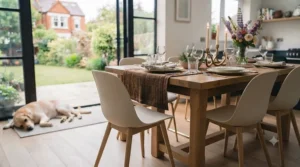
Dining Chair Buying Guide: How to Choose Dining Chairs
How do you choose dining chairs? Start with your table’s height and your typical seating duration, then work through material, weight capacity, upholstery and budget in that order — the biggest buying mistakes come from picking the look first and the fit second.
- Measure your table height first. Standard UK dining tables sit around 73-75cm high; chairs should leave roughly 25-30cm between the seat and the underside of the tabletop for comfortable legroom.
- Decide on material based on lifestyle, not just looks. Solid wood suits long-term use and can be refinished; metal-framed upholstered chairs suit renters and quick refreshes but wear differently over time.
- Check the weight rating, not just the style. Chairs used daily by a full household need a genuinely stated capacity — anything under 100kg per chair is worth double-checking against your household’s needs.
- Consider upholstery maintenance honestly. Velvet and fabric need more careful spot-cleaning; PU and faux leather wipe clean in seconds but can crack over many years.
- Match armrests to your table’s width. Armed chairs need extra clearance to slide under the table — measure before assuming they’ll fit at every seat.
- Buy one chair before committing to a full set where possible. Sitting in a chair for ten minutes tells you more about comfort than any spec sheet.
- Factor in assembly and delivery realistically. Flat-pack chairs save money but cost time; pre-assembled premium pieces cost more but arrive ready to use.
Chair Height and Table Pairing: Getting the Fit Right
Chair height and table pairing is one of the most overlooked details in dining furniture shopping, largely because it’s invisible until you’re actually sitting there with your knees jammed against the underframe. The comfortable range most furniture designers work to is a seat height of around 44-48cm paired with a standard table height of 73-76cm, leaving roughly 25-30cm of clearance between the top of the seat and the underside of the tabletop.
Upholstered seats complicate this more than people expect — a thick cushion can effectively raise sitting height by 2-3cm compared with a hard wooden seat, which is enough to turn comfortable legroom into a cramped squeeze if you’re not accounting for it. If you’re buying chairs and a table separately rather than as a matched set, it’s worth measuring both individually before ordering rather than assuming standard dimensions will simply work together — a mismatch of even 5cm noticeably changes how comfortable long meals feel. When mixing chair styles — say, armed chairs at the head of the table and armless side chairs elsewhere — try to keep seat heights within about 4cm of each other, since larger gaps make sightlines across the table feel uneven and can leave some diners looming over others.
Matching vs Mismatched Dining Sets: Which Should You Choose?
Matching vs mismatched dining sets is less about right and wrong and more about which look actually suits your space and how you use it. A fully matching set — same chair, same finish, all the way round — gives a dining room a coordinated, slightly more formal feel, and it’s genuinely the simpler choice if you’re buying everything at once and want zero decision fatigue.
Mismatched or curated setups have grown considerably in popularity, and there’s a practical reason beyond aesthetics: buying two armed chairs for the table ends and four armless side chairs, sometimes in complementary rather than identical finishes, lets you introduce visual hierarchy and personality without the room feeling like a furniture showroom display. The trade-off is that mismatched setups require a slightly better eye for coordination — sticking to one dominant material or tone (all oak-toned wood, for instance, even if the exact chair models differ) keeps the look intentional rather than accidental. Budget-conscious buyers often land on a practical middle ground: one matching set as the core, with one or two contrasting chairs added at the table ends for visual interest, which delivers most of the personality of a fully mismatched room without the higher cost of sourcing several different premium pieces.
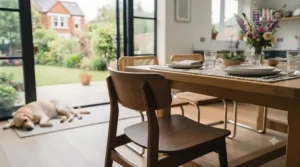
Common Mistakes When Buying Dining Chairs
The single most common mistake is buying on looks alone without checking the weight rating, particularly for households with teenagers or frequent guests — a chair rated for 90kg simply isn’t built for a rowdy Sunday lunch with extended family. A close second is ignoring return policies on flat-pack furniture; assembly damage or missing parts happen often enough that it’s worth confirming a retailer’s returns window before ordering, not after discovering a cracked leg mid-build.
Buyers also frequently underestimate how much cushion thickness changes effective seat height, leading to chairs that don’t actually fit comfortably under the table once assembled — always check seat height including cushion compression, not just the frame measurement. Another frequent error is assuming all “solid wood” listings mean the same thing: some chairs use solid wood only for legs while the seat and back are engineered board, which is a meaningfully different (and less durable) product than a fully solid-wood frame, so it’s worth reading spec sheets carefully rather than trusting marketing copy alone.
Dining Chairs vs Bar Stools and Benches
| Feature | Dining Chairs | Bar Stools | Benches |
|---|---|---|---|
| Typical seat height | 44-48cm | 61-76cm | 44-48cm |
| Individual back support | Yes, standard | Often minimal | Rarely |
| Seating flexibility | Fixed per chair | Fixed per chair | Flexible, fits more people |
| Best For | Standard dining tables | Kitchen islands, breakfast bars | Casual, space-saving dining |
Bar stools solve a completely different problem — they’re built for counter-height surfaces like kitchen islands, not standard dining tables, and swapping one for the other without checking heights is a common and easily avoidable mistake. Benches trade individual back support for flexibility, squeezing in an extra diner or two along one side of the table, which makes them a smart pairing with chairs like the Hallowood Furniture Aston or Julian Bowen Ibsen at the table ends for a casual, mixed-seating look. For most standard dining rooms, chairs remain the most comfortable choice for meals lasting longer than twenty minutes, simply because proper back support matters more than people credit until they’re missing it.
Long-Term Cost & Maintenance
A £90 pair of budget chairs that needs replacing every three to four years works out to roughly £22-30 per year in seating cost, before factoring in the hassle of reordering and reassembling. A £220 pair of solid oak chairs like the Julian Bowen Coxmoor, maintained properly, can realistically last 15-20 years with basic care, working out closer to £11-15 per year — genuinely cheaper over time despite the higher upfront cost. This is the real argument for investing in solid wood construction where budget allows: the total cost of ownership often favours the pricier option once you stretch the comparison past five years.
Maintenance costs stay low across the board provided basic care is followed — occasional retightening of bolts, a fabric protector spray for upholstered seats, and keeping wood chairs away from direct radiator heat, which dries and cracks timber over time. Upholstered chairs like the VASAGLE EKHO or SONGMICS LDC087CZ01 may eventually need a professional re-cover if the fabric wears before the frame does, typically after 7-10 years of regular use, which is worth budgeting for separately rather than assuming the whole chair needs replacing at that point.
Safety, Materials & Regulations Guide
UK dining chairs sold with upholstered elements fall under domestic fire safety law, and it’s worth knowing this exists even as a casual buyer. Under current UK rules, the Furniture and Furnishings (Fire) (Safety) Regulations 1988 set flammability requirements for domestic upholstered furniture supplied anywhere in the UK, with testing methods based on established British Standards for cover and filling materials. Reputable UK and EU-based sellers will have this compliance built in as standard, but it’s a reasonable thing to glance at on a listing, particularly when buying from lesser-known third-party sellers via marketplaces rather than established UK furniture brands.
Material safety extends to sourcing, too — solid wood chairs using rubberwood, oak or beech should ideally carry sustainability certification from a recognised body, confirming the timber came from responsibly managed forestry rather than unregulated logging. For metal-framed chairs, a stated weight capacity isn’t just a comfort figure, it’s a genuine safety spec, and buying below your household’s realistic needs risks structural failure over repeated use rather than on the first sit. None of this should put anyone off buying online, but a few seconds checking for these details before purchase is time well spent.
Buyer’s Decision Framework
If you’re furnishing on a strict budget and expect to move within a few years, choose lightweight metal-framed or particleboard chairs like the VASAGLE LDC094B01, because portability and low upfront cost matter more than 15-year durability. If you’re outfitting a family table that sees daily wear and the occasional spill, choose solid wood with a wipeable or easily cleaned seat pad like the Hallowood Furniture Aston, because the combination of structural durability and practical maintenance suits repeated everyday use best.
If you’re building a design-led dining space and comfort during long dinners matters as much as looks, choose a premium upholstered or solid oak option like the Julian Bowen Coxmoor or VASAGLE EKHO, because both the material quality and the visual statement justify the higher spend. And if you’re simply unsure, buy one chair first rather than a full set — a week of actually sitting in it tells you more than any spec sheet ever will.
✨ Ready to Find Your Perfect Match?
🔍 Compare all seven picks above side by side, click through to check current pricing and availability, and pick the chair that actually fits your table, your budget and your household. Small details make the biggest difference once you’re sitting there every night.
Frequently Asked Questions
❓ What is the standard height for dining chairs?
❓ How much should I spend on dining chairs?
❓ Do dining chairs need to match the table exactly?
❓ Are upholstered or wooden dining chairs better?
❓ How many dining chairs do I need for a standard table?
Conclusion
There’s no single “best” dining chair, and honestly, anyone who tells you otherwise is skipping past the part where your table, your household and your budget actually matter. What this guide hopefully makes clear is that dining chairs for every budget doesn’t mean settling — the VASAGLE LDC094B01 genuinely earns its place for renters and quick refreshes, while the Julian Bowen Coxmoor justifies its higher price with oak construction built to outlast several cheaper replacements. Chair height and table pairing, matching versus mismatched sets, and material choice all matter more than they first appear, and a little care in each of those areas pays off every single time you sit down to eat.
If there’s one habit worth taking from this entire guide, it’s checking the actual spec sheet — seat height, weight capacity, material — before checking the price tag. As one broader look at British interiors design history shows, dining furniture has always balanced practicality against style, and that balance is exactly what separates a chair you’ll still like in five years from one you’ll be quietly replacing by next Christmas — a distinction worth remembering the next time a listing photo catches your eye.
Recommended for You
- Carver Chairs for Dining Table: 7 Best Picks for 2026 (Buyer’s Guide)
- 7 Best Metal Dining Chairs for Kitchen in 2026 (Honest UK Guide)
- Wooden Dining Chairs for Kitchen: 7 Brilliant Picks (2026)
Disclaimer: This article contains affiliate links. As an Amazon Associate, I earn from qualifying purchases. If you purchase products through these links, we may earn a small commission at no additional cost to you.
✨ Found this helpful? Share it with your friends! 💬🤗
