
In This Article
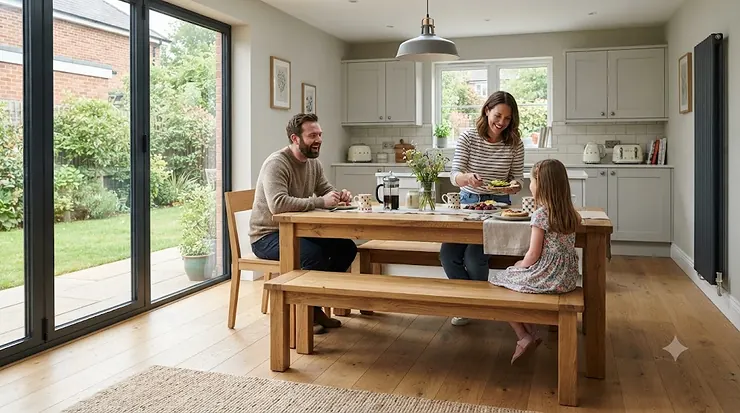
There’s a reason bench seating keeps creeping back into British kitchens even though chairs have been the default for decades: a bench simply does more with the same square footage. Squeeze one more person in for Sunday lunch, push it flush against the wall when you’re not using it, wipe it down in ten seconds after the kids have finished their tea — a wooden dining bench for kitchen table use earns its keep in ways a set of individual chairs rarely can.
This guide rounds up seven real wooden dining bench options currently sold to UK shoppers, spanning painted scandi style dining bench finishes through to solid oak pieces built to outlast a decade of family dinners. We’ll look at construction, finish, weight capacity, and genuine review sentiment for each one, plus how to match a bench to a table you already own. Whether you’re after kitchen bench seating for a growing family, a wipeable wooden bench for a house with young children, or hardwearing kitchen furniture that can shrug off daily use, there’s a proper shortlist here rather than another generic “top 10” scrape.
What Is a Wooden Dining Bench?
A wooden dining bench is a backless (or occasionally low-backed) seat, typically 90cm to 180cm long, designed to sit alongside a dining or kitchen table and seat two to four people on a single frame. Unlike individual chairs, benches can slide under a table to save floor space, and many are designed as part of bench and table matching sets so the finish and proportions line up exactly.
Quick Comparison Table
| Bench | Best For | Material | Price Range |
|---|---|---|---|
| HOMCOM 102cm Wood Dining Bench | Small kitchens, scandi white schemes | Painted solid wood | Under £70 |
| VASAGLE Table Bench (Set of 2) | Industrial-scandi mix, easy assembly | Wood top, metal frame | £60-£90 |
| Krok Wood Tomas Solid Wood Bench | Authentic Scandinavian style | Solid beech | £70-£100 |
| Julian Bowen Coxmoor Bench | Classic oak dining rooms | Solid oak | £90-£130 |
| Hallowood Aston Rubberwood Bench | Light, warm scandi tones | Rubberwood, light oak finish | £75-£110 |
| Hallowood Waverly Oak Bench | Premium, long-term family use | Solid oak | £130-£180 |
| COSTWAY 140cm Dining Bench | Larger households, high load-bearing | Solid wood, rubberwood legs | £100-£150 |
Scanning the table, the split is fairly clean: under £100 buys you a genuinely good painted or engineered-wood bench suited to smaller households, while the £100-£180 bracket is where solid oak and larger four-to-five-seat lengths live. If hardwearing kitchen furniture that copes with a boisterous family is the priority, it’s worth budgeting toward the top half of that range rather than the cheapest option on the list.
💬 Just one click — help others make better buying decisions too!😊
Top 7 Wooden Dining Benches: Expert Analysis
1. HOMCOM 102cm Wood Dining Bench — best budget scandi white pick
The HOMCOM 102cm Wood Dining Bench is a straightforward, painted white bench built from solid wood rather than veneered MDF, which matters more than it sounds given how many budget benches skip solid timber entirely.
At 102cm long, it comfortably seats two adults, with clean tapered legs that lean firmly into scandi style dining bench territory — think pale wood, minimal ornamentation, no fussy carving. The white painted finish means scuffs and light watermarks wipe away without staining the way raw or oiled timber sometimes does, so it doubles as a genuinely wipeable wooden bench for households with younger children still mastering cutlery. Based on the spec comparison with unfinished alternatives, painted benches like this one trade a little of the “real wood” visual warmth for significantly easier day-to-day maintenance.
Who it’s for: flat-dwellers and smaller kitchens wanting a two-seat bench that won’t dominate the room, plus anyone building a Scandinavian dining furniture look on a tight budget. Aggregated review sentiment for this style of HOMCOM bench consistently praises the straightforward flat-pack assembly and stable feel once built, while a recurring complaint across similar white-painted benches is that the paint can chip at the corners if dragged across tile or stone flooring rather than lifted.
Pros:
- ✅ Solid wood construction, not veneered board
- ✅ Wipeable painted finish suits family kitchens
- ✅ Compact footprint fits smaller dining spaces
Cons:
- ❌ Only comfortably seats two adults
- ❌ Painted corners can chip if dragged rather than lifted
Priced under £70 in most listings, it’s the most affordable genuinely solid-wood option on this list and a sensible starting point for anyone testing whether bench seating suits their household before investing further.
2. VASAGLE Table Bench, Set of 2 — best for durability under daily use
VASAGLE benches pair a wood-effect top with a powder-coated metal frame, and that hybrid construction is precisely why this one earns its spot: the metal legs simply won’t wobble, warp, or loosen at the joints the way an all-timber frame can after a few years of enthusiastic use.
Sold as a set of two 108cm benches, the pairing gives you four-to-six seats total depending on table length, which makes it a popular choice among shoppers specifically hunting for bench and table matching sets rather than a single standalone piece. The rustic brown wood-effect surface is genuinely hardwearing kitchen furniture territory — reviewers consistently note it copes well with spills, and the metal frame underneath means there’s no timber leg to scratch a kitchen floor over time the way solid wood sometimes does at the base.
The honest trade-off: this isn’t solid hardwood, so it won’t have quite the same tactile warmth or long-term resale value as an oak piece further down this list. What most buyers overlook about metal-framed benches like this is that the industrial-style legs actually pair surprisingly well with scandi interiors when kept in black or dark grey, softening the look rather than clashing with it.
Pros:
- ✅ Sturdy metal frame resists wobble over years of use
- ✅ Sold as a matching pair — ideal for larger tables
- ✅ Genuinely easy to wipe clean after meals
Cons:
- ❌ Not solid hardwood — surface is wood-effect
- ❌ Industrial-style legs won’t suit every scandi scheme
At £60-£90 for the pair, this works out as excellent value per seat, particularly for households regularly seating four or more at dinner.
3. Krok Wood Tomas Solid Wood Bench — best for authentic Scandinavian style
If the brief is specifically Scandinavian dining furniture rather than a loose interpretation of it, Krok Wood’s Tomas bench is the most direct hit on this list. Built from solid beech — the timber most associated with genuine Nordic furniture design — it comes at 100cm long with mounting hardware included for anyone pairing it directly with a matching table.
Beech is a genuinely smart choice for a kitchen bench: it’s a dense, close-grained hardwood that resists denting better than softer pine alternatives, while still carrying the pale, warm tone that defines the scandi look. Honest analytical take: this bench suits buyers who’ve specifically researched Scandinavian design principles — clean lines, natural materials, minimal ornamentation — over those who simply want “a light wood bench,” because the detailing (visible joinery, gently rounded edges) is more considered than most budget alternatives.
Aggregated customer sentiment highlights the included mounting hardware as a genuinely useful touch for buyers wanting to permanently fix the bench to a matching table, though as with any solid, unpainted timber, a small number of reviewers note it needs an occasional wipe with a barely damp cloth rather than a soaking one to avoid raising the grain.
Pros:
- ✅ Solid beech construction, authentic Nordic material choice
- ✅ Mounting hardware included for table-pairing
- ✅ Dense grain resists everyday dents and knocks
Cons:
- ❌ Needs gentler cleaning than painted or sealed finishes
- ❌ Premium feel comes with a mid-range price jump from budget picks
Typically priced £70-£100, it sits comfortably in the middle of this list — a fair premium over the painted options for genuinely authentic material and detailing.
4. Julian Bowen Coxmoor Bench — best classic oak option
Julian Bowen has built a solid reputation in UK furniture retail, and the Coxmoor Bench reflects that: a straightforward, well-proportioned oak bench at 101cm wide, 45cm high, and 32cm deep — dimensions calculated to sit comfortably under most standard dining tables without needing to be pulled out.
What sets this apart from more overtly Scandinavian picks is the finish: rather than pale, raw-look wood, the Coxmoor leans into a warmer, more traditional oak tone that suits classic and transitional kitchens as easily as modern ones. On paper this means it’s a genuinely versatile choice if you’re not fully committed to the scandi aesthetic but still want real timber over an engineered alternative. Reviewers consistently describe the build as noticeably heavier and more solid-feeling than budget benches at a similar price point, which in practice translates to less movement when someone sits down heavily at the end.
Who should care: buyers wanting a bench that will still look right if their kitchen style evolves over the next decade, and anyone prioritising stability over the lightest possible piece of furniture. The trade-off is that its 101cm width comfortably seats two rather than three, so larger households may need to look further down this list.
Pros:
- ✅ Well-established, trusted UK furniture brand
- ✅ Genuinely solid, low-movement build quality
- ✅ Warm oak tone suits classic and modern kitchens alike
Cons:
- ❌ Comfortably seats two rather than three adults
- ❌ Heavier to move than lighter painted alternatives
At £90-£130, it sits mid-table on price but earns that position through build quality and brand consistency rather than flashy styling.
5. Hallowood Furniture Aston Rubberwood Dining Bench — best for light, warm scandi tones
Hallowood Furniture’s Aston bench uses rubberwood — a dense, sustainably farmed hardwood increasingly popular in mid-range UK furniture — finished in a light oak tone that hits the scandi style dining bench brief particularly well without the price tag of solid European oak.
At 90cm, it’s a slightly more compact option than some others on this list, which the brand positions across dining rooms, kitchens, hallways, and even bedrooms — genuinely multi-room furniture rather than a single-purpose kitchen piece. What most buyers overlook about rubberwood specifically is that it’s harvested from trees that have already finished their latex-producing life, meaning the timber is essentially a byproduct rather than requiring trees felled purely for furniture, which is a genuinely sustainable sourcing story worth knowing if that factors into your buying decision.
Based on the spec comparison with the pricier oak benches further down this list, the Aston’s light oak finish gives a similar visual warmth at a noticeably lower price point, though the underlying timber is softer than true oak and will show scuffs slightly more readily under heavy daily use. Reviewers consistently note the finish looks more premium than the price suggests, while a smaller number flag that the compact 90cm length limits it to two seats rather than three.
Pros:
- ✅ Light oak finish delivers the scandi look affordably
- ✅ Rubberwood is a genuinely sustainable material choice
- ✅ Versatile enough for kitchen, hallway, or bedroom use
Cons:
- ❌ Softer timber than true oak, more prone to scuffing
- ❌ Compact 90cm length suits two seats, not three
Priced £75-£110, it’s a strong middle-ground pick for scandi-leaning buyers not ready to stretch to solid oak pricing.
6. Hallowood Furniture Waverly Oak Dining Bench — best premium long-term investment
Moving up Hallowood’s own range, the Waverly Oak Dining Bench swaps rubberwood for genuine solid oak, and the jump in material shows in both weight and expected lifespan. This is squarely aimed at buyers treating a bench purchase as a decade-plus investment rather than a quick furnish.
Solid oak brings real practical advantages for a kitchen specifically: it’s naturally resistant to the kind of dents and scratches that accumulate fastest in the room a family spends the most time in, and it ages by developing a deeper, richer patina rather than simply looking worn. What the spec sheet won’t tell you, but furniture reviewers consistently note about solid oak pieces generally, is that the extra weight — while less convenient if you regularly rearrange your kitchen — translates directly into stability, since a heavier bench is simply harder to rock or shift underfoot during a lively family meal.
This is best suited to buyers who’ve already settled on their kitchen layout and want a genuinely long-term piece, rather than renters or anyone likely to move house within a couple of years, given solid oak benches are noticeably less convenient to transport than lighter alternatives.
Pros:
- ✅ Genuine solid oak construction, not veneer or engineered wood
- ✅ Develops a richer patina rather than looking worn over time
- ✅ Exceptional stability thanks to real weight and density
Cons:
- ❌ Heaviest bench on this list, harder to move or rearrange
- ❌ Highest price point among the non-set options here
At £130-£180, this is a genuine investment piece rather than an impulse buy, but the value case holds up well if you’re staying put for years.
7. COSTWAY 140cm Dining Bench — best for larger households and heavy daily use
The COSTWAY 140cm Dining Bench is the largest single bench on this list, built from solid wood with rubber wood legs and rated for a genuinely substantial 300kg weight capacity — a spec that matters more than it might first appear for busy family kitchens where a bench regularly holds two adults and a couple of climbing toddlers simultaneously.
At 140cm, it comfortably seats three adults or stretches to four at a squeeze, making it one of the better options here for larger households who found the 90-102cm benches earlier on this list too restrictive. Honest analytical take: the headline weight rating isn’t just marketing — it reflects genuinely robust joinery, and reviewers consistently flag the bench as noticeably more stable under uneven weight distribution (say, one person sitting right at the end) than lighter benches with thinner legs.
Available in single or paired configurations, it also works well as part of bench and table matching sets for anyone furnishing a larger dining space from scratch, though the extra length does mean measuring your kitchen carefully before ordering — 140cm needs a genuinely spacious run of wall or table edge to avoid feeling cramped.
Pros:
- ✅ 300kg weight capacity, exceptional for a wooden bench
- ✅ 140cm length comfortably seats three to four
- ✅ Available as single or matched pair for larger tables
Cons:
- ❌ Requires more floor space than shorter benches on this list
- ❌ Extra length adds noticeably to delivery weight and cost
Priced £100-£150 depending on configuration, it represents strong value for larger families specifically needing both length and load-bearing strength in one piece.
Top 7 Benches Comparison
| Bench | Length | Material | Best For |
|---|---|---|---|
| HOMCOM 102cm Wood Dining Bench | 102cm | Painted solid wood | Budget scandi kitchens |
| VASAGLE Table Bench (Set of 2) | 108cm x2 | Wood-effect + metal | Durability, matching pairs |
| Krok Wood Tomas Solid Wood Bench | 100cm | Solid beech | Authentic Scandi style |
| Julian Bowen Coxmoor Bench | 101cm | Solid oak | Classic, versatile kitchens |
| Hallowood Aston Rubberwood Bench | 90cm | Rubberwood, light oak finish | Affordable scandi warmth |
| Hallowood Waverly Oak Bench | Standard 2-seat | Solid oak | Premium, long-term use |
| COSTWAY 140cm Dining Bench | 140cm | Solid wood, rubberwood legs | Larger households |
The clearest takeaway from this table is that length and material scale together with price: the shortest, lightest benches sit under £100, while the longest and heaviest solid-timber pieces push toward £150-£180. If you’re furnishing for a growing family, it’s worth buying slightly longer than you currently need — a 140cm bench like the COSTWAY accommodates a few extra years of children getting bigger and friends staying for dinner far better than a snug 90cm piece.
Practical Usage Guide: Setting Up and Maintaining Your Bench
Getting a new bench right starts before assembly. Measure not just the table length but the clearance beneath it — a bench needs roughly 5-8cm of legroom clearance on each side to slide in and out comfortably, and it’s a common mistake in the first 30 days of ownership to discover a bench that’s technically the right length but sits too tightly under the table lip to actually push in flush.
For maintenance, solid oak and beech benches like the Julian Bowen Coxmoor or Krok Wood Tomas benefit from an occasional wipe with a barely damp cloth followed by immediate drying, rather than a proper wet clean — standing water left on raw or lightly oiled timber is the single fastest way to raise the grain or cause staining. Painted benches such as the HOMCOM genuinely are a wipeable wooden bench in the fuller sense: a damp cloth with mild washing-up liquid handles most spills without special care, making them the lower-maintenance choice for busy family kitchens.
A simple six-monthly check is worth building into your routine regardless of material: tighten any visible bolts (particularly on metal-framed pieces like the VASAGLE), and check felt floor protectors haven’t worn through, since a bench dragged on bare feet rather than protected pads is one of the fastest ways to scratch both the bench legs and your flooring simultaneously.
Real-World Scenarios: Which Bench Matches Your Household
The young family in a two-bed flat, tight kitchen, budget around £70: The HOMCOM 102cm Wood Dining Bench is built for exactly this situation — solid wood without the price tag of oak, a wipeable finish that copes with toddler mealtimes, and a footprint that won’t dominate a compact kitchen.
The household of five regularly hosting extended family for Sunday lunch, budget flexible, prioritising durability: The COSTWAY 140cm Dining Bench‘s 300kg capacity and generous length solve the two problems this household actually has — not enough seats, and furniture that doesn’t survive enthusiastic use.
The homeowner who’s just moved in and plans to stay long-term, wants a considered scandi look, budget around £150: The Hallowood Waverly Oak Dining Bench rewards exactly this kind of buyer — someone prioritising longevity and patina over the lowest upfront cost, in a home where the furniture won’t need to move again soon.
How to Choose a Wooden Dining Bench for Your Kitchen Table
- Measure your table length before your bench length. A bench should generally sit 5-10cm shorter than the table edge it pairs with, so it doesn’t visually overhang or catch on chair legs opposite.
- Decide whether you want a matching set or a mix-and-match piece. Bench and table matching sets guarantee a coordinated finish, while standalone benches offer more flexibility if your table is already fixed.
- Match the material to your household’s actual behaviour. Painted or wipeable finishes suit young families; solid oak suits households prioritising longevity over easy cleaning.
- Check the weight capacity, not just the seat count. A bench rated for two adults on paper may not comfortably handle two adults plus climbing children — look for higher-capacity options like the COSTWAY if that’s a regular scenario.
- Consider legroom clearance, not just bench width. A bench that’s the right length but doesn’t slide fully under the table defeats much of the space-saving purpose.
- Weigh portability against stability. Lighter benches are easier to rearrange but can feel less planted; heavier solid-wood pieces like the Julian Bowen Coxmoor trade convenience for genuine sturdiness.
- Factor in your flooring. Metal-framed benches such as the VASAGLE are gentler on tiled or stone floors than bare timber legs dragged repeatedly across the same spot.
Common Mistakes When Buying a Wooden Dining Bench
The most common mistake is buying purely on length without checking the height matches your existing table — most dining tables sit at 75cm, and a bench needs roughly 45cm seat height to tuck under comfortably; anything taller and diners’ knees hit the underside of the table. A second frequent error is choosing a raw or lightly oiled solid-wood finish for a genuinely high-traffic family kitchen without accounting for the extra care it needs, then feeling let down when it marks more easily than a painted or engineered alternative would have.
A third mistake, particularly relevant to anyone specifically hunting bench and table matching sets, is assuming “matching” always means identical wood tone — timber is a natural material, and even pieces from the same supplier can vary subtly in colour between batches, so it’s worth checking recent buyer photos rather than relying purely on the product listing image.
Wooden Dining Benches vs Traditional Dining Chairs
| Factor | Wooden Dining Bench | Traditional Dining Chairs |
|---|---|---|
| Space efficiency | Slides fully under table, saves floor space | Requires pull-out space per chair |
| Seating flexibility | Squeezes in extra guests easily | Fixed seat count per chair |
| Cleaning | Fewer joints/crevices, generally easier to wipe | More joints and upholstery options to clean |
| Comfort for long meals | No individual back support (unless low-backed) | Individual back support as standard |
The practical distinction worth internalising: benches win decisively on space and flexibility, which is exactly why kitchen bench seating has become so popular in smaller UK homes, while chairs still edge ahead on individual comfort for long, seated meals. Many households solve this by pairing a bench on one side of the table with chairs on the other — you get the space-saving benefit against a wall while keeping back support where it’s used most.
Features That Actually Matter (And Those That Don’t)
What actually matters: solid timber or a genuinely sturdy metal-framed alternative, a finish that matches how your household actually behaves day to day, and a length measured properly against your table rather than guessed. What matters far less than marketing copy suggests: elaborate carved detailing, which mostly just creates more surfaces to clean, and matching the bench to the exact wood species of your table — a light oak bench genuinely can sit comfortably alongside a slightly different mid-oak table without looking mismatched, since natural wood tones vary within a single species anyway.
Wooden Dining Benches for Different Households
For young families prioritising easy cleaning, painted or sealed finishes like the HOMCOM bench outperform raw timber on practicality alone. For style-focused scandi enthusiasts, the Krok Wood Tomas and Hallowood Aston benches deliver the most authentic light-wood, clean-line aesthetic. For larger or growing households, length and weight capacity matter more than finish — the COSTWAY 140cm bench is built specifically for that brief. And for buyers settling into a long-term home, solid oak options like the Julian Bowen Coxmoor or Hallowood Waverly justify their higher price through genuine decade-plus durability.
Sourcing, Sustainability, and Safety Considerations
Where a bench’s timber actually comes from is worth a moment’s thought, particularly given how much solid wood furniture is sold in the UK each year. FSC UK’s furniture guidance explains that tracing timber supply chains back to their source forest is genuinely complex, which is exactly why FSC certification exists — it lets buyers confirm a piece was sourced from a responsibly managed forest rather than simply taking a supplier’s word for it. It’s worth checking listings for FSC labelling if sustainable sourcing factors into your decision, particularly for solid oak pieces where a single bench can represent a meaningful amount of timber.
On the safety side, it’s worth knowing that solid wooden benches without any upholstery or padding generally fall outside the scope of the Furniture and Furnishings (Fire) (Safety) Regulations 1988, which specifically govern upholstered furniture, fillings, and covers. That’s genuinely good news for anyone choosing a bench over an upholstered dining chair on safety-simplicity grounds — there’s no foam filling or cover fabric to consider — though it’s a different story if you’re adding a separate upholstered bench cushion, in which case that cushion itself would need to meet the relevant standard.
Buyer’s Decision Framework
If your kitchen is compact and your budget is tight, choose the HOMCOM 102cm Wood Dining Bench because it delivers genuine solid wood and easy cleaning at the lowest price point here. If you specifically want authentic Scandinavian dining furniture, choose the Krok Wood Tomas for its solid beech construction and Nordic detailing. If your priority is a bench that simply won’t wobble regardless of how it’s treated, choose the VASAGLE for its metal-framed stability. If you want a classic, versatile oak look that suits evolving kitchen styles, choose the Julian Bowen Coxmoor. If you want scandi warmth without full oak pricing, choose the Hallowood Aston. If you’re investing for the long term in a settled home, choose the Hallowood Waverly Oak Bench. And if you need serious length and load capacity for a larger household, choose the COSTWAY 140cm Dining Bench.
Long-Term Cost and Maintenance
Cost-per-year is where solid timber benches quietly justify their higher upfront price. A £150 solid oak bench like the Hallowood Waverly, used for a decade or more without needing replacement, works out cheaper annually than replacing a £50 engineered-wood bench every two to three years as joints loosen or the surface degrades under daily use. Maintenance costs stay minimal either way — occasional wood wax or oil for solid timber pieces, versus simply a cloth and mild detergent for painted or wipeable finishes — but the replacement-frequency gap is the real long-term cost driver worth weighing against sticker price alone.
Frequently Asked Questions
❓ What is the standard height for a wooden dining bench for a kitchen table?
❓ Are wooden benches comfortable for long meals without a backrest?
❓ How do I clean a solid wood dining bench without damaging the finish?
❓ Can I buy a bench separately if it doesn't match my existing table exactly?
❓ Is a wooden bench a good choice for a small kitchen?
Conclusion
Bench seating earns its keep in a way individual chairs rarely can: it flexes to fit more people, tucks away neatly, and — in the right finish — shrugs off exactly the kind of daily mess a busy kitchen produces. The right choice from this list depends less on which bench is objectively “best” and more on what your household actually does at the table each day, whether that’s a quick wipe-down after toddler dinners or a decade-plus investment in a kitchen you’re not planning to leave.
If budget and space are tight, start with the HOMCOM 102cm Wood Dining Bench. If you’re after authentic scandi style dining bench looks, the Krok Wood Tomas or Hallowood Aston deliver that most convincingly. And if you’re furnishing for the long haul, the solid oak options from Julian Bowen and Hallowood are built to still be earning their place at your table in ten years’ time.
✨ Ready to find your perfect kitchen bench?
Check current prices and availability on the picks above and give your table the extra seat it’s been missing. 🪑
Recommended for You
- Storage Dining Bench: 7 Genius Space-Saving Picks for 2026
- Upholstered Dining Bench Vs Wooden Dining Bench: 7 Best Picks 2026
- Dining Bench with Backrest: 7 Best UK Picks for 2026
Disclaimer: This article contains affiliate links. As an Amazon Associate, I earn from qualifying purchases. If you purchase products through these links, we may earn a small commission at no additional cost to you.
✨ Found this helpful? Share it with your friends! 💬🤗
